





Mast cell activation syndrome (MCAS) is a condition in which mast cells, immune cells made in the bone marrow, release chemical messengers such as histamine too easily. The result is recurring episodes of symptoms in two or more parts of the body at the same time: the skin (flushing, hives, itching, swelling), the gut (cramping, diarrhea, nausea, vomiting), the heart and blood vessels (a fast heartbeat, low blood pressure, fainting or nearly fainting), and the airways (wheezing or shortness of breath) (AAAAI work group report).
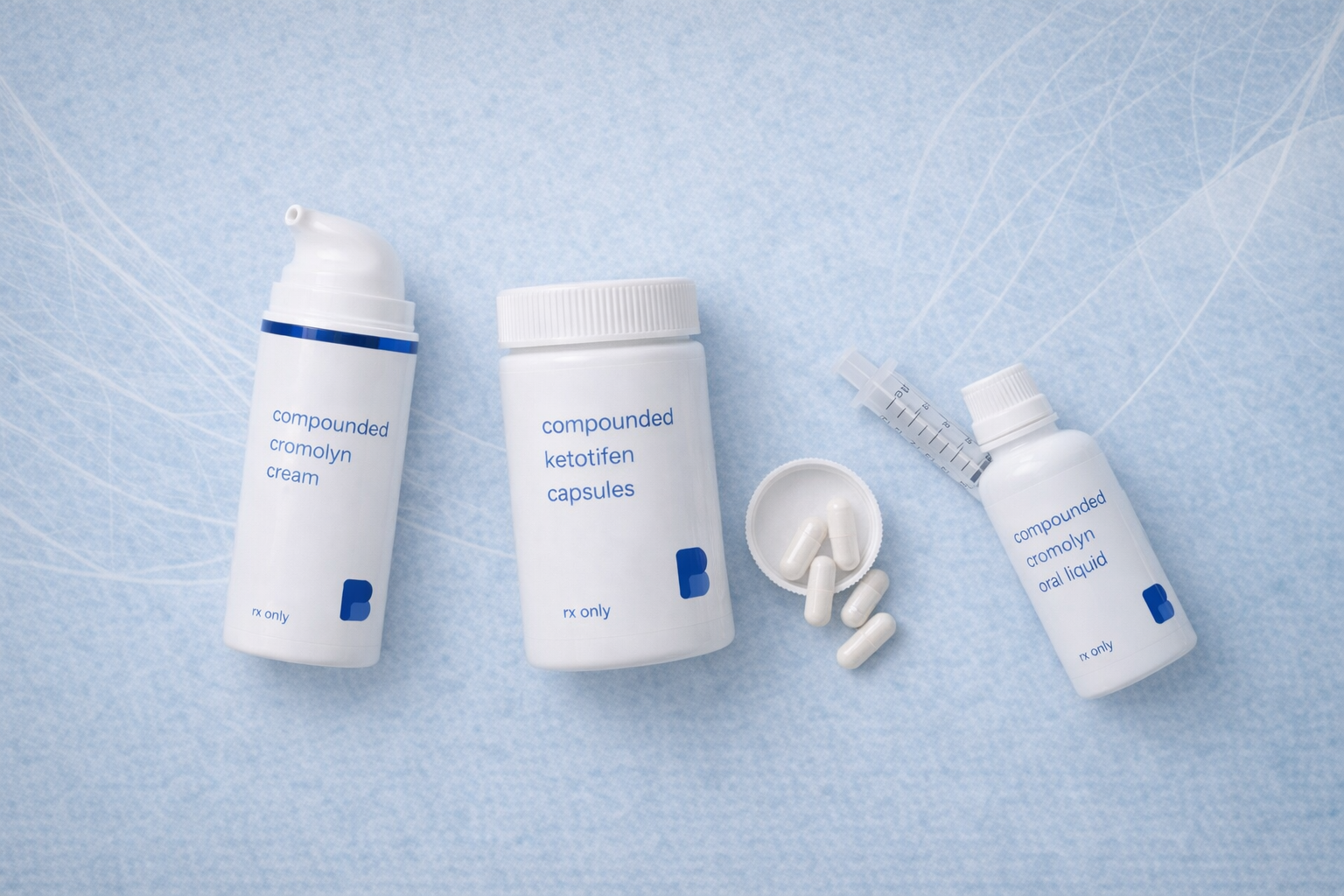
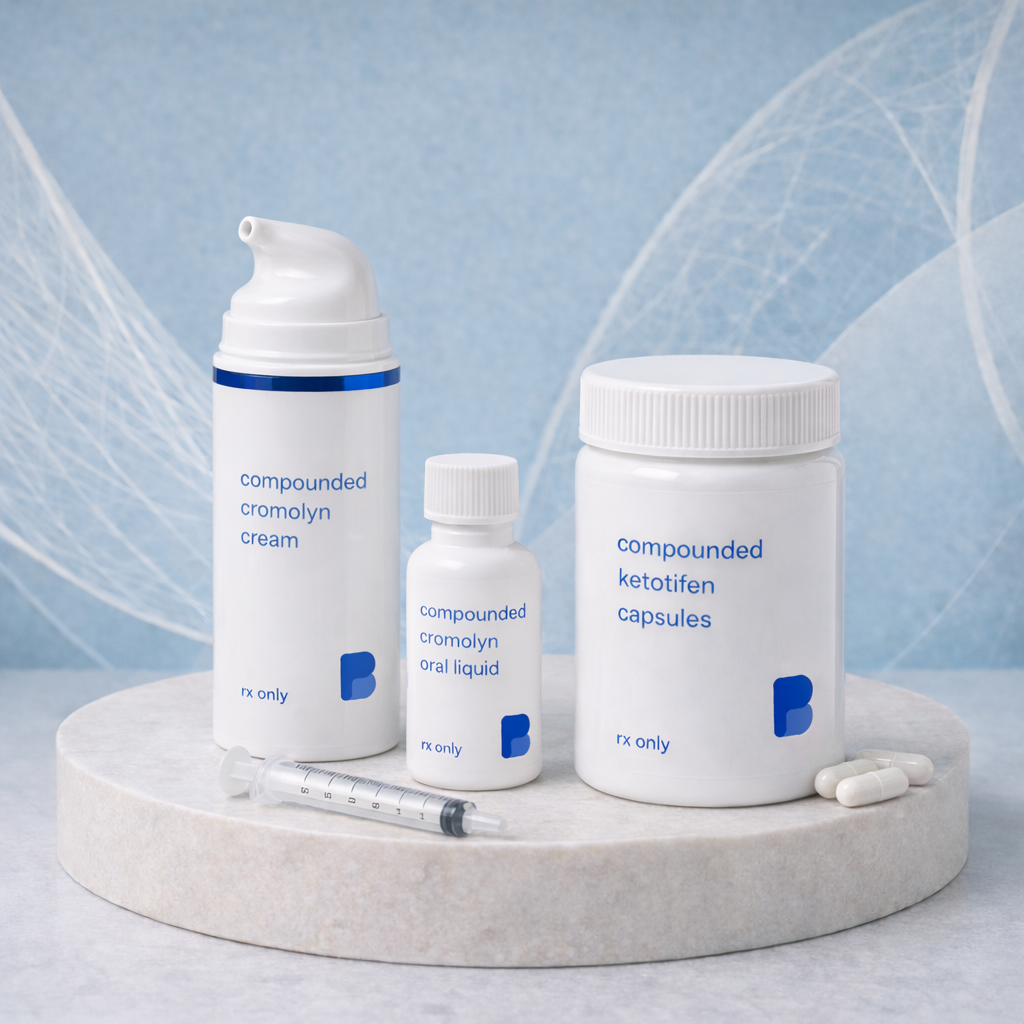
Bayview Pharmacy compounds the prescription medications that providers most often order for mast cell conditions, including ketotifen capsules and oral cromolyn sodium. Your provider decides which medications fit your situation, and a valid prescription is required.
What causes mast cell activation syndrome?
Mast cells are white blood cells made in the bone marrow. When they are activated, they release proteins called mediators that signal an immune response (MedlinePlus Genetics). In MCAS, that release happens too often or too strongly. The AAAAI work group describes three broad types:
- Primary (clonal) MCAS. The mast cells themselves are more easily activated, sometimes because of a change in a gene called KIT. Systemic mastocytosis falls in this group.
- Secondary MCAS. Normal mast cells are set off by an outside trigger, most often an allergy, but also physical triggers such as pressure, heat, cold, or vibration.
- Idiopathic MCAS. No trigger, gene change, or inherited trait can be found.
How is MCAS diagnosed?
Under the AAAAI criteria, a diagnosis needs three things: recurring symptoms involving at least two body systems at once, a rise in a mast cell mediator measured during an episode (most often blood tryptase, or certain urine markers), and improvement with medications that target mast cell mediators (AAAAI work group report). Testing is usually arranged by an allergist or immunologist, and timing matters: blood for tryptase is best drawn about 30 minutes to 2 hours after an episode starts.
The same report cautions that some publications have described MCAS with much broader, unvalidated criteria. A careful evaluation matters because other conditions can cause similar symptoms, and missing a treatable cause is a real risk. Bayview Pharmacy does not diagnose MCAS or decide whether a medication is right for you.
How MCAS medications work
Care for MCAS usually starts with avoiding known triggers, such as insect stings, temperature extremes, friction or pressure on the skin, alcohol, and certain medications, then layers medications that block mast cell mediators or make mast cells less likely to release them (AAAAI work group report). The table below shows the main groups and what Bayview prepares.
| Medication group | How it is used in MCAS | What Bayview prepares |
|---|---|---|
| H1 antihistamines | Block histamine at H1 receptors, for itching, hives, and flushing. Less-sedating options such as cetirizine and fexofenadine are generally preferred | Cetirizine, levocetirizine, fexofenadine, loratadine, and diphenhydramine capsules when a manufactured product does not suit the patient |
| H2 antihistamines | Block histamine at H2 receptors, used mainly for stomach and gut symptoms | Famotidine capsules |
| Mast cell stabilizers | Make mast cells less likely to release mediators. Oral cromolyn is used mainly for gut symptoms | Ketotifen capsules and suspension; oral cromolyn capsules and suspension; cromolyn cream or gel |
| Leukotriene modifiers | Block leukotrienes, another group of mast cell mediators | Montelukast capsules |
This table describes how each group is used and what Bayview compounds. It is not a treatment plan and is not a statement that any medication is better, safer, or more effective than another. Your provider chooses the medications, doses, and order of treatment.
Some people with MCAS also need medications Bayview does not compound, such as an epinephrine auto-injector for severe reactions. The AAAAI report also notes that much of the evidence for MCAS medications comes from expert opinion, case reports, and small case series rather than large trials (AAAAI work group report).
Ketotifen and cromolyn, the mast cell stabilizers
Ketotifen is an antihistamine that also acts as a mast cell stabilizer. In the United States it is sold only as an eye drop for allergic eye itching (MedlinePlus), so oral ketotifen is available only as a compounded preparation. It can cause drowsiness, and the AAAAI report notes it has not been shown to help more than other antihistamines (AAAAI work group report). See ketotifen capsules for strengths and details.
Oral cromolyn is FDA-approved as an oral concentrate for mastocytosis and is taken before meals and at bedtime (prescribing information). Very little of it is absorbed into the body, so it acts mainly in the gut. Providers often start low and increase slowly, and benefit may take at least a month to appear (AAAAI work group report). Bayview compounds cromolyn as capsules and suspensions in custom strengths, and as a cream or gel when a prescriber orders a topical form. See oral cromolyn sodium for details.
When are antihistamines compounded?
Many antihistamines, including cetirizine, fexofenadine, levocetirizine, and loratadine, can be bought without a prescription (MedlinePlus), and famotidine is sold both over the counter and by prescription (MedlinePlus). Federal rules limit compounding a copy of a drug that is commercially available. One exception is a change that makes a real difference for a specific patient, such as leaving out an inactive ingredient the patient is allergic to, and FDA expects the prescription to name both the change and the reason (FDA guidance).
So Bayview compounds these capsules when your prescriber documents what needs to change, for example a different filler such as microcrystalline cellulose instead of lactose, a vegetable capsule shell, or a strength the manufactured product does not come in. The AAAAI report notes that reactions to additives have not been studied in MCAS and advises against compounding emergency medications to remove additives (AAAAI work group report). Keep any epinephrine auto-injector exactly as prescribed.
What to expect
Most MCAS medications are daily maintenance medications, not rescue treatments, and they are meant to be taken every day as prescribed. Mast cell stabilizers build up slowly, so providers usually judge them over weeks rather than days. Your provider may adjust your medications over time. Results vary from person to person.
Side effects & safety
Drowsiness is common with ketotifen and with older antihistamines such as diphenhydramine and hydroxyzine, which also carry more risk of confusion in older adults (AAAAI work group report). Antihistamines can also cause dry mouth, dizziness, constipation, and blurry vision (MedlinePlus). The most common side effects reported with oral cromolyn are headache and diarrhea (prescribing information).
Who should not use these medications?
Do not use any of these medications if you are allergic to the active ingredient or an ingredient in your prescription. Oral cromolyn should not be used by anyone who has had a reaction to cromolyn sodium, and the manufactured oral concentrate is not recommended for children under 2 (prescribing information). Tell your provider about pregnancy, breastfeeding, your other medications, and any alcohol or sedative use before starting.
How do I get started?
These are prescription medications, so a licensed provider decides whether treatment is appropriate and chooses the medication, strength, and form. Bayview Pharmacy does not provide consultations or determine appropriateness. Already have a prescription at another pharmacy? You can transfer it to Bayview. Once you have a prescription, your provider can order through Bayview, and a pharmacist is available if you have questions. Bayview compounds these as part of our compounded medications catalog, alongside low dose naltrexone.
Clinical details for prescribers
Diagnostic criteria (AAAAI 2019). Recurrent symptoms consistent with mast cell activation involving at least two organ systems concurrently; an increase in a validated mediator during symptoms; and response to mediator-targeted therapy. An acute serum total tryptase is considered significant when it exceeds 1.2 times baseline plus 2 ng/mL, drawn about 30 to 120 minutes after onset, with baseline drawn at least 24 hours after symptoms resolve. Urinary metabolites listed in the report are N-methylhistamine, 11β-PGF2α, and LTE4 (Weiler et al. 2019).
Regulatory. None of the preparations on this page is a controlled substance. Oral ketotifen has no US-approved product (ophthalmic only) and is compounded. Oral cromolyn concentrate is FDA-approved for mastocytosis; MCAS use is off-label. Cetirizine, levocetirizine, fexofenadine, loratadine, diphenhydramine, famotidine, and montelukast are commercially available; under section 503A, note on the prescription the patient-specific change and the significant difference it produces (for example, "No lactose, patient allergy") (FDA 503A guidance).
Mediator-targeted therapy, as summarized in the AAAAI report:
- H1 antagonists: nonsedating agents preferred, often used at 2 to 4 times FDA-approved doses; first-generation agents add sedation and cognitive risk, particularly in older adults.
- H2 antagonists (famotidine, cimetidine) mainly for GI and vascular symptoms; evidence is largely case reports and series.
- Oral cromolyn mainly for GI symptoms: start at the lowest dose and titrate to 200 mg four times daily before meals and at bedtime; allow at least one month to judge benefit. Labeled dosing for the concentrate is 200 mg four times daily for patients 13 and older and 100 mg four times daily for ages 2 to 12; not recommended under 2. No more than 1% of an oral dose is absorbed (labeling).
- Ketotifen: sedating H1 antagonist with mast cell stabilizing activity; benefit beyond other antihistamines is unproven.
- Leukotriene modifiers (montelukast, zafirlukast, zileuton) may help, particularly with H1 antagonists and when urinary LTE4 is elevated; not well studied.
- Aspirin (introduced in a controlled setting), omalizumab, and corticosteroids are reserved for selected or refractory cases. Patients with prior anaphylaxis or airway angioedema should carry an epinephrine auto-injector. Removing additives from anaphylaxis treatments by compounding is not recommended.
What Bayview compounds:
- Ketotifen capsules 0.5, 1, and 2 mg (other strengths on prescription) and 1 mg/mL oral suspension.
- Cromolyn sodium capsules 100 and 200 mg, oral suspension 25 and 50 mg/mL, and topical cream or gel 0.22% to 10%.
- Capsules of cetirizine 2.5 and 10 mg, levocetirizine 5 mg, fexofenadine 180 mg, loratadine 2.5 mg (and 1 mg/mL unsweetened suspension), diphenhydramine 5, 25, and 50 mg, famotidine 10 and 20 mg, and montelukast 10 mg, with the filler and capsule shell specified on the prescription.
Licensed to dispense in RI, MA, CT, NJ, NH, FL, ME, and PA. Ordering and account setup are covered on our for providers page.
This information is about a health condition and the prescription medications used for it, and is not medical advice. Compounded medications are prescription-only and are not FDA-approved. Your provider determines whether treatment is appropriate and sets the medication and dose.
References
- AAAAI work group report on MCAS (J Allergy Clin Immunol, 2019)
- Cromolyn sodium oral concentrate, prescribing information
- FDA guidance: compounded drugs that are essentially copies (503A)
- MedlinePlus Genetics: systemic mastocytosis
- MedlinePlus: antihistamines for allergies
- MedlinePlus: famotidine
- MedlinePlus: ketotifen ophthalmic