


In Stock
Gabapentin Cream, Gel & Liquid, Compounded | Bayview Pharmacy

Gabapentin Cream, Gel & Oral Suspension

Smiling man in blue pharmacist scrubs with arms crossed and pen behind his ear.
Medically reviewed by Ryan Dyer, RPh
Last updated on
October 21, 2026
Starting at
$109
for
30 g
Checkmark icon followed by text 'HSA/FSA Eligible'.
Fill my prescription
Requires a prescription from your own provider. Bayview is a pharmacy and does not prescribe.
Prescribers: how to e-prescribe this →
Licensed to fill prescriptions for patients in RI, MA, CT, NJ, NH, FL, ME & PA
  • Topical gabapentin. Gel, cream, or ointment from 2% to 10%.
  • Combination topicals. With lidocaine, amitriptyline, diclofenac, or bupivacaine.
  • Small capsule strengths. 25 mg and 50 mg, below the smallest manufactured capsule.
  • Oral suspensions. Concentrations the manufactured liquid does not come in.

Gabapentin is a prescription medication for nerve pain and seizures. The FDA-approved gabapentin products are capsules, tablets, and an oral solution taken by mouth. Providers also prescribe gabapentin as a compounded gel, cream, or ointment applied to a painful area of skin, often for nerve pain that has not responded to other treatment.

Bayview Pharmacy compounds topical gabapentin from 2% to 10%, alone or in combination topicals such as our topical pain creams and vulvodynia creams, plus oral suspensions and small-strength capsules. Compounded preparations are not FDA-approved, and a valid prescription is required.

Prescribed gabapentin for a dog or cat? See anxiety and behavior medications for pets.

Is there an FDA-approved gabapentin cream?

No. The FDA-approved gabapentin products are capsules, tablets, and an oral solution, all taken by mouth. Gabapentin gel, cream, or ointment is made by a compounding pharmacy to a provider's prescription, and compounded preparations are not FDA-approved.

Does topical gabapentin work?

The evidence is limited. Small studies without a comparison group, mostly using a 6% gel, reported lower pain in people with nerve pain and vulvodynia. A randomized trial of compounded pain creams, including two that contained gabapentin, found they worked no better than a placebo cream. Your provider can help you decide whether it is worth trying.

Trusted by 105,826 patients to date.
A group of faces of our past satisfied patients.
Compounded medications are prepared pursuant to a valid prescription for an individual patient and are not FDA-approved. This page is for educational purposes and is not medical advice.
**The FDA does not review or approve compounded medications for safety or effectiveness. A valid prescription from a licensed practitioner is required.
Important safety information →
Service availability

Prescription delivery in your state

Bayview Pharmacy is licensed to serve patients in eight states and serves eligible New York patients on a limited basis while nonresident registration is pending. Check your state before getting started.

See every state we ship to, with shipping times and pickup details →

Where we currently serve

Select a highlighted state to check availability.

Currently licensed Limited basis, registration pending Not currently licensed Your selection

Select a state on the map or use the state checker.

Do we serve your state?

Choose your state to confirm current service availability.

Thank you! Your submission has been received!
Oops! Something went wrong while submitting the form.
Where we serve
Fill my prescription

Getting your prescription filled is simple

Send us your prescription

STEP
1
Have your provider e-prescribe to Bayview, fax it to us, or call it in directly to one of our pharmacists.
A thin blue light beam connecting two clear glass slabs on a white surface.

A pharmacist reviews it

STEP
2
We verify your prescription and prepare your medication to your provider's exact instructions.
Close-up of a white dial with blue measurement markings and a rotating knob.

We compound & ship

STEP
3
We prepare your medication and ship it discreetly to your door, with support when you need it.
Close-up of a gray box with a precise blue line running along its folded edges.

What is Gabapentin Cream, Gel & Oral Suspension?

Gabapentin is an anticonvulsant that is also widely used for nerve pain. It is FDA-approved, as Neurontin and as generic gabapentin, for nerve pain that lingers after shingles (postherpetic neuralgia) in adults and as an add-on treatment for partial-onset seizures. The approved products are 100, 300, and 400 mg capsules, 600 and 800 mg tablets, and an oral solution of 50 mg per mL (prescribing information).

Bayview Pharmacy compounds gabapentin in forms those products do not cover: a gel, cream, or ointment applied to the skin, combination topicals, oral suspensions in other concentrations, and capsules smaller than 100 mg. Your provider decides whether gabapentin fits your situation, and a valid prescription is required.

Compounded preparations are not FDA-approved. There is no FDA-approved topical gabapentin product, and compounded topical gabapentin has not been tested in large controlled trials. Oral gabapentin is FDA-approved, so Bayview compounds an oral form only when it differs from the manufactured products in a way that matters for the patient, such as a strength that is not made, and the prescription documents it.

How does gabapentin work?

Gabapentin is structurally related to GABA, a chemical messenger that calms nerve activity, but it does not change how the body binds, takes up, or breaks down GABA. It binds tightly to a part of the calcium channels on nerve cells called the alpha-2-delta subunit. Exactly how that relieves pain or prevents seizures is not known (prescribing information).

Topical gabapentin: what the evidence shows

A gel or cream puts gabapentin directly on the painful area of skin. The research behind it is limited and mostly uncontrolled:

  • Nerve pain. In a review of 23 patients with hard-to-treat nerve pain in one area who used a 6% gabapentin gel, average pain scores fell from 8.2 to 5.6 out of 10 after a month, and no side effects were reported. The study looked back at patient records and had no comparison group (Hiom et al., 2015).
  • Vulvodynia. A 2023 review found four observational studies of topical gabapentin, most using 6%. All reported lower pain, but none was a randomized trial, and the authors concluded that the effect could not yet be judged (Ergisi et al., 2023). See vulvodynia vaginal creams.
  • Combination pain creams. In a randomized trial of 399 people with localized chronic pain, compounded creams, including two that contained gabapentin, relieved pain no better than a placebo cream (Ann Intern Med trial).

Some providers still prescribe topical gabapentin when other treatments have not helped or when oral gabapentin causes side effects such as drowsiness. Results vary from person to person, and your provider decides whether it is worth trying.

Topical gabapentin (compounded)Oral gabapentin
Where it is usedApplied to the painful area of skinSwallowed; acts throughout the body
FDA statusNo FDA-approved product; compounded, not FDA-approvedFDA-approved capsules, tablets, and oral solution
EvidenceSmall observational studies; a trial of combination creams found no benefit over placeboRandomized trials for postherpetic neuralgia and seizures
What Bayview preparesGel, cream, or ointment 2% to 10%; combination topicalsOral suspensions in other concentrations; 25 and 50 mg capsules

This comparison is for education only and is not a statement that either form is better, safer, or more effective. Your provider decides which form, if any, is appropriate for you.

Gabapentin liquid and small-strength capsules

The manufactured gabapentin oral solution is 50 mg per mL, contains xylitol and glycerin with strawberry-anise flavoring, and is stored in the refrigerator (prescribing information). The smallest manufactured capsule is 100 mg. Federal rules limit compounding a copy of a drug that is commercially available, unless the prescriber documents a change that makes a real difference for the patient (FDA guidance).

So Bayview compounds water-free (anhydrous) oral suspensions in concentrations such as 200 mg per mL, capsules of 25 or 50 mg for small doses or slow increases, and, when the prescription states the reason, a liquid or capsule at a strength that is also manufactured. Veterinarians also order gabapentin liquids and capsules for dogs and cats; see anxiety and behavior medications for pets.

Is gabapentin a controlled substance?

Not under federal law (prescribing information). Some states classify it as a Schedule V controlled substance, including Alabama, Kentucky, Tennessee, Virginia, and West Virginia (Drugs.com). None of the states where Bayview is licensed schedules gabapentin, but Massachusetts (Mass.gov), Connecticut (CT DCP), and New Jersey (NJ PMP) require pharmacies to report gabapentin prescriptions to the state prescription monitoring program. Misuse and abuse of gabapentin have been reported (prescribing information).

Side effects & safety

With oral gabapentin, the most common side effects in nerve pain studies were dizziness, sleepiness, and swelling of the hands, feet, or legs (prescribing information). Others include tiredness, unsteadiness, blurred or double vision, and weight gain (MedlinePlus). Gabapentin can slow breathing, especially when taken with opioids or other sedating medications or by people with lung problems, and like other anticonvulsants it carries a small risk of suicidal thoughts (prescribing information).

Topical gabapentin is applied only where it is needed. In the small topical gabapentin studies above, the side effects reported were mostly irritation where it was applied (Ergisi et al., 2023). Apply it to intact skin, wash your hands afterward, and keep it away from your eyes unless your provider directs otherwise.

Do not stop oral gabapentin suddenly. Stopping all at once can cause withdrawal symptoms and, in people with epilepsy, more seizures. Your provider will lower the dose gradually, usually over at least a week (prescribing information). Call 911 for trouble breathing, bluish lips or skin, or swelling of the face, throat, or tongue.

Who should not use it?

Do not use gabapentin if you are allergic to it or to an ingredient in your prescription. Before starting, tell your provider if you have kidney disease (oral doses are lowered when the kidneys clear medicine more slowly), lung disease, depression, or a history of substance misuse; if you take opioids, sleep medicines, or other sedatives; or if you are pregnant or breastfeeding (prescribing information). Do not drive or use machinery until you know how gabapentin affects you.

How do I get started?

Gabapentin is a prescription medication, so a licensed provider decides whether treatment is appropriate and chooses the form, strength, and directions. Bayview Pharmacy does not provide consultations or determine appropriateness. Already have a prescription at another pharmacy? You can transfer it to Bayview. Once you have a prescription, your provider can order through Bayview, and a pharmacist is available if you have questions. Bayview compounds gabapentin as part of our compounded medications catalog, alongside lidocaine cream and ointment and diclofenac gel.

Clinical details for prescribers

Regulatory. FDA-approved gabapentin is oral only: capsules 100, 300, 400 mg; tablets 600, 800 mg; oral solution 250 mg/5 mL (50 mg/mL; xylitol, glycerin, strawberry-anise flavor; refrigerate). Indications: postherpetic neuralgia in adults; adjunctive therapy for partial-onset seizures. Not federally controlled; misuse and abuse have been reported postmarketing (labeling). Schedule V in AL, KY, MT, ND, TN, VA, and WV (Drugs.com, March 2026); PMP reporting required in MA, CT (since January 1, 2021), and NJ. Compounded topical gabapentin is not FDA-approved. For a 100, 300, or 400 mg capsule or a 50 mg/mL liquid, note on the prescription the patient-specific change and the significant difference it produces, as section 503A requires (FDA 503A guidance).

Oral dosing (labeling):

  • Postherpetic neuralgia: 300 mg on day 1, 300 mg twice daily on day 2, 300 mg three times daily on day 3, then titrate as needed to 1800 mg/day in three divided doses; doses up to 3600 mg/day were studied without added benefit above 1800 mg/day.
  • Epilepsy, 12 years and older: start 300 mg three times daily; maintenance 300 to 600 mg three times daily. No more than 12 hours between doses.
  • Reduce the dose for creatinine clearance below 60 mL/min and in hemodialysis. Taper over at least one week when stopping.
  • Respiratory depression: risk is higher with CNS depressants, including opioids, and with underlying respiratory impairment; consider a low starting dose and monitor.

Topical evidence:

  • Retrospective observational series, 6% w/w gabapentin gel, refractory focal peripheral neuropathic pain (n = 23): BPI NRS 8.2 to 5.6 at one month (p < 0.001), responses maintained at six months in responders, no adverse effects reported; no control arm (Hiom et al. 2015).
  • Vulvodynia: four observational studies (2% to 6%, mostly 6%), fair to poor quality, no RCTs; efficacy cannot be determined (Ergisi et al. 2023).
  • RCT, n = 399, localized neuropathic, nociceptive, or mixed pain: compounded creams (neuropathic: ketamine, gabapentin, clonidine, lidocaine; mixed: ketamine, gabapentin, diclofenac, baclofen, cyclobenzaprine, lidocaine) applied three times daily were not significantly better than placebo (Ann Intern Med 2019).

What Bayview compounds:

  • Topical gel in an anhydrous base, 2%, 4%, 6%, and 10% (tube or metered pump); cream 10% (VersaBase, pump); ointment 6%.
  • Combination topicals, for example amitriptyline 2% / diclofenac 5% / gabapentin 5% gel, gabapentin 6% / lidocaine 5% / bupivacaine 2% gel, and gabapentin 6% / amitriptyline 2% / lidocaine 1% scalp solution. Vaginal and vulvar gabapentin creams are on the vulvodynia page.
  • Anhydrous oral suspensions (for example 200 mg/mL); capsules 25 and 50 mg; 100 and 300 mg capsules or a 50 mg/mL liquid with a documented change.
  • Baclofen / gabapentin suppositories, rectal or vaginal, as prescribed.

Licensed to dispense in RI, MA, CT, NJ, NH, FL, ME, and PA. Ordering and account setup are covered on our for providers page.

This information is about a prescription medication and is not medical advice. Compounded medications are prescription-only and are not FDA-approved. Your provider determines whether treatment is appropriate and sets the form, strength, and dose.

References

  1. Gabapentin (Neurontin) prescribing information, FDA label revised April 2025
  2. MedlinePlus: gabapentin
  3. Hiom et al. 2015: topical gabapentin gel for neuropathic pain, a proof of concept study (Int J Pharm Pract)
  4. Ergisi et al. 2023: topical gabapentin in vulvodynia, a narrative synthesis (Front Pain Res)
  5. Johns Hopkins Medicine: randomized trial of compounded topical pain creams (Ann Intern Med, 2019)
  6. FDA guidance: compounded drugs that are essentially copies (503A)
  7. Drugs.com: is gabapentin a controlled substance? (reviewed March 2026)
  8. Massachusetts PMP: pharmacy reporting and data submission
  9. Connecticut DCP: gabapentin and naloxone added to CPMRS
  10. New Jersey PMP: reporting requirements
Reviewed by Ryan Dyer, RPh, pharmacist at Bayview Pharmacy. Last reviewed October 21, 2026. Bayview does not provide consultations and does not decide whether a medication is right for you. Your prescriber makes that call.

In Stock
Gabapentin Cream, Gel & Oral Suspension, compounded by Bayview Pharmacy

On this page

Gabapentin, applied to the skin

Bayview compounds gabapentin gel, cream, and ointment from 2% to 10%, alone or with lidocaine, amitriptyline, or diclofenac, to your prescriber's order.

See strengths
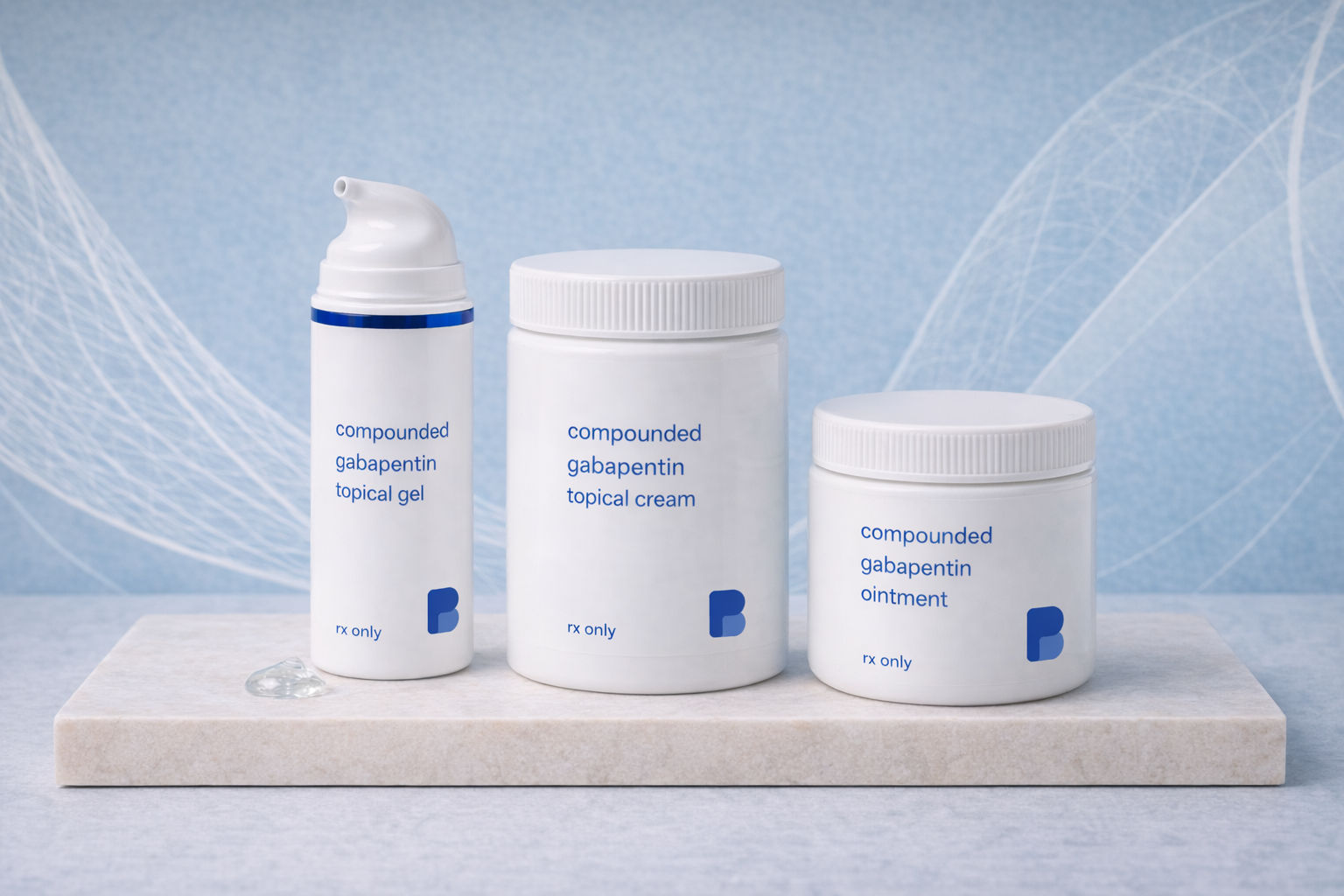
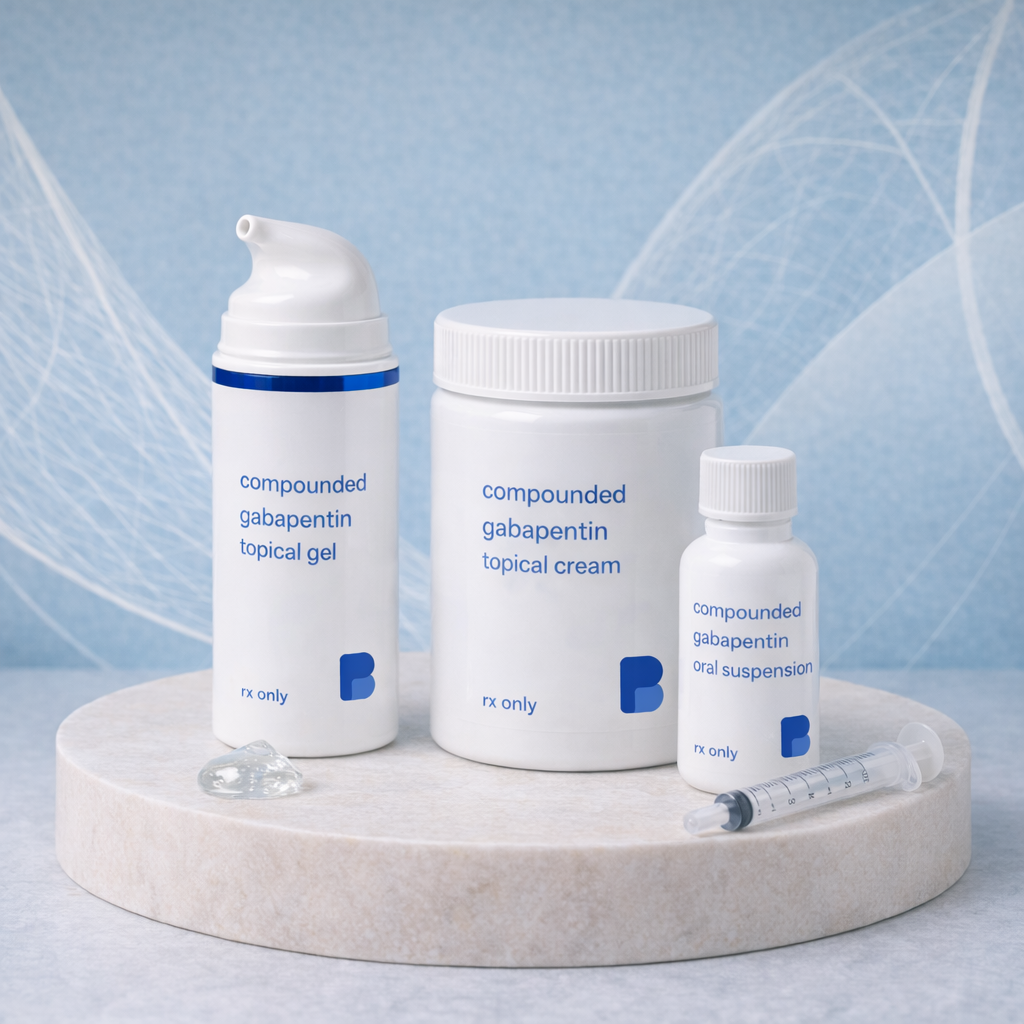
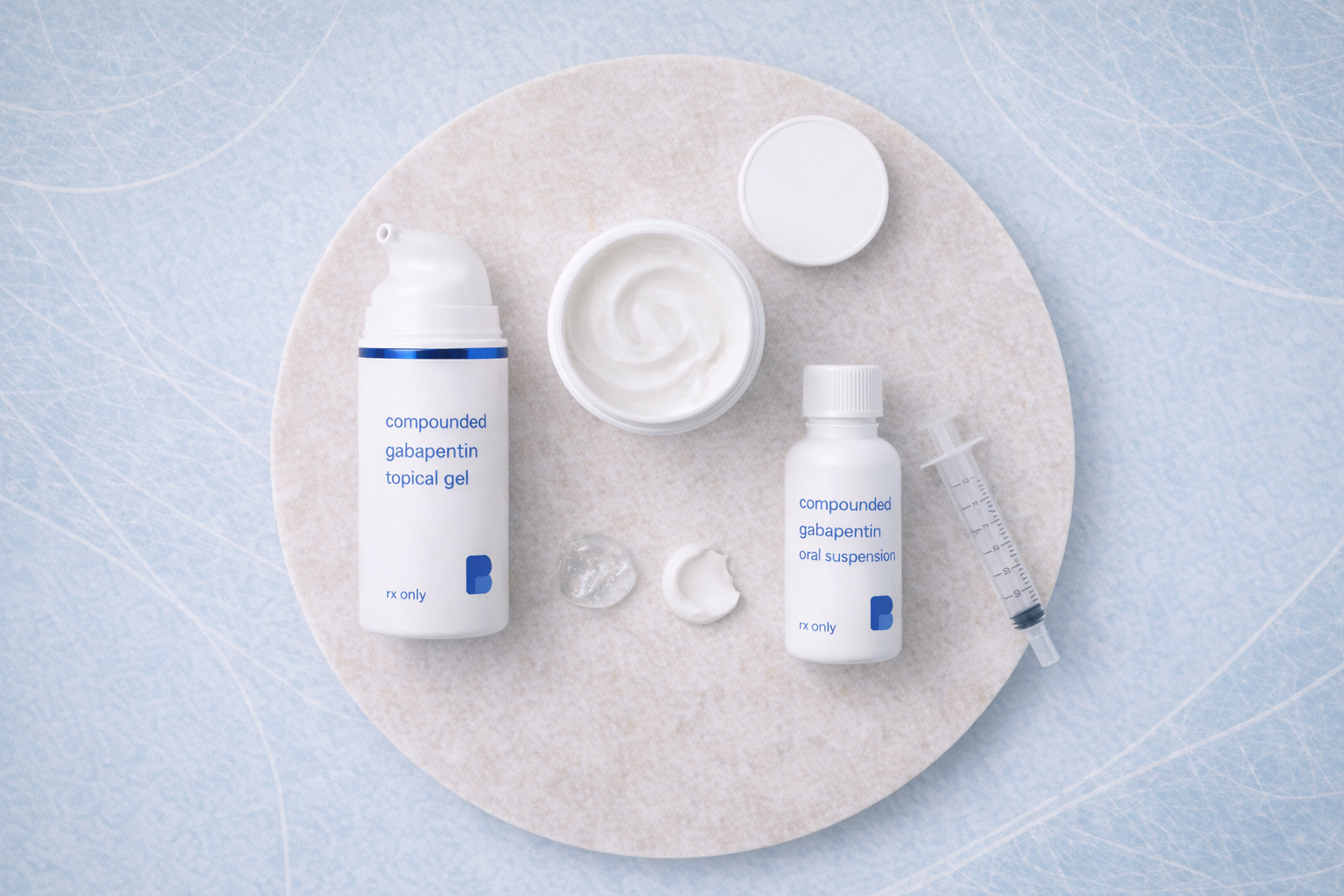
Compounded gabapentin topical gel, topical cream, and ointment on a marble plank

Your gabapentin prescription, filled at Bayview

Send a prescription for topical gabapentin, a gabapentin suspension, or small-strength capsules. A pharmacist reviews every order, and we ship to the states where we are licensed.

Fill my prescription
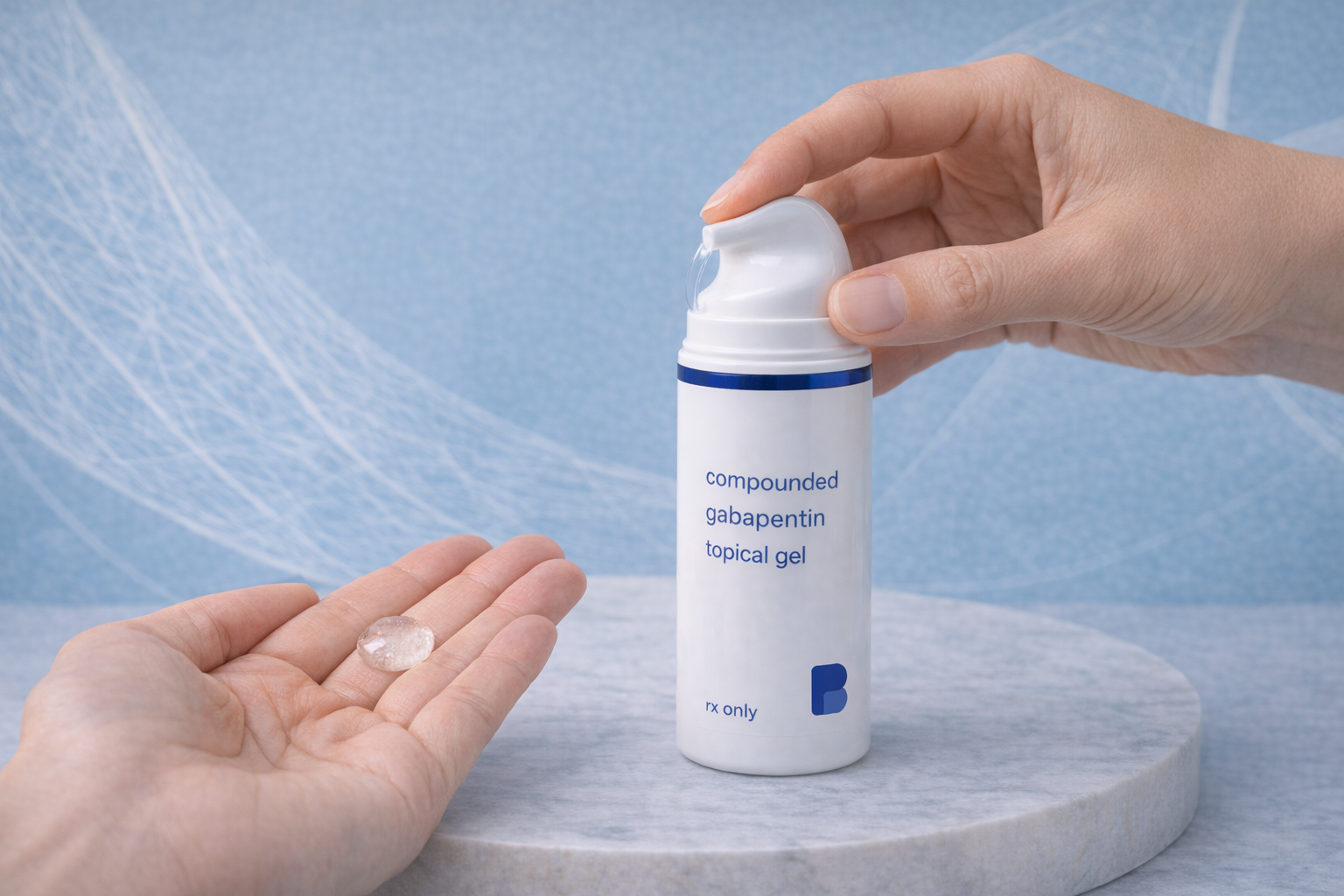
A hand pressing the pump of a compounded gabapentin topical gel bottle

Personalized compounding for patients who need more than a standard option.

"As a compounding pharmacy, we prepare each medication to a provider’s exact specifications. My focus, and my team’s focus, is quality, consistency, and close communication with prescribers so patients receive medication prepared for their individual needs."
Ryan Dyer, RPh
Owner and Chief Pharmacist, Bayview Pharmacy
Smiling man in blue scrubs with arms crossed and pen behind his ear
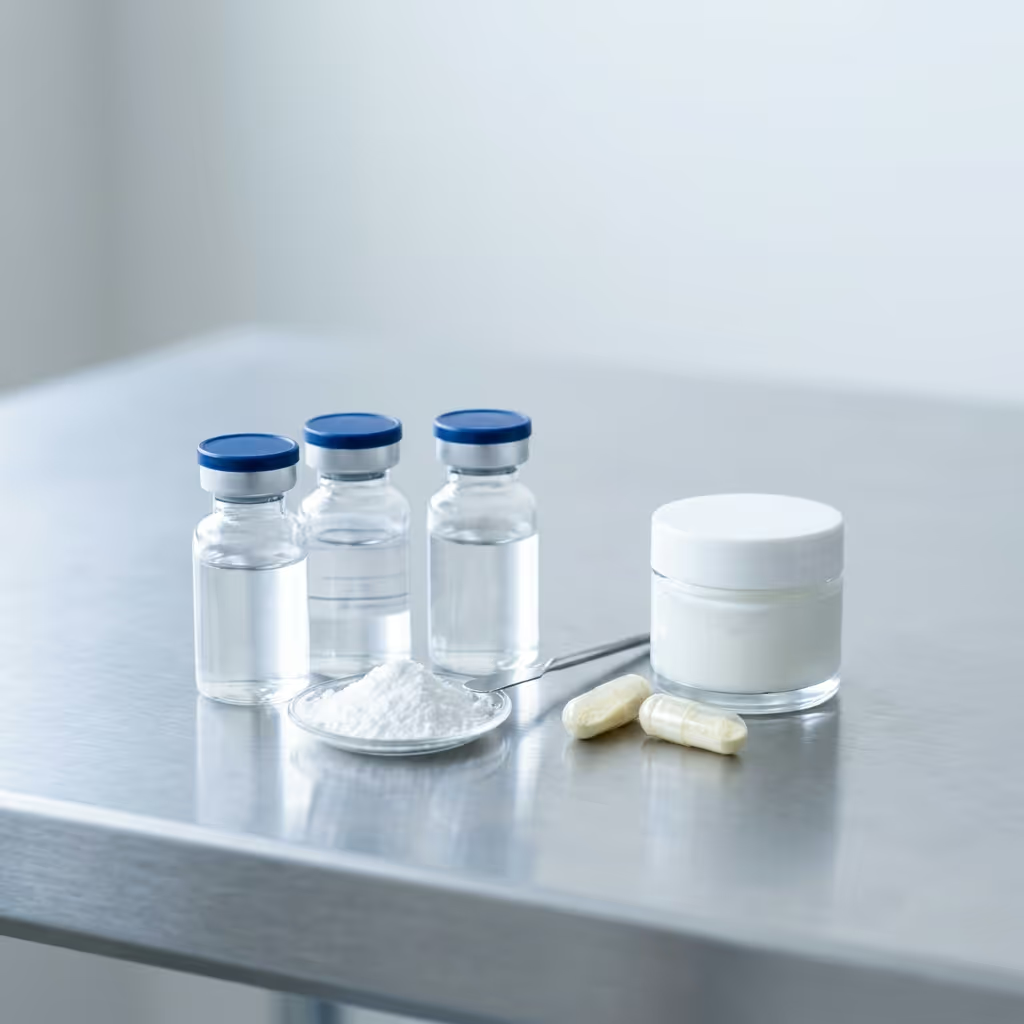
Three clear liquid vials, white powder on spoon, two capsules, and a cream jar on a metal surface.
QUALITY AND TESTING

Held to a higher standard

Every preparation is made under strict quality controls, and verified by a licensed pharmacist.
We use validated quality processes and third-party testing where appropriate
Sterile compounding in a dedicated USP <797> cleanroom
Non-sterile compounding under USP <795> and <800> standards
USP/NF-grade ingredients from reputable, vetted suppliers

Why patients choose Bayview

Made in our own pharmacy
Made to your prescription
Quality tested
Real pharmacist support
Trusted since 2006

Our formulations

These are the gabapentin preparations Bayview compounds on prescription. Gels use an anhydrous (water-free) base and come in a tube or a metered pump. Your provider selects the form, strength, and size.

FormStrengthsNotes
Topical gel (anhydrous base)Gabapentin 2%, 4%, 6%, or 10%30 to 90 g, tube or metered pump; 6% is the most common
Topical creamGabapentin 10% (other strengths on prescription)VersaBase cream in a metered pump
Topical ointmentGabapentin 6%Tube, 50 to 60 g
Combination topicalsAmitriptyline 2% / diclofenac 5% / gabapentin 5% gel; gabapentin 6% / lidocaine 5% / bupivacaine 2% gel; amitriptyline 2% / gabapentin 6% gel; gabapentin 6% / amitriptyline 2% / lidocaine 1% scalp solutionMore blends on the topical pain cream page
Vaginal or vulvar creamGabapentin 4% or 6%, alone or with lidocaine, amitriptyline, or baclofenSee vulvodynia vaginal creams
Oral suspension (anhydrous)Gabapentin in a custom concentration, for example 200 mg/mLDose measured in mL; 50 mg/mL only with a documented change
Oral capsulesGabapentin 25 or 50 mgSmaller than the 100 mg manufactured capsule; 100 or 300 mg only with a documented change
SuppositoriesBaclofen / gabapentin, for example 20 mg / 61.5 mg or 30 mg / 120 mgRectal or vaginal, as prescribed

Forms and strengths are listed for education only and are not a statement that any option is better, stronger, or more effective. Oral gabapentin at a manufactured strength is compounded only when the prescription documents a patient-specific change. A valid prescription is required, and your provider determines which preparation is appropriate for you. Compounded preparations are not FDA-approved.

Fill my prescription
Topical gel | Gabapentin 6% topical gel (anhydrous base) | 30 g | Apply a thin layer to the affected area(s) | | Three times daily as needed Topical gel | Gabapentin 10% topical gel (anhydrous base) | 60 g | Apply a thin layer to the affected area(s) | | Three times daily Topical gel | Gabapentin 4% topical gel (anhydrous base) | 30 g | Apply a thin layer to the affected area(s) | | Three times daily Topical ointment | Gabapentin 6% topical ointment | 60 g | Apply a thin layer to the affected area(s) | | Three times daily as needed Topical cream | Gabapentin 10% topical cream (VersaBase, pump) | 30 g | Apply topically to the affected area(s) | | Twice daily Combination gel | Amitriptyline 2% / Diclofenac 5% / Gabapentin 5% topical gel | 60 g | Apply 2 mL (2 pumps) to the affected area(s) | | Twice daily Combination gel | Gabapentin 6% / Lidocaine 5% / Bupivacaine 2% topical gel | 100 g | Apply to the affected area(s) | | Once daily as needed Oral capsule | Gabapentin 25 mg oral capsule | 100 capsules | Take 1 capsule by mouth | | Twice daily Oral capsule | Gabapentin 50 mg oral capsule | 100 capsules | Take 1 capsule by mouth | | Once daily
Gabapentin

For prescribers

How to e-prescribe this formulation

Bayview accepts e-prescriptions from any Surescripts-connected EHR. Compounded preparations have no NDC, so they will not appear in your drug search. Choose the preparation below and copy the prescription into your EHR.

Patient? Send these instructions to your doctor's office.
  1. Find Bayview in your EHR's pharmacy directory

    Search by NCPDP 4106882, or by name and ZIP: Bayview Pharmacy, Warwick, RI 02886. Save it as a favorite so you never search again.

  2. Choose the preparation

    Name the preparation exactly as listed under Our formulations above: each active ingredient and strength, the dose form, the quantity, and the directions.

  3. Enter it as a compound

    Use your system's compound, non-formulary, or free-text prescription entry and paste the details. If your EHR forces you to pick a listed drug, pick the closest entry for the active ingredient and put the full formula in the prescription body (the Sig or directions field).

  4. Send it

    Transmit from your EHR. Prefer not to e-prescribe? For non-controlled preparations we also accept fax to (401) 284-4506 and phoned orders at (401) 284-4505. Order forms are in the Prescribers: download order form menu above.

Do not use Notes to Pharmacy for the formula. Some EHRs keep that field internal and never transmit it. A prescription that arrives without the formula is delayed while we call your office.

Compounded preparations are not FDA-approved. A valid prescription is required. Questions: call (401) 284-4505. Full e-prescribing guide

Frequently asked questions

Is there an FDA-approved gabapentin cream?

No. The FDA-approved gabapentin products are capsules, tablets, and an oral solution, all taken by mouth. Gabapentin gel, cream, or ointment is made by a compounding pharmacy to a provider's prescription, and compounded preparations are not FDA-approved.

Does topical gabapentin work?

The evidence is limited. Small studies without a comparison group, mostly using a 6% gel, reported lower pain in people with nerve pain and vulvodynia. A randomized trial of compounded pain creams, including two that contained gabapentin, found they worked no better than a placebo cream. Your provider can help you decide whether it is worth trying.

Is gabapentin a controlled substance?

Not under federal law. A few states, including Kentucky, Tennessee, and Virginia, classify it as Schedule V. None of the states where Bayview is licensed schedules gabapentin, but Massachusetts, Connecticut, and New Jersey require pharmacies to report gabapentin prescriptions to the state prescription monitoring program.

Can you make gabapentin liquid?

Yes. Gabapentin is manufactured as a 50 mg per mL oral solution, so Bayview compounds an oral suspension in a different concentration, such as 200 mg per mL for smaller doses by volume, or at 50 mg per mL when your prescriber documents why you need a change from the manufactured product. If the gabapentin is for a dog or cat, see our veterinary pages.

What strengths of gabapentin cream or gel are available?

Bayview compounds topical gabapentin from 2% to 10%, in a gel, cream, or ointment. A 6% gel is the strength used most often in published studies and the most common at Bayview. Your provider chooses the strength, base, and container.

Can I stop taking gabapentin suddenly?

Do not stop oral gabapentin all at once. Stopping suddenly can cause withdrawal symptoms such as anxiety, trouble sleeping, nausea, pain, and sweating, and can bring on seizures in people with epilepsy. Your provider will lower the dose gradually, usually over at least a week. Ask your provider before stopping a topical gabapentin too.

Are compounded medications FDA-approved?

Compounded medications are not FDA-approved. They're prepared by a licensed pharmacy pursuant to a valid prescription for an individual patient, under USP standards. The FDA does not review compounded medications for safety or effectiveness.

Can you fill a prescription from my own provider?

Yes. Your provider can send your prescription to Bayview Pharmacy by e-prescribe, fax, or phone, or you can transfer an existing prescription from another pharmacy.

Do I need a prescription?

Yes. All of our medications require a valid prescription from a licensed provider. We're a dispensing and compounding pharmacy, so we don't provide consultations or write prescriptions. If you don't have one yet, you'll need to see a provider first.

How does shipping work?

Once your prescription is verified, we prepare your medication and ship it discreetly in plain packaging either via UPS or USPS. A pharmacy technician confirms the details with you before it goes out, and we're available if you have any questions.

How do providers send a prescription to Bayview?

Providers can submit a prescription three ways:

  • E-prescribe: Search Bayview Pharmacy, Warwick, RI (NCPDP 4106882) in your EHR. For compounds, use the compound, custom, or free-text option and include the full formulation, strength, quantity, refills, and directions.
  • Fax: Send a signed order to 401-284-4506 (alt. 401-210-2757) with patient and prescriber details, medication, quantity, refills, directions, signature, and date.
  • Phone: Call 401-284-4505 to submit, clarify, or coordinate refills.

A valid prescription is required, and compounded medications are not FDA-approved.

‍

How do refills and automatic refills work?

Refills are coordinated with your prescriber and your prescription. You can request a refill through our website or by calling us, and we'll handle the rest as long as you have refills remaining on a valid prescription. You can also opt into automatic refills on non-controlled substances, with no need to worry about running out of your medication. We can either ship it to you automatically, or ready for pickup.

What is compounding?

Compounding is the practice of preparing a medication tailored to an individual patient's prescription. Instead of a mass-produced product, a compounding pharmacy makes the medication to the specific strength, form, or combination your provider orders.

Examples on this site include medications compounded as liquids for people who cannot swallow pills, thyroid capsules made to a T3/T4 ratio no manufactured product offers, and all-purpose nipple ointment, which combines three actives that are not sold together commercially.

Shipping & Delivery

Every prescription ships directly to your door in discreet packaging. Refrigerated medications travel in insulated coolers with ice packs to stay cold in transit.

Delivery AreaStandard ShippingRefrigerated Shipping
Rhode Island, Massachusetts & Connecticut$9 USPS$20 UPS
New Hampshire, New Jersey, Pennsylvania, Maine & New York (limited basis)$15 UPS$40 UPS Next Day Air
Florida$15 UPS$80 UPS Next Day Air

Need it faster? Expedited UPS is $15 for Rhode Island, Massachusetts and Connecticut. Your pharmacist will let you know if your medication needs refrigerated shipping. Questions? Call us at (401) 284-4505.

References

Sources reviewed

The medical information on this page draws on the following sources, which are also linked where cited.

  1. U.S. Food and Drug Administration. Neurontin (gabapentin) capsules, tablets, and oral solution, prescribing information. Revised April 2025.
  2. MedlinePlus (NIH). Gabapentin.
  3. Hiom S, Khot S, Mogford S, et al. Topical delivery of gabapentin (Gaba Gel) for neuropathic pain: a 'proof of concept' study. Int J Pharm Pract. 2015;23(S2):46.
  4. Ergisi M, Law A, Chaudhari N, et al. Effectiveness of topical gabapentin in the treatment of vulvodynia: a narrative synthesis. Front Pain Res. 2023;4.
  5. Johns Hopkins Medicine. Research pushes back on benefits of compounded topical pain creams. February 2019. Reports the randomized trial by Brutcher RE, Kurihara C, Bicket MC, et al., Ann Intern Med. 2019 (doi:10.7326/M18-2736).
  6. U.S. Food and Drug Administration. Compounded Drug Products That Are Essentially Copies of a Commercially Available Drug Product Under Section 503A of the Federal Food, Drug, and Cosmetic Act. Guidance for industry, January 2018.
  7. Drugs.com. Is gabapentin a controlled substance / narcotic? Medically reviewed March 24, 2026.
  8. Massachusetts Department of Public Health. Pharmacy reporting and data submission (Prescription Monitoring Program).
  9. Connecticut Department of Consumer Protection. Gabapentin and naloxone added to CPMRS.
  10. New Jersey Division of Consumer Affairs. NJ Prescription Monitoring Program: reporting.

Important safety information

Important safety information

Compounded gabapentin gel, cream, ointment, suspension, and capsules are prescription compounded preparations and are not FDA-approved. Gabapentin is not a federally controlled substance, but some states regulate or track it. Use it only as prescribed and under the care of your provider.

Do not use gabapentin if you:

  • Are allergic to gabapentin or any other ingredient in your prescription.

Warnings and precautions:

  • Gabapentin can cause dizziness and sleepiness. Do not drive or use machinery until you know how it affects you, and avoid alcohol unless your provider says otherwise.
  • Gabapentin can slow or stop breathing, especially with opioids, sleep medicines, or other sedatives, or in people with lung disease. Tell your provider about every medication you take.
  • Like other anticonvulsants, gabapentin may cause new or worse depression or suicidal thoughts. Call your provider right away if your mood changes.
  • Do not stop oral gabapentin suddenly. Your provider will lower the dose gradually.
  • Tell your provider if you have kidney disease, are pregnant or breastfeeding, or have a history of substance misuse.
  • Apply topical gabapentin only to intact skin, wash your hands afterward, and keep it out of your eyes.

Common side effects:

  • Oral: dizziness, sleepiness, tiredness, unsteadiness, blurred or double vision, and swelling of the hands, feet, or legs.
  • Topical: redness or irritation where it is applied.

Get emergency care if you have:

  • Trouble breathing, bluish lips or skin, or extreme sleepiness. Call 911.
  • Swelling of the face, lips, tongue, or throat, a widespread rash, or fever with swollen glands.

Storage:

Store as directed on the label, away from heat and moisture, and out of the reach of children and pets. Do not use past the beyond-use date.

This is a compounded prescription medication and is not approved by the FDA. Use it only under the supervision of a licensed provider, exactly as prescribed. Do not adjust your dose without talking to your prescriber. Seek emergency care for any severe or unexpected reaction. This information is not complete; talk to your provider about your full medical history and all medications you take.

Ready to get started?

Send us your prescription and a Bayview pharmacist will take it from there.