



In Stock
Cyclobenzaprine Gel & Cream, Compounded | Bayview Pharmacy

Cyclobenzaprine Topical Gel & Cream

Smiling man in blue pharmacist scrubs with arms crossed and pen behind his ear.
Medically reviewed by Ryan Dyer, RPh
Last updated on
September 3, 2026
Starting at
$90
for
60 mL
Checkmark icon followed by text 'HSA/FSA Eligible'.
Start with a prescription
Licensed to fill prescriptions for patients in RI, MA, CT, NY, NJ, NH & FL
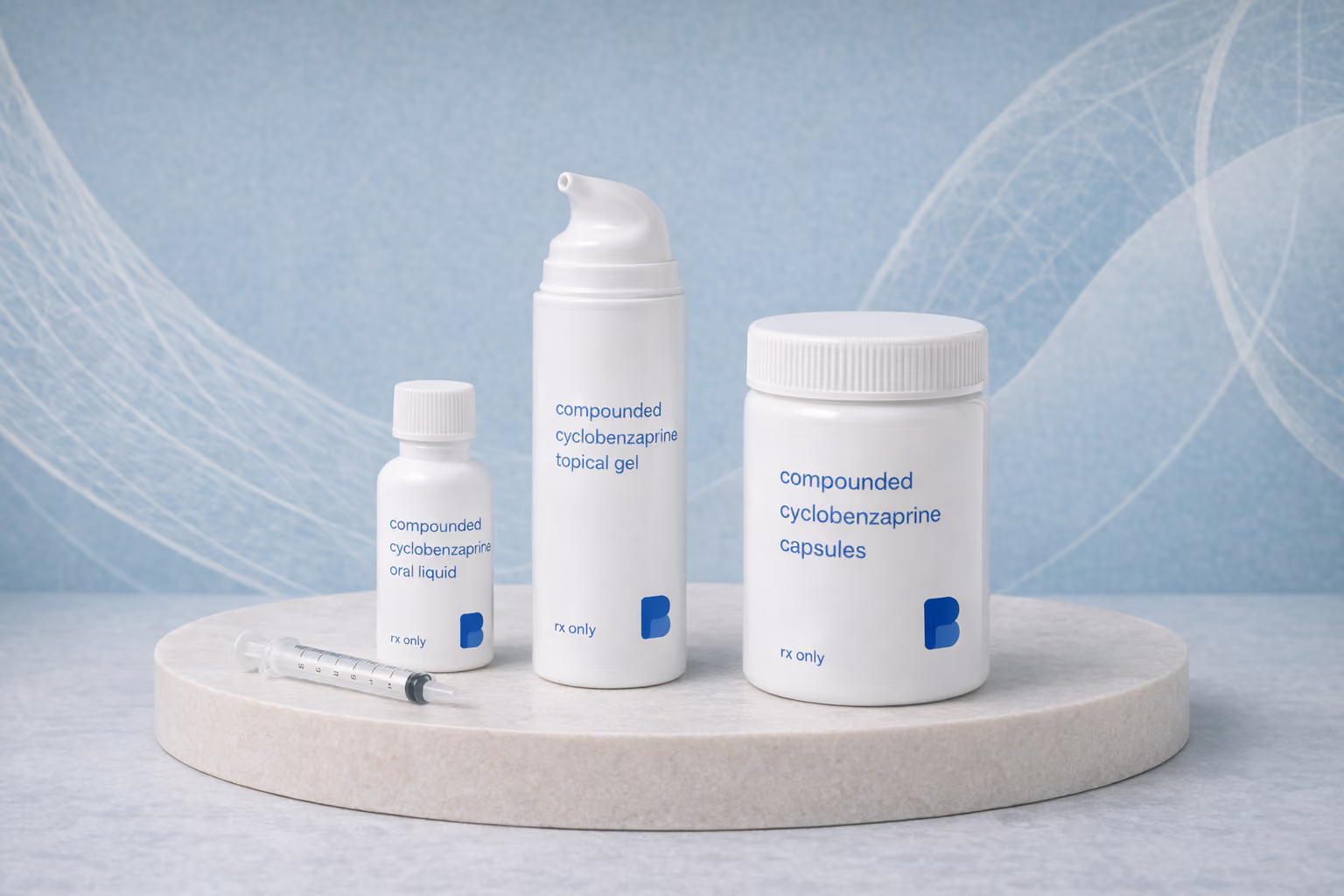
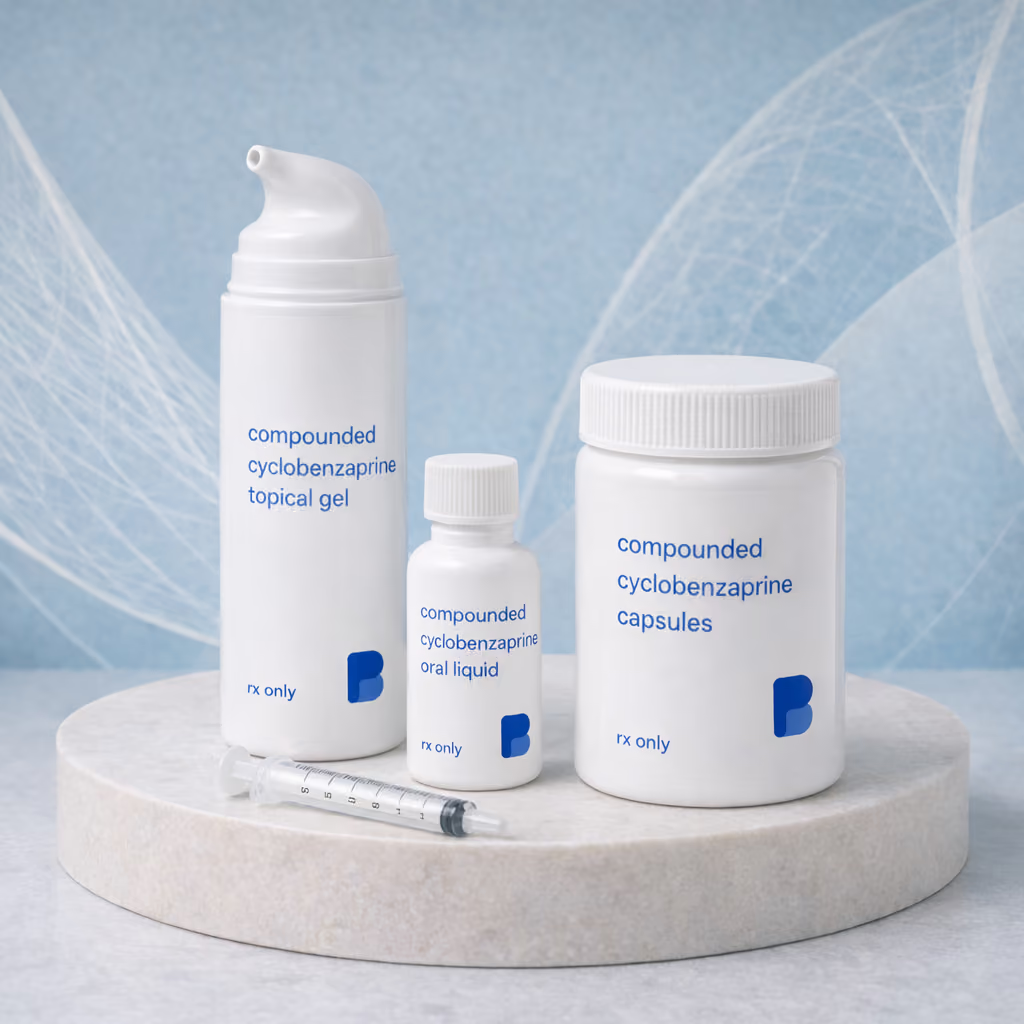
  • Applied where it hurts. A gel or cream rubbed into a tight muscle, jaw, neck, or back, for prescribers who want a route other than the tablet.
  • Strengths from 0.5% to 5%. Compounded in an anhydrous gel base, with a cream base on request.
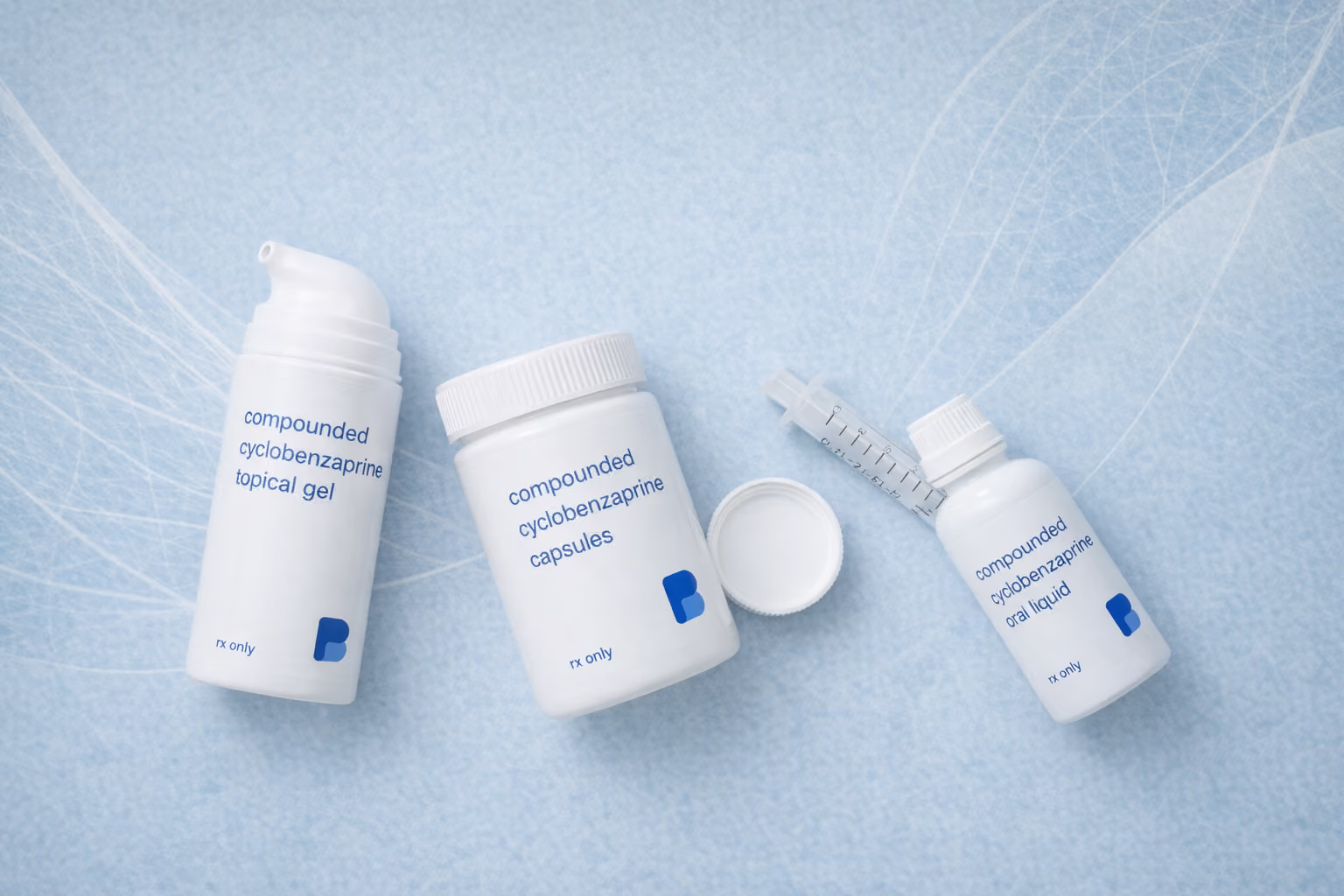
  • Oral forms the manufacturers do not make. A liquid measured by syringe, a troche, and custom-strength capsules.
  • Compounded to order. Prepared in our Rhode Island pharmacy for an individual prescription.

Cyclobenzaprine is a skeletal muscle relaxant that works in the brain stem rather than on the muscle itself. It is FDA-approved as 5, 7.5, and 10 mg tablets and as 15 and 30 mg extended-release capsules, for muscle spasm from acute, painful musculoskeletal conditions, alongside rest and physical therapy, for up to two or three weeks. No cyclobenzaprine gel, cream, liquid, or troche is manufactured, so when a prescriber orders one, Bayview compounds cyclobenzaprine hydrochloride in that form and strength. These preparations are not FDA-approved, their use is off-label, and a valid prescription is required.

Prescribers most often order the topical gel for a localized muscle spasm, a stiff neck or low back, jaw pain from a temporomandibular joint disorder, or a myofascial trigger point, when they want the medicine at the site rather than a tablet that makes the whole patient drowsy. The oral liquid and troche are for patients who cannot swallow tablets or need a dose the tablets do not come in. Your prescriber decides whether it is appropriate, in which form, and at what strength.

Bayview also compounds diclofenac gel, custom topical pain cream, and the full range of pain management preparations.

What is compounded cyclobenzaprine gel?

Cyclobenzaprine, the muscle relaxant sold as a tablet, prepared by Bayview as a topical gel (or a cream on request) in strengths from 0.5% to 5%, to a prescriber's order, so it can be rubbed into the painful muscle instead of swallowed. No cyclobenzaprine gel, cream, liquid, or troche is manufactured. The compounded forms are not FDA-approved, their use is off-label, and a prescription is required.

Why a gel instead of the tablet?

The tablet relaxes muscle by acting in the brain, and it makes most people drowsy and dry-mouthed. A prescriber may order the gel when the problem is one muscle, a stiff neck, a low back, or a sore jaw, and they want the medicine there rather than a sedating dose for the whole body. Some of a gel is still absorbed into the bloodstream, so it is not free of those effects, and whether it is right for you is your prescriber's call.

Trusted by 105,826 patients to date.
A group of faces of our past satisfied patients.
Compounded medications are prepared pursuant to a valid prescription for an individual patient and are not FDA-approved. This page is for educational purposes and is not medical advice.
**The FDA does not review or approve compounded medications for safety or effectiveness. A valid prescription from a licensed practitioner is required.
Important safety information →
Service availability

Prescription delivery in your state

Bayview Pharmacy currently serves eligible patients in six states. Check your state before getting started.

Where we currently serve

Select a highlighted state to check availability.

Currently licensed Licensed — non-controlled only Not currently licensed Your selection

Select a state on the map or use the state checker.

Do we serve your state?

Choose your state to confirm current service availability.

Thank you! Your submission has been received!
Oops! Something went wrong while submitting the form.
Currently licensed in
Start with a prescription

Send us your prescription

STEP
1
Have your provider e-prescribe to Bayview, fax it to us, or call it in directly to one of our pharmacists.
A thin blue light beam connecting two clear glass slabs on a white surface.

A pharmacist reviews it

STEP
2
We verify your prescription and prepare your medication to your provider's exact instructions.
Close-up of a white dial with blue measurement markings and a rotating knob.

We compound & ship

STEP
3
We prepare your medication and ship it discreetly to your door, with support when you need it.
Close-up of a gray box with a precise blue line running along its folded edges.

What is Cyclobenzaprine Topical Gel & Cream?

Cyclobenzaprine is a skeletal muscle relaxant that has been prescribed since 1977 for the muscle spasm that goes with a strained back or neck. Chemically it is a close relative of the tricyclic antidepressant amitriptyline, which explains both how it works, in the brain stem rather than in the muscle, and its best-known side effects, drowsiness and a dry mouth.

In the United States cyclobenzaprine is FDA-approved as 5, 7.5, and 10 mg tablets and as 15 and 30 mg extended-release capsules, for muscle spasm from acute, painful musculoskeletal conditions, as an adjunct to rest and physical therapy, for up to two or three weeks. No cyclobenzaprine gel, cream, oral liquid, or troche is manufactured, so when a prescriber orders one, Bayview compounds cyclobenzaprine hydrochloride in that form and strength. These compounded preparations are not FDA-approved, their use is off-label, and a valid prescription is required. Bayview compounds this as part of our pain management line.

Compounded cyclobenzaprine is not FDA-approved, and this use is off-label. It is prepared by a licensed pharmacy to a prescriber's order. The topical gel has not been tested in the kind of trials the tablets went through, and cyclobenzaprine applied to the skin can still reach the bloodstream, so the strength, the site, how often it is applied, and for how long are set by your prescriber and should be followed exactly.

How does it work?

Cyclobenzaprine does not act on the muscle fiber. It works in the brain stem, where it reduces the nerve activity that keeps a muscle in spasm, mainly by blocking serotonin 5-HT2 receptors and by effects on the motor pathways that run from the brain to the spinal cord (StatPearls, Cyclobenzaprine). Because its structure is so close to a tricyclic antidepressant, it also blocks acetylcholine and histamine receptors, which is where the dry mouth and drowsiness come from (DailyMed, cyclobenzaprine tablets label). Applied as a gel, some of the dose is taken up by the skin and underlying tissue and some enters the circulation; how much depends on the strength, the area treated, and the base.

What is it used for?

The approved use of the tablets is muscle spasm from an acute, painful musculoskeletal condition, a strained back or neck for example, together with rest and physical therapy, for a short course of up to two or three weeks (DailyMed, cyclobenzaprine tablets label). Prescribers also use cyclobenzaprine off-label for the sleep disturbance of fibromyalgia and for jaw pain from temporomandibular joint disorders (StatPearls, Cyclobenzaprine). The compounded gel is ordered for the same kinds of problems when a prescriber wants the medicine at the painful muscle instead of a tablet that sedates the whole patient: a localized spasm, a stiff neck or low back, a myofascial trigger point, or a tender jaw. The evidence here is thin. In a randomized trial of 399 patients, a compounded cream for muscle and joint pain that combined cyclobenzaprine with ketoprofen, baclofen, and lidocaine was not better than a placebo cream at one month (Brutcher et al., 2019), and no trial of a single-agent cyclobenzaprine gel was identified. Your prescriber weighs that when deciding whether it fits your situation.

Gel, cream, or by mouth?

The gel is prepared in an anhydrous base in a metered pump, so each press delivers about the same amount, and it is rubbed into the skin over the painful muscle; a cream base can be prepared on request for patients who prefer it. The oral liquid is measured with a syringe and is for people who cannot swallow tablets or need a dose smaller than the 5 mg tablet; the troche dissolves in the mouth; custom capsules are for a strength or an ingredient list the manufactured tablets do not offer. Your prescriber selects the form and strength; see the strengths section for what Bayview compounds.

How is it used?

Follow the directions on your label exactly. For the gel, apply the number of pumps your prescriber named to clean, dry, unbroken skin over the painful muscle, rub it in, and wash your hands afterward; keep it away from your eyes and mouth, and do not cover the area unless you were told to. Use it no more often, and for no longer, than the label says; the tablets are approved for two or three weeks, and a gel is not a reason to extend that. Do not drive or do anything hazardous until you know whether it makes you drowsy, and do not drink alcohol while using it (MedlinePlus, Cyclobenzaprine). If you miss a dose of the oral forms, take it when you remember unless the next dose is near, and never double up.

Side effects & safety

Drowsiness and dry mouth are the most common effects. In the tablet trials, drowsiness was reported by 29% of patients on 5 mg and 38% on 10 mg, against 10% on placebo, and dry mouth by 21% and 32%, against 7% (DailyMed, cyclobenzaprine tablets label). Dizziness, fatigue, headache, nausea, and constipation follow. The gel is expected to produce less of these than a tablet, because less reaches the bloodstream, but it can still cause them, and it can redden or itch the skin where it is applied.

The heart, serotonin, and older adults. Because cyclobenzaprine is a tricyclic-type drug, the labeling contraindicates it with a monoamine oxidase inhibitor taken within the past 14 days, during recovery from a heart attack, and in patients with arrhythmias, heart block, heart failure, or an overactive thyroid; it warns of serotonin syndrome when combined with antidepressants, tramadol, meperidine, bupropion, or verapamil, of additive sedation with alcohol and other depressants, and of anticholinergic effects such as urinary retention and worsened glaucoma (DailyMed, cyclobenzaprine tablets label). Older adults are more sensitive to its sedation and confusion and it is on the list of medicines generally avoided after 65 (StatPearls, Cyclobenzaprine). In overdose the picture is drowsiness, a fast heartbeat, tremor, agitation, and, rarely, seizures or dangerous heart rhythms, which needs emergency care (DailyMed, cyclobenzaprine tablets label).

Who should not use it?

Do not use cyclobenzaprine if you have taken an MAOI in the past 14 days, are recovering from a heart attack, have an irregular heartbeat, heart block, or heart failure, have hyperthyroidism, or are allergic to it. Talk with your prescriber before using it if you have liver disease, glaucoma, an enlarged prostate or trouble urinating, or if you take an antidepressant, tramadol, or another sedating medicine, or if you are 65 or older. Tell your prescriber if you are pregnant or breastfeeding: the amounts in breast milk appear to be very small and two breastfed infants tolerated it well, but the infant should be watched for drowsiness (LactMed, Cyclobenzaprine). Safety in children under 15 has not been established (DailyMed, cyclobenzaprine tablets label).

How should it be stored?

Store as directed on your label, at room temperature away from heat, light, and moisture, with the pump closed, and keep it out of the reach of children and pets. Do not use it after the beyond-use date, and dispose of unused medication as directed.

Why is this compounded?

The manufactured cyclobenzaprine products are tablets and extended-release capsules. When a prescriber wants the medicine applied to one muscle instead of swallowed, a liquid dose for a patient who cannot take tablets, a troche, or a strength the tablets do not come in, compounding is the only way to prepare it. As a 503A compounding pharmacy, Bayview prepares each order in small batches under USP standards, pursuant to a prescription for an individual patient. We do not supply it as clinic or office stock, that is the role of a 503B outsourcing facility, which Bayview is not. Compounded preparations are not FDA-approved. Related preparations include Topical Pain Cream, Diclofenac Gel, and Lidocaine Cream & Ointment. The full list is in our compounded medications catalog.

Clinical details for prescribers

Regulatory status. Cyclobenzaprine hydrochloride, a centrally acting skeletal muscle relaxant structurally related to the tricyclic antidepressants. FDA-approved presentations: 5, 7.5, and 10 mg immediate-release tablets (5 mg three times daily, may be increased to 10 mg three times daily; maximum 30 mg/day) and 15 and 30 mg extended-release capsules, indicated as an adjunct to rest and physical therapy for muscle spasm associated with acute, painful musculoskeletal conditions, for periods of up to 2 or 3 weeks. Compounded topical gel and cream, oral liquid, troches, and capsules are 503A preparations, not FDA-approved, and off-label. Not a controlled substance.

Formulation & directions. Bayview compounds cyclobenzaprine HCl as 0.5%, 1%, 2% (20 mg/g), and 5% topical gel in an anhydrous gel base (metered pump, 30 to 100 g), the same strengths in a cream base on request, 1 and 2 mg/mL oral liquid, 10 mg troches, and custom-strength capsules. Typical directions: gel, 1 to 2 pumps to the affected muscle two to three times daily for up to 14 days, not on broken skin; oral liquid, 2.5 to 5 mg three times daily. Specify a duration on every prescription. Combination gels (ketoprofen, diclofenac, baclofen, gabapentin, lidocaine) are separate preparations ordered on the topical pain cream form.

Safety & counseling:

  • Contraindications: MAOI within 14 days, acute recovery phase of MI, arrhythmias, heart block or conduction disturbances, congestive heart failure, hyperthyroidism, hypersensitivity. Warnings: serotonin syndrome with SSRIs, SNRIs, TCAs, tramadol, meperidine, bupropion, verapamil; tricyclic-like cardiac effects; additive CNS depression with alcohol and sedatives; anticholinergic effects (urinary retention, angle-closure glaucoma) (DailyMed, cyclobenzaprine tablets label).
  • Adverse reactions in the tablet trials: drowsiness 29% (5 mg) and 38% (10 mg) vs 10% placebo; dry mouth 21% and 32% vs 7%; fatigue 6% vs 3%. Systemic exposure from a topical gel is uncounted but not zero; counsel on driving and alcohol regardless of route (DailyMed, cyclobenzaprine tablets label).
  • Beers criteria: avoid in patients 65 and older (sedation, confusion, falls). Hepatic impairment: start 5 mg and titrate in mild impairment; not recommended in moderate or severe. Avoid in advanced CKD (StatPearls, Cyclobenzaprine).
  • Evidence for topical use: in a randomized, placebo-controlled trial of 399 patients with localized chronic pain, the nociceptive-pain cream (ketoprofen 10%, baclofen 2%, cyclobenzaprine 2%, lidocaine 2%) did not reduce average pain more than placebo at one month (-0.3 points, 95% CI -0.9 to 0.2); no trial of single-agent topical cyclobenzaprine was identified. Frame expectations accordingly (Brutcher et al., 2019).
  • Pregnancy: animal data reassuring, human data limited. Lactation: milk levels appear very small; monitor the infant for drowsiness (LactMed, Cyclobenzaprine). Pediatric safety and effectiveness not established under 15 years.

Non-controlled; ship to patient or office per the order form. Licensed to dispense in RI, MA, CT, NY, NJ, NH, and FL. Background: DailyMed, cyclobenzaprine tablets label; StatPearls, Cyclobenzaprine; Brutcher et al., 2019; LactMed, Cyclobenzaprine. Account setup, licensing, and ordering are covered on our for providers page.

This is a prescription compounded medication and is not FDA-approved; its use is off-label. This information is educational and is not medical advice. Your prescriber determines whether it is appropriate and sets the formulation and directions.

References

  1. DailyMed: cyclobenzaprine hydrochloride tablets prescribing information
  2. NCBI Bookshelf: StatPearls, Cyclobenzaprine
  3. Brutcher et al., Annals of Internal Medicine 2019: randomized trial of compounded topical pain creams
  4. MedlinePlus: Cyclobenzaprine
  5. NCBI Bookshelf: LactMed, Cyclobenzaprine

Reviewed by Ryan Dyer, RPh, pharmacist at Bayview Pharmacy. Last reviewed September 3, 2026. Bayview does not provide consultations and does not decide whether a medication is right for you. Your prescriber makes that call.

In Stock

On this page

A muscle relaxant applied to the muscle, compounded to order

Cyclobenzaprine compounded as a topical gel or cream, from 0.5% to 5%, or as an oral liquid, troche, or custom capsule, to your prescriber's order, for patients the tablet does not suit.

Start with a prescription

Four gel strengths, none of them manufactured

0.5%, 1%, 2%, and 5% cyclobenzaprine gel in an anhydrous base and a metered pump, with a cream base on request, dispensed in 30 to 100 g and shipped to your patient or your office.

View our formulas

Personalized compounding for patients who need more than a standard option.

"As a compounding pharmacy, we prepare each medication to a provider’s exact specifications. My focus, and my team’s focus, is quality, consistency, and close communication with prescribers so patients receive medication prepared for their individual needs."
Ryan Dyer, RPh
Owner and Chief Pharmacist, Bayview Pharmacy
Smiling man in blue scrubs with arms crossed and pen behind his ear
Three clear liquid vials, white powder on spoon, two capsules, and a cream jar on a metal surface.
QUALITY AND TESTING

Held to a higher standard

Every preparation is made under strict quality controls, and verified by a licensed pharmacist.
We use validated quality processes and third-party testing where appropriate
Sterile compounding in a dedicated USP <797> cleanroom
Non-sterile compounding under USP <795> and <800> standards
USP/NF-grade ingredients from reputable, vetted suppliers

Why patients choose Bayview

Made in our own pharmacy
Made to your prescription
Quality tested
Real pharmacist support
Trusted since 2006

Our formulations

Bayview compounds cyclobenzaprine hydrochloride in the form and strength your prescriber orders. The topical gel is prepared in an anhydrous gel base and dispensed in a metered pump so each press delivers about the same amount; it is rubbed into the skin over the painful muscle. The oral liquid, troche, and capsules are taken by mouth in place of the manufactured tablet. The manufactured products are the 5, 7.5, and 10 mg tablets and the 15 and 30 mg extended-release capsules; they are not what this page describes.

Strength Form Commonly ordered for Sizes
Cyclobenzaprine HCl 0.5% and 1%Topical gel (pump)The lower strengths; a common starting point for a localized spasm or a tender jaw30 g, 60 g
Cyclobenzaprine HCl 2% (20 mg/g)Topical gel (pump)The strength Bayview dispenses most often, for neck, back, and myofascial pain60 g, 100 g
Cyclobenzaprine HCl 5%Topical or transdermal gel (pump)The highest single-agent strength; ordered when a larger amount per application is wanted60 g, 100 g
Cyclobenzaprine HCl 0.5% to 5%Topical creamThe same strengths in a cream base, on request30 g, 60 g
Cyclobenzaprine HCl 1 mg/mL and 2 mg/mLOral liquid (oral syringe)Measured doses for patients who cannot swallow tablets or need less than 5 mg60 mL, 120 mL
Cyclobenzaprine HCl 10 mgOral trocheDissolves in the mouth; an option when a tablet cannot be taken30 troches
Cyclobenzaprine HCl custom strengthOral capsulesCapsules in a strength or without an excipient the manufactured tablets do not offer30 capsules
Custom strengthAs orderedStrength, base, and form set by your prescriber, alone or with other ingredientsAs ordered

Strengths are listed for education only and are not a statement of effectiveness. Strength, directions, and duration are prescriber-directed, and a valid prescription is required. Compounded preparations are not FDA-approved, and this use is off-label.

Start with a prescription

Frequently asked questions

What is compounded cyclobenzaprine gel?

Cyclobenzaprine, the muscle relaxant sold as a tablet, prepared by Bayview as a topical gel (or a cream on request) in strengths from 0.5% to 5%, to a prescriber's order, so it can be rubbed into the painful muscle instead of swallowed. No cyclobenzaprine gel, cream, liquid, or troche is manufactured. The compounded forms are not FDA-approved, their use is off-label, and a prescription is required.

Why a gel instead of the tablet?

The tablet relaxes muscle by acting in the brain, and it makes most people drowsy and dry-mouthed. A prescriber may order the gel when the problem is one muscle, a stiff neck, a low back, or a sore jaw, and they want the medicine there rather than a sedating dose for the whole body. Some of a gel is still absorbed into the bloodstream, so it is not free of those effects, and whether it is right for you is your prescriber's call.

Does the gel work?

That has not been settled. The tablets were tested in trials for muscle spasm; the gel has not been. The best evidence is a randomized trial of 399 patients in which a compounded cream combining cyclobenzaprine with ketoprofen, baclofen, and lidocaine did no better than a placebo cream after a month, and no trial of cyclobenzaprine gel on its own was found. Bayview prepares it to your prescriber's order; your prescriber weighs that evidence for you.

How do I apply it?

Apply the number of pumps on your label to clean, dry, unbroken skin over the painful muscle, rub it in, and wash your hands. Keep it away from your eyes and mouth, do not cover the area unless told to, and use it no more often, or for longer, than your prescriber directed; the tablets are approved for two or three weeks and the gel follows the same idea. Do not drive until you know whether it makes you drowsy, and skip alcohol while you use it.

What are the side effects?

Drowsiness and dry mouth are the most common with cyclobenzaprine in any form, then dizziness, tiredness, headache, nausea, and constipation. The gel usually produces less of these than a tablet but can still cause them, and it can leave the skin red or itchy where it is applied. Get medical care for a fast or irregular heartbeat, chest pain, fainting, agitation or confusion, fever with stiff or twitching muscles, or hives and swelling.

Who should not use cyclobenzaprine?

Anyone who has taken an MAOI in the past 14 days, is recovering from a heart attack, has an irregular heartbeat, heart block, or heart failure, has an overactive thyroid, or is allergic to it. Talk with your prescriber first if you have liver disease, glaucoma, or trouble urinating, take an antidepressant, tramadol, or other sedating medicines, are 65 or older, or are pregnant or breastfeeding. It is not established as safe in children under 15.

Do I need a prescription?

Yes. All of our medications require a valid prescription from a licensed provider. We're a dispensing and compounding pharmacy, so we don't provide consultations or write prescriptions. If you don't have one yet, you'll need to find and see a provider first.

What is compounding?

Compounding is the practice of preparing a medication tailored to an individual patient's prescription. Instead of a mass-produced product, a compounding pharmacy makes the medication to the specific strength, form, or combination your provider orders.

Examples on this site include medications compounded as liquids for people who cannot swallow pills, thyroid capsules made to a T3/T4 ratio no manufactured product offers, and all-purpose nipple ointment, which combines three actives that are not sold together commercially.

Are compounded medications FDA-approved?

Compounded medications are not FDA-approved. They're prepared by a licensed pharmacy pursuant to a valid prescription for an individual patient, under USP standards. The FDA does not review compounded medications for safety or effectiveness.

How do providers send a prescription to Bayview?

Providers can submit a prescription three ways:

  • E-prescribe: Search Bayview Pharmacy, Warwick, RI (NCPDP 4106882) in your EHR. For compounds, use the compound, custom, or free-text option and include the full formulation, strength, quantity, refills, and directions.
  • Fax: Send a signed order to 401-284-4506 (alt. 401-210-2757) with patient and prescriber details, medication, quantity, refills, directions, signature, and date.
  • Phone: Call 401-284-4505 to submit, clarify, or coordinate refills.

A valid prescription is required, and compounded medications are not FDA-approved.

Can you fill a prescription from my own provider?

Yes. Your provider can send your prescription to Bayview Pharmacy by e-prescribe, fax, or phone, or you can transfer an existing prescription from another pharmacy.

How does shipping work?

Once your prescription is verified, we prepare your medication and ship it discreetly in plain packaging either via UPS or USPS. A pharmacy technician confirms the details with you before it goes out, and we're available if you have any questions.

How do refills and automatic refills work?

Refills are coordinated with your prescriber and your prescription. You can request a refill through our website or by calling us, and we'll handle the rest as long as you have refills remaining on a valid prescription. You can also opt into automatic refills on non-controlled substances, with no need to worry about running out of your medication. We can either ship it to you automatically, or ready for pickup.

Shipping & Delivery

Every prescription ships directly to your door in discreet packaging. Refrigerated medications travel in insulated coolers with ice packs to stay cold in transit.

Delivery AreaStandard ShippingRefrigerated Shipping
Rhode Island, Massachusetts & Connecticut$9 USPS$20 UPS
New Hampshire, New Jersey & New York$15 UPS$40 UPS Next Day Air
Florida$15 UPS$80 UPS Next Day Air

Need it faster? Expedited UPS is $15 for Rhode Island, Massachusetts and Connecticut. Your pharmacist will let you know if your medication needs refrigerated shipping. Questions? Call us at (401) 284-4505.

References

Sources reviewed

The medical information on this page draws on the following sources, which are also linked where cited.

  1. DailyMed, US National Library of Medicine. Cyclobenzaprine Hydrochloride Tablets, USP: Prescribing Information.
  2. Khan I, Kahwaji CI. StatPearls (NCBI Bookshelf). Cyclobenzaprine.
  3. Brutcher RE, Kurihara C, Bicket MC, et al. Annals of Internal Medicine 2019;170(5):309-318. Compounded topical pain creams to treat localized chronic pain: a randomized controlled trial.
  4. MedlinePlus, US National Library of Medicine. Cyclobenzaprine.
  5. Drugs and Lactation Database (LactMed), NCBI Bookshelf. Cyclobenzaprine.

Important safety information

Important safety information

Compounded cyclobenzaprine gel, cream, oral liquid, troches, and capsules are prescription compounded medications and are not FDA-approved. Cyclobenzaprine is related to the tricyclic antidepressants and can be absorbed through the skin, so the warnings for the tablets apply to every form. Use it exactly as prescribed, for no longer than your prescriber directed, and never share it.

Do not use cyclobenzaprine if you:

  • Take a monoamine oxidase inhibitor (MAOI) or have taken one in the past 14 days.
  • Are recovering from a recent heart attack, or have an irregular heartbeat, heart block or another conduction problem, or heart failure.
  • Have an overactive thyroid (hyperthyroidism).
  • Are allergic to cyclobenzaprine or to any ingredient in the preparation.

Warnings and precautions:

  • Drowsiness. Cyclobenzaprine commonly causes drowsiness and dizziness. Do not drive, operate machinery, or do anything hazardous until you know how it affects you, and avoid alcohol and other sedating medicines, which add to the effect.
  • Serotonin syndrome. Agitation, hallucinations, fast heartbeat, fever, sweating, muscle twitching, or stiffness, especially when cyclobenzaprine is combined with an antidepressant (SSRI, SNRI, tricyclic), tramadol, meperidine, bupropion, or verapamil, needs medical care. Tell your prescriber about every medicine you take.
  • Anticholinergic effects. Dry mouth, blurred vision, constipation, and difficulty urinating. Tell your prescriber if you have glaucoma, an enlarged prostate, or trouble urinating.
  • Older adults. Cyclobenzaprine is generally not recommended for people 65 and older because of drowsiness, confusion, and falls; if it is used, the lowest strength is usual.
  • Liver disease. The tablets are started at the lowest dose in mild liver impairment and are not recommended in moderate or severe impairment. Tell your prescriber about any liver condition.
  • Short courses. The manufactured tablets are approved for up to two or three weeks; a topical gel is not a reason to use the medicine for longer than your prescriber intended.
  • Skin. Apply the gel or cream only to intact skin, not to broken, irritated, or infected skin, and not near the eyes or mouth. Wash your hands after applying. Redness or itching at the site can occur.
  • Pregnancy, breastfeeding, and children. Tell your prescriber if you are pregnant or breastfeeding; small amounts pass into milk. Safety in children under 15 has not been established.

Common side effects:

  • Drowsiness and dry mouth are the most common, then dizziness, fatigue, headache, nausea, and constipation. With the gel, mild redness or itching where it is applied.

Get medical care if you have:

  • A fast or irregular heartbeat, chest pain, or fainting.
  • Agitation, confusion, hallucinations, fever with stiff or twitching muscles.
  • Hives, swelling of the face or throat, or trouble breathing.
  • Seizure, or extreme drowsiness that you cannot be woken from (call emergency services).

Storage:

Store as directed on your label, at room temperature away from heat, light, and moisture, with the pump closed, and keep it out of the reach of children and pets. Do not use after the beyond-use date, and discard unused medication as directed by your pharmacist.

This is a compounded prescription medication and is not approved by the FDA. Use it only under the supervision of a licensed provider, exactly as prescribed. Do not adjust your dose without talking to your prescriber. Seek emergency care for any severe or unexpected reaction. This information is not complete; talk to your provider about your full medical history and all medications you take.

Ready to get started?

Send us your prescription and a Bayview pharmacist will take it from there.