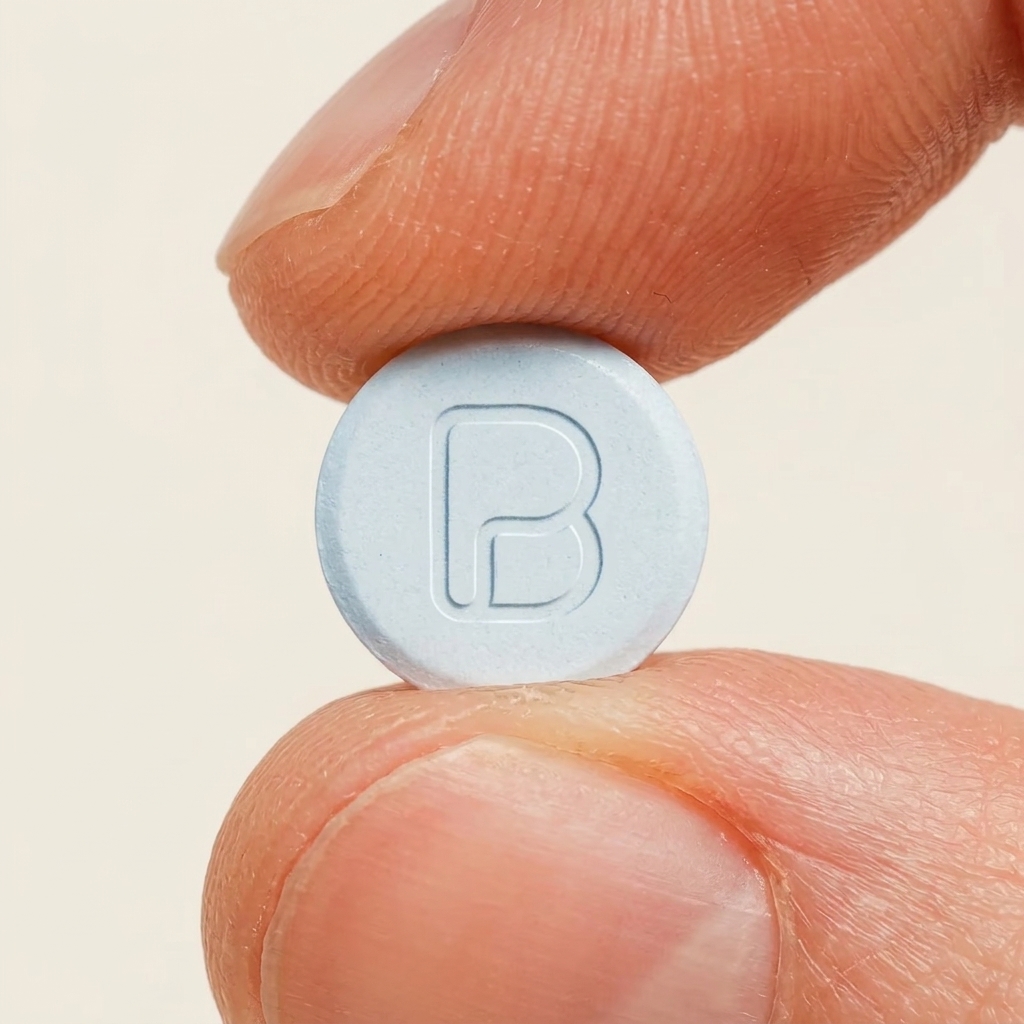

Topical and oral are two routes for the same drug, and the route changes where most of the medication ends up. A capsule is absorbed in the gut, passes through the liver, and circulates through the whole body before any of it reaches a painful knee. The same drug rubbed into the skin over that knee concentrates in the tissue underneath, and far less of it reaches the bloodstream.
Diclofenac sodium topical gel and oral capsules is the clearest example of the two routes side by side, because Bayview compounds the same drug as a gel for the skin, as an oral liquid or capsule, and as a suppository. This post explains what actually changes when a medication goes on the skin instead of in the mouth, and what does not change. Which route is appropriate, at what strength, and for how long are decisions your prescriber makes, not decisions a pharmacy or a web page can make for you.
What changes in topical vs oral absorption?
The topical vs oral medication comparison starts with where the drug goes first. Swallowed medication has to survive the stomach, cross the lining of the intestine, and travel through the liver before it enters general circulation. Medication applied to the skin takes a different path: part of it stays in the skin, fat, muscle, and joint capsule directly underneath, and part of it crosses into the bloodstream from there.
For diclofenac, the prescribing information for the approved topical products describes systemic exposure from skin application as a small fraction of the exposure from an equivalent oral dose (PENNSAID prescribing information, DailyMed). That is also why topical labels still carry the NSAID class warnings: lower is not zero.
The "lower than oral" row describes diclofenac applied to the skin, as reported in the prescribing information for the approved topical products. How much of any topical drug crosses depends on the concentration, the base, the surface area treated, how often it is applied, whether the area is covered or warmed, and the individual. Sublingual and buccal forms, covered in our post on compounding sublingual medications, bypass the liver on the way in but are still meant to reach the whole body.
What is first pass metabolism?
First pass metabolism is the share of a swallowed dose that the liver changes or removes before the drug reaches general circulation. Blood leaving the intestine goes to the liver first, so a drug taken by mouth is processed once on the way in. For some drugs that loss is small. For others it is large enough that the oral dose has to be much bigger than the amount that finally circulates.

Skin application largely sidesteps that first pass, but this is not automatically an advantage. It is a trade. A topical preparation reaches the tissue it is rubbed into and a limited depth below it, so it is only considered for problems close enough to the surface. Depth is a real limit: a hip joint sits much further from the skin than a knuckle does.
Is topical diclofenac better than pills?
That question does not have one answer, and the honest version is narrower than the question. A Cochrane systematic review of topical NSAIDs for chronic musculoskeletal pain in adults reported that topical diclofenac provided meaningful pain relief for a substantial minority of people with hand and knee osteoarthritis, with results comparable to oral NSAIDs and fewer systemic side effects (Derry and colleagues, Cochrane Database of Systematic Reviews, 2016). The same review noted that most of the trial evidence sits with the approved concentrations.
That matters for anything compounded. Diclofenac sodium 1% gel is FDA-approved and sold over the counter, a 1.5% and 2% topical solution and a 1.3% patch are FDA-approved by prescription, and oral tablets are FDA-approved. There is no FDA-approved topical diclofenac above 2% and no FDA-approved diclofenac combination gel, so those preparations are compounded and prescribed off-label, and they have not been compared to the approved strengths in that kind of trial.
Compounded topical pain preparations have also been tested and come up short. In a randomized trial of 399 patients with localized chronic pain, a compounded cream combining ketoprofen, baclofen, cyclobenzaprine, and lidocaine did not reduce average pain more than a placebo cream at one month (Brutcher and colleagues, 2019). A prescriber weighs that evidence when deciding whether a compounded topical fits a situation.
How long does a topical medication take to work?
There is no single number, and we do not publish one. Onset depends on the drug, the concentration, the base it is compounded in, the site, the surface area, and how often it is applied. Some of those variables are set by the prescription and some by the person using it.

One thing is quick and worth knowing in advance: DMSO (dimethyl sulfoxide) cream and gel passes through skin within minutes and carries dissolved material with it, and most people notice a garlic-like taste within minutes of applying it, with a matching odor on the breath and skin that can last up to 72 hours. That is expected and it is not an allergic reaction. It is also the reason a DMSO-treated area should be clean, dry, and free of any other cream, lotion, sunscreen, or repellent.
What strengths come as a topical?
Over-the-counter rules cap several familiar topicals at a low concentration. Diclofenac is sold over the counter at 1%. Over-the-counter lidocaine products are limited to 4%, and lidocaine cream and ointment above that is a prescription item, compounded from 5% to 30%. Compounding is how a prescriber orders a concentration, base, or container that the commercial range does not include.
A higher percentage is not automatically a better result. The percentage describes how much drug is in the base; how much crosses the skin depends on the base, the area treated, the frequency, and the person. Above the approved concentrations there is little comparative trial data, which is why a prescriber matches the strength to a clinical reason rather than to the number.
When does a prescriber choose a cream instead of a pill?
The reasons prescribers give are usually practical rather than dramatic. A concentration the commercial products do not offer. A base that suits the application site or a patient who reacts to an ingredient in the manufactured product. A dye-free or preservative-free preparation. A metered pump instead of a tube, when a consistent measured amount matters. Several actives in one application instead of three separate products.
The reverse happens too. Cyclobenzaprine topical gel and cream is compounded when a prescriber wants a muscle relaxant at one tight muscle rather than a tablet that sedates the whole patient, and the same drug is compounded as an oral liquid or a troche for people who cannot swallow tablets or need a dose the 5 mg tablet does not come in. Route is one more variable the prescriber sets, alongside strength and directions. Our post on what goes into a compounded cream covers the bases and ingredients in more detail.
What does a topical not change?
The drug is still the drug. Diclofenac on the skin carries the NSAID class warnings: the FDA has strengthened the warning that non-aspirin NSAIDs can increase the risk of heart attack and stroke, and NSAIDs also carry a risk of serious gastrointestinal bleeding, ulceration, and perforation, which can occur without warning. Systemic exposure from the skin is lower than from a tablet, which is why the approved topical labels carry those warnings rather than drop them, and exposure rises with higher concentrations, larger treated areas, longer use, heat, and occlusive dressings. Using an oral NSAID at the same time adds to the exposure, so tell your prescriber if you do.
The same logic applies to the others. Lidocaine absorbed in excess can cause numbness around the mouth, a metallic taste, ringing in the ears, dizziness, confusion, seizures, and heart rhythm problems, and in 2024 the FDA warned the public not to use unapproved over-the-counter numbing products containing lidocaine above 4%, some sold at up to 40%, after reports of serious harm when they were applied over large areas or under wraps. Cyclobenzaprine can be absorbed through the skin, so the drowsiness and driving cautions on the tablet apply to the gel as well. Apply any topical to clean, intact skin only, never to wounds or broken skin, and do not cover or heat the area unless your prescriber told you to.
What does Bayview compound for this?
On a prescriber's order, Bayview prepares compounded diclofenac as topical and transdermal gels from 4% to 20% or a custom concentration, as combination gels with ingredients such as lidocaine, gabapentin, baclofen, menthol, or DMSO, as 5, 10, and 15 mg/mL oral liquids, as 50 mg and 75 mg acid-resistant capsules in immediate or slow release, and as 50 mg suppositories, in a jar, tube, or metered pump. Cyclobenzaprine is prepared as a 0.5% to 5% topical gel or cream, a 1 or 2 mg/mL oral liquid, a 10 mg troche, or custom-strength capsules. Lidocaine is prepared as a cream, ointment, gel, or spray from 5% to 30%, and dimethyl sulfoxide as a 10% topical gel or a 50% topical cream. All of these are non-sterile preparations made in our Rhode Island pharmacy under USP 795 non-sterile compounding, in the strength, base, and container the prescription names.
Compounded preparations are not FDA-approved, and no claim is made that any of them performs better than an FDA-approved product. The rest of what Bayview prepares is listed in the searchable compounded medications catalog.
How do I ask my prescriber about a topical?
Bring the question as a question: is there a version of this medication that goes on the skin instead, and would that make sense for me? Your prescriber decides whether a topical route is appropriate, which drug, which strength, and how it should be applied. If they decide it is, they can send the prescription to Bayview by e-prescribe, fax, or phone, and we can fill it and ship it to patients in the states where Bayview is licensed. See our FAQ for where we ship and how to get started.
Two practical notes before you call. Compounded prescriptions are paid differently from manufactured ones, which we cover in do compounding pharmacies take insurance. And if you are weighing a local pharmacy against one that ships, our post on finding a compounding pharmacy near me walks through what to ask.
Frequently asked questions
Why would a prescriber order compounded diclofenac capsules instead of tablets?
Diclofenac sodium tablets are FDA-approved and come in a fixed set of strengths. A prescriber orders compounded capsules when that set does not fit: a strength that is not manufactured, an acid-resistant or slow-release profile they want specified, or a dye-free or preservative-free preparation for someone who reacts to an excipient in the commercial product.
Bayview compounds diclofenac sodium as 50 mg and 75 mg acid-resistant capsules, immediate or slow release, and at custom strengths. Compounded capsules are not FDA-approved, and oral diclofenac carries the full systemic NSAID cardiovascular and gastrointestinal risk profile, so the choice belongs with your prescriber.
What does diclofenac gel do?
Diclofenac is a nonsteroidal anti-inflammatory drug (NSAID). It blocks the enzymes that make prostaglandins, the signaling molecules that drive pain and swelling in injured or arthritic tissue.
Rubbed into the skin over a painful joint or muscle, it concentrates in the tissue underneath, and much less of it reaches the bloodstream than the same medicine taken by mouth.
How is compounded diclofenac gel different from the 1% gel at the pharmacy counter?
Same active ingredient, different concentration and base. Diclofenac sodium 1% gel is FDA-approved and sold over the counter for arthritis pain. Compounded gels are made at concentrations the commercial products do not offer, 4% through 20%, and in the base and container your prescriber specifies.
Compounded preparations are not FDA-approved, require a prescription, and are used off-label above 2%. We make no claim that a compounded gel performs better than an FDA-approved product; the choice belongs to your prescriber.
Is a higher percentage better?
Not automatically. The percentage tells you how much diclofenac is in the base, not how much crosses the skin. Absorption depends on the base, the size of the area treated, how often it is applied, and the individual.
The clinical trial evidence for topical diclofenac sits almost entirely with the approved 1% to 2% concentrations. Above that, there is little comparative data. A prescriber may still choose a higher strength for a specific reason, but a bigger number is not a promise of a better result.
Why would a prescriber order a compounded diclofenac gel?
Because the commercial range is narrow: a 1% gel, a 1.5% and 2% solution, and a 1.3% patch. Prescribers order compounded preparations when that range does not fit: a different concentration, a base suited to the application site or to a patient who reacts to an ingredient in the commercial product, a dye-free or preservative-free formulation, a metered pump instead of a tube, a quantity that matches the course, or several actives combined in one application.
What is in the combination gels?
Depends entirely on the prescription. We compound diclofenac alongside actives such as lidocaine, gabapentin, baclofen, menthol, and dimethyl sulfoxide, in a single gel or cream.
Combination topical preparations are compounded, are not FDA-approved, and are studied far less than single-ingredient topical NSAIDs. Each active brings its own cautions and interactions, so the ingredients and concentrations are your prescriber's decision.
Can I take ibuprofen or naproxen while using it?
Not without asking your prescriber. Ibuprofen, naproxen, aspirin, and diclofenac are all NSAIDs, and the exposure adds up even when one of them is applied to the skin rather than swallowed.
Tell your prescriber and pharmacist about every medication you take, including over-the-counter pain relievers, blood thinners, and corticosteroids.
What are the side effects?
The most common ones are local: dryness, redness, itching, scaling, or a rash where it is applied.
The NSAID class warnings still apply. NSAIDs can increase the risk of heart attack and stroke and can cause serious stomach or intestinal bleeding, which may occur without warning. Absorption from the skin is much lower than from a tablet, so those risks are lower with topical use, but not zero, and they rise with higher concentrations, larger treated areas, and longer use. See the Important Safety Information on this page and talk with your prescriber.
Can I use it if I am pregnant or breastfeeding?
Tell your prescriber before using it. The FDA recommends avoiding NSAIDs in pregnancy at 20 weeks or later because they can lead to low amniotic fluid, and use at 30 weeks and later carries additional risk to the fetus.
If you are pregnant, may become pregnant, or are breastfeeding, that decision belongs with your prescriber, not with this page.
How should I apply it?
Follow the directions on your label; they come from your prescriber. In general, topical diclofenac goes on clean, intact skin over the painful area and is rubbed in, and you wash your hands afterward unless your hands are the treated area.
Do not apply it to broken skin, wounds, or a rash. Keep it away from the eyes, nose, and mouth. Do not cover the area with an occlusive bandage or apply heat unless your prescriber tells you to, since both increase how much is absorbed.
What is the difference between a topical and an oral medication?
They are two routes for the same drug. A capsule or liquid is absorbed in the gut and passes through the liver before it circulates through the whole body. A gel or cream is rubbed into the skin, where part of the drug stays in the skin, fat, muscle, and joint capsule underneath and part crosses into the bloodstream from there. Which route is appropriate is a prescriber's decision.
Does a topical medication still get into the bloodstream?
Yes, some of it does. For diclofenac, the prescribing information for the approved topical products describes systemic exposure from skin application as a small fraction of the exposure from an equivalent oral dose (PENNSAID prescribing information, DailyMed). Lower is not zero, which is why topical NSAID labels still carry the NSAID class warnings. Absorption rises with higher concentrations, larger treated areas, longer use, heat, and occlusive dressings.
Is compounded diclofenac gel the same as the 1% gel sold over the counter?
No. Diclofenac sodium 1% gel is FDA-approved and sold over the counter, and a 1.5% and 2% topical solution and a 1.3% patch are FDA-approved by prescription. There is no FDA-approved topical diclofenac above 2% and no FDA-approved diclofenac combination gel. Bayview compounds gels from 4% to 20% and combination gels on a prescriber's order; those preparations are not FDA-approved and are prescribed off-label.
How long does a topical medication take to work?
There is no single number and Bayview does not publish one. Onset depends on the drug, the concentration, the base it is compounded in, the application site, the surface area, and how often it is applied. One quick effect is worth expecting with DMSO: a garlic-like taste within minutes of application, with a matching odor on the breath and skin that can last up to 72 hours.
Can a compounded topical be made stronger than an over-the-counter product?
Compounded strengths above the over-the-counter range do exist. Over-the-counter lidocaine products are limited to 4%, and Bayview compounds lidocaine from 5% to 30% on a prescription. Diclofenac is sold over the counter at 1%, and compounded gels run from 4% to 20%. A higher percentage is not automatically a better result, and above the approved concentrations there is little comparative trial data.
What Bayview compounds for this
Important: Compounded medications are prepared to a prescriber's order for an individual patient. They are not FDA-approved, and the FDA has not evaluated them for safety, effectiveness, or manufacturing quality. This article is educational and is not a substitute for advice from your prescriber or pharmacist.
This preparation contains a controlled substance. Controlled-substance prescriptions carry refill limits, must be e-prescribed, and can only be shipped to states where Bayview holds the required licensure.
Uses discussed here may be off-label, meaning they are not part of any FDA-approved labeling. Off-label use is a decision for you and your prescriber, based on the available evidence.
Veterinary preparations are compounded to a veterinarian's order for a specific animal and are not FDA-approved animal drugs. Never give a compounded human medication to an animal without veterinary direction.
Compounded prescriptions are paid for directly rather than billed through insurance. Most are HSA/FSA-eligible, and many patients submit the receipt to their plan for possible reimbursement. Pricing depends on the strength, dose form and quantity your prescriber orders. Read more about cost and insurance.
Compounded diclofenac gel starts at $132 for 60 mL, and the price moves with the strength, base, quantity, and container your prescriber orders. Compounded preparations are paid for differently from manufactured ones and coverage varies by plan, so check with your plan before you assume either way.
Bayview Pharmacy is a compounding pharmacy in Warwick, Rhode Island, licensed to fill and ship compounded prescriptions for patients in Rhode Island, Massachusetts, Connecticut, New Jersey, New Hampshire, Florida, Maine and Pennsylvania. Prescriptions for New York patients are filled on a limited basis, and controlled substances are not shipped to New York addresses. See every state we ship to.
Related reading