
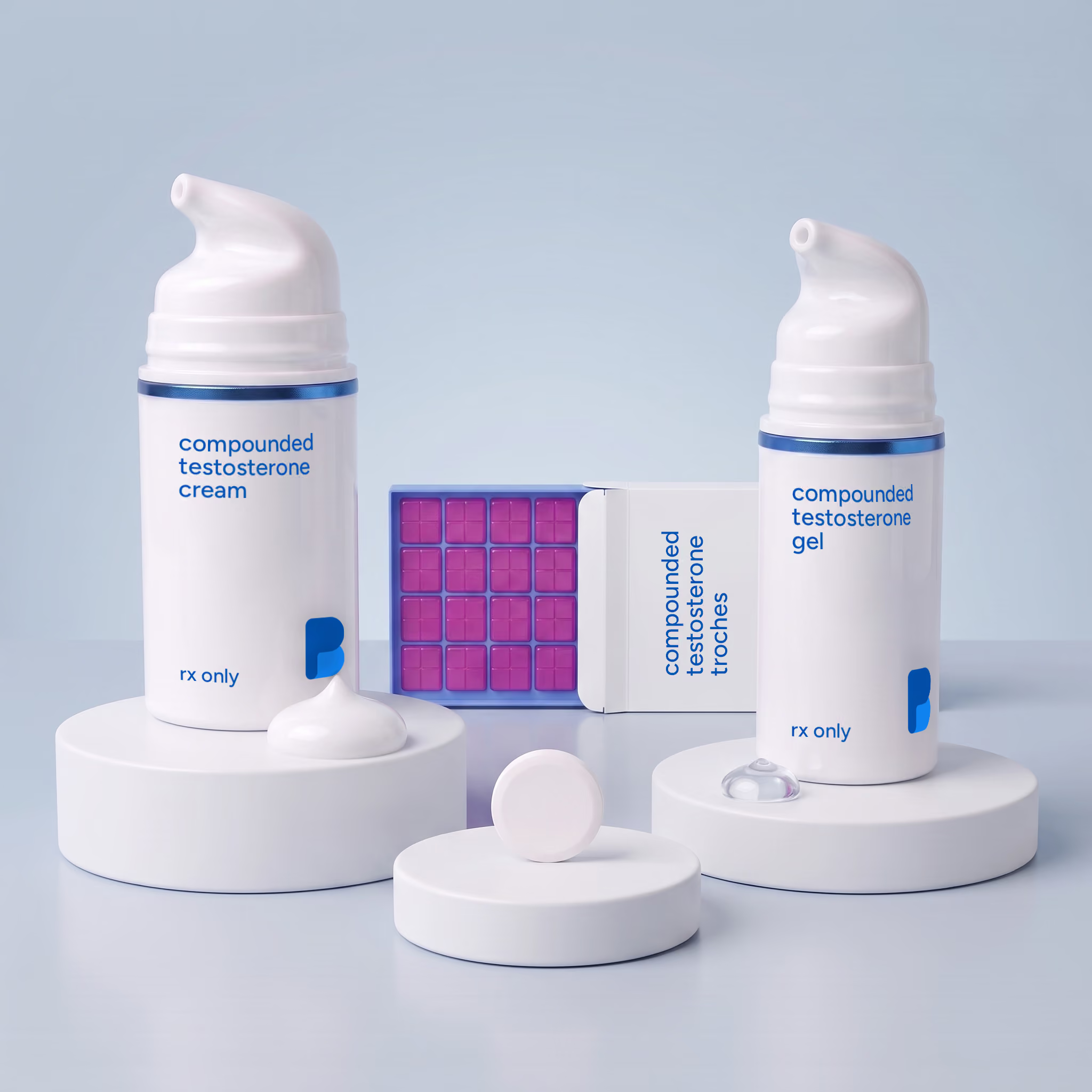






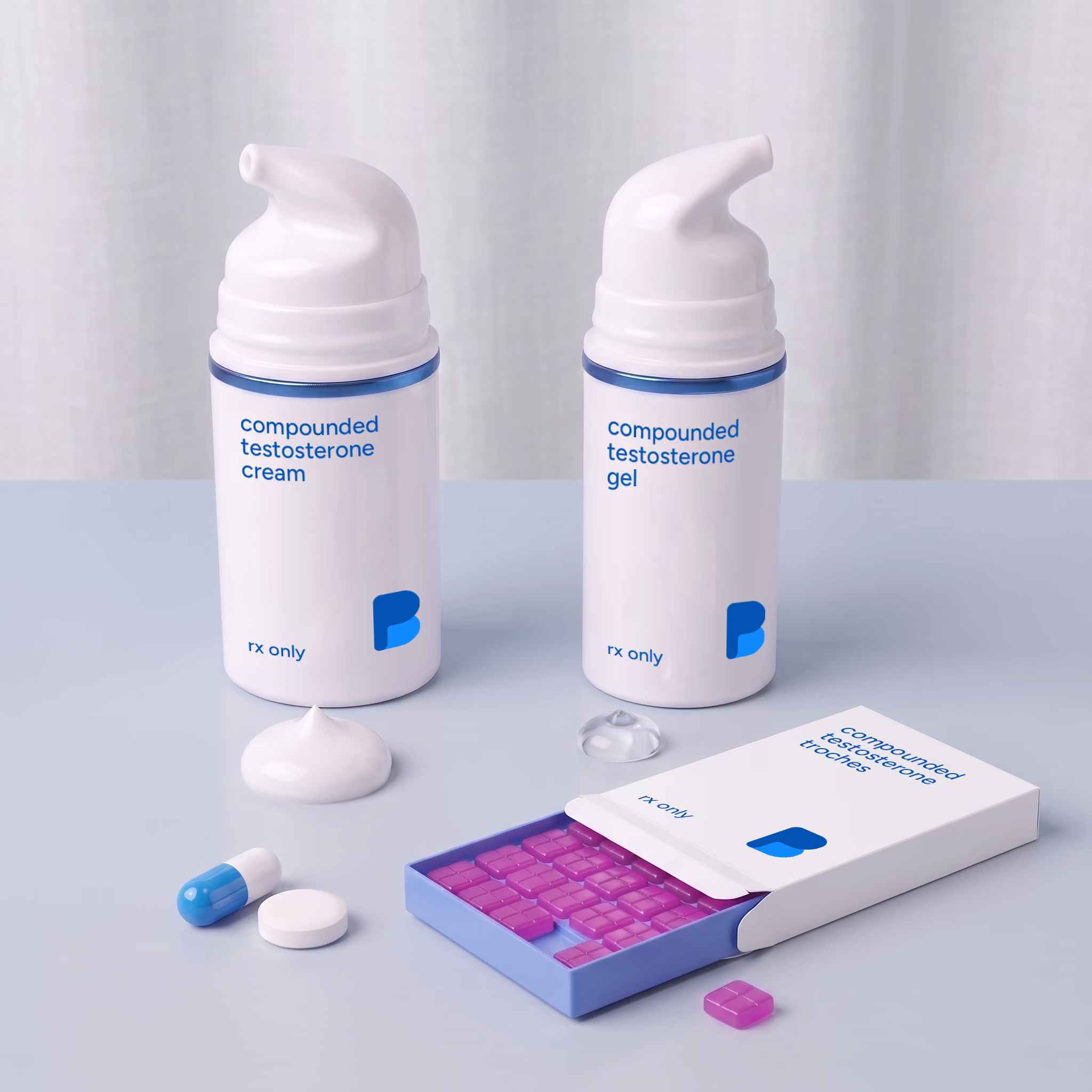
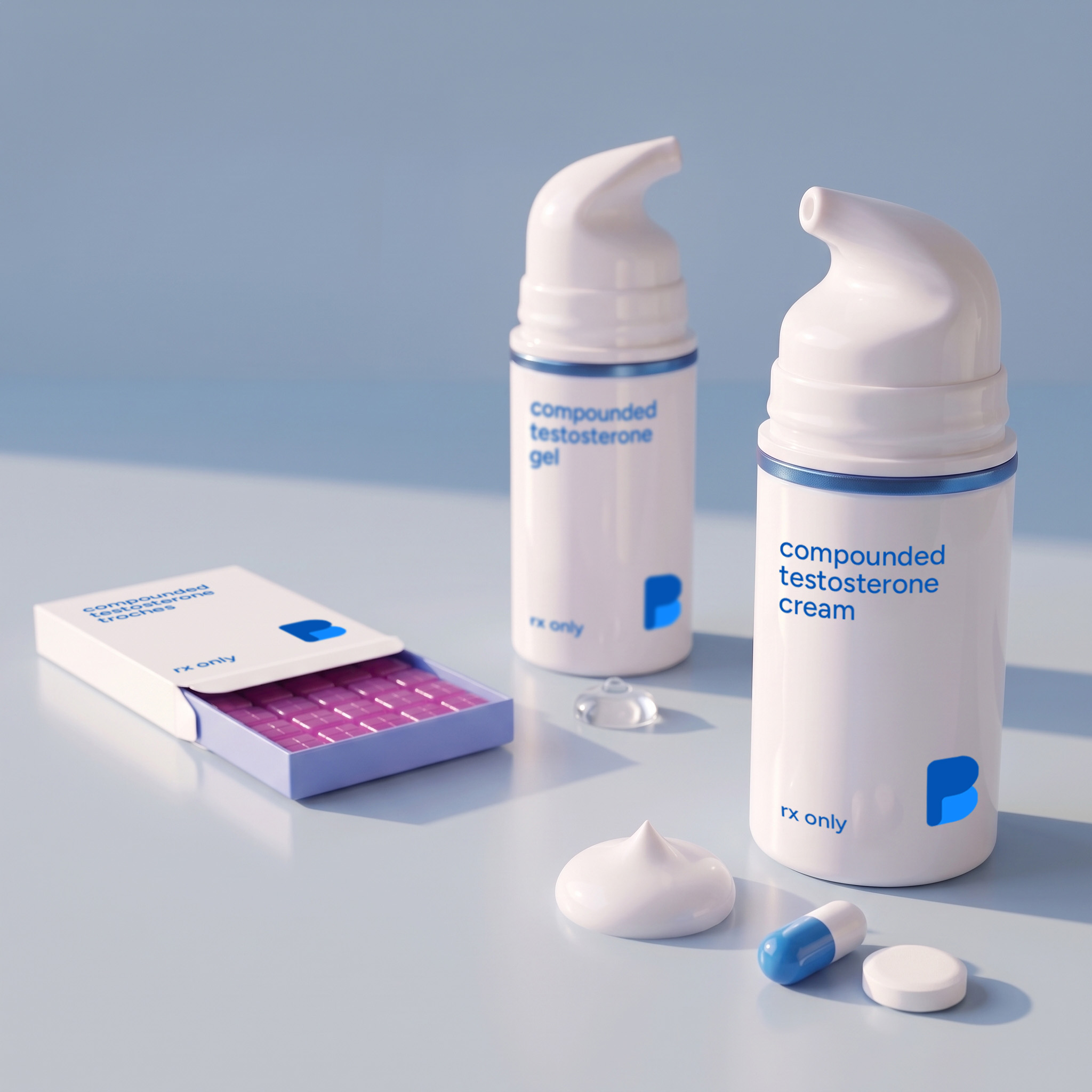
Testosterone for men is a compounded, prescription-only preparation of testosterone, the primary male sex hormone (androgen). It is prepared by a licensed pharmacy to the strength and form your provider orders rather than mass-produced, and it is available in several forms, including a topical cream, an anhydrous topical gel, a troche (a lozenge that dissolves in the mouth), and a rapid-dissolve tablet.
Providers may consider testosterone as part of hormone therapy for men with low testosterone when they determine it is appropriate. Only a licensed provider can decide whether it is right for an individual. Testosterone is also used at much lower doses in women; if you are looking for women's dosing, see Testosterone for Women. Bayview compounds this as part of our hormone replacement therapy compounding line.
How does it work?
Testosterone is the principal male androgen, produced mainly in the testes. It supports the development and maintenance of male characteristics, libido, muscle and bone, and other functions, and levels generally decline with age (StatPearls, physiology of testosterone). When a man's testosterone is low and a provider determines treatment is appropriate, testosterone may be prescribed to bring levels toward the normal range. The dose and form are matched to the individual by the prescriber, who sets the strength and schedule and monitors treatment.
What is it used for?
Providers may prescribe testosterone as part of hormone therapy for men with low testosterone (sometimes called hypogonadism or low T) when they determine it is appropriate. There are FDA-approved testosterone products for certain uses in men; compounded testosterone is used when a provider needs a specific strength or dosage form that a manufactured product does not offer. Only a licensed provider can decide whether this formulation is right for an individual; Bayview Pharmacy does not provide consultations or determine appropriateness, and a valid prescription is required.
How do the forms compare?
Testosterone is compounded in several forms that differ mainly in how they are taken. The table below describes those differences for education only.
| Form | How it's taken | Notes |
|---|---|---|
| Topical cream | Applied to the skin | Absorbed through the skin; wide strength range for individualized dosing |
| Topical gel (anhydrous) | Applied to the skin | A water-free base applied to the skin |
| Troche | Dissolved in the mouth | Absorbed through the lining of the mouth |
| Rapid-dissolve tablet | Dissolves quickly in the mouth | A low-strength oral option |
Differences in form and route are described for education only and are not a statement that any option is better, stronger, or more effective. Topical forms carry a risk of transfer to others by skin contact. See the safety section below. Your provider determines which form and dose are appropriate for you.
How is it used?
Testosterone is used following the exact form, application site, technique, schedule, and dose set by your prescriber, who establishes your starting dose and any adjustments. Creams and gels are applied to the skin only where and as directed; troches and tablets are used in the mouth as directed. With topical forms, wash the application site before skin-to-skin contact and wash your hands after applying, to reduce the chance of transferring testosterone to a woman or child. Never change your dose on your own. If you are unsure about how to use it or about your dosing, contact your prescriber, and a Bayview pharmacist is available if you have questions about your prescription.
Side effects & safety
As with any medication, side effects are possible. Reported effects can include acne, oily skin, application-site reactions with topical forms, fluid retention, mood changes, breast tenderness or enlargement, changes in cholesterol, and an increase in red blood cell count (hematocrit) that your provider may monitor with blood tests. Testosterone therapy may also affect fertility. Report any effect that concerns you to your provider.
Seek medical care for signs of a serious problem, such as chest pain, shortness of breath, weakness or numbness on one side of the body, difficulty speaking, or swelling or pain in the legs. Contact your provider about any reaction that concerns you.
Who should not use it?
Testosterone is not appropriate for everyone. It is generally avoided in men with known or suspected prostate or breast cancer, and used with caution in men with certain heart, liver, or kidney conditions, untreated severe sleep apnea, a high red blood cell count, or a known sensitivity to the ingredients. It should not be handled by or transferred to women who are or may become pregnant. Tell your provider about your full medical history and all medications you take so they can determine whether this formulation is appropriate for you.
How should it be stored?
Store exactly as directed on your label, away from heat, light, and moisture. Because testosterone is a controlled substance, keep it secured and out of the reach of children and others in the home, and do not share it with anyone. Avoid skin contact with topical forms by anyone the medication is not prescribed for. Do not use it after its expiration or beyond-use date, and dispose of unused medication as directed.
Why is this compounded?
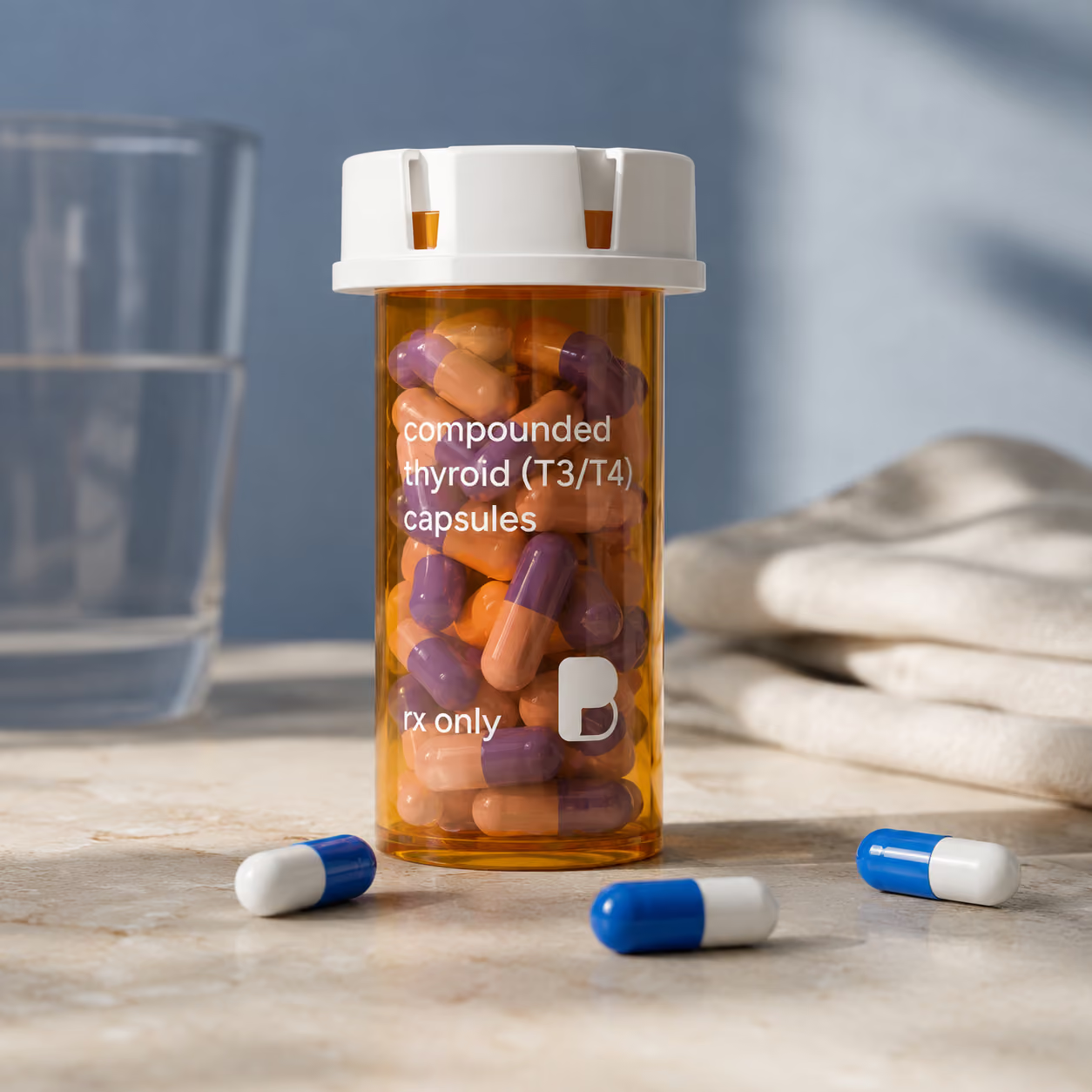
Compounding lets a licensed pharmacy tailor the strength and dosage form of testosterone to an individual prescription, for example, preparing a cream, an anhydrous gel, a troche, or a rapid-dissolve tablet at the strength a provider orders. This can matter when a manufactured product is not available in the needed strength or form, or when a provider is dosing for a patient whose needs differ from standard products. As a 503A compounding pharmacy, Bayview Pharmacy prepares each order in small batches under USP <795> standards using quality ingredients. Compounded preparations are not FDA-approved. Related preparations include Enclomiphene, Sildenafil, Tadalafil, and Compounded Thyroid (T3/T4) Capsules. The full list is in our compounded medications catalog.
Clinical details for prescribers
Controlled substance. Testosterone is a Schedule III controlled substance federally (Anabolic Steroids Control Act); certain states schedule it more strictly. Requires EPCS transmission and valid DEA registration; refill and quantity limits apply per federal and state law. Step-by-step: how to e-prescribe testosterone to Bayview →
Formulation. Testosterone compounded as topical cream (0.1 to 10%), anhydrous (VersaBase-type) gel (1 to 10 mg/g), buccal/sublingual troche (1 mg), and rapid-dissolve tablet (0.5 mg). Strengths per the strengths table on this page; select the strength and form to target the patient's dose within the physiologic male range.
Counseling points:
- Secondary transfer risk: wash site before contact, cover application area, hand hygiene, virilization risk to women/children
- Monitor per plan (e.g., total testosterone, hematocrit, and PSA) at baseline and follow-up as the prescriber directs
- Counsel on possible effects on fertility, erythrocytosis, and prostate/cardiovascular considerations
- Contraindicated in known/suspected prostate or breast cancer; caution with untreated severe sleep apnea and heart failure
For female androgen dosing see Testosterone for Women. Also available in multi-hormone preparations. Background: testosterone topical monograph.
This is a prescription-only compounded medication and is not FDA-approved. This information is educational and is not medical advice. Your provider determines whether it is appropriate and sets the formulation and dose.









%20A%20Complete%20Overview%20Main%20Image.avif)
