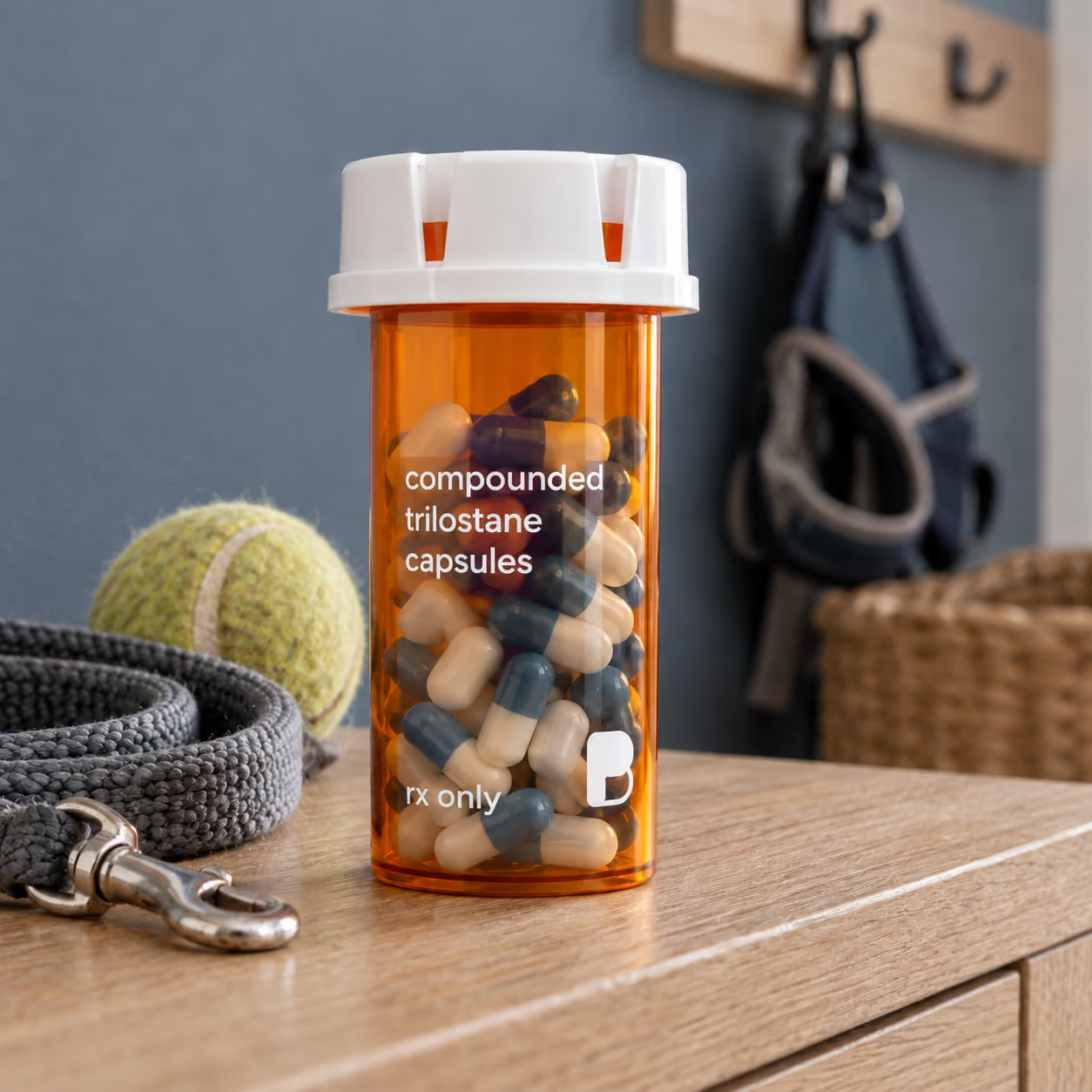




Trilostane is a medication that lowers the amount of cortisol a dog's adrenal glands produce. Veterinarians may prescribe it as part of a treatment plan to help manage Cushing's disease (hyperadrenocorticism), a condition in which the body makes too much cortisol.
This page describes a trilostane preparation compounded by Bayview Pharmacy to the strength your veterinarian orders. It is available by prescription only from a licensed veterinarian. Bayview compounds this as part of our veterinary compounding line.
How does it work?
Trilostane is described as a competitive inhibitor of 3β-hydroxysteroid dehydrogenase, an enzyme the adrenal glands use to make cortisol. By slowing this step, it is proposed to reduce cortisol production and help control the signs of excess cortisol. You can read more in this veterinary review of trilostane in dogs.
What is it used for?
Veterinarians may prescribe trilostane to help manage Cushing's disease (hyperadrenocorticism) in dogs. Whether it is appropriate for your dog is a decision your veterinarian makes based on diagnosis, testing, and your dog's overall health.
Why a custom (in-between) dose may be compounded
Dosing for Cushing's disease is precise and based on your dog's weight and response to monitoring. Sometimes the amount your veterinarian wants to give falls between the commercial capsule sizes. In that situation, and only under your veterinarian's direction and monitoring, a capsule may be compounded to a strength that is not commercially available so it matches your individual dog's needs. Other preparations we compound for animals include Pimobendan for Dogs, Ursodiol for Pets, Cisapride, and Methimazole for Cats. The full list is in our compounded medications catalog.
How is it given?
This preparation is an oral capsule given by mouth, usually with food. Your veterinarian sets the exact amount and schedule for your dog, so never adjust the dose on your own. Give it consistently and keep every recheck appointment.
Side effects & safety
Because trilostane lowers cortisol, giving too much can cause a dangerous drop that may lead to weakness, vomiting, diarrhea, or collapse, a medical emergency. To reduce this risk, your veterinarian monitors treatment with tests such as ACTH stimulation testing, electrolytes, and bloodwork. Report lethargy, poor appetite, vomiting, or diarrhea promptly. See the FDA's overview of treating Cushing's disease in dogs.
Which pets should not take it?
Trilostane is generally not given to pregnant dogs or to dogs with certain kidney or liver conditions unless your veterinarian specifically directs it. Tell your veterinarian about all of your dog's health conditions and any other medications so they can decide whether it is safe.
How should it be stored?
Store as directed on the label and keep it out of reach of children and pets. Follow your veterinarian's or pharmacist's instructions for any specific storage needs.
Why is this compounded?
Bayview Pharmacy compounds trilostane capsules to a custom strength when your veterinarian needs an amount that is not available in the commercial product for your individual dog. It is prepared only from a valid prescription and to your veterinarian's exact order.
Clinical details for prescribers
Regulatory status. Trilostane is not a controlled substance. FDA-approved canine capsules exist in fixed sizes; compounded in-between strengths are prepared under AMDUCA when the approved sizes do not fit the dog's calculated dose, within a valid veterinarian-client-patient relationship.
Formulation & dosing. Compounded as oral capsules in the exact custom mg strength ordered. Commonly reported starting dosing is about 1 to 2 mg/kg by mouth once daily with food, with some dogs managed twice daily; monitoring (ACTH stimulation or pre-pill cortisol per your protocol) is typically rechecked 10 to 14 days after starting or changing a dose.
Counseling / clinical points:
- Educate owners on hypoadrenocorticism warning signs, lethargy, vomiting, diarrhea, anorexia, and to stop the drug and call immediately if they occur
- Give with food for absorption; dose at a consistent time relative to monitoring tests
- Monitor electrolytes alongside cortisol testing
- Owners should not open capsules; pregnant women should avoid handling
- Recalculate the dose against current body weight at each refill
Adrenal suppression is dose-critical in Cushing's management. The entire value of compounding here is hitting the calculated dose exactly. Account setup, licensing, and ordering are covered on our for providers page.
Trilostane for Dogs is a compounded veterinary medication and is not FDA-approved. This information is educational and is not a substitute for your veterinarian's instructions. Your veterinarian determines whether it is appropriate and sets the dose.