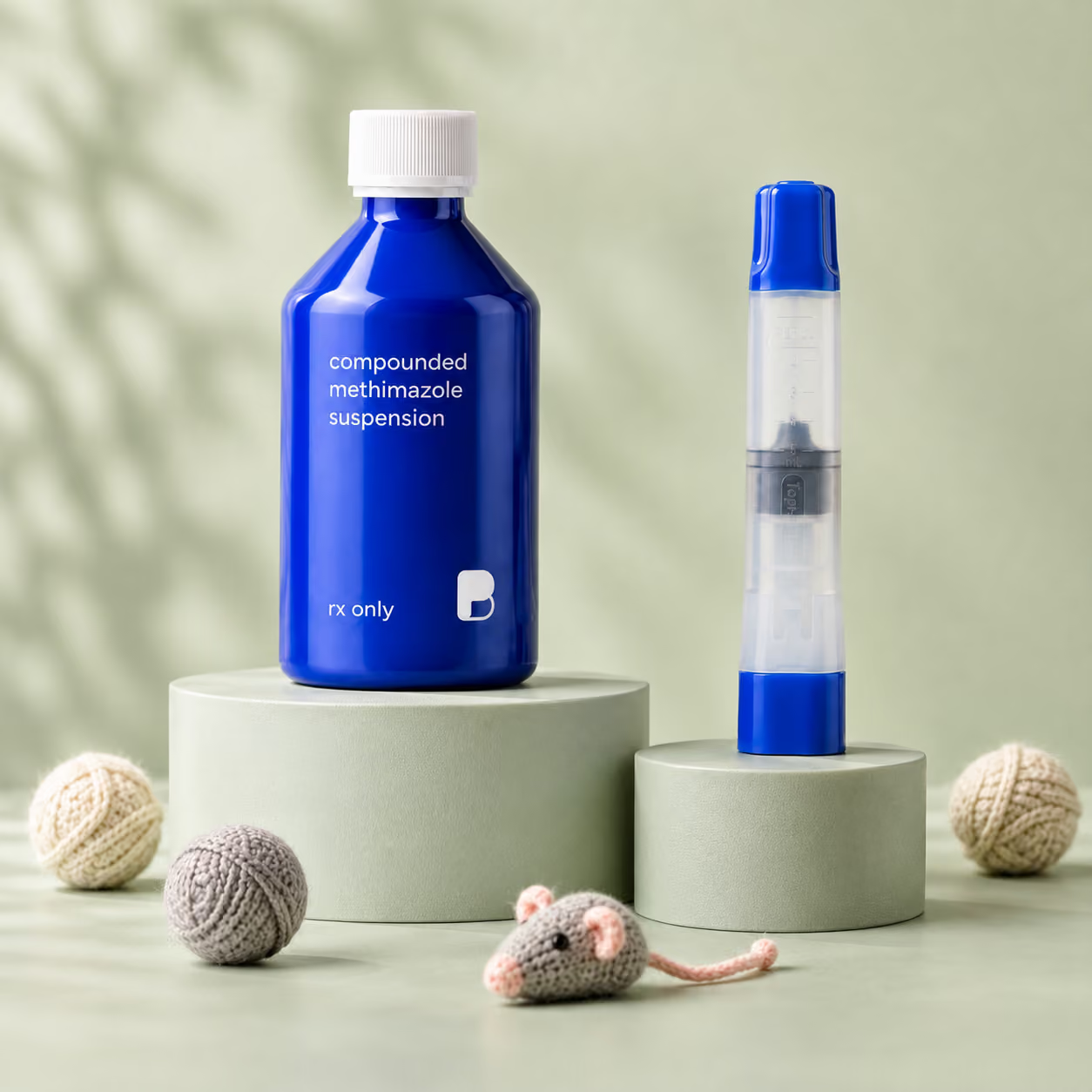
A compounding pharmacy for pets prepares a medication to a veterinarian's exact order for one named animal: a strength no manufacturer sells, a flavored liquid instead of a tablet, or a gel rubbed into a cat's ear instead of a pill pushed down its throat. Bayview Pharmacy is a 503A compounding pharmacy in Warwick, Rhode Island, and our most-requested veterinary preparation is methimazole for cats, compounded as a transdermal ear gel or a flavored oral suspension starting at $75. Compounded animal drugs are not FDA-approved and are prescribed by a veterinarian for a specific animal.
This page covers why animals are the clearest case for compounding, what forms are made, how your veterinarian sends the order, what it costs, and how the "near me" question works when the pharmacy ships. You can browse everything we prepare in our searchable catalog of compounded medications.
Why do dogs and cats need a compounding pharmacy?

Human medicine is manufactured for a 150-pound adult who can swallow a tablet. Almost nothing about that describes a 9-pound cat or a 5-pound dog, which is why veterinary compounding exists as a distinct practice rather than a specialty add-on.
Four problems come up over and over.
Dose fractions. A dose calculated on body weight often lands between commercial sizes, or below the smallest one. Splitting a capsule is not an option when the difference matters clinically.
Refusal. Cats spit out tablets. Dogs find the pill in the cheese. A twice-daily medication that the animal fights every time is a medication the household eventually stops giving.
No animal product exists. Some drugs veterinarians use have never had an approved animal version, so the only forms available are human capsules in human sizes.
Discontinued products and shortages. Veterinary products are withdrawn or go on back order regularly, and a compounded preparation can bridge the gap on a prescriber's order.
Why doesn't the manufactured product fit?
| Problem | Example drug | Approved product |
|---|---|---|
| Dose between sizes | Trilostane, dogs | Fixed capsule sizes |
| Dose below smallest size | Pimobendan, toy breeds | Smallest chewable too large |
| Animal refuses the form | Methimazole, cats | Feline tablet only |
| No animal version | Ursodiol, dogs and cats | Human capsules, off-label |
| Discontinued or shortage | Any maintenance drug | Temporarily unavailable |
| Excipient has to go | Dye, sugar, alcohol | Not adjustable |
Trilostane is dosed to the dog's weight and monitoring results, ursodiol has no approved animal version so its use in dogs and cats is off-label, and a transdermal ear gel or flavored liquid is one alternative a veterinarian may consider for a cat that resists pilling.
What forms of compounded medication for dogs and cats are made?
Transdermal medication for cats. A transdermal gel is measured with a metered applicator and rubbed into the inner surface of the ear rather than swallowed. Methimazole is the common example. Transdermal absorption can be more variable than an oral dose, so your veterinarian monitors the response and may adjust the strength or switch forms. Caregivers wear a glove or finger cot, wipe residue from the previous dose, alternate ears, and wash their hands after each dose.
Flavored medication for dogs and cats. A custom oral suspension is a liquid version of a medication, drawn up in an oral syringe, made at the concentration the veterinarian orders. Flavors such as chicken, tuna, beef, and fish are common for animals. Flavoring is cosmetic: it changes taste only and does not change how the medication works.
Capsules and chews. Capsules are compounded in custom milligram strengths, including in-between strengths the approved product does not offer. Pimobendan is also compounded as a flavored chew on a veterinarian's order.
Sterile ophthalmic drops. Eye drops are sterile preparations, compounded in our USP 797 sterile lab rather than as a non-sterile liquid. Bayview compounds ophthalmic solutions that have no commercial equivalent on a prescriber's order.
Where to buy tacrolimus eye drops for dogs
Tacrolimus comes up often in veterinary searches, usually for canine dry eye, and there is no FDA-approved veterinary ophthalmic tacrolimus product, which is why the question leads to compounding pharmacies. Bayview's compounded tacrolimus preparations are listed as otic (ear) solutions, rectal enemas, gels, creams, foams, and shampoos, all off-label and not FDA-approved. If your veterinarian wants an ophthalmic tacrolimus preparation for your dog, have them contact the pharmacy with the strength and vehicle they intend to order before writing the prescription, so we can confirm what we can prepare. Whether tacrolimus is appropriate for your dog is your veterinarian's decision.

What Bayview compounds for dogs and cats
| Preparation | Species | Form | Starting price |
|---|---|---|---|
| Methimazole | Cats | Ear gel, flavored suspension | $75 |
| Pimobendan | Dogs | Suspension, capsules, chews | $65 |
| Trilostane | Dogs | Capsules, custom strengths | $64 |
| Ursodiol | Dogs and cats | Suspension, custom capsules | $186 |
All four are compounded preparations, not FDA-approved, and prescribed by a veterinarian for a specific animal. Forms and prices are listed for education only and are not a statement that any option is better or stronger. Each preparation is made to the strength, form, and flavor a veterinarian orders. FDA-approved products exist for methimazole in cats (a feline tablet), pimobendan in dogs, and trilostane in dogs, and where the approved product fits the patient, that is what a veterinarian prescribes. Compounding covers the cases it does not fit.
Is veterinary compounding regulated?
Yes. Compounding animal drugs from bulk drug substances is addressed in FDA's Guidance for Industry #256, issued in 2022. At a general level, the guidance describes conditions under which FDA does not intend to take action over animal drugs compounded from bulk substances, including that the drug is compounded by a licensed pharmacist or veterinarian on a prescription for an individual animal patient, that it is not essentially a copy of an approved product, and that records are kept. State boards of pharmacy license and inspect the pharmacy itself, and non-sterile preparations are compounded under USP 795 standards.
What all of that means in practice: compounded animal drugs are not FDA-approved, FDA has not reviewed them for safety or effectiveness, and they are prepared only on a prescription a veterinarian writes for a specific animal.
How does a veterinarian order compounded medication?
The order starts with the veterinarian, not the owner. We cannot prepare a veterinary medication without a prescription written for a named animal.
Veterinarians send prescriptions to Bayview Pharmacy at 3844 Post Rd, Warwick, RI 02886 by e-prescribing platform, fax, or phone. The prescription should name the species, breed, and current body weight so the dose can be verified, along with the form, strength, directions, diagnosis, quantity, and refills. For methimazole, that means specifying the transdermal gel strength per 0.1 mL and the applicator, or the oral suspension concentration and flavor.
Once the prescription is on file, the preparation is compounded to that order. Owners can pick up in Warwick, or the prescription can ship to the states where Bayview is licensed; our FAQ covers where we can dispense. Refills are requested the same way any prescription refill is.
What does a compounding pharmacy for pets cost?
Veterinary compounded preparations are cash-priced. Across the pet preparations on this page, starting prices run from $64 to $186 depending on the drug, the concentration, and the quantity, and the price is quoted before we compound. HSA and FSA funds do not apply to veterinary medications, since those accounts cover human medical expenses.
Pet insurance sometimes reimburses compounded prescriptions. Coverage varies by carrier, by plan, and by whether the policy treats a prescription medication benefit separately, so check your policy or ask your insurer before assuming either way. If your plan does reimburse, you pay the pharmacy and submit the receipt yourself.
Is there a compounding pharmacy for pets near me?
"Compounding pharmacy for pets near me" is a search that assumes you need to drive somewhere, and for some prescriptions you do. But a compounded preparation is made to order and mailed the same way any prescription is, so the practical question is not distance, it is whether the pharmacy is licensed in your state and whether your veterinarian can send the prescription there. We wrote about that in more detail in what "compounding pharmacy near me" actually means.
Bayview compounds in Warwick, Rhode Island, and dispenses to the states where we are licensed. If you are outside those states, a local compounding pharmacy is the right call, and your veterinarian can name one.
How to order
Ask your veterinarian whether a compounded form is appropriate for your animal, and if so, which one. Dose, form, and whether to compound at all are your veterinarian's decisions, not ours; Bayview does not provide consultations and does not determine whether a medication is right for your pet. Veterinarians can send the prescription to Bayview Pharmacy by e-prescribing platform, fax at 401-284-4506, or phone at 401-284-4505, and we will quote the preparation before compounding it. Details on methimazole for cats and the rest of our veterinary line are in the catalog.
Frequently asked questions
What side effects should I watch for?
Common effects include vomiting, poor appetite, lethargy, and facial itching. Call your veterinarian for persistent vomiting, yellowing of the gums or eyes, or unusual bruising or bleeding.
Is there an FDA-approved version?
Yes, an FDA-approved cat tablet (Felimazole) exists. Bayview compounds the transdermal gel, flavored liquid, and custom strengths for cats that will not take the tablet, at your veterinarian's direction. The compounded forms are not FDA-approved.
Does my cat need bloodwork?
Yes. Your veterinarian typically checks a CBC, liver values, thyroid levels, and kidney values during treatment, because methimazole can rarely affect blood cells or the liver.
How do I apply the transdermal gel safely?
Wear a glove or finger cot, wipe off any residue from the last dose, and rotate between the left and right ear. Wash your hands afterward and keep the medication away from children and other pets.
What is the difference between the ear gel and the liquid?
The transdermal gel is applied to the inner ear for cats that resist pills; the flavored liquid is given by mouth. Your veterinarian chooses the form and monitors your cat's thyroid levels either way.
What is methimazole used for in cats?
Veterinarians prescribe methimazole to manage hyperthyroidism in cats, an overactive thyroid that makes too much hormone. It lowers thyroid hormone production as part of a plan your veterinarian determines.
Is compounded pimobendan the same as Vetmedin?
No. A compounded preparation is not FDA-reviewed and is not a generic substitute; the FDA has cautioned that compounded pimobendan can vary in quality and potency. It is used only to fill a gap the approved product cannot, at your veterinarian's direction.
What is ursodiol used for in pets?
Veterinarians prescribe ursodiol for certain dogs and cats with liver or gallbladder and biliary conditions. It improves bile flow and helps protect liver cells, as part of a plan your veterinarian determines.
What is a compounding pharmacy for pets?
It is a licensed pharmacy that prepares a medication to a veterinarian's exact order for one named animal, rather than dispensing a manufactured product off the shelf. That can mean a strength no manufacturer sells, a flavored liquid instead of a tablet, or a transdermal gel instead of a pill. Compounded animal drugs are not FDA-approved, and a prescription from a licensed veterinarian is required for every preparation.
Can I get compounded medication for my dog without a prescription?
No. A compounded veterinary preparation is made only against a prescription a veterinarian writes for a specific animal, and that prescription is what makes the compounding lawful. The veterinarian also decides the drug, the form, the strength, and the directions. Any site selling compounded prescription medication for animals without a veterinarian's prescription is not operating within those rules.
How do I get transdermal methimazole for my cat?
Ask your veterinarian whether a transdermal form is appropriate for your cat. If it is, they send a prescription to a compounding pharmacy specifying the gel strength per 0.1 mL, the base and applicator, and the directions. Bayview compounds methimazole as a transdermal ear gel or a flavored oral suspension to that order, starting at $75. Your veterinarian sets the dose and monitors thyroid levels and bloodwork.
Does pet insurance cover compounded medications?
Sometimes. Some pet insurance plans reimburse compounded prescriptions and some do not, and it often depends on whether the policy includes a prescription medication benefit and how it treats preparations that are not FDA-approved. Check your specific policy or call your insurer before assuming either way. Compounded preparations are cash-priced at the pharmacy, so you would pay first and submit the receipt for reimbursement.
Can I use my HSA or FSA for pet medication?
Generally no. HSA and FSA accounts cover qualified human medical expenses, so veterinary medications for a pet are not eligible, with narrow exceptions such as a service animal. Compounded veterinary preparations at Bayview are cash-priced and quoted before we compound them. If your pet insurance offers a prescription benefit, that is the usual route to reimbursement instead.
Where to buy tacrolimus eye drops for dogs?
There is no FDA-approved veterinary ophthalmic tacrolimus product, so an ophthalmic preparation would have to be compounded on a veterinarian's prescription. Bayview's compounded tacrolimus preparations are listed as otic solutions, rectal enemas, gels, creams, foams, and shampoos, all off-label and not FDA-approved. Have your veterinarian contact the pharmacy with the strength and vehicle they intend to order so we can confirm what we can prepare.
Why is compounded medication for pets not FDA approved?
Because it is made for one animal on a prescription rather than mass-produced and submitted for approval, so FDA has not reviewed that specific preparation for safety or effectiveness. Compounding animal drugs from bulk substances is addressed in FDA's Guidance for Industry #256, issued in 2022, which describes conditions including compounding on a prescription for an individual animal patient. State boards of pharmacy license and inspect the pharmacy.
Is there a compounding pharmacy for pets near me?
Distance matters less than licensing. A compounded preparation is made to order and mailed like any other prescription, so the questions are whether the pharmacy holds a license in your state and whether your veterinarian can send the prescription there. Bayview compounds in Warwick, Rhode Island and dispenses to the states where it is licensed. Outside those states, ask your veterinarian for a local compounding pharmacy.
What Bayview compounds for this
Important: Compounded medications are prepared to a prescriber's order for an individual patient. They are not FDA-approved, and the FDA has not evaluated them for safety, effectiveness, or manufacturing quality. This article is educational and is not a substitute for advice from your prescriber or pharmacist.
This preparation contains a controlled substance. Controlled-substance prescriptions carry refill limits, must be e-prescribed, and can only be shipped to states where Bayview holds the required licensure.
Uses discussed here may be off-label, meaning they are not part of any FDA-approved labeling. Off-label use is a decision for you and your prescriber, based on the available evidence.
Veterinary preparations are compounded to a veterinarian's order for a specific animal and are not FDA-approved animal drugs. Never give a compounded human medication to an animal without veterinary direction.
Compounded prescriptions are paid for directly rather than billed through insurance. Most are HSA/FSA-eligible, and many patients submit the receipt to their plan for possible reimbursement. Pricing depends on the strength, dose form and quantity your prescriber orders. Read more about cost and insurance.
Compounded veterinary preparations are cash-priced and are not billed through insurance at the pharmacy. Methimazole for cats starts at $75, and across Bayview's pet preparations starting prices run from $64 to $186 depending on the drug, the concentration, and the quantity. HSA and FSA funds do not apply to veterinary medications, since those accounts cover human medical expenses. Pet insurance sometimes reimburses compounded prescriptions, so check your policy. We quote the preparation before we compound it.
Bayview Pharmacy is an NABP-accredited compounding pharmacy in Warwick, Rhode Island, licensed to fill and ship compounded prescriptions for patients in Rhode Island, Massachusetts, Connecticut, New Jersey, New Hampshire, Florida, New York and Maine. Controlled substances are not shipped to New York addresses. See where we ship and how to get started.