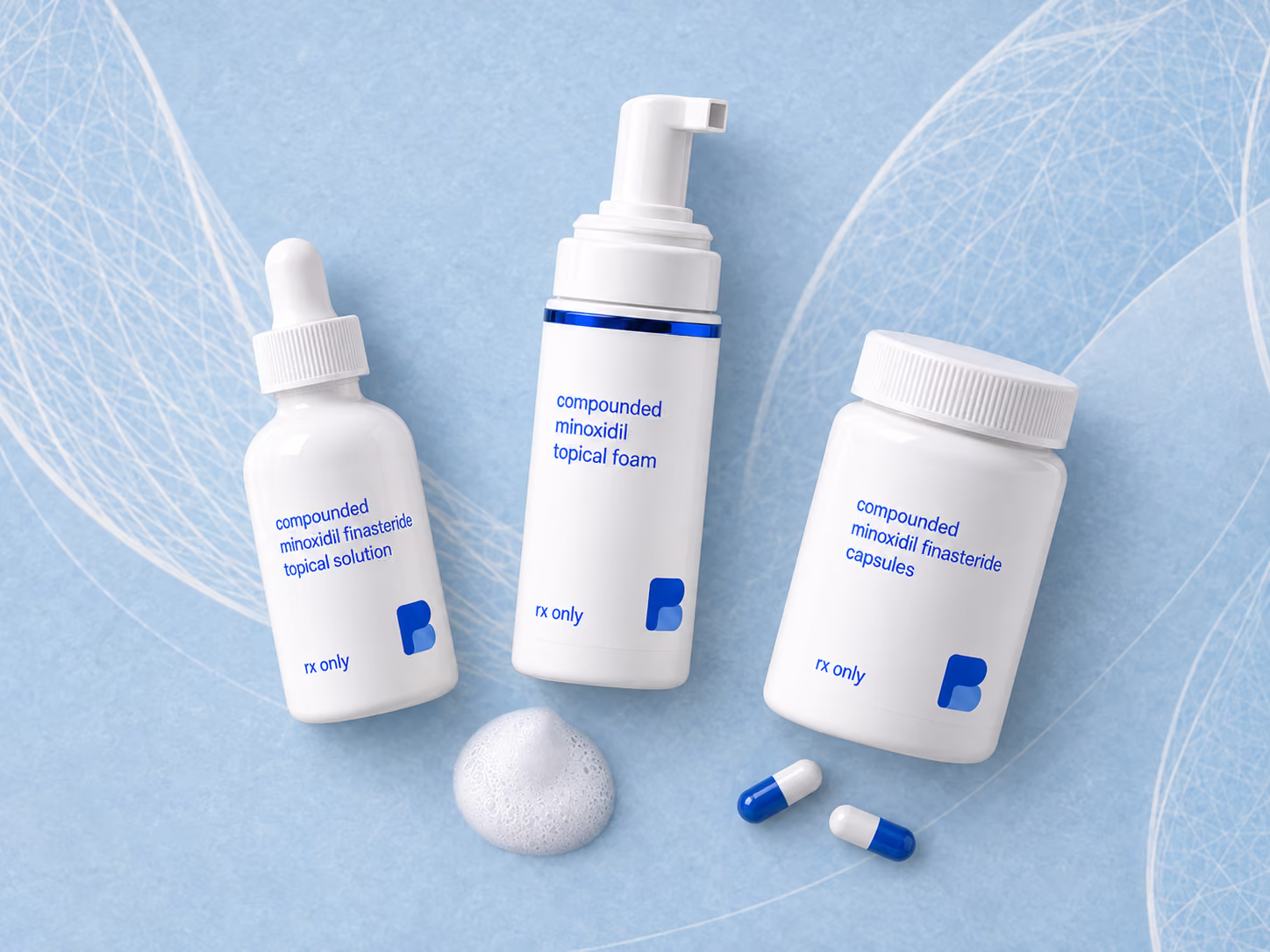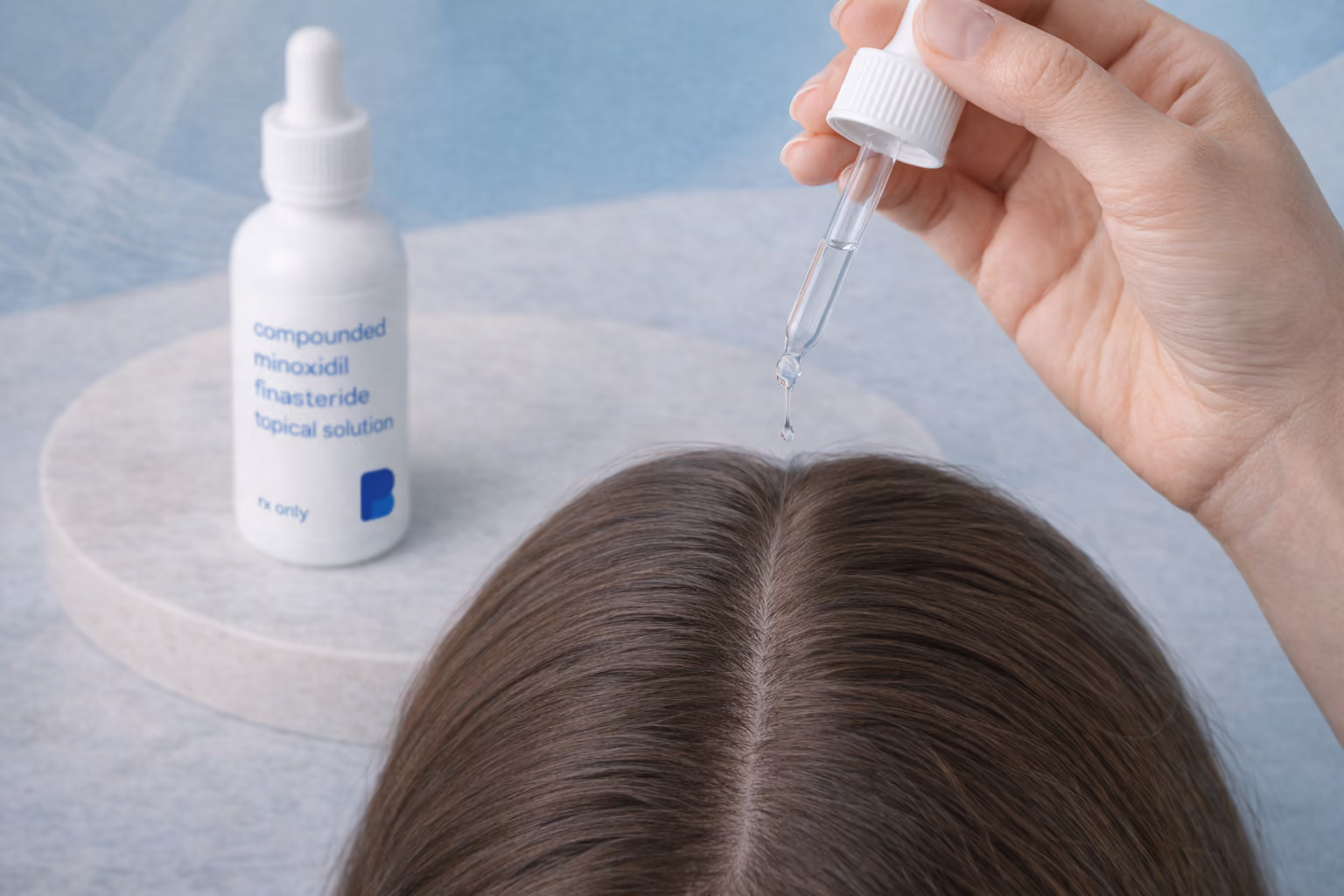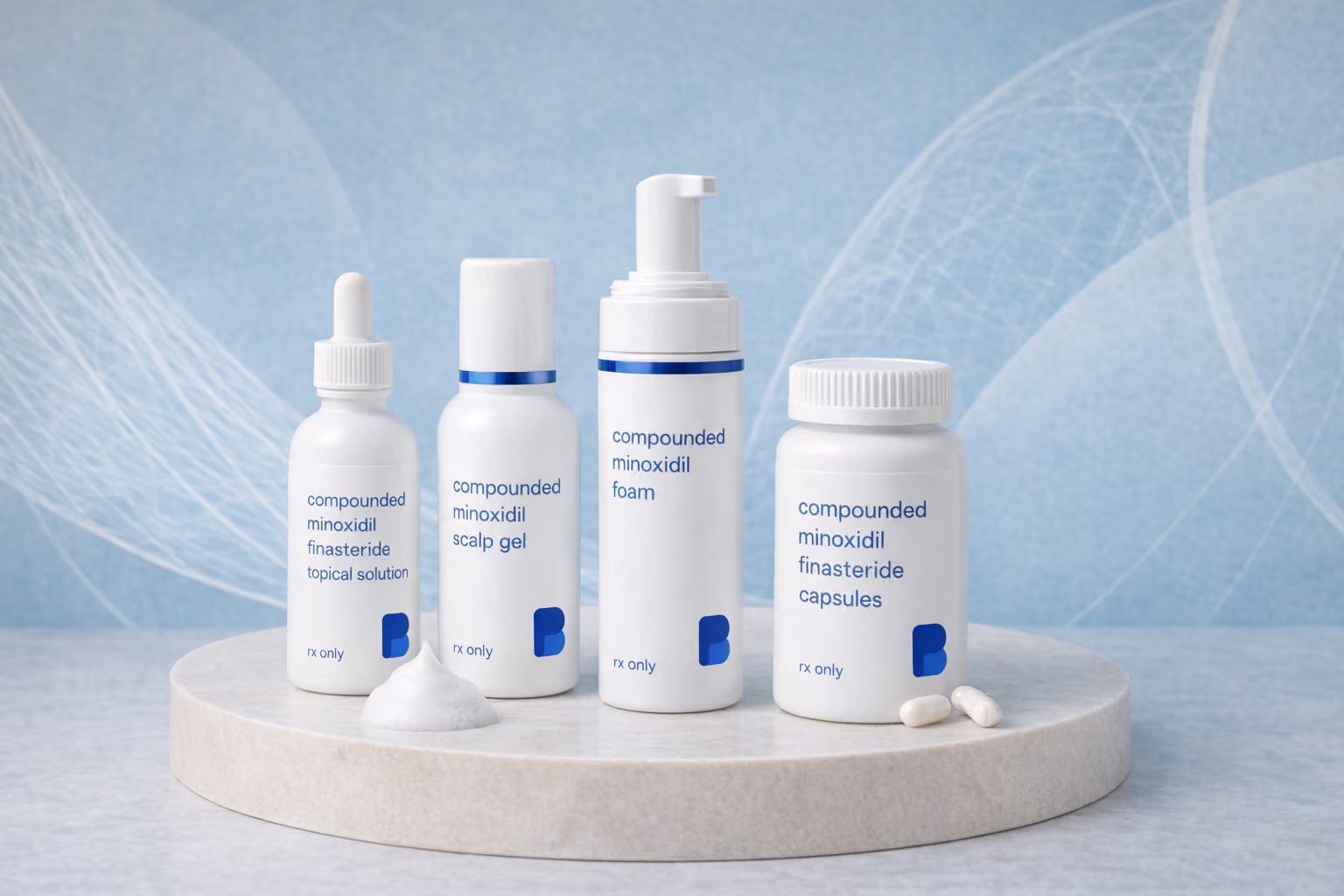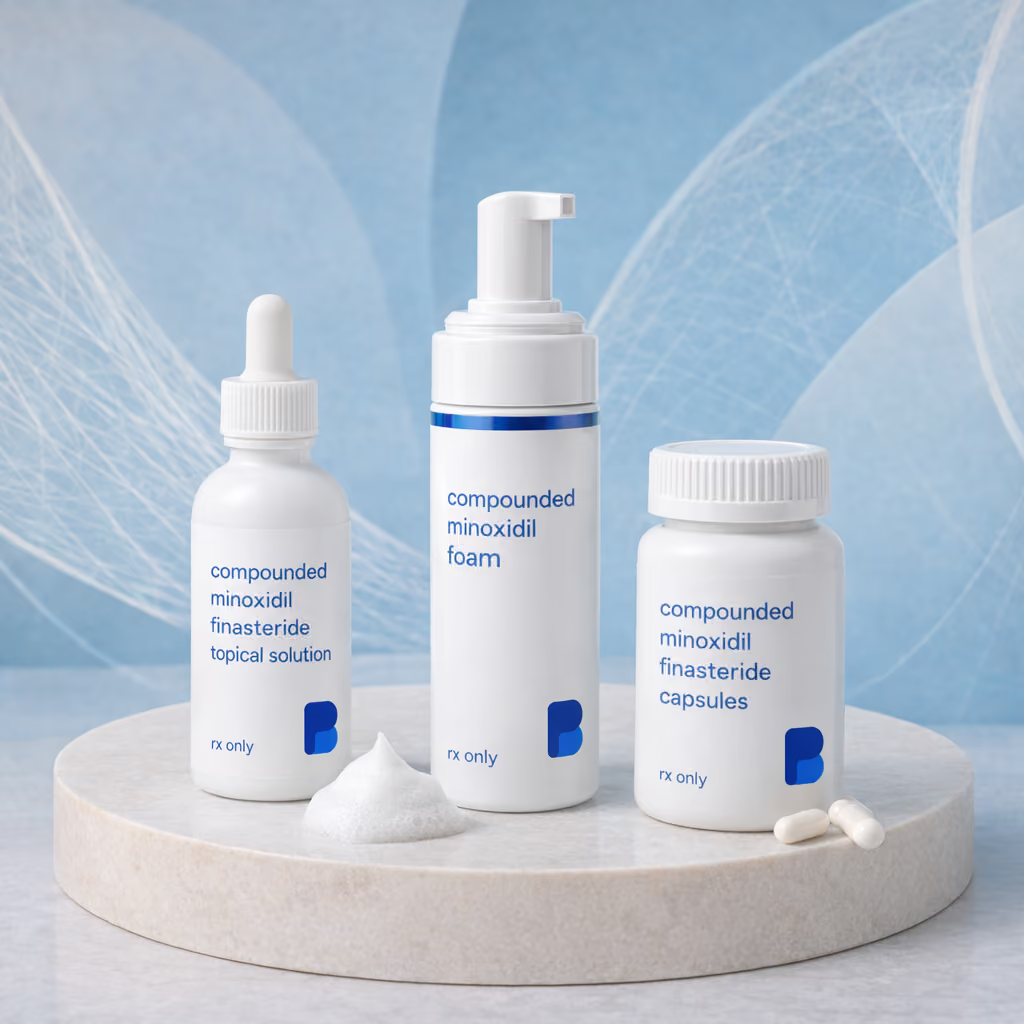





Compounded minoxidil and finasteride formulas are prescription preparations for pattern hair loss (androgenetic alopecia). They put minoxidil, which stimulates hair follicles, together with finasteride, which lowers the hormone that shrinks them, into one preparation made to your prescriber's order. Depending on what your prescriber writes for, that can be a scalp solution, a foam, a gel, an oral capsule, or a liquid you place under the tongue.
Some formulas also include add-on ingredients such as tretinoin, spironolactone, or fluocinolone. Because these combinations are prepared by a licensed pharmacy rather than mass-produced, the strengths and the vehicle can be matched to what your prescriber wants. Only a licensed prescriber can decide whether any of this is right for you. Bayview compounds this as part of our dermatology compounding line.
How does it work?
Minoxidil is a potassium-channel opener and vasodilator. In the scalp, an enzyme called sulfotransferase (SULT1A1) converts it into minoxidil sulfate, which is the form that acts on hair follicles. Minoxidil sulfate prolongs the anagen (growth) phase of the hair cycle and helps enlarge follicles that have become miniaturized, so hairs grow longer and thicker (MedlinePlus). How much sulfotransferase a person has in the scalp varies, which is one reason minoxidil works better for some people than others.
Finasteride is a type II 5-alpha-reductase inhibitor. It blocks the enzyme that converts testosterone into dihydrotestosterone (DHT), the androgen that drives follicular miniaturization in pattern hair loss. Lowering DHT slows that miniaturization (Propecia prescribing information).
Add-on ingredients do different jobs. Tretinoin is used as a penetration enhancer and also upregulates sulfotransferase, which may help convert more minoxidil to its active form. Spironolactone is an androgen-receptor antagonist and is used in women. Fluocinolone is a corticosteroid included to reduce scalp irritation caused by the vehicle. Dutasteride, used in one of the foam formulas, is another 5-alpha-reductase inhibitor and is not FDA-approved for hair loss in the United States.
What is it used for?
These formulas are prescribed for pattern hair loss (androgenetic alopecia) in men and, in some formulas, in women. You can read more about the condition and the other options Bayview compounds on our hair loss page.
It is worth being clear about what is well established and what is not. Topical minoxidil 2% and 5% has strong randomized-controlled-trial evidence, and oral finasteride 1 mg has strong randomized-controlled-trial evidence. Topical finasteride has one adequately powered phase III trial: Piraccini and colleagues (JEADV, N=458, 24 weeks) reported a target-area hair count increase of 20.2 hairs with topical finasteride versus 6.7 with placebo (P<0.001), a serum DHT reduction of 34.6% with topical versus 55.6% with oral finasteride, and sexual adverse events in 2.8% of the topical group versus 3.3% of placebo (Piraccini et al.).
That trial studied one specific standardized metered spray (P-3074), not compounded solutions. Compounded versions have not been studied for potency, skin penetration, or how much drug reaches the bloodstream, so those results do not transfer to a compounded product. Low-dose oral minoxidil for hair loss is supported by retrospective and observational data only; there is no large randomized trial.
Use of these compounded formulas for hair loss is off-label. Only a licensed prescriber can decide whether it is appropriate. Bayview Pharmacy does not provide consultations or determine appropriateness, and a valid prescription is required.
How do the formulas compare?
Bayview compounds several combinations. They differ in what is in them, whether they go on the scalp or are taken by mouth, and what the add-on ingredients are meant to do. The table below is for education only.
| Formula | Route | Notes |
|---|---|---|
| Minoxidil 5% / finasteride 0.1% solution | Topical (scalp) | The most commonly prescribed combination; one step instead of two |
| Minoxidil / finasteride / tretinoin / spironolactone scalp solution | Topical (scalp) | Tretinoin as a penetration enhancer; spironolactone blocks androgen receptors |
| Minoxidil / finasteride / tretinoin / fluocinolone 10-0.1-0.025-0.025% gel or solution | Topical (scalp) | Includes a corticosteroid intended to reduce vehicle-related scalp irritation |
| Minoxidil / azelaic acid / dutasteride 5-1.5-0.05% foam | Topical (scalp) | Uses dutasteride, a different 5-alpha-reductase inhibitor, in a foam vehicle |
| Minoxidil / finasteride 5-1 mg capsules | Oral | Both ingredients taken by mouth in one daily capsule |
| Minoxidil / spironolactone 0.25-25 mg capsules | Oral | Typically used in women; spironolactone rather than finasteride |
| Minoxidil 2.5 mg/mL oral / sublingual solution | Oral or sublingual | Allows very low, adjustable doses that tablets cannot provide |
| Custom | As ordered | Other strengths, vehicles, and ingredient combinations as your prescriber orders |
Formulas are described for education only. Listing them is not a statement that any one of them is better, safer, or more effective for a particular person. Your prescriber selects the formula, strength, and schedule.
How is it used?
Use it exactly as your prescriber directs. The descriptions here reflect common regimens and are not treatment recommendations.
For a topical solution or foam, about 1 mL is usually applied to the dry scalp once or twice daily, spread over the thinning area rather than rubbed into the hair. Wash your hands before and after, and let the scalp dry fully before lying down or wearing a hat so the product does not transfer to a pillow, a partner, or a child. For sublingual minoxidil 2.5 mg/mL, doses of about 0.25 to 2.5 mg daily are common. Combination capsules are usually taken once daily.
Hair changes take time. Most people do not see a difference for 3 to 6 months, and continued use is required, if you stop, the hair you gained is generally lost over the following months. Do not increase the dose or the number of applications on your own.
Side effects & safety
Minoxidil. Applied to the scalp, minoxidil commonly causes irritation, itching, dryness, or flaking, and it can cause allergic contact dermatitis, often to propylene glycol in the vehicle rather than to the minoxidil itself. Many people go through a temporary increase in shedding around weeks 2 to 8 as follicles reset into a new growth cycle; this affects roughly 16% to 32% of users and usually settles. Unwanted hair growth on the face or body (hypertrichosis) occurs in about 15% of people taking low-dose oral minoxidil, more often in women and at higher doses. Reported rates of other effects with low-dose oral minoxidil include fluid retention or ankle swelling in about 1.3% to 10%, a fast heartbeat in about 0.9% to 4%, and dizziness or lightheadedness on standing in about 1% to 1.7%.
Finasteride. Reported effects include sexual dysfunction (decreased libido, erectile dysfunction, ejaculation problems), breast tenderness or enlargement (gynecomastia), and mood changes including depression. Finasteride does not carry a boxed warning. The 07/2022 Propecia label lists Warnings and Precautions for exposure of women and risk to a male fetus, effects on PSA, an increased risk of high-grade prostate cancer, and use in pediatric patients; persistent sexual dysfunction and reports of depression and suicidal ideation appear in the postmarketing Adverse Reactions section. Finasteride also cuts measured PSA roughly in half, so if you are a man over 40 being screened for prostate cancer, tell the ordering clinician you take finasteride. The PSA value generally needs to be doubled to be interpreted.
Keep all of these products out of the reach of children and pets. If someone swallows the medication, contact Poison Control at 1-800-222-1222 or seek emergency care.
Who should not use it?
These formulas are not appropriate for everyone. Do not use them if you are allergic to minoxidil, finasteride, dutasteride, spironolactone, tretinoin, or any ingredient in the vehicle. Women who are pregnant, may become pregnant, or are breastfeeding should not use or handle finasteride- or dutasteride-containing products, or come into contact with a treated scalp, because of the risk of abnormalities in a developing male fetus. These preparations are not for children.
Talk with your prescriber before using minoxidil if you have heart disease, heart failure, a history of pericardial effusion, low blood pressure, or kidney problems, or if you take blood pressure medications, since minoxidil is a vasodilator. Tell your prescriber about your full health history, allergies, and every medication and supplement you take so they can determine whether a compounded formula is appropriate.
How should it be stored?
Store at controlled room temperature, about 20 to 25 °C (68 to 77 °F), tightly closed and upright so the bottle does not leak. Many of these vehicles contain alcohol or propylene glycol and are flammable, so keep them away from heat, sparks, and open flame, and do not smoke while applying. Keep the product out of the reach of children and away from pets, especially cats. Do not use it after its beyond-use date, and dispose of unused medication as directed by your pharmacist.
Why is this compounded?
There is no commercially available product that combines minoxidil with finasteride, and no FDA-approved topical finasteride at all in the United States. Oral minoxidil is only made as tablets approved for severe high blood pressure, in strengths far above the small doses used for hair; a sublingual solution lets a prescriber order a fraction of a milligram and adjust it. Compounding also allows add-on ingredients such as tretinoin, spironolactone, or fluocinolone, and lets the vehicle be changed, for example to reduce propylene glycol for someone who reacts to it. As a 503A compounding pharmacy, Bayview Pharmacy prepares each order in small batches to the prescriber's exact specifications using quality ingredients, and potency-tests oral minoxidil preparations. Compounded preparations are not FDA-approved. Related dermatology preparations include Hair Loss. The full list is in our compounded medications catalog.
Clinical details for prescribers
Regulatory status. Minoxidil and finasteride are not controlled substances. FDA-approved products: topical minoxidil 2% and 5% (OTC), oral finasteride 1 mg and 5 mg. Oral minoxidil tablets are approved only for severe hypertension. There is no FDA-approved topical finasteride, no approved oral minoxidil for alopecia, and no approved fixed combination. All combination use here is off-label and compounded; compounded preparations are not FDA-approved.
FDA compounding risk alert, 22 April 2025. FDA reported 32 adverse-event reports (2019 to 2024) with compounded topical finasteride, erectile dysfunction, decreased libido, testicular pain, anxiety, depression, suicidal ideation, brain fog, fatigue, insomnia, with most reports noting persistence after discontinuation, plus risk of secondary transfer to female household contacts. FDA specifically noted reports of prescribers counseling patients that topical finasteride avoids systemic effects. Please counsel accordingly and document. (FDA alert; Compounding Risk Alerts.)
Mechanism. Minoxidil is a potassium-channel opener; scalp SULT1A1 converts it to minoxidil sulfate, prolonging anagen and reversing follicular miniaturization. Finasteride is a type II 5-alpha-reductase inhibitor reducing DHT. Adjuncts: tretinoin (penetration enhancement, sulfotransferase upregulation), spironolactone (androgen-receptor antagonism, used in women), fluocinolone (vehicle-related irritant/contact dermatitis).
Formulations & SIG. Minoxidil 5%/finasteride 0.1% solution (30, 60, 120 mL); minoxidil/finasteride/tretinoin/spironolactone scalp solution (60 to 120 mL); minoxidil/finasteride/tretinoin/fluocinolone 10-0.1-0.025-0.025% gel or solution (60 g or mL); minoxidil/azelaic acid/dutasteride 5-1.5-0.05% foam (30 mL); minoxidil/finasteride 5-1 mg capsules (90); minoxidil/spironolactone 0.25-25 mg capsules (90); minoxidil 2.5 mg/mL oral/sublingual solution (30 to 90 mL). Typical SIG: apply ~1 mL to dry scalp once or twice daily; sublingual minoxidil commonly 0.25 to 2.5 mg daily; combination capsules once daily. Custom strengths and vehicles available. Bayview potency-tests and verifies oral minoxidil capsule and solution strengths.
Evidence & clinical points:
- Topical minoxidil 2%/5% and oral finasteride 1 mg: strong RCT evidence.
- Topical finasteride: one adequately powered phase III trial (Piraccini et al., JEADV, N=458, 24 weeks), target-area hair count +20.2 vs +6.7 placebo (P<0.001); serum DHT −34.6% topical vs −55.6% oral; sexual AEs 2.8% topical vs 3.3% placebo. That trial used a specific standardized metered spray (P-3074), not a compounded solution. Compounded topical finasteride has not been studied for potency, penetration, or systemic absorption; those results do not transfer.
- Low-dose oral minoxidil: retrospective/observational data only; no large RCT.
- Finasteride has no boxed warning. Propecia label rev. 07/2022 Warnings and Precautions: 5.1 Exposure of Women, Risk to Male Fetus; 5.2 Effects on PSA; 5.3 Increased Risk of High-Grade Prostate Cancer; 5.4 Pediatric Patients. Persistent sexual dysfunction and depression/suicidal ideation appear under postmarketing Adverse Reactions.
- Finasteride approximately halves PSA; double the measured value in men over 40 undergoing screening.
- Minoxidil AEs: scalp irritation and allergic contact dermatitis (often propylene glycol); telogen shedding weeks 2 to 8 in 16 to 32%; hypertrichosis ~15% on low-dose oral minoxidil (higher in women and at higher doses); fluid retention/edema 1.3 to 10%; tachycardia 0.9 to 4%; dizziness/postural hypotension 1 to 1.7%. Pericardial effusion is extremely rare (three published case reports); a 2025 J Clin Med review associated severe cases with compounding dosing errors, including 1 mg capsules assayed at up to 1000 mg.
- Monitoring for low-dose oral minoxidil: baseline cardiovascular history; baseline and periodic blood pressure, heart rate, weight and edema check; slow titration. PSA awareness for finasteride. Document pregnancy counseling for women of childbearing potential and for female household contacts.
- Onset of visible response is typically 3 to 6 months; continuous use is required or gains reverse.
Ordering: e-prescribe to Bayview Pharmacy, 3844 Post Rd, Warwick, RI 02886 (NCPDP 4106882), or fax 401-284-4506. Licensed in RI, MA, CT, NJ, NH, FL, ME, and PA. Account setup, licensing, and ordering are covered on our for providers page.
These are prescription compounded medications and are not FDA-approved. This information is educational and is not medical advice. Bayview Pharmacy does not provide consultations or determine appropriateness; your prescriber decides whether a formula is appropriate and sets the strength and dose. Bayview makes no claim that compounded topical finasteride is safer than oral finasteride or that it avoids systemic side effects.