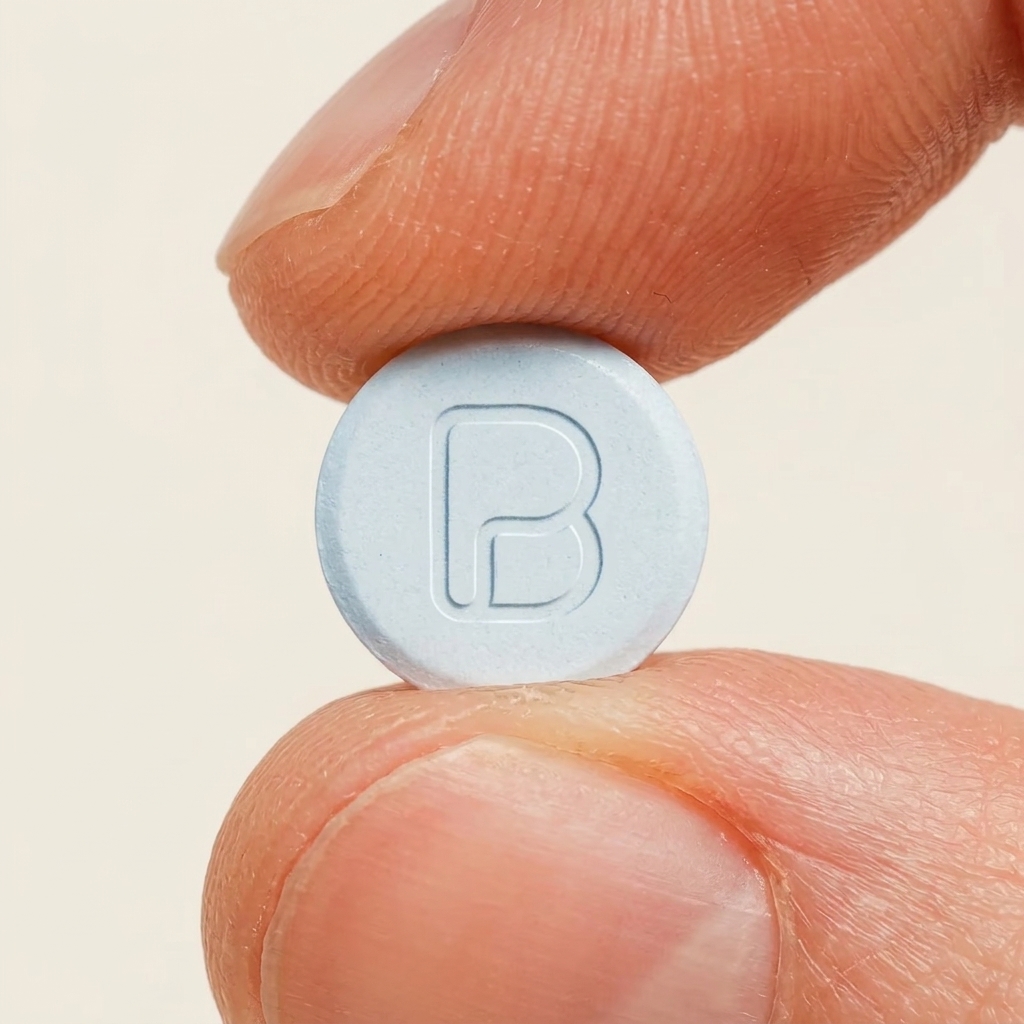

A dosage form is the physical shape a medication takes: a tablet, a capsule, a cream, a liquid, a suppository. A base, also called a vehicle, is the inactive material that carries the active ingredient and gives the form its body. Compounding dosage forms are the versions a pharmacy prepares on a prescriber's order when the manufactured product does not come in the form, the strength, or the base a patient needs.
This page defines the words that appear on compounded prescriptions and across the pages in the compounded medications catalog. It describes what each form is and what it contains, not what any form achieves. Compounded preparations are not FDA-approved, and the form, the strength, and whether a preparation is appropriate at all are your prescriber's decisions.
What is a dosage form?
Every preparation has two parts. The active ingredient is the drug itself. Everything else is inactive: the powder in a capsule, the oil or water in a cream, the thickened liquid holding drug particles in a suspension. That inactive part is the base or vehicle, and it is what makes a dosage form behave like a cream rather than a liquid, or like a lozenge rather than a swallowed tablet.
Three more words show up on nearly every label:
If you are new to all of this, what a compounding pharmacy is covers the bigger picture first.
Which compounded forms dissolve in the mouth?
These are solid or liquid doses placed in the mouth and held there rather than swallowed whole.

Two notes on the vocabulary. The abbreviation ODT covers compounded oral dissolve tablets and also the manufactured orally disintegrating tablets, which are FDA-approved products in their own right. On the sildenafil page, Bayview states that the extent of absorption through the oral mucosa, the onset of action and the bioavailability of a compounded dissolving tablet may vary and have not been evaluated by FDA. Longer treatments of these two forms are in what is a troche and compounding sublingual medications.
Which compounded forms are swallowed?
Bayview's own page is direct about what a liquid is for: a compounded liquid is not stronger, faster, or more effective than the same medication in tablet form. It exists so a dose can be measured and swallowed by someone who cannot take a pill, or so a strength can be made that no manufacturer produces.
What is a compounding base?
A base is chosen by the prescriber or left to the pharmacy, and the name on the prescription usually tells you what kind of base it is.

Penetration-enhancing is a description of intent, not a result. The Bayview pages that use PLO also report that in single-dose studies dexamethasone showed undetectable or very low absorption from the skin, and that several drugs show poor, variable bioavailability in PLO transdermal formulations. For how the pain-cream bases differ in practice, see what goes into a compounded cream.
Anhydrous bases turn up on both sides of the body. On the skin they are oil-based, and our vulvodynia page notes that oil-based products can weaken latex condoms and diaphragms. In oral liquids, published work on anhydrous compounding bases describes them as thixotropic, meaning thick and stable at rest so the drug stays suspended, and thin enough to pour and measure once shaken (Banov and colleagues, Pharmaceutics, 2023).
Which compounded forms go on the skin?
| Form | Where it goes | What it is |
|---|---|---|
| Ointment | Skin | Greasiest, most occlusive base |
| Cream | Skin | Absorbs without a greasy film |
| Gel | Skin or scalp | Spreads and dries without residue |
| Anhydrous gel | Skin | Water-free gel base |
| Foam | Scalp, hair-bearing skin | Spreads through hair |
| Shampoo | Scalp | Applied, left briefly, rinsed |
| Topical solution | Skin or scalp | Thin liquid, no residue |
The distinctions in that table are physical, not clinical. Our triamcinolone page describes ointment as the greasiest and most occlusive base, cream as absorbing without a greasy film, and gels, solutions and lotions as spreading through hair and over large areas. A compounded pain cream is a prescriber-designed blend of ingredients in one of these bases, used off-label, and the published evidence for multi-ingredient topical pain creams is limited and mixed.
Two words are easy to confuse. Topical describes a preparation applied to the skin. Transdermal describes one prepared in a base intended to carry the drug through the skin, and a gel absorbed through the skin is not the same as a dose given by mouth.
Which forms go in the mouth, the nose, or the rectum?
Routes change the evidence as well as the mechanics. There is no FDA-approved ondansetron suppository in the United States, the rectal and topical routes for that drug are off-label, and the one small pharmacokinetic study Bayview cites, in 12 healthy volunteers, found slower absorption and lower bioavailability from a suppository than from the oral tablet. That was a single small study and it does not establish how any compounded suppository will perform. For the practical side of the rectal route, see how to use a compounded suppository, and for one molecule prepared across several of these routes, how ondansetron works.
Where does the same strength exist both ways?
Some forms of a drug are manufactured and some exist only through compounding. Triamcinolone acetonide is a clear example.
| Form | Where it goes | Status |
|---|---|---|
| 0.1% cream | Skin | FDA-approved |
| 0.1% dental paste | A single mouth sore | FDA-approved |
| 0.5% gel | Skin or scalp | Compounded |
| 0.2% oral rinse | Swished and spat out | Compounded |
When a manufactured product fits the prescription, that is what Bayview dispenses. The compounded strengths, bases and the oral rinse have not been through the trials the manufactured cream and paste went through, which is why the strength, the area, the frequency and the duration are set by your prescriber and should be followed exactly.
How is a compounded dose measured?
Dosage forms exist because people are different. A liquid can be taken when a tablet cannot, which matters in dysphagia after a stroke and in conditions such as Parkinson disease. Children usually cannot swallow pills and are dosed by weight. Patients with an NG, PEG, G-tube or J-tube need a liquid that will pass through a narrow tube, with a water flush before each medication and another afterward. Doses that fall between commercial tablet strengths, and preparations without a particular dye, sugar or alcohol, are other common reasons. Animals need compounded liquids too, prescribed by a veterinarian for a specific animal.
How do I tell which form my prescription is?
Read the label. A compounded label names the active ingredient and its concentration, the directions, the storage conditions and the beyond-use date. If it is a suspension, shake it before every dose and measure it with the syringe that came with it. Keep the preparation in the container it was dispensed in, since the label belongs with the liquid. If anything on the label is unclear, call the pharmacy rather than guessing.
What Bayview compounds in these forms
On a prescriber's order, Bayview prepares troches and rapid dissolve tablets, sublingual solutions, capsules and pressed tablets, oral suspensions and solutions in anhydrous or aqueous vehicles, creams, ointments, gels in both standard and anhydrous bases, foams, shampoos and topical solutions, oral adhesive pastes and oral rinses, metered nasal sprays, suppositories and enemas. Bases include PLO, Lipoderm, VersaBase, Perme8 and polyglycol troche bases, with preservative-free, dye-free, sugar-free and alcohol-free options where the formula allows. Concentration is compounded to the order rather than to a fixed catalog strength.
How to get a compounded form
Ask your prescriber whether a different form fits your situation, and say what the obstacle is. Your prescriber decides and sends the prescription to Bayview, naming the form, the base and the concentration. We fill and ship to patients in the states where Bayview is licensed, which you can find on our FAQ page. On paying for it, see do compounding pharmacies take insurance, and if you are looking locally, compounding pharmacy near me explains what to ask.
Frequently asked questions
What is PLO gel?
PLO stands for pluronic lecithin organogel. It is a water-and-oil base held together by lecithin and a poloxamer that thickens to a gel at skin temperature. It has been the long-standing base for multi-ingredient compounded pain creams because it can carry both water-soluble and oil-soluble drugs in the same preparation. Anhydrous transdermal bases such as Lipoderm are the other common choice. Which base is used is the prescriber's call.
What is the difference between a troche and a rapid dissolve tablet?
Both are solid doses that dissolve in the mouth rather than being swallowed whole. A troche is a small medicated lozenge that dissolves slowly, held between the cheek and gum or under the tongue. A rapid dissolve tablet, abbreviated RDT, is a pressed tablet placed under the tongue to dissolve before swallowing. Your prescriber names the form, the strength and where to place it. Both are compounded preparations and are not FDA-approved.
What is a compounding base?
A base, also called a vehicle, is the inactive material that carries the active ingredient and gives a preparation its physical form. Names you may see on a prescription include PLO, Lipoderm, VersaBase and Perme8 for topical preparations, a polyglycol base for sublingual troches, and an anhydrous, which is to say water-free, suspending vehicle for oral liquids. The prescriber may specify the base or leave the choice to the pharmacy.
Is a compounded liquid stronger than a tablet?
No. Bayview's custom oral suspensions page states it directly: a compounded liquid is not stronger, faster, or more effective than the same medication in tablet form. It exists so a dose can be measured and swallowed by someone who cannot take a pill, or so a strength can be prepared that no manufacturer produces. Where an FDA-approved commercial liquid already exists and suits the patient, the approved product should be used.
What does anhydrous mean on my label?
Anhydrous means water-free. In oral liquids it describes a suspending vehicle that contains essentially no water. Published work on anhydrous compounding bases describes them as thixotropic, meaning thick and stable at rest so the drug stays suspended, and thin enough to pour and measure once shaken (Banov and colleagues, Pharmaceutics, 2023). On the skin, an anhydrous base is oil-based, and oil-based products can weaken latex condoms and diaphragms.
Can I choose which dosage form I get?
You can raise it, but the decision is your prescriber's. Tell them what the obstacle is: trouble swallowing, a reaction to a dye or filler, a dose that falls between tablet strengths, a feeding tube. The prescriber decides whether a compounded form is appropriate and writes the form, the base, the concentration and the directions. Bayview compounds to that order and does not provide consultations or determine appropriateness.
Why does my compounded preparation have a beyond-use date instead of an expiration date?
A beyond-use date is the date after which a compounded preparation should not be used. It is assigned under USP 795 non-sterile compounding standards for the specific formula and container, and it is printed on your label. It is generally much shorter than the expiration date on a manufactured product, and it is not transferable: do not assume it matches another prescription you have had.
Does flavoring change the medication?
Flavoring is cosmetic. It changes taste only, and it is added at the prescriber's or the family's request. Common choices for people include bubblegum, cherry, grape and banana. Ask for it before the prescription is compounded rather than after, and tell the pharmacy about allergies and about any dye, sugar or alcohol that has to be avoided at the same time, since those affect how the preparation is built.
What Bayview compounds for this
Important: Compounded medications are prepared to a prescriber's order for an individual patient. They are not FDA-approved, and the FDA has not evaluated them for safety, effectiveness, or manufacturing quality. This article is educational and is not a substitute for advice from your prescriber or pharmacist.
This preparation contains a controlled substance. Controlled-substance prescriptions carry refill limits, must be e-prescribed, and can only be shipped to states where Bayview holds the required licensure.
Uses discussed here may be off-label, meaning they are not part of any FDA-approved labeling. Off-label use is a decision for you and your prescriber, based on the available evidence.
Veterinary preparations are compounded to a veterinarian's order for a specific animal and are not FDA-approved animal drugs. Never give a compounded human medication to an animal without veterinary direction.
Compounded prescriptions are paid for directly rather than billed through insurance. Most are HSA/FSA-eligible, and many patients submit the receipt to their plan for possible reimbursement. Pricing depends on the strength, dose form and quantity your prescriber orders. Read more about cost and insurance.
Bayview Pharmacy is a compounding pharmacy in Warwick, Rhode Island, licensed to fill and ship compounded prescriptions for patients in Rhode Island, Massachusetts, Connecticut, New Jersey, New Hampshire, Florida, Maine and Pennsylvania. Prescriptions for New York patients are filled on a limited basis, and controlled substances are not shipped to New York addresses. See every state we ship to.
Related reading