Check out our most popular compounded medications! Get Started

Triamcinolone Acetonide is a potent corticosteroid used in various compounded formulations to manage inflammatory and allergic conditions.
Triamcinolone acetonide is a synthetic glucocorticoid corticosteroid with anti-inflammatory action.[1] Applied to the skin, it works by activating natural substances in the skin to reduce swelling, redness, and itching.[3]
In dermatology, topical triamcinolone is used to treat the itching, redness, dryness, crusting, scaling, inflammation, and discomfort of skin conditions including psoriasis and eczema.[3] Triamcinolone acetonide injectable suspension is also labeled for intralesional use in keloids and in localized inflammatory lesions such as psoriatic plaques, lichen planus, and granuloma annulare.[2]
For musculoskeletal conditions, intra-articular or soft tissue injection of triamcinolone acetonide is labeled as adjunctive, short-term therapy in conditions such as acute gouty arthritis, acute and subacute bursitis, rheumatoid arthritis, and synovitis of osteoarthritis.[1][2] The injectable suspension has an extended duration of effect that may be sustained over several weeks.[1]
Triamcinolone nasal spray is used to relieve sneezing and runny, stuffy, or itchy nose caused by hay fever or other allergies.[4] Intramuscular triamcinolone acetonide is labeled for control of severe or incapacitating allergic conditions, including asthma and allergic rhinitis, that do not respond to adequate trials of conventional treatment.[1]
In ophthalmology, a triamcinolone acetonide injectable suspension given by intravitreal injection is FDA-approved for sympathetic ophthalmia, temporal arteritis, uveitis, and ocular inflammatory conditions unresponsive to topical corticosteroids, and for visualization during vitrectomy.[5]
Each of these is compounded to order at our pharmacy and requires a prescription.
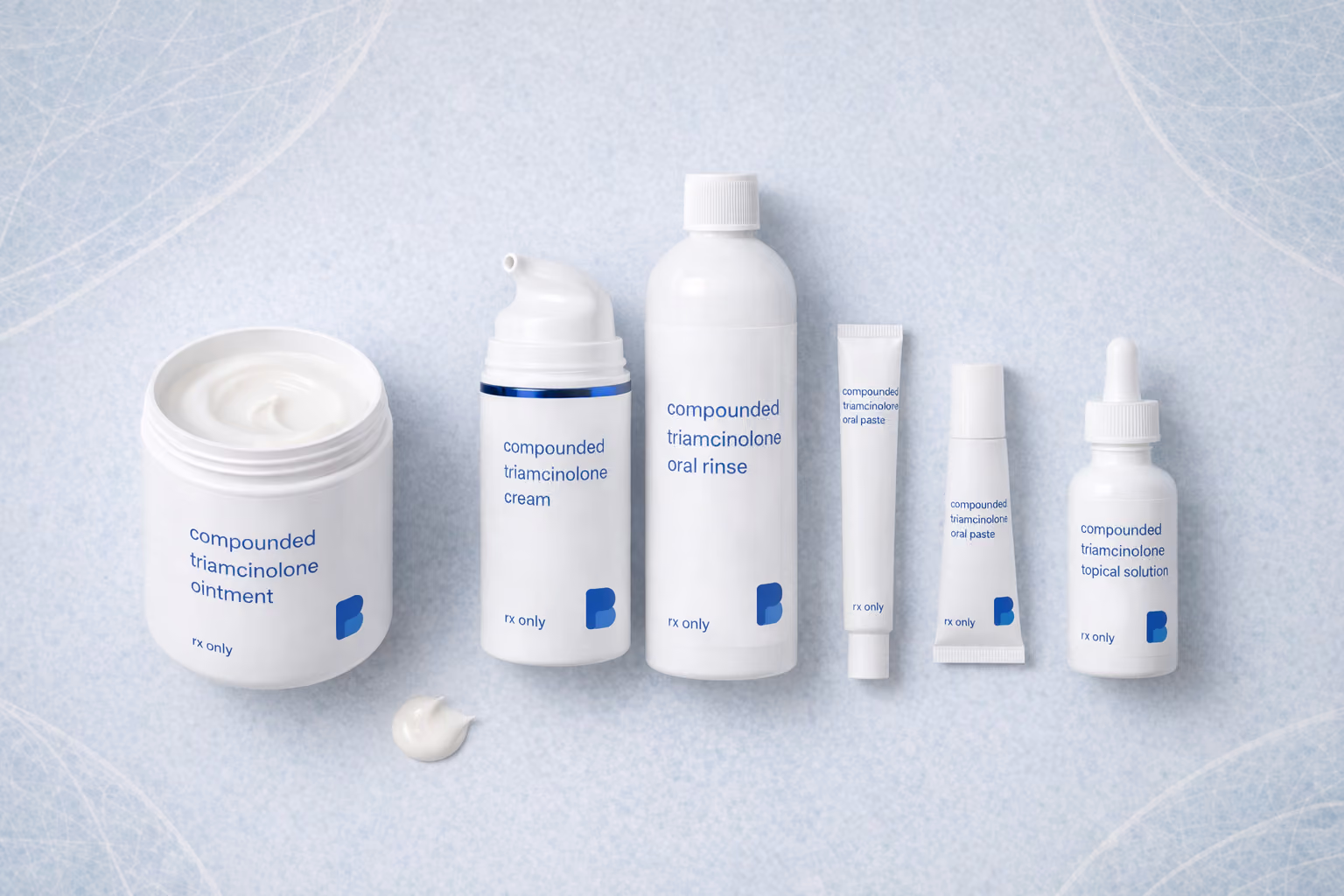
A sample of preparations from our formulary. Strengths and dose forms are customised to the prescription.
Triamcinolone acetonide is a medium-potency corticosteroid used on the skin for inflammatory conditions such as eczema, psoriasis, and dermatitis, and in the mouth for sores and lichen planus. Manufactured triamcinolone comes as 0.025%, 0.1%, and 0.5% cream and ointment, a lotion, a spray, and a 0.1% dental paste. Bayview compounds it when your prescriber wants a strength, base, or form those do not offer, such as a preservative-free ointment, a gel, a shampoo, or a swish-and-spit oral rinse. The compounded preparations are not FDA-approved and are prepared to your prescriber's order.
Anyone allergic to triamcinolone or other corticosteroids, and anyone who would put it on an untreated skin infection, cold sore, or thrush, because a steroid can let the infection spread; the paste and rinse should not be used during a mouth or throat infection. Tell your prescriber if you are pregnant or breastfeeding, have diabetes or glaucoma, or use other steroid medicines. Children absorb more through their skin and need a pediatric prescriber's direction, the lowest strength, and no diapers over treated skin.
It depends on the strength, base, form, and size — a 240 mL oral rinse and a 30 g tube of cream are not priced alike, and the starting price shown on this page is for the oral rinse. Where a manufactured triamcinolone product fits your prescriber's order, that is what we dispense, and it is usually the less expensive route; compounding is for the strengths, bases, and forms no manufacturer makes. Compounded preparations are cash-priced and are generally eligible for HSA and FSA cards. Call us at 401-284-4505 with the preparation and quantity your prescriber ordered and we will quote it before we make it.
Topical steroids are grouped into seven potency classes, class I being the strongest and class VII the mildest. Triamcinolone acetonide sits in the middle: the 0.5% is class III, the 0.1% is class IV, and the 0.025% is class V. That middle position is why it is the most commonly prescribed topical steroid in the United States — strong enough for eczema and psoriasis on the body and limbs, and mild enough for larger areas and longer courses than a class I or II steroid allows. For comparison, fluocinonide 0.05% is class II and over-the-counter hydrocortisone 1% is class VII.
They are the same medicine at three concentrations, and they fall into three different potency classes. The 0.025% (class V) is the mildest and is used for larger areas, thinner skin, and step-down courses. The 0.1% (class IV) is the everyday strength for eczema, psoriasis, and dermatitis on the body and limbs. The 0.5% (class III) is reserved for thick, stubborn plaques on places like the hands, feet, elbows, and knees. Higher is not automatically better: more steroid on thin or inflamed skin also means more absorption and more risk of thinning. Your prescriber picks the strength.
Other salt forms of this molecule, and ingredients commonly compounded alongside it.
This page describes an active pharmaceutical ingredient, not a finished drug product. Bayview Pharmacy compounds preparations containing it only on a prescriber's order for an individual patient.
Compounded preparations are not FDA-approved, and the FDA has not evaluated them for safety, effectiveness, or manufacturing quality. Nothing on this page is a claim that any preparation is effective for any condition.
A valid prescription is required. Availability depends on Bayview's licensure in your state. This page is general information, not medical advice — discuss your situation with a licensed healthcare provider.
Our pharmacists work with prescribers to build preparations around a patient's dose, form and tolerances. Ask us what is possible with this ingredient.