



In Stock
Preservative-Free Morphine Infusion | Bayview Pharmacy

Morphine Infusion

Smiling man in blue pharmacist scrubs with arms crossed and pen behind his ear.
Medically reviewed by Ryan Dyer, RPh
Last updated on
September 21, 2026
Starting at
$140
for
100 mL
Checkmark icon followed by text 'HSA/FSA Eligible'.
Start with a prescriptionPrescribers: request this order form →Prescribers: how to e-prescribe this →
Licensed to fill prescriptions for patients in RI, MA, CT, NJ, NH, FL, ME & PA
This medication is a controlled substance. Your provider must send it by electronic prescribing for controlled substances (EPCS).
  • No preservatives. No benzyl alcohol, none of the rest.
  • 5 and 20 mg/mL. Other concentrations on the prescriber's written order.
  • Infusion bags. Filled at 50, 100, or 150 mL for the infusion pump.
  • Tested and dated. Sterile under USP <797>, with the beyond-use date printed on the label.
  • Subcutaneous or IV. Suitable for continuous administration.
  • Schedule II. Dispensed for one named patient on a valid prescription.

Morphine Infusion (Preservative-Free) is a compounded sterile solution of morphine sulfate, prepared at 5 mg/mL and 20 mg/mL without benzyl alcohol or other preservatives, for continuous subcutaneous infusion (CSCI) or intravenous infusion. It is compounded for hospice and palliative care patients whose prescriber has ordered a parenteral opioid because pain or dyspnea cannot be managed by the oral route. Morphine is a Schedule II controlled substance and requires a written, signed prescription. Compounded preparations are not FDA-approved, and FDA does not verify their safety, effectiveness, or quality before marketing.

Preservative-free preparations avoid benzyl alcohol and similar preservatives, which cause local tissue irritation at continuous subcutaneous infusion sites and accumulate at high infusion volumes. The 20 mg/mL concentration exists because subcutaneous tissue absorbs only roughly up to 3 mL per hour, so high hourly doses cannot be delivered subcutaneously at commercially available dilute concentrations. Bayview fills it into 50 mL, 100 mL, and 150 mL infusion bags to the prescriber's order.

Related pages: hospice and palliative care compounding and hydromorphone infusion.

Why is morphine compounded concentrated and preservative-free?

Subcutaneous tissue absorbs only roughly 3 mL per hour, so once the ordered hourly dose passes a certain point it cannot be delivered subcutaneously at commercially available dilute concentrations. The 20 mg/mL preservative-free preparation exists for that reason; 5 mg/mL covers lower-rate infusions.

Preservative-free is a separate matter: benzyl alcohol and similar preservatives irritate continuous subcutaneous infusion sites and accumulate at higher infusion volumes. The prescriber selects the concentration.

How is bag volume chosen?

Bag volume is normally the ordered infusion rate multiplied by the intended interval between nurse visits, so a bag runs until the next scheduled change. Bayview fills 50, 100, and 150 mL infusion bags for use with the patient's infusion pump.

Naming the pump, the rate, and the intended visit interval on the prescription lets us match volume to rate. This is a logistical calculation, not a clinical recommendation.

Trusted by 105,826 patients to date.
A group of faces of our past satisfied patients.
Compounded medications are prepared pursuant to a valid prescription for an individual patient and are not FDA-approved. This page is for educational purposes and is not medical advice.
**The FDA does not review or approve compounded medications for safety or effectiveness. A valid prescription from a licensed practitioner is required.
Important safety information →
Service availability

Prescription delivery in your state

Bayview Pharmacy is licensed to serve patients in eight states and serves eligible New York patients on a limited basis while nonresident registration is pending. Check your state before getting started.

See every state we ship to, with shipping times and pickup details →

Where we currently serve

Select a highlighted state to check availability.

Currently licensed Limited basis, registration pending Not currently licensed Your selection

Select a state on the map or use the state checker.

Do we serve your state?

Choose your state to confirm current service availability.

Thank you! Your submission has been received!
Oops! Something went wrong while submitting the form.
Where we serve
Start with a prescription

Your provider e-prescribes it

STEP
1
This medication is a controlled substance, so your provider must send it electronically (EPCS) from a DEA-registered account. A licensed provider has to decide it's appropriate first.
A thin blue light beam connecting two clear glass slabs on a white surface.

A pharmacist reviews it

STEP
2
We verify your electronic prescription and its controlled-substance requirements, then prepare your medication to your provider's exact instructions.
Close-up of a white dial with blue measurement markings and a rotating knob.

We compound & ship

STEP
3
We prepare your medication and ship it discreetly to your door, with support when you need it. Refills and quantities follow the limits set by law for its drug schedule and by your prescriber.
Close-up of a gray box with a precise blue line running along its folded edges.

What is Morphine Infusion?

Morphine Infusion (Preservative-Free) is a compounded sterile solution of morphine sulfate prepared without benzyl alcohol or other preservatives, for continuous subcutaneous infusion (CSCI) or intravenous infusion. Bayview Pharmacy compounds it at 5 mg/mL and 20 mg/mL, and at other concentrations when a prescriber orders them, filled into infusion bags. It is part of our hospice and palliative care compounding line.

This page is written for prescribers and for the hospice nurses and family caregivers who manage an infusion at home. It describes the preparation and summarizes what the palliative care literature reports. It is not medical advice, and nothing on this page recommends a drug or a dose for any patient. The prescribing clinician decides whether an opioid infusion is appropriate, which opioid to use, and at what rate.

Morphine is a Schedule II controlled substance, and this is a compounded preparation. A written, signed prescription is required under 21 CFR 1306.11. Compounded preparations are not FDA-approved, and FDA does not verify their safety, effectiveness, or quality before marketing. Bayview compounds each preparation for an identified individual patient on a valid prescription. Bayview does not supply office-use stock, agency stock, or fillable hospice kits.

What is it used for?

In hospice and palliative care, morphine is prescribed for two symptoms. One is pain. The other is dyspnea, the sensation of breathlessness, sometimes described as air hunger. A continuous parenteral infusion is generally considered when the oral route has failed or is unavailable, for example because of dysphagia, obtundation, persistent vomiting, or bowel obstruction. The decision to begin an opioid infusion, and the choice among morphine, hydromorphone, fentanyl, and sufentanil, belongs to the prescribing clinician. Bayview also compounds preservative-free hydromorphone infusion and the wider set of hospice and palliative care preparations, including magic mouthwash for oral discomfort.

How does it work?

Morphine is an agonist at the mu-opioid receptor. In plain terms, it turns down the brain's alarm signal for pain, and it reduces the sensation of breathlessness. That is why one drug is used for two symptoms that can seem unrelated. It does not treat the underlying disease.

Why is a concentrated, preservative-free preparation compounded?

There are three documented reasons, and the first is the main one.

Subcutaneous tissue absorbs roughly up to 3 mL per hour. That volume ceiling is the entire rationale for the 20 mg/mL strength. Above roughly 3 mL/hr the tissue cannot take up the fluid, so a high hourly dose simply cannot be delivered subcutaneously at commercially available dilute concentrations. The 5 mg/mL strength covers typical infusion requirements. The 20 mg/mL strength exists for opioid-tolerant patients, and to keep a 50, 100, or 150 mL bag running long enough that a nurse is not driving to the home every day to change it. Bag size is chosen as rate multiplied by the desired change interval.

Preservative-free matters at a continuous infusion site. Benzyl alcohol and other preservatives cause local tissue irritation at continuous subcutaneous sites and accumulate when infusion volumes are high, so preservative-free preparations are used for this route.

Supply. Morphine injection has appeared on FDA and ASHP drug shortage lists, and persistent shortages of commercial morphine injection are an additional documented driver of compounding.

Concentrations and bag sizes

The table below lists what Bayview routinely compounds. Bag size is a practical choice, infusion rate multiplied by the interval between nurse visits, not a clinical recommendation. The prescriber specifies the concentration, the volume, and the container.

ConcentrationVolumes filledNotes
Morphine sulfate 5 mg/mL, preservative-free100 mL or 150 mL bagCovers typical continuous infusion requirements
Morphine sulfate 20 mg/mL, preservative-free50 mL, 100 mL, or 150 mL bagUsed when the ordered hourly dose would exceed the subcutaneous volume ceiling at a dilute concentration, or to extend the time between bag changes
Other concentrationsAs orderedCompounded to the prescriber's written order
ContainersInfusion bagsSpecify the pump on the prescription

Concentrations and volumes are listed for reference only and are not a statement that any strength or volume is appropriate for a particular patient. Dispensing more than one bag is a supply arrangement and is not a dosing instruction.

How is it given?

Continuous subcutaneous infusion is the workhorse route in the home when the oral route fails and intravenous access is absent or burdensome. Morphine, hydromorphone, fentanyl, and sufentanil are all suitable for subcutaneous administration. A 25- or 27-gauge butterfly needle is placed in the upper arm, shoulder, abdomen, or thigh, avoiding the chest wall, and connected to an ambulatory infusion pump. The same preparation can be run intravenously when a line is already in place. Evidence for intravenous-to-subcutaneous conversion is weak; many practitioners use a 1:1 ratio.

Caring for the infusion site

A subcutaneous site may remain in place for up to about a week unless a local reaction develops. Rotate the site if you see redness, hardness or firm swelling under the skin (induration), or fluid leaking around the needle. Avoid placing a site in tissue that is swollen with fluid (edematous) or that has been irradiated. Tell the hospice nurse about any site problem, and about a pump alarm you do not understand. Do not reprogram or restart the pump on your own. Call the hospice.

Dosing and titration as reported in the literature

Dosing is the prescriber's decision. The following describes the approach reported in the palliative care literature and is provided for reference only. It is not a dosing recommendation.

  • Convert the patient's current 24-hour opioid requirement to an intravenous or subcutaneous equivalent, then divide by 24 to obtain the basal hourly rate.
  • A loading bolus is described, because steady state on a continuous infusion takes hours to reach.
  • Demand (patient-controlled) boluses are commonly described at 50 to 150% of the hourly rate, with a lockout of about 20 minutes.
  • Reassessment every 30 to 60 minutes until symptoms are controlled is described.
"Start morphine at 1 mg/hr and titrate to effect" is pharmacologically unsound. A starting rate chosen without reference to the patient's existing opioid requirement is not a conversion. The literature describes calculating the rate from the documented 24-hour requirement instead.

Kidney function and morphine's metabolites

This is the point most specific to morphine. Morphine is metabolized to glucuronide metabolites, morphine-3-glucuronide (M3G) and morphine-6-glucuronide (M6G), which accumulate when kidney function declines and may cause opioid neurotoxicity. That is why prescribers often move away from morphine as renal function worsens.

To be accurate about the alternatives: hydromorphone follows a similar pattern through its own glucuronide metabolite, so describing hydromorphone as simply "safe in renal failure" overstates the case. Fentanyl and methadone have no clinically significant active metabolites. The literature recommends dose reduction of approximately 25% at a creatinine clearance of 10 to 50 mL/min and approximately 50% at a creatinine clearance below 10 mL/min.

Opioid neurotoxicity is not simply sedation. It presents as myoclonus (sudden muscle jerks), hyperalgesia (pain that increases rather than improves as the dose goes up), and agitated delirium. Report these to the hospice team; they may signal metabolite accumulation rather than undertreated pain.

Side effects and safety

Respiratory depression is the principal risk of opioid therapy. As reported in the palliative care literature, opioids correctly titrated to symptom relief do not cause respiratory depression; the risk lies in non-proportional dose escalation, in opioid-naive patients, and in co-administration of an opioid with a benzodiazepine.

Equianalgesic conversion is the most common source of serious opioid error. Published conversion ratios are approximations, and incomplete cross-tolerance warrants a reduction of 25 to 50% when rotating from one opioid to another.

Other effects reported with morphine include sedation, constipation, nausea, pruritus (itching, which with morphine is related to histamine release), urinary retention, and myoclonus. Constipation is universal with continuous opioid therapy, and a bowel regimen is planned alongside it rather than after the fact.

Who should not receive it?

This decision belongs to the prescribing clinician, and in hospice the balance of risk and benefit is different from other settings. The considerations below are drawn from the standard morphine sulfate labeling and are listed for reference, not as a recommendation.

Morphine is contraindicated in anyone with a known hypersensitivity to morphine, in significant respiratory depression, in acute or severe bronchial asthma in an unmonitored setting or without resuscitative equipment, and in known or suspected gastrointestinal obstruction including paralytic ileus (MedlinePlus). Concurrent benzodiazepines or other central nervous system depressants raise the risk of profound sedation and respiratory depression, which is one of the settings where respiratory depression concentrates. As covered above, declining kidney function is a reason prescribers often move away from morphine rather than a strict contraindication.

Tell the hospice team about all medications the patient takes, including anything started by another prescriber, and about any known drug allergy.

Storage, security, and disposal

Store exactly as directed on the label. Morphine is a Schedule II controlled substance and is a target for diversion. Keep it in a secure place, a lock box or a locked cabinet, and out of the sight and reach of children, visitors, and anyone else in the home. Keep track of what has been dispensed and what remains. Never give it to anyone other than the patient it was dispensed for; sharing a controlled substance is a federal offense and can be fatal to someone who is not opioid-tolerant.

Do not put unused bags in the household trash. Under the CMS hospice condition of participation at 42 CFR 418.106, the hospice must have written policies for the management and disposal of controlled drugs in the patient's home, and must counsel the patient and family on those policies, and document that counseling, when controlled drugs are first ordered. Follow your hospice's written disposal procedure, and ask the hospice nurse if anything about it is unclear.

Sterile compounding and beyond-use dates

Bayview prepares this as a sterile compounded preparation under USP General Chapter <797>. You can read how we handle sterile compounding. The 2023 revision of <797>, official November 1, 2023, replaced the former low-, medium-, and high-risk levels with Category 1, Category 2, and Category 3 compounded sterile preparations. Category 1 preparations are compounded in a primary engineering control located in an unclassified segregated compounding area and carry short beyond-use dates. Category 2 preparations require a cleanroom suite, with beyond-use dates assigned per the chapter's Table 13. Category 3 permits longer beyond-use dates per Table 14, but requires sterility testing and extended environmental monitoring.

One practical point matters for scheduling deliveries and bag changes: the assigned beyond-use date, not the chemical stability of the molecule, usually governs how long a preparation may be used. The beyond-use date for each dispense is assigned according to the applicable USP <797> category and the testing performed, and is printed on the label. Use the date on the label.

Clinical details for prescribers

Regulatory status. Morphine sulfate is a Schedule II controlled substance. 21 CFR 1306.11 requires a written, signed prescription for a Schedule II controlled substance. A facsimile prescription serves as the original written prescription, with no follow-up hard copy required, in three situations that commonly apply to this preparation: (a) a Schedule II narcotic compounded for direct parenteral administration by intravenous, intramuscular, subcutaneous, or intraspinal infusion; (b) a resident of a long-term care facility; and (c) a patient enrolled in a hospice program. Electronic prescribing for controlled substances is also accepted.

Compounding status. Compounded under section 503A of the Federal Food, Drug, and Cosmetic Act. Compounded preparations are not FDA-approved, and FDA does not verify their safety, effectiveness, or quality before marketing. Each preparation is compounded for an identified individual patient on a valid prescription; anticipatory compounding is permitted only in limited quantities based on a documented history of receiving valid prescriptions. Bayview does not supply office-use stock, agency stock, or fillable hospice kits.

Formulation. Morphine sulfate, preservative-free, 5 mg/mL and 20 mg/mL; other concentrations compounded to order. Filled into infusion bags at 50 mL, 100 mL, and 150 mL. Prepared as a sterile compounded preparation under USP <797>; the beyond-use date is assigned by category and testing performed, and is printed on the label.

Clinical points as reported in the literature:

  • Subcutaneous absorption is limited to roughly 3 mL/hr, which constrains the achievable hourly dose at dilute concentrations and is the rationale for the 20 mg/mL preparation
  • CSCI is used when the oral route fails (dysphagia, obtundation, vomiting, bowel obstruction) and IV access is absent or burdensome; 25- or 27-gauge butterfly in upper arm, shoulder, abdomen, or thigh, avoiding the chest wall; a site may remain up to about a week absent local reaction; rotate on redness, induration, or leakage; avoid edematous or irradiated tissue
  • Morphine, hydromorphone, fentanyl, and sufentanil are all suitable subcutaneously; IV:SQ conversion evidence is weak and many practitioners use 1:1
  • Titration as reported: convert the 24-hour opioid requirement to an IV/SQ equivalent, divide by 24 for the basal rate, give a loading bolus because steady state takes hours, set demand boluses at 50 to 150% of the hourly rate with a lockout of about 20 minutes, and reassess every 30 to 60 minutes until controlled
  • M3G and M6G accumulate in renal impairment with a risk of neurotoxicity (myoclonus, hyperalgesia, agitated delirium); approximately 25% dose reduction at CrCl 10 to 50 mL/min and approximately 50% at CrCl <10 mL/min is recommended. Hydromorphone accumulates via its own glucuronide and is not simply "safe in renal failure"; fentanyl and methadone have no clinically significant active metabolites
  • Incomplete cross-tolerance warrants a 25 to 50% reduction when rotating opioids; published equianalgesic ratios are approximations, and conversion is the most common source of serious error
  • Respiratory depression risk concentrates in non-proportional dose escalation, opioid-naive patients, and benzodiazepine co-administration; opioids correctly titrated to symptom relief are not reported to cause respiratory depression
  • 42 CFR 418.106 requires hospice written policies on management and disposal of controlled drugs in the home, with counseling and documentation at the time controlled drugs are first ordered

Ordering: send a written, signed prescription, an EPCS electronic prescription, or a facsimile as permitted above to Bayview Pharmacy, 3844 Post Rd, Warwick, RI 02886, fax 401-284-4506. Specify concentration, total volume, container and pump type, rate, and any demand bolus and lockout. Dosing decisions remain the prescriber's responsibility. Account setup, licensing, and ordering are covered on our for providers page.

This is a prescription compounded preparation and is not FDA-approved. Morphine is a Schedule II controlled substance. This information is educational, is not medical advice, and is not a recommendation to use any drug or any dose for any patient. The prescribing clinician determines whether an opioid infusion is appropriate and sets the drug, concentration, and rate.

References

  1. MedlinePlus: Morphine
  2. 21 CFR 1306.11: Requirement of prescription (Schedule II)
  3. 42 CFR 418.106: Hospice condition of participation, drugs and biologicals
  4. USP General Chapter <797> Pharmaceutical Compounding, Sterile Preparations
  5. FDA Drug Shortages database
  6. Section 503A, Federal Food, Drug, and Cosmetic Act
Reviewed by Ryan Dyer, RPh, pharmacist at Bayview Pharmacy. Last reviewed July 28, 2026. Bayview does not provide consultations and does not decide whether a medication is right for you. Your prescriber makes that call.

In Stock
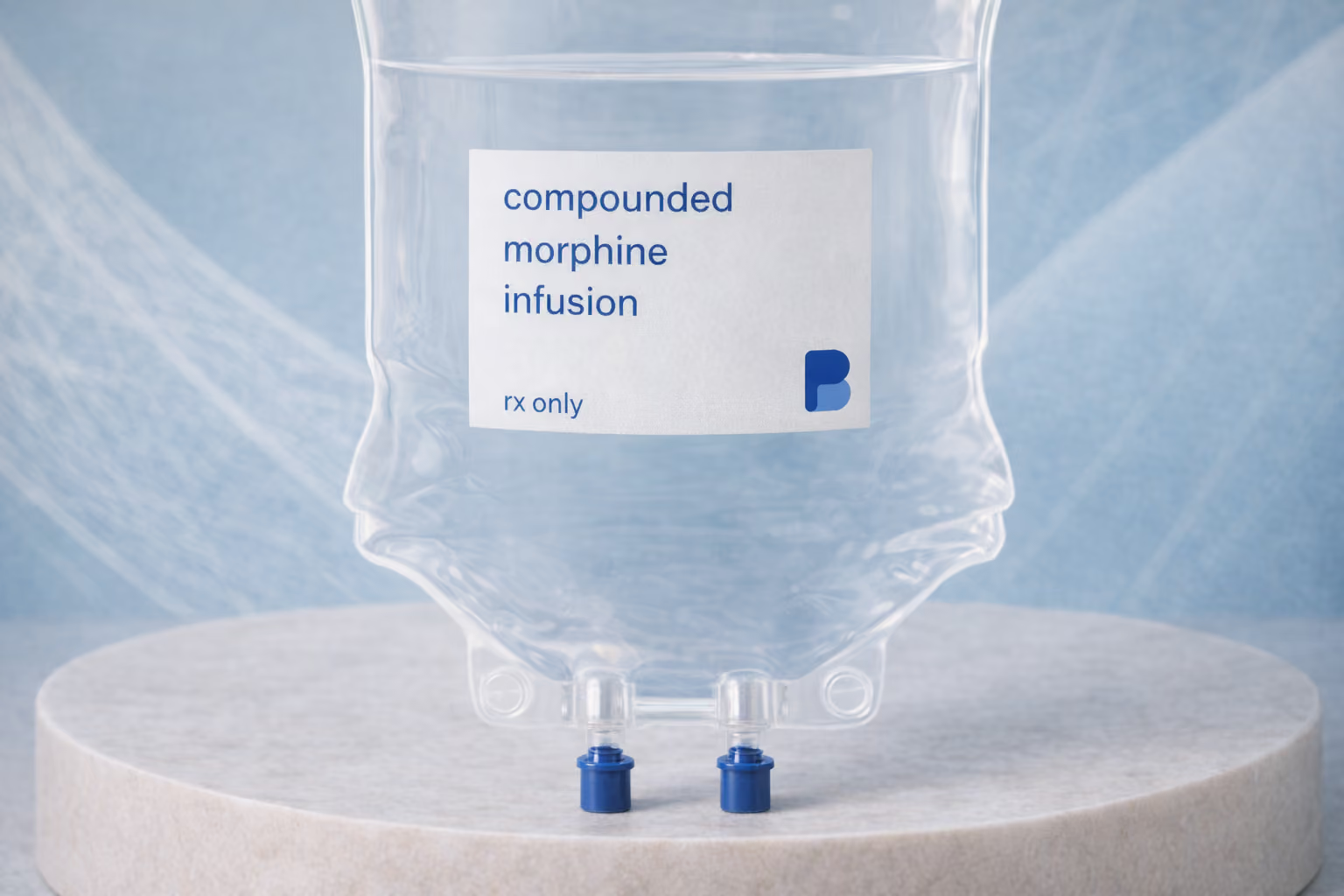
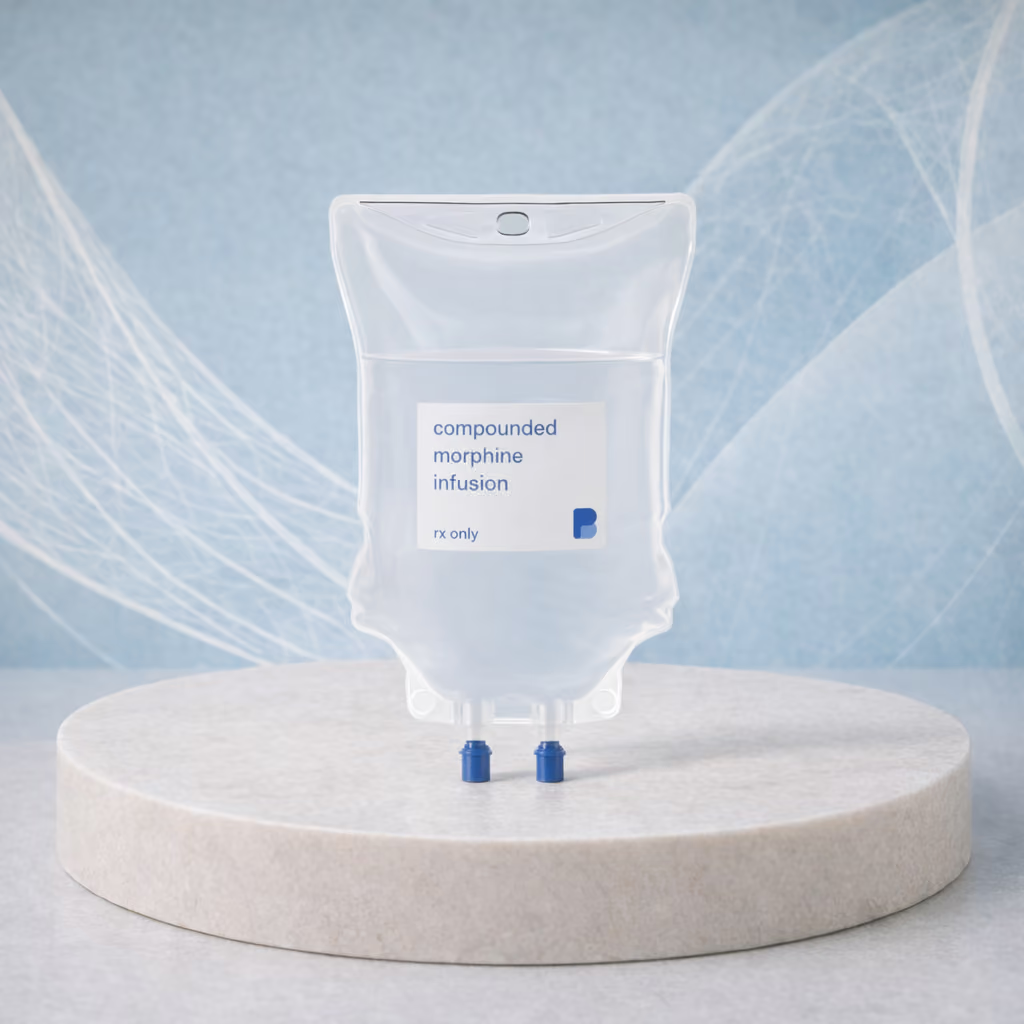
Morphine Infusion, a compounded medication prepared by Bayview Pharmacy

On this page

Preservative-free for continuous infusion sites

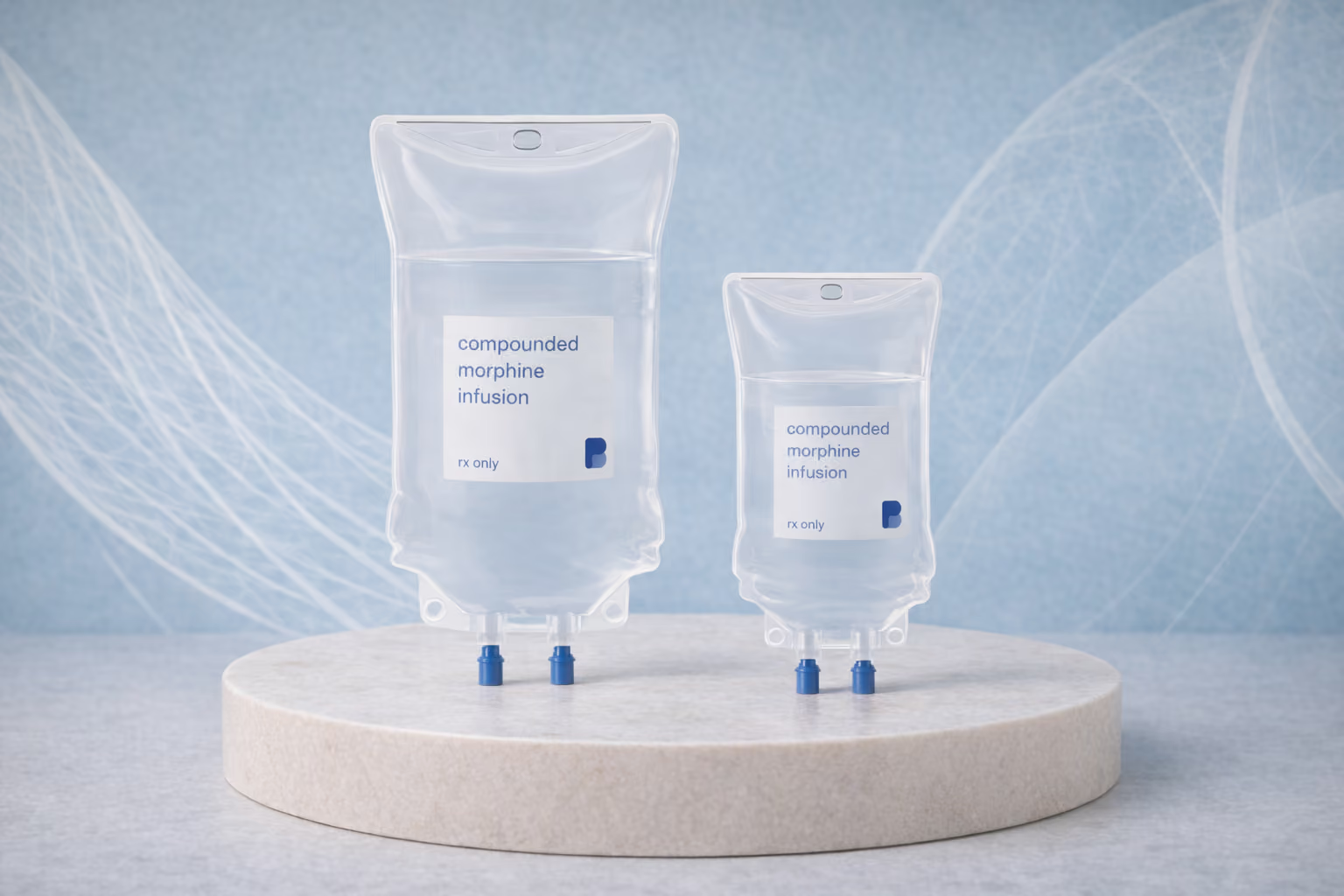
Morphine is compounded without preservatives, which irritate continuous infusion sites. Bayview fills infusion bags to the prescriber's written order for each individual patient.

Start with a prescription
Preservative-free for continuous infusion sites – Morphine Infusion from Bayview Pharmacy

Why a 20 mg/mL concentration exists

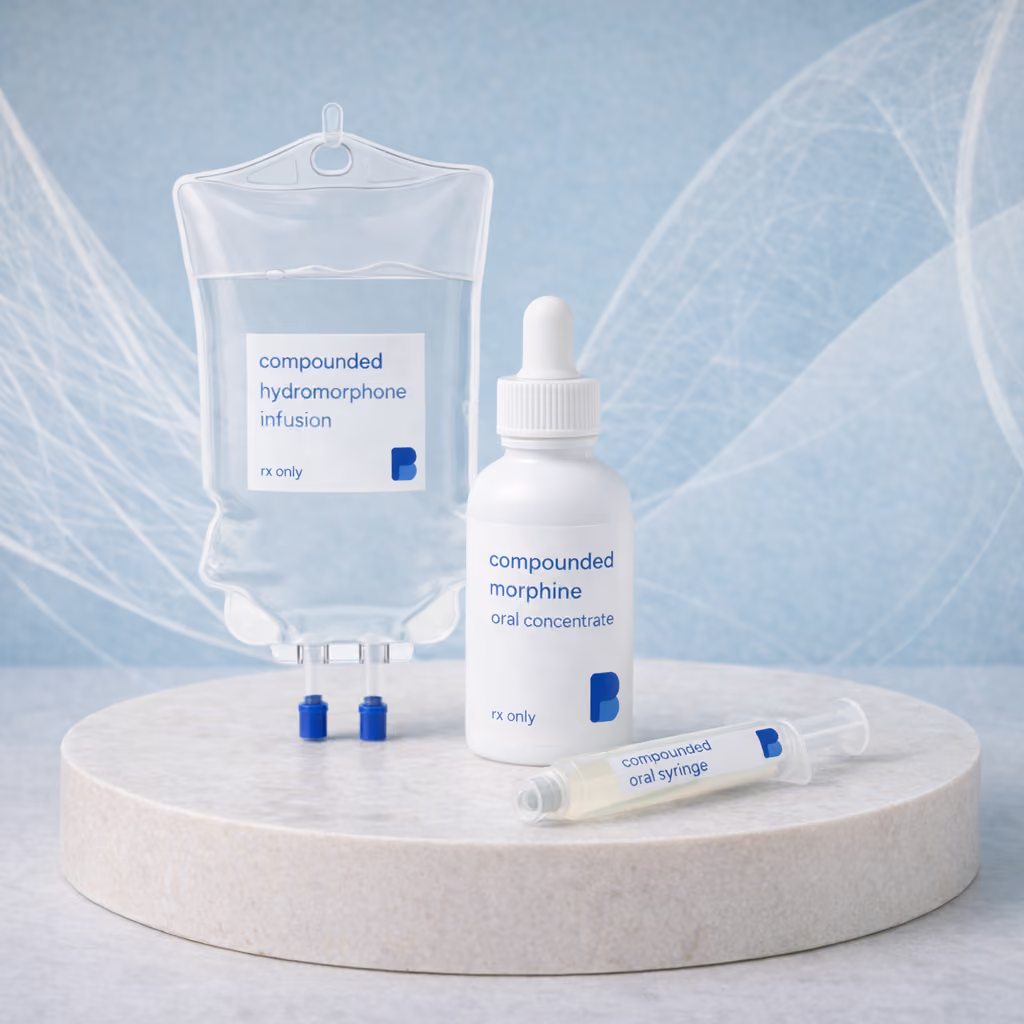
Skin can only absorb about 3 mL per hour, so higher doses cannot be given at dilute commercial concentrations. The 20 mg/mL preparation solves that and extends the time between bag changes. The prescriber sets concentration, volume, and rate.

View our formulas
Why a 20 mg/mL concentration exists – Morphine Infusion from Bayview Pharmacy

Personalized compounding for patients who need more than a standard option.

"As a compounding pharmacy, we prepare each medication to a provider’s exact specifications. My focus, and my team’s focus, is quality, consistency, and close communication with prescribers so patients receive medication prepared for their individual needs."
Ryan Dyer, RPh
Owner and Chief Pharmacist, Bayview Pharmacy
Smiling man in blue scrubs with arms crossed and pen behind his ear
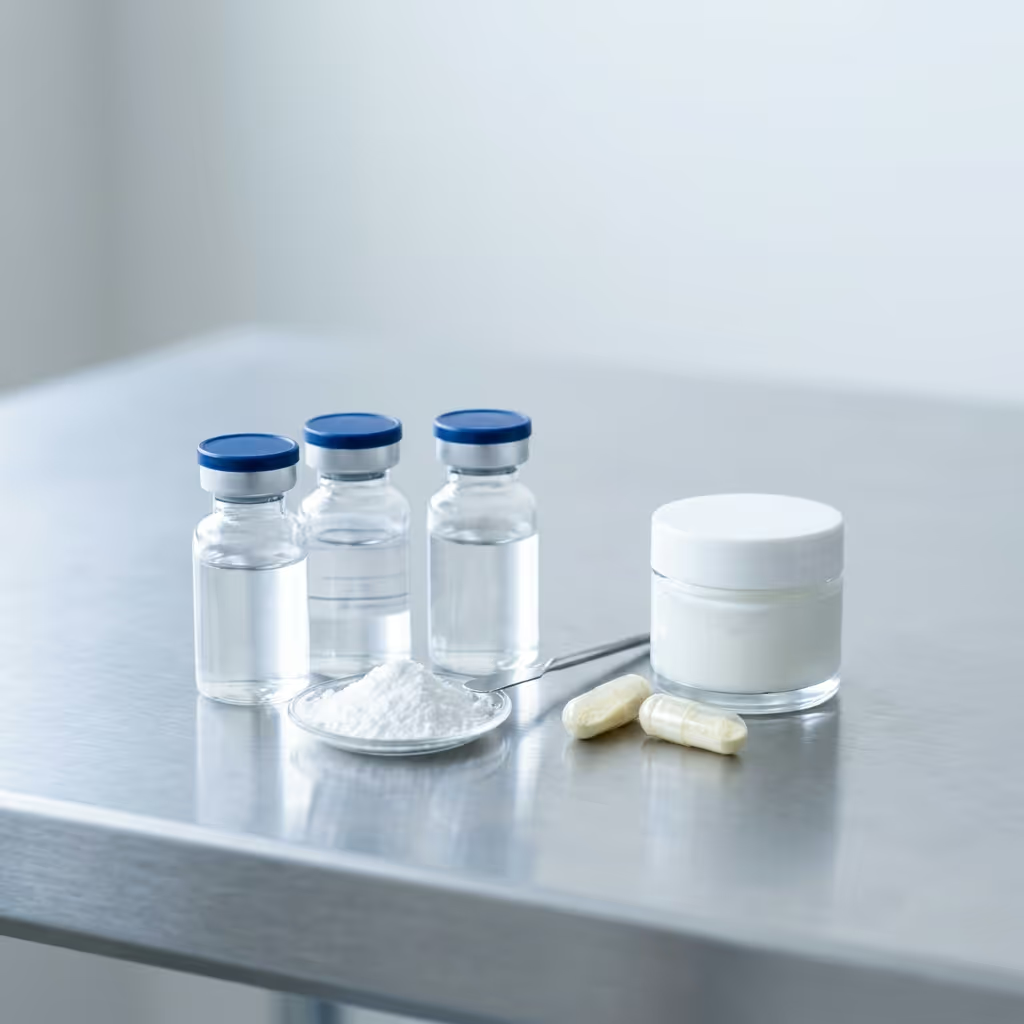
Three clear liquid vials, white powder on spoon, two capsules, and a cream jar on a metal surface.
QUALITY AND TESTING

Held to a higher standard

Every preparation is made under strict quality controls, and verified by a licensed pharmacist.
We use validated quality processes and third-party testing where appropriate
Sterile compounding in a dedicated USP <797> cleanroom
Non-sterile compounding under USP <795> and <800> standards
USP/NF-grade ingredients from reputable, vetted suppliers

Why patients choose Bayview

Made in our own pharmacy
Made to your prescription
Quality tested
Real pharmacist support
Trusted since 2006

Our formulations

Morphine is compounded preservative-free at the concentration the prescriber orders and filled into the container specified. Concentrations and volumes are shown for reference; the prescriber selects what is appropriate.

Concentration Volumes filled Notes
Morphine sulfate 5 mg/mL PF100 mL or 150 mL bagCovers typical continuous infusion requirements
Morphine sulfate 20 mg/mL PF50 mL, 100 mL, or 150 mL bagFor hourly doses that cannot be delivered subcutaneously at a dilute concentration, and to extend the time between bag changes
Other concentrationsAs orderedCompounded to the prescriber's written order
ContainersInfusion bagsSpecify the pump on the prescription

Concentration, volume, rate, and container are set by the prescriber. Bag size is a practical choice (rate multiplied by the interval between nurse visits) and not a clinical recommendation. Concentrations are listed for reference only and are not a statement that any strength is appropriate for a particular patient. Morphine is a Schedule II controlled substance and a written, signed prescription is required. This is a compounded preparation and is not FDA-approved. Beyond-use dates are assigned per the applicable USP <797> category and the testing performed, and are printed on the label.

Start with a prescription
Prescribers: request this order form →
Morphine Infusion (Preservative-Free)

For prescribers

How to e-prescribe this formulation

Bayview accepts e-prescriptions from any Surescripts-connected EHR. Compounded preparations have no NDC, so they will not appear in your drug search. Choose the preparation below and copy the prescription into your EHR.

Patient? Send these instructions to your doctor's office.
  1. Find Bayview in your EHR's pharmacy directory

    Search by NCPDP 4106882, or by name and ZIP: Bayview Pharmacy, Warwick, RI 02886. Save it as a favorite so you never search again.

  2. Choose the preparation

    Name the preparation exactly as listed under Our formulations above: each active ingredient and strength, the dose form, the quantity, and the directions.

  3. Enter it as a compound

    Use your system's compound, non-formulary, or free-text prescription entry and paste the details. If your EHR forces you to pick a listed drug, pick the closest entry for the active ingredient and put the full formula in the prescription body (the Sig or directions field).

  4. Send it

    Transmit from your EHR. Prefer not to e-prescribe? For non-controlled preparations we also accept fax to (401) 284-4506 and phoned orders at (401) 284-4505. Order forms are in the Prescribers: download order form menu above.

Do not use Notes to Pharmacy for the formula. Some EHRs keep that field internal and never transmit it. A prescription that arrives without the formula is delayed while we call your office.

Compounded preparations are not FDA-approved. A valid prescription is required. Questions: call (401) 284-4505. Full e-prescribing guide

Frequently asked questions

Why is morphine compounded concentrated and preservative-free?

Subcutaneous tissue absorbs only roughly 3 mL per hour, so once the ordered hourly dose passes a certain point it cannot be delivered subcutaneously at commercially available dilute concentrations. The 20 mg/mL preservative-free preparation exists for that reason; 5 mg/mL covers lower-rate infusions.

Preservative-free is a separate matter: benzyl alcohol and similar preservatives irritate continuous subcutaneous infusion sites and accumulate at higher infusion volumes. The prescriber selects the concentration.

How is bag volume chosen?

Bag volume is normally the ordered infusion rate multiplied by the intended interval between nurse visits, so a bag runs until the next scheduled change. Bayview fills 50, 100, and 150 mL infusion bags for use with the patient's infusion pump.

Naming the pump, the rate, and the intended visit interval on the prescription lets us match volume to rate. This is a logistical calculation, not a clinical recommendation.

How is the subcutaneous infusion site managed?

Continuous subcutaneous infusion is generally described in the literature using a 25 to 27 gauge butterfly or a small subcutaneous catheter placed in the abdomen, upper arm, anterior thigh, or upper back. Edematous, irradiated, infected, or broken tissue is avoided.

Sites are rotated when redness, induration, swelling, pain, or leakage appears; a quiet site is often reported to remain usable for about a week. Assessment and rotation follow the hospice's own policy and nursing judgment.

What are the principal safety concerns?

Respiratory depression is the principal risk of opioid therapy, and it concentrates in three situations: dose escalation that is not proportional to the symptom being treated, opioid-naive patients, and co-administration of a benzodiazepine with an opioid.

Equianalgesic conversion is the most common source of serious opioid error. Published conversion ratios are approximations, and the literature advises a 25 to 50 percent reduction from the calculated dose when rotating opioids to account for incomplete cross-tolerance. Nothing here is a dose recommendation; titration and monitoring remain the prescriber's responsibility.

What changes when kidney function is reduced?

Morphine's M3G and M6G metabolites accumulate in renal impairment and may cause neurotoxicity, which presents as myoclonus, hyperalgesia, and agitated delirium rather than as undertreated pain.

Hydromorphone is often assumed to be a safe substitute, but that is overstated: it accumulates through its own glucuronide in a similar pattern. Fentanyl and methadone are the opioids described in the literature as having no clinically significant active metabolites. Dose adjustment or opioid selection is the prescriber's decision.

How should infusion bags be secured and disposed of?

Store as directed on the label. Morphine is a Schedule II controlled substance and a target for diversion, so infusion bags are kept in a lock box or locked cabinet, out of sight and reach of children and visitors, with a count reconciled at each nursing visit.

Unused medication is not placed in household trash; it is disposed of exactly as the hospice directs and documented. Under 42 CFR 418.106 the hospice must maintain written policies on the management and disposal of controlled drugs in the home and counsel the patient and family when controlled drugs are first ordered.

Do I need a prescription?

Yes. All of our medications require a valid prescription from a licensed provider. We're a dispensing and compounding pharmacy, so we don't provide consultations or write prescriptions. If you don't have one yet, you'll need to find and see a provider first.

What is compounding?

Compounding is the practice of preparing a medication tailored to an individual patient's prescription. Instead of a mass-produced product, a compounding pharmacy makes the medication to the specific strength, form, or combination your provider orders.

Examples on this site include medications compounded as liquids for people who cannot swallow pills, thyroid capsules made to a T3/T4 ratio no manufactured product offers, and all-purpose nipple ointment, which combines three actives that are not sold together commercially.

Are compounded medications FDA-approved?

Compounded medications are not FDA-approved. They're prepared by a licensed pharmacy pursuant to a valid prescription for an individual patient, under USP standards. The FDA does not review compounded medications for safety or effectiveness.

How do providers send a prescription to Bayview?

Providers can submit a prescription three ways:

  • E-prescribe: Search Bayview Pharmacy, Warwick, RI (NCPDP 4106882) in your EHR. For compounds, use the compound, custom, or free-text option and include the full formulation, strength, quantity, refills, and directions.
  • Fax: Send a signed order to 401-284-4506 (alt. 401-210-2757) with patient and prescriber details, medication, quantity, refills, directions, signature, and date.
  • Phone: Call 401-284-4505 to submit, clarify, or coordinate refills.

A valid prescription is required, and compounded medications are not FDA-approved.

‍

Can you fill a prescription from my own provider?

Yes. Your provider can send your prescription to Bayview Pharmacy by e-prescribe, fax, or phone, or you can transfer an existing prescription from another pharmacy.

How does shipping work?

Once your prescription is verified, we prepare your medication and ship it discreetly in plain packaging either via UPS or USPS. A pharmacy technician confirms the details with you before it goes out, and we're available if you have any questions.

How do refills and automatic refills work?

Refills are coordinated with your prescriber and your prescription. You can request a refill through our website or by calling us, and we'll handle the rest as long as you have refills remaining on a valid prescription. You can also opt into automatic refills on non-controlled substances, with no need to worry about running out of your medication. We can either ship it to you automatically, or ready for pickup.

Shipping & Delivery

Every prescription ships directly to your door in discreet packaging. Refrigerated medications travel in insulated coolers with ice packs to stay cold in transit.

Delivery AreaStandard ShippingRefrigerated Shipping
Rhode Island, Massachusetts & Connecticut$9 USPS$20 UPS
New Hampshire, New Jersey, Pennsylvania, Maine & New York (limited basis)$15 UPS$40 UPS Next Day Air
Florida$15 UPS$80 UPS Next Day Air

Need it faster? Expedited UPS is $15 for Rhode Island, Massachusetts and Connecticut. Your pharmacist will let you know if your medication needs refrigerated shipping. Questions? Call us at (401) 284-4505.

References

Important safety information

Important safety information

Morphine Infusion (Preservative-Free) is a prescription compounded preparation and is not FDA-approved. Morphine is a Schedule II controlled substance. It is used only as prescribed, under the direction of the prescribing clinician and the hospice or palliative care team. Nothing here is medical advice or a recommendation to use any drug or dose.

It is not appropriate for everyone. Tell the prescriber if the patient:

  • Has a known allergy or hypersensitivity to morphine.
  • Is opioid-naive, or the current 24-hour opioid requirement is not documented.
  • Has reduced kidney function. Morphine's M3G and M6G metabolites accumulate in renal impairment and may cause neurotoxicity; dose reduction or a different opioid may be considered by the prescriber.
  • Is taking a benzodiazepine, or any other sedating medication.

Warnings and precautions:

  • Respiratory depression is the principal risk of opioid therapy. Risk is concentrated in non-proportional dose escalation, opioid-naive patients, and opioid plus benzodiazepine co-administration.
  • Equianalgesic conversion is the most common source of serious opioid error. Published conversion ratios are approximations, and incomplete cross-tolerance warrants a 25–50% reduction when rotating opioids.
  • Do not change the pump rate, reprogram the pump, or hang a new bag on your own. Call the hospice.
  • Constipation is universal with continuous opioid therapy; a bowel regimen is planned alongside it.

Reported side effects:

  • Sedation, constipation, nausea, itching (with morphine, related to histamine release), urinary retention, and myoclonus.
  • Redness, hardness (induration), or leaking at the infusion site.

Contact the hospice team promptly for:

  • Sudden muscle jerks (myoclonus), pain that increases rather than improves as the dose goes up (hyperalgesia), or agitated confusion. These may signal metabolite accumulation rather than undertreated symptoms.
  • Very slow or shallow breathing, or a patient who cannot be roused. Get emergency care.
  • Rash, swelling, or trouble breathing that may signal a serious allergic reaction. Get emergency care.
  • A site that is red, hard, swollen, or leaking, or a pump alarm you do not understand.

Security, storage, and disposal:

Store as directed on the label. Morphine is a Schedule II controlled substance and a target for diversion; keep it in a lock box or locked cabinet, out of the sight and reach of children, visitors, and others in the home, and keep track of what has been dispensed. Never give it to anyone other than the patient it was dispensed for. Do not put unused bags in the household trash. Under 42 CFR 418.106, the hospice must have written policies for the management and disposal of controlled drugs in the home and must counsel and document with the patient and family when controlled drugs are first ordered; follow that written procedure and ask the hospice nurse if anything is unclear.

This is a compounded prescription medication and is not approved by the FDA. Use it only under the supervision of a licensed provider, exactly as prescribed. Do not adjust your dose without talking to your prescriber. Seek emergency care for any severe or unexpected reaction. This information is not complete; talk to your provider about your full medical history and all medications you take.

Ready to get started?

Send us your prescription and a Bayview pharmacist will take it from there.