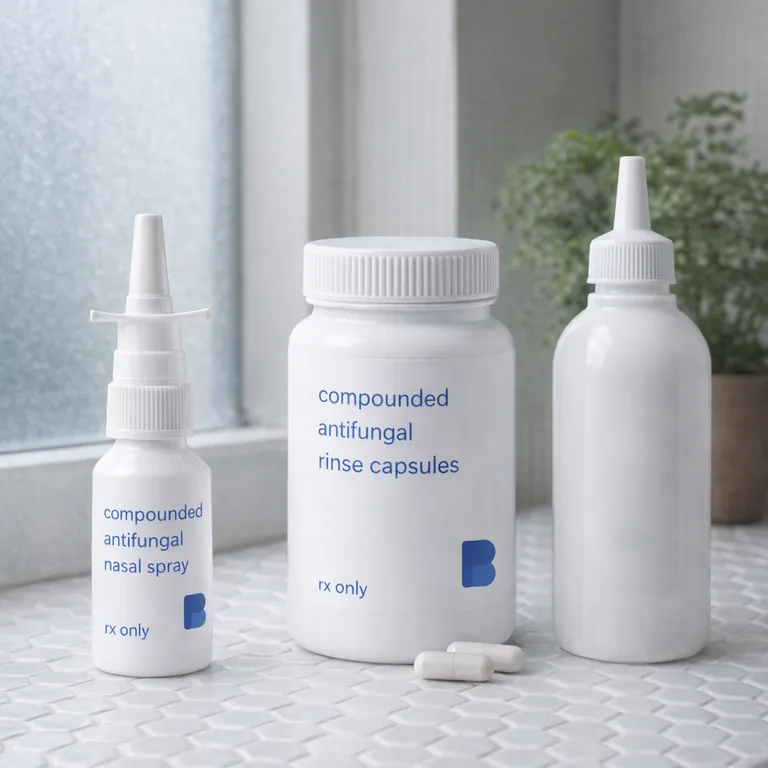
Check out our most popular compounded medications! Get Started

Ketoconazole is an imidazole antifungal, most often compounded into topical creams, gels, foams, shampoos and solutions for the skin and scalp.
Ketoconazole is an imidazole antifungal. It binds fungal cytochrome P450 enzymes and blocks the production of ergosterol, a building block of the fungal cell membrane, which stops dermatophytes and yeasts such as Candida and Malassezia from growing. Manufactured products include ketoconazole tablets, FDA-approved for certain systemic fungal infections (blastomycosis, coccidioidomycosis, histoplasmosis, chromomycosis and paracoccidioidomycosis) only when other antifungal therapy is not available or tolerated, and ketoconazole 2% cream, approved for tinea corporis, tinea cruris, tinea pedis, tinea versicolor, cutaneous candidiasis and seborrheic dermatitis. Ketoconazole 2% shampoo is manufactured by prescription for tinea versicolor, and a 1% ketoconazole shampoo (Nizoral) is sold over the counter for dandruff. A prescriber might order ketoconazole compounded when a patient needs a strength, vehicle or allergen-free base that is not manufactured, or a combination with another topical ingredient in one preparation. Compounded preparations are not FDA-approved and require a prescription.
Ketoconazole tablets carry an FDA boxed warning: they are to be used only when other antifungal therapy is not available or tolerated and are not for nail, skin or Candida infections; they can cause serious liver injury, including deaths and liver transplants; and they cause QT prolongation, a dangerous heart rhythm change, when combined with certain drugs. The cream label notes negligible absorption through skin, with no liver or hormonal effects seen from topical use. Oral ketoconazole strongly inhibits CYP3A4 and must not be combined with drugs such as dofetilide, quinidine, pimozide, cisapride, methadone, simvastatin, lovastatin, triazolam or oral midazolam. Antacids and acid reducers lower its absorption; alcohol raises liver risk. People with liver disease or a ketoconazole allergy should not take it. It passes into breast milk; LactMed says other agents are preferred for oral use, while topical use away from the breast poses little to no risk. Topical side effects include irritation, itching and stinging. For yellow skin or eyes, dark urine, palpitations, fainting or any worrying side effect, talk to your prescriber or pharmacist.
Ketoconazole inhibits fungal cytochrome P450-dependent lanosterol demethylation, depleting ergosterol in the fungal membrane. It is active against dermatophytes, Candida and Malassezia. Oral absorption is pH-dependent: the drug is a weak dibase and requires gastric acidity to dissolve, so acid-suppressing drugs and antacids reduce bioavailability. It is about 99% protein bound, metabolized hepatically by CYP3A4 to inactive metabolites, and has a biphasic half-life of roughly 2 hours initially and 8 hours terminally, with negligible CSF penetration. Systemic absorption after topical application of the 2% cream was undetectable in volunteers. Labeled indications: ketoconazole tablets for refractory blastomycosis, coccidioidomycosis, histoplasmosis, chromomycosis and paracoccidioidomycosis; ketoconazole 2% cream for tinea corporis, cruris and pedis, tinea versicolor, cutaneous candidiasis and seborrheic dermatitis; ketoconazole 2% shampoo for tinea versicolor; ketoconazole 2% foam for seborrheic dermatitis in patients 12 and older. The tablet boxed warning states the tablets are not indicated for onychomycosis, cutaneous dermatophyte infections or Candida infections. Dosing is per prescriber. For oral therapy the label calls for baseline liver panel and viral hepatitis testing, weekly ALT during treatment, and adrenal function monitoring in at-risk patients; higher oral doses suppress adrenal corticosteroid secretion. Ketoconazole is not a controlled substance.
Compounded at Bayview
Patient guides for the preparations we make most often. Each one is compounded to order and requires a prescription.
For prescribers
Every preparation in our formulary that contains this ingredient. Strength, base and dose form are set by the prescription.
Other salt forms of this molecule, and ingredients commonly compounded alongside it.
This page describes an active pharmaceutical ingredient, not a finished drug product. Bayview Pharmacy compounds preparations containing it only on a prescriber's order for an individual patient.
Compounded preparations are not FDA-approved, and the FDA has not evaluated them for safety, effectiveness, or manufacturing quality. Nothing on this page is a claim that any preparation is effective for any condition.
A valid prescription is required. Availability depends on Bayview's licensure in your state. This page is general information, not medical advice. Discuss your situation with a licensed healthcare provider.
Our pharmacists work with prescribers to build preparations around a patient's dose, form and tolerances. Ask us what is possible with this ingredient.