Check out our most popular compounded medications! Get Started

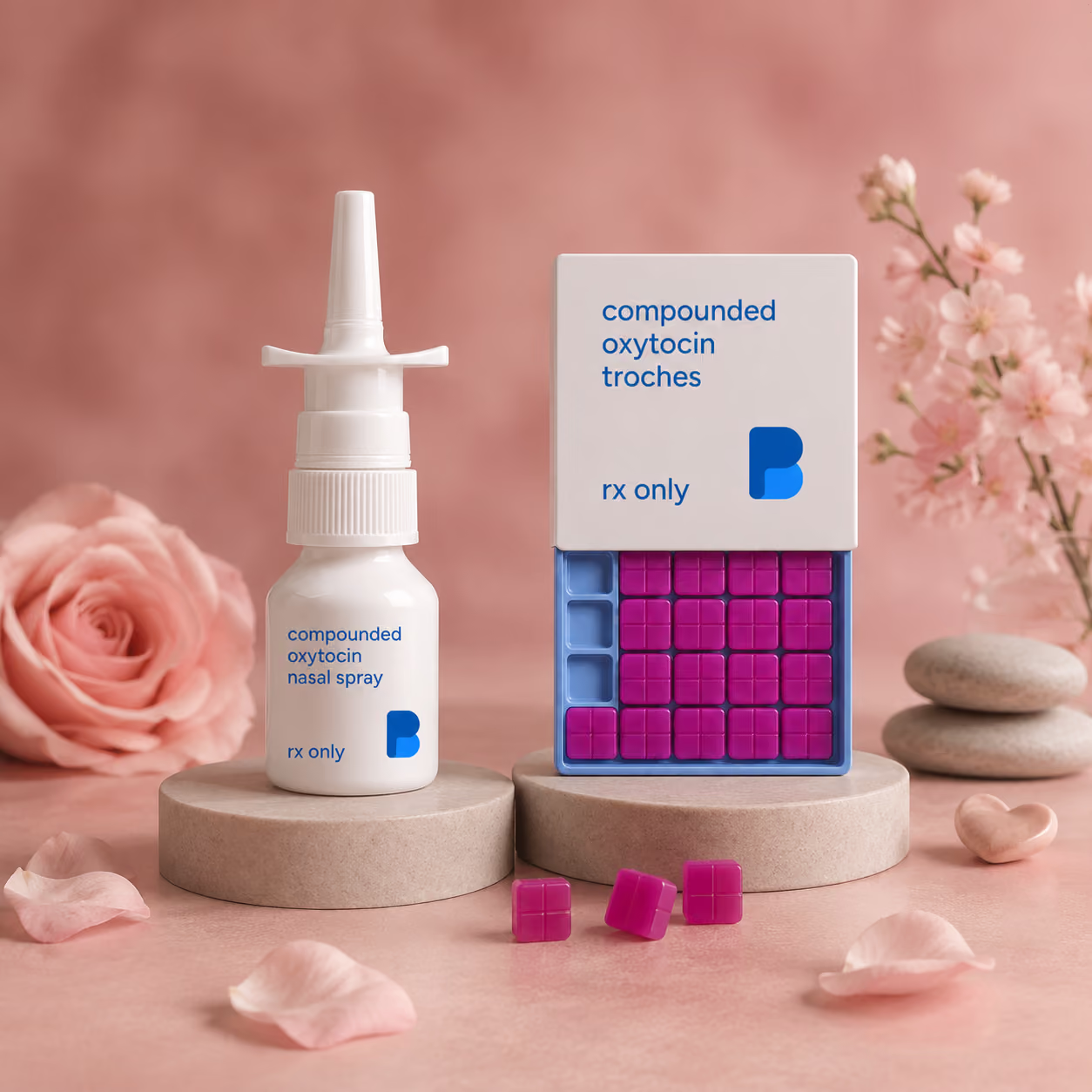
Oxytocin is a peptide hormone made by the pituitary gland that Bayview compounds to a prescriber's order.
Oxytocin is a naturally occurring nonapeptide hormone that plays a role in childbirth and lactation. It is produced in the hypothalamus and released from the posterior pituitary gland, stimulating uterine contractions and facilitating milk ejection.[1] FDA-approved oxytocin injection is indicated antepartum for medically indicated induction and stimulation of labor, and postpartum to control bleeding.[2][1] It is not indicated for elective induction of labor.[2]
Beyond its obstetric applications, intranasal oxytocin has been investigated off-label for conditions such as autism spectrum disorder and anxiety. However, results of a National Institutes of Health study suggest that oxytocin does not improve social functioning in autism.[1]
In clinical settings, oxytocin injection is given by intravenous infusion or intramuscular injection.[2] Intranasal formulations also exist.[1] Bayview compounds oxytocin preparations on a prescriber's order.
Prescribers should be aware of the contraindications and potential interactions associated with oxytocin use. Oxytocin can cause adverse effects such as uterine hyperstimulation, water intoxication, and cardiac arrhythmias, and severe hypertension has been reported when it is used with vasoconstrictors in patients receiving caudal block anesthesia.[2][1] A thorough understanding of the patient's medical history and concurrent medications is important.
Compounded at Bayview
Patient guides for the preparations we make most often. Each one is compounded to order and requires a prescription.
For prescribers
Every preparation in our formulary that contains this ingredient. Strength, base and dose form are set by the prescription.
No. The only FDA-approved oxytocin is an injection used in labor and delivery. Intranasal and sublingual oxytocin are not FDA-approved, and any use is off-label and decided by your provider.
Other salt forms of this molecule, and ingredients commonly compounded alongside it.
This page describes an active pharmaceutical ingredient, not a finished drug product. Bayview Pharmacy compounds preparations containing it only on a prescriber's order for an individual patient.
Compounded preparations are not FDA-approved, and the FDA has not evaluated them for safety, effectiveness, or manufacturing quality. Nothing on this page is a claim that any preparation is effective for any condition.
A valid prescription is required. Availability depends on Bayview's licensure in your state. This page is general information, not medical advice — discuss your situation with a licensed healthcare provider.
Our pharmacists work with prescribers to build preparations around a patient's dose, form and tolerances. Ask us what is possible with this ingredient.