Check out our most popular compounded medications! Get Started

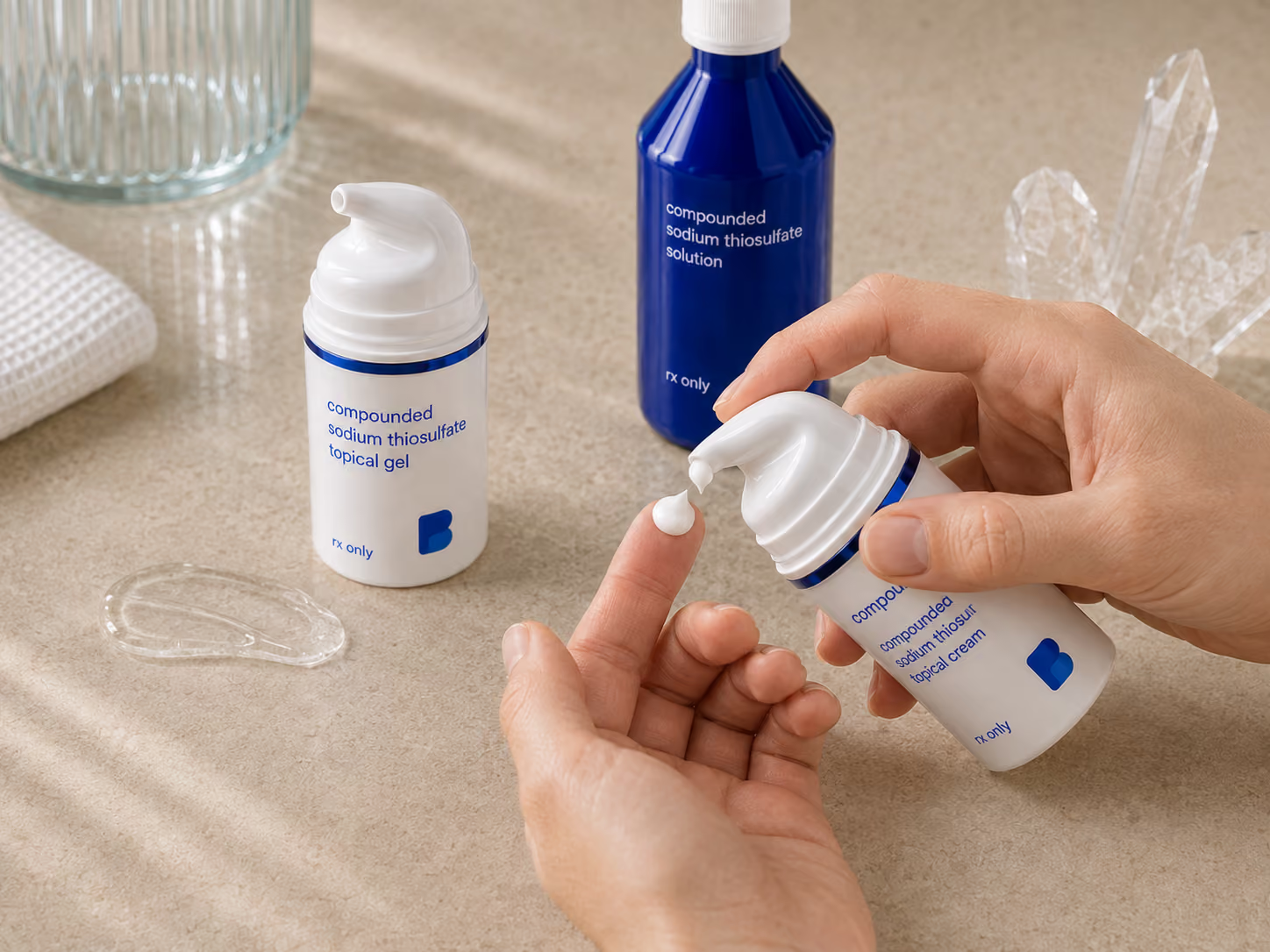
Sodium Thiosulfate is a sulfur-containing salt that Bayview compounds to a prescriber's order.
Sodium thiosulfate is best known as an antidote for cyanide poisoning. FDA-approved sodium thiosulfate injection is indicated for sequential use with sodium nitrite for the treatment of acute cyanide poisoning that is judged to be serious or life-threatening.[1] It acts as a sulfur donor in an enzyme-catalyzed reaction that converts cyanide to thiocyanate, which is relatively nontoxic and readily excreted in the urine.[1]
Sodium thiosulfate is also routinely used off-label in the treatment of calciphylaxis (calcific uremic arteriolopathy), a rare but serious disorder most commonly seen in patients with end-stage renal disease.[2] Its mechanism in calciphylaxis remains unknown. It was previously believed to work through calcium chelation, but recent studies suggest it may inhibit soft tissue calcification through mechanisms independent of calcium binding.[2] It is typically given intravenously during hemodialysis, and oral and intralesional delivery are being investigated.[2]
Bayview compounds sodium thiosulfate topical preparations on a prescriber's order.
Compounded at Bayview
Patient guides for the preparations we make most often. Each one is compounded to order and requires a prescription.
For prescribers
Every preparation in our formulary that contains this ingredient. Strength, base and dose form are set by the prescription.
Prescribers use it most often for calcium deposits in the skin, called calcinosis cutis, and historically for the fungal rash tinea versicolor. Sodium thiosulfate makes calcium salts more soluble, which is the rationale for applying it over deposits, and it releases sulfur on the skin, which gives mild antifungal and keratolytic activity. Your prescriber decides whether it fits your situation.
Other salt forms of this molecule, and ingredients commonly compounded alongside it.
This page describes an active pharmaceutical ingredient, not a finished drug product. Bayview Pharmacy compounds preparations containing it only on a prescriber's order for an individual patient.
Compounded preparations are not FDA-approved, and the FDA has not evaluated them for safety, effectiveness, or manufacturing quality. Nothing on this page is a claim that any preparation is effective for any condition.
A valid prescription is required. Availability depends on Bayview's licensure in your state. This page is general information, not medical advice — discuss your situation with a licensed healthcare provider.
Our pharmacists work with prescribers to build preparations around a patient's dose, form and tolerances. Ask us what is possible with this ingredient.