Check out our most popular compounded medications! Get Started


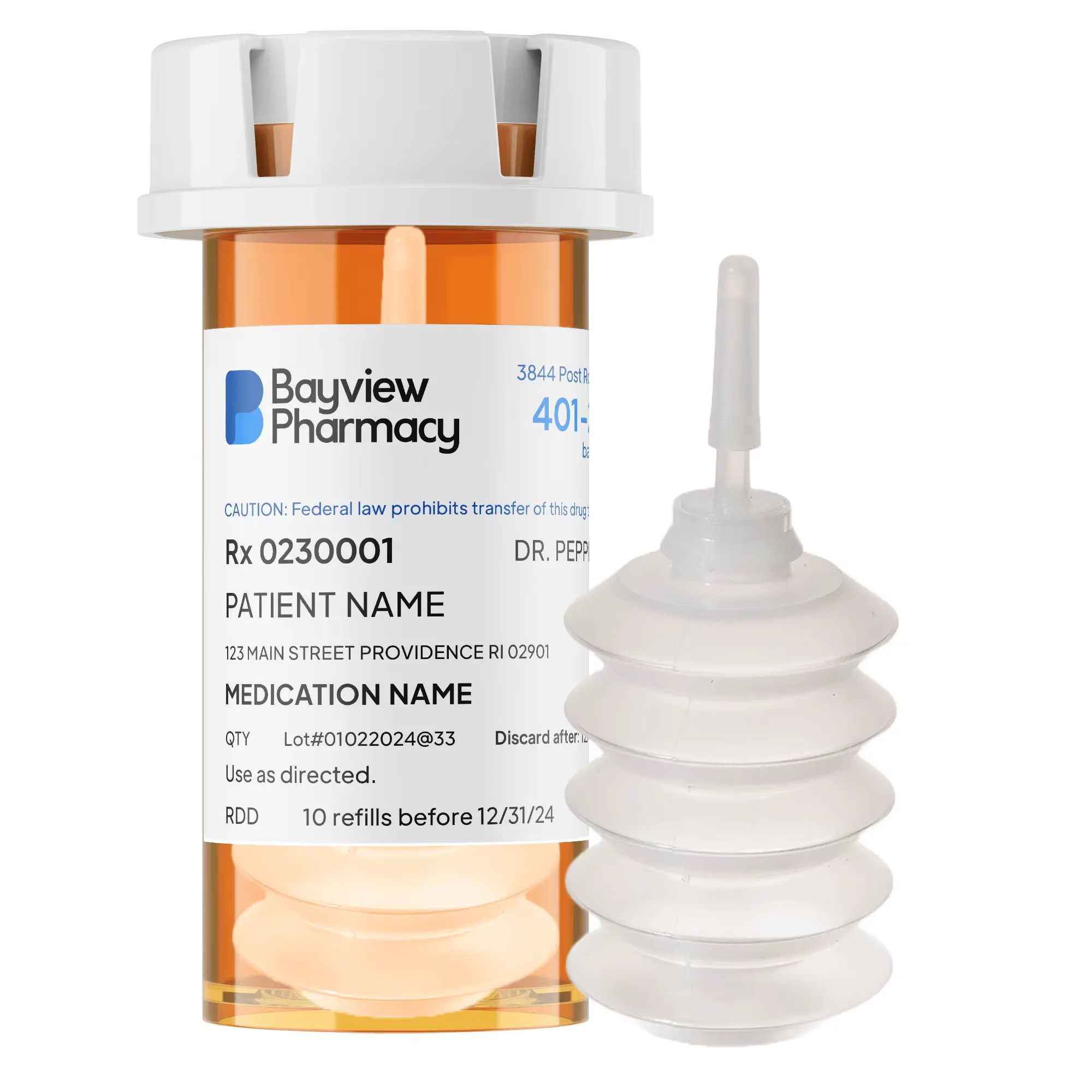
Miconazole 2% Boric Acid Otic Powder is a specialized formulation designed for application in the ear canal using an otic insufflator. This powdered medication provides targeted treatment for ear conditions such as otitis externa, fungal infections, and inflammation. By delivering therapeutic agents directly to the affected area, it ensures localized therapy with easy and controlled administration for optimal efficacy.

Licensed to fill prescriptions for patients in RI, MA, CT, NJ, NH, FL, ME and PA. New York patients are served on a limited basis while nonresident registration is pending.

This powdered medication is applied using an otic insufflator, allowing for targeted treatment of ear conditions such as otitis externa caused by fungal infections or certain bacterial infections resistant to standard treatments.
Miconazole is an imidazole antifungal agent that works by inhibiting the synthesis of ergosterol, an essential component of fungal cell membranes. This disruption leads to increased permeability and ultimately cell death of susceptible fungi. Boric acid, on the other hand, possesses mild antibacterial and antifungal properties and helps to acidify the ear canal environment, inhibiting the growth of both fungi and bacteria.
This formulation is particularly useful in treating otitis externa (also known as swimmer's ear) that is resistant to conventional therapy, especially in cases involving fungal organisms such as Candida or Aspergillus species. The combination of miconazole and boric acid provides a broad spectrum of activity against various pathogenic organisms.
The use of a powdered formulation allows for prolonged contact of the medication with the ear canal. Unlike liquid preparations, the powder absorbs moisture, creates a less hospitable environment for microbial growth, and can provide sustained antifungal and antibacterial effects. This delivery method also minimizes the risk of maceration of the skin within the ear canal, which can occur with prolonged use of aqueous solutions.
Administration of Miconazole 2% Boric Acid Otic Powder should be performed using an otic insufflator, a device that allows for precise and controlled delivery of the powder into the ear canal. Typically, the powder is applied once or twice daily, but the exact dosing regimen should be determined by the prescribing healthcare provider based on the patient's condition.
While generally well-tolerated, some patients may experience irritation or discomfort upon application. It is important to assess for hypersensitivity to miconazole, boric acid, or any other components of the formulation. Boric acid can be absorbed through damaged skin and mucous membranes, so caution is advised in cases of perforated tympanic membrane or extensive skin erosion. Prolonged use should be avoided to minimize the risk of systemic absorption and toxicity.
Healthcare providers considering this treatment should evaluate the patient's specific condition and any potential contraindications. Patients should follow the prescribed instructions carefully for optimal results.
If you have any
Miconazole 2% Boric Acid Otic Powder is a compounded formulation designed for application in the ear canal, utilizing an otic insufflator for precise delivery. This formulation is primarily used to treat ear infections and inflammation by providing localized therapy directly to the affected area. Miconazole is an antifungal agent that works by inhibiting the growth of fungi. Boric acid, on the other hand, possesses antiseptic and antifungal properties, which help in maintaining an acidic environment in the ear canal, thereby preventing the growth of bacteria and fungi.
When considering the use of Miconazole 2% Boric Acid Otic Powder, it is important to be aware of potential drug interactions. Miconazole, being an azole antifungal, can interact with other medications metabolized by the cytochrome P450 enzyme system, particularly CYP3A4. This interaction can lead to increased plasma concentrations of drugs metabolized by this pathway, potentially causing adverse effects. Patients using medications such as certain statins, anticoagulants like warfarin, or immunosuppressants should be monitored closely, as miconazole may enhance their effects or increase the risk of side effects.
Boric acid, while generally safe when used as directed in the ear, can be toxic if absorbed in significant amounts or if used improperly. It is crucial to avoid using this formulation in patients with perforated eardrums, as this could lead to systemic absorption and toxicity. Additionally, patients with a history of hypersensitivity to any component of the formulation should avoid its use to prevent allergic reactions.
Patients should inform their healthcare provider of all medications they are currently taking, including over-the-counter drugs and supplements, to assess the risk of potential interactions. Prescribers should evaluate the patient's medication regimen and medical history to ensure the safe use of this otic powder. If there are any concerns or questions regarding the use of Miconazole 2% Boric Acid Otic Powder, patients and prescribers are encouraged to reach out to us for further guidance and information.
This powdered formulation is applied using an otic insufflator, a device that allows for precise and controlled administration of the powder into the ear. This method of delivery ensures that the medication reaches the targeted area, providing localized therapy for optimal efficacy. The use of a powder form is particularly advantageous as it can adhere to the ear canal's surface, allowing for prolonged contact time with the affected area, which can enhance the therapeutic effects.
Miconazole is an antifungal agent that works by inhibiting the synthesis of ergosterol, an essential component of fungal cell membranes. By disrupting the cell membrane, miconazole effectively kills or inhibits the growth of fungi, making it a potent treatment for fungal infections in the ear. This is particularly beneficial for conditions such as otomycosis, where fungal growth in the ear canal can lead to discomfort, itching, and inflammation.
Boric acid, on the other hand, serves multiple roles in this formulation. It acts as an antiseptic, providing additional antimicrobial activity that can help prevent or treat bacterial infections that may accompany or complicate fungal infections. Boric acid also helps to maintain an acidic environment in the ear canal, which is unfavorable for the growth of many pathogens.
The powdered form of this medication is particularly useful for patients who may have difficulty with liquid formulations, such as those with perforated eardrums or excessive moisture in the ear canal. The dry powder can help absorb excess moisture, creating a less hospitable environment for pathogens and promoting healing. Additionally, the use of an otic insufflator allows for easy and controlled application, ensuring that the medication is delivered precisely where it is needed without the risk of over-application or spillage.
For prescribers, this formulation offers a targeted approach to treating ear infections and inflammation, with the added benefit of a broad-spectrum antimicrobial effect. It is important to assess the patient's specific condition and ensure that the use of a powdered formulation is appropriate for their needs.
If you have any questions about this formulation or its use, please reach out to us at Bayview Pharmacy. Our team of compounding pharmacists is here to provide you with the information and support you need to ensure the best possible outcomes for your patients.
This powdered formulation is specifically designed for use in the ear canal to treat various ear conditions, such as infections or inflammation, by delivering medication or therapeutic agents directly to the affected area.
The powder is applied using an otic insufflator, which facilitates easy and controlled administration directly into the ear canal for optimal efficacy.
They also facilitate easy and controlled administration.
This formulation is designed for specific ear conditions, primarily infections or inflammation. It is important to consult a healthcare professional to determine if it is appropriate for your specific condition.
Safety for children depends on the specific condition and the child's health status. It is crucial to consult a healthcare professional before using this formulation on children.
The frequency of application should be determined by a healthcare professional based on the specific condition being treated and the patient's response to the medication.
As with any medication, there may be potential side effects. It is important to monitor for any adverse reactions and consult a healthcare professional if any occur.
Using this formulation with a perforated eardrum may not be safe. It is essential to consult a healthcare professional before use in such cases.
The powder should be stored in a cool, dry place, away from direct sunlight and moisture, to maintain its efficacy and shelf life.
It is important to consult a healthcare professional before using other ear medications concurrently, as there may be interactions or contraindications.
This formulation is compounded by Bayview Pharmacy on a prescriber's order for an individual patient. It is not an FDA-approved drug product, and the FDA has not evaluated it for safety, effectiveness, or manufacturing quality.
A valid prescription is required. Availability depends on Bayview's licensure in your state. This page is general information, not medical advice. Discuss your situation with a licensed healthcare provider.
Search by NCPDP 4106882, or by name and ZIP: Bayview Pharmacy, Warwick, RI 02886. Select it as the destination pharmacy and save it as a favorite. Click any value to copy it.
Compounded preparations have no NDC, so this formula will not appear in your EHR's drug search. Use your system's compound, non-formulary, or free-text prescription entry and name the preparation exactly as written in step 3. If your EHR forces you to pick a listed drug, pick the closest entry for the active ingredient and put the full formula in the prescription body (the Sig or directions field), not in Notes to Pharmacy.
Compounded preparations have no NDC and will not appear in your drug search. For EPCS to validate, select a drug entry your EHR recognizes as controlled, usually the bulk powder entry for the active ingredient (for example Ketamine (bulk) powder, not a branded product), then put the full formula from step 3 in the prescription body. A free-text entry that does not validate as controlled will be rejected by your EPCS module.
Quantity and directions are starting points for this dose form, not treatment recommendations. Dosing remains the prescriber's responsibility.
Transmit from your EHR. For this non-controlled preparation we also accept fax to (401) 284-4506 and phoned orders at (401) 284-4505. Order forms are on the formulation pages and in the prescriber portal.
Transmit with two-factor authentication through your EPCS-enabled EHR. No order form is offered for this preparation; e-prescribing guides for our controlled preparations are on the formulation pages.
Licensed to dispense in RI, MA, CT, NJ, NH, FL, ME, and PA; New York is served on a limited basis while nonresident registration is pending. Compounded preparations are not FDA-approved. A valid prescription is required. Full guide, including steps by EHR: How to e-prescribe to Bayview. Questions about this formula: call (401) 284-4505.
Puff powder into ear(s)

