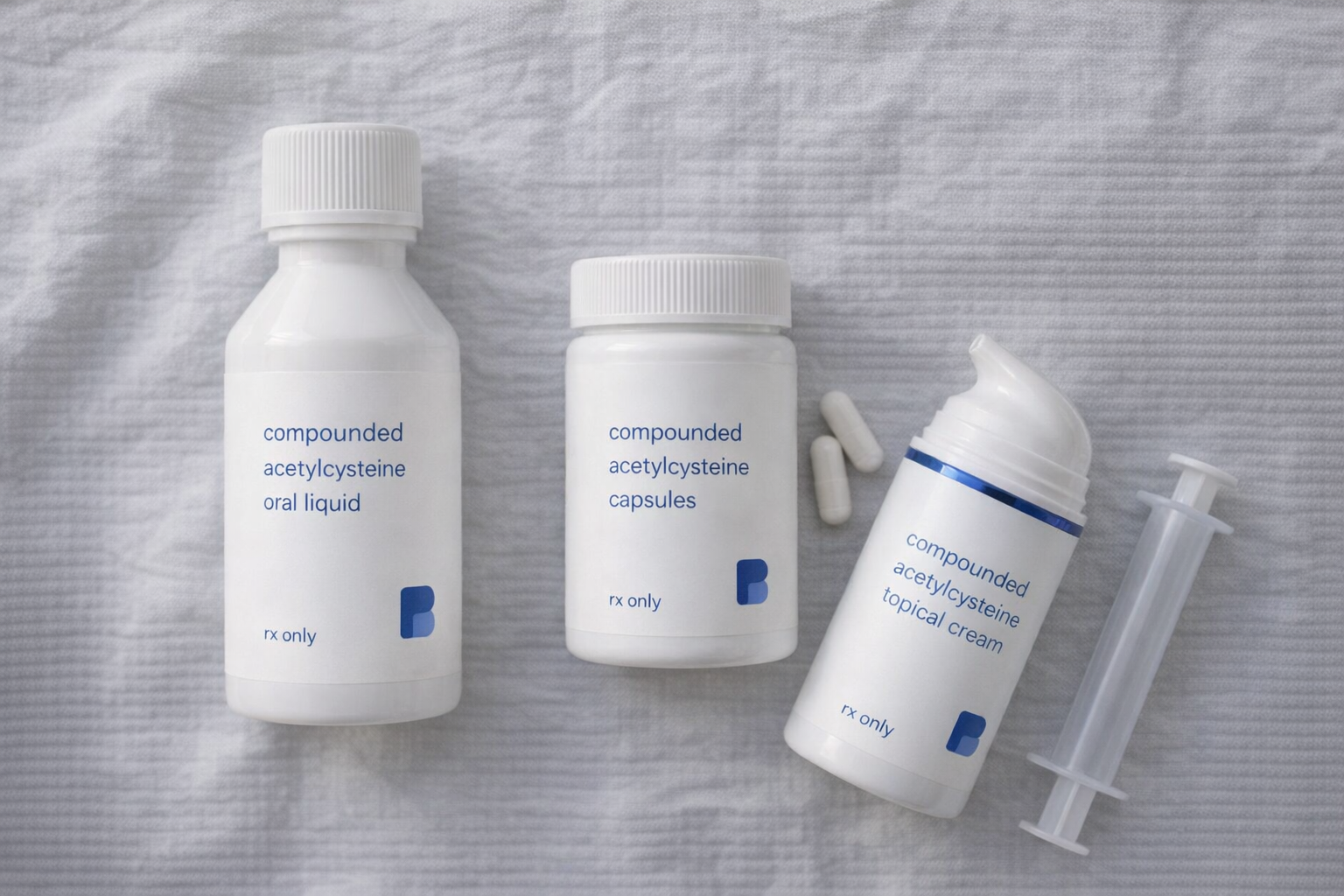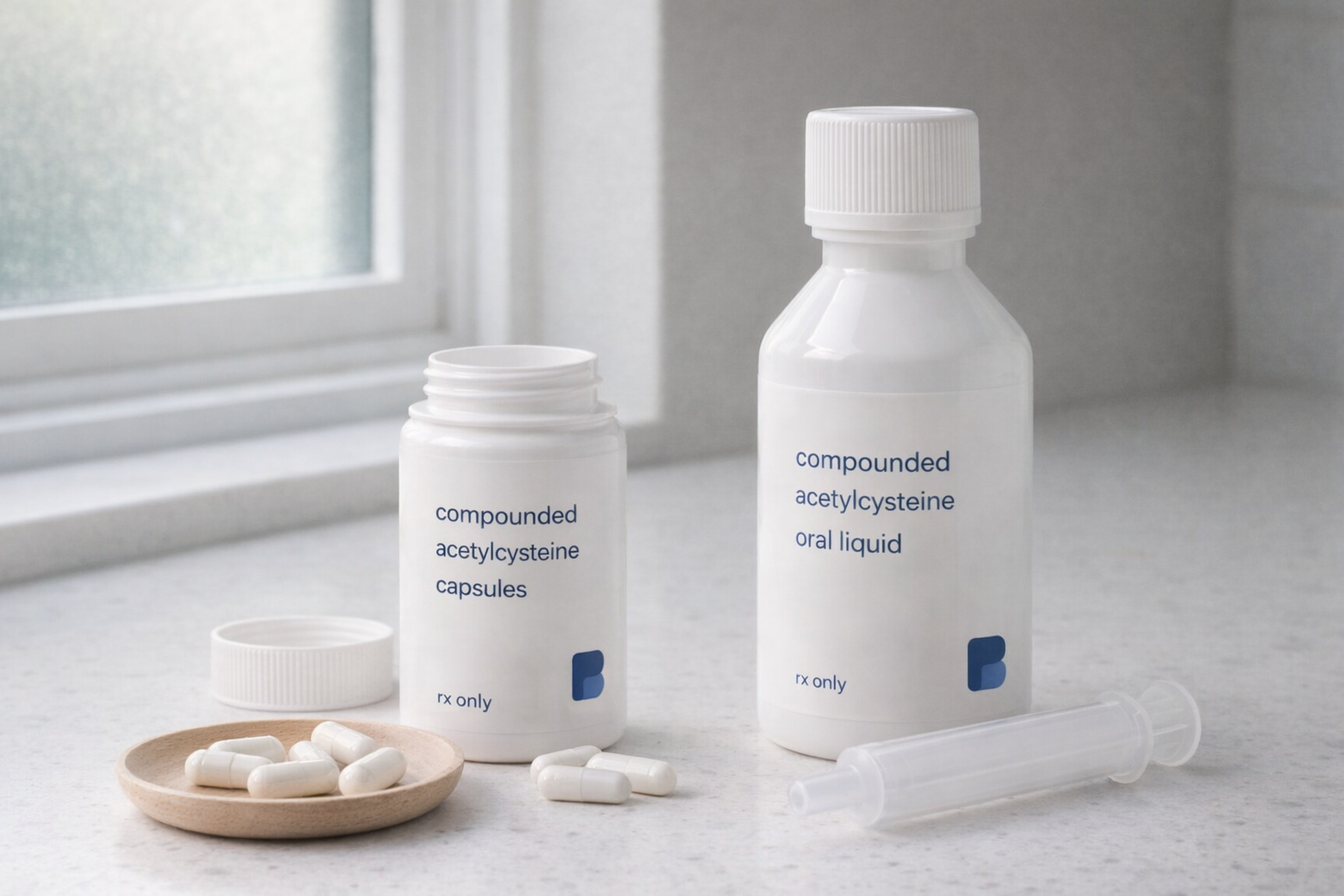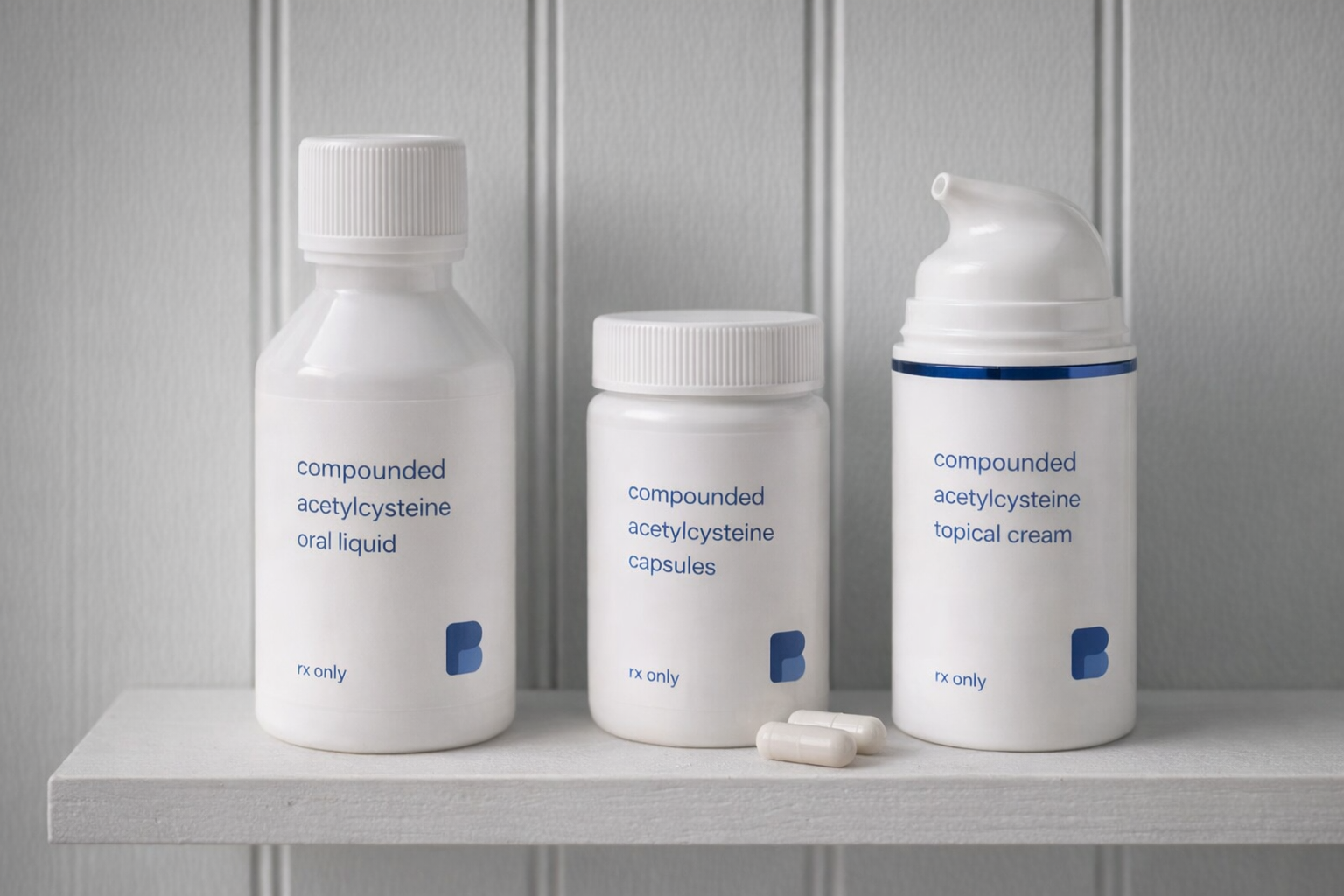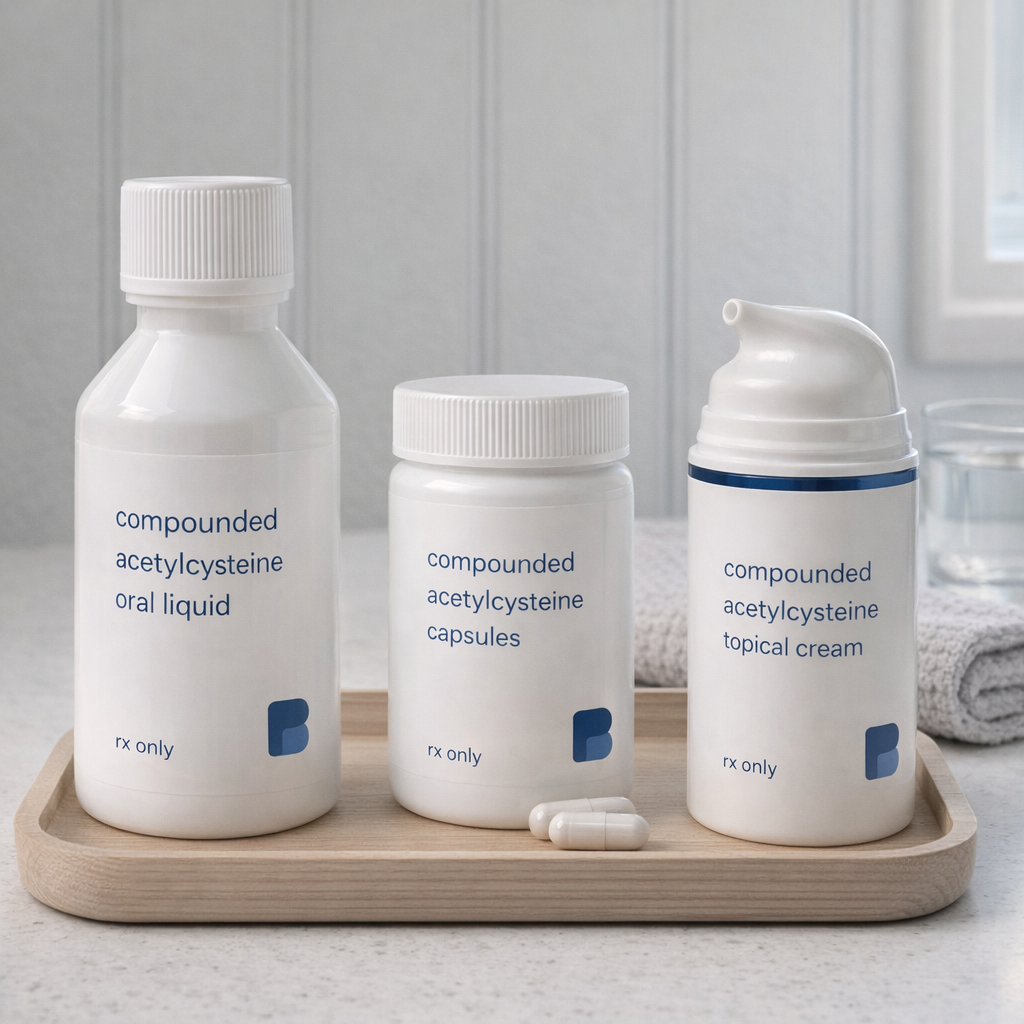





Acetylcysteine, also known as N-acetylcysteine or NAC, is a form of the amino acid cysteine. It has two well-described actions: it breaks the bonds that make mucus thick and sticky, and in the body it supplies cysteine, which the liver uses to make glutathione, an antioxidant. Manufactured acetylcysteine comes as an inhalation solution and an injection. Compounding covers the forms that are not manufactured, such as capsules, oral liquids, a nasal spray and topicals.
How does it work?
Acetylcysteine has a sulfur-containing group that opens the chemical bonds holding mucus together, which makes mucus thinner. In the body it is also a source of cysteine, which cells use to rebuild glutathione. See MedlinePlus on acetylcysteine oral inhalation.
Is acetylcysteine the same as NAC?
Yes. Acetylcysteine and N-acetylcysteine (NAC) are two names for the same molecule. NAC is also sold as a dietary supplement. A compounded prescription is a different product: it is prepared by a pharmacy to a prescriber's order, in the strength and form written on the prescription.
Which forms does Bayview compound?
Bayview compounds acetylcysteine as oral capsules from 245 mg to 1200 mg, oral liquids and suspensions, a 10% nasal spray, 100 mg capsules to dissolve into a nasal rinse, and topical creams and gels, including combinations with urea. The full list is in the table on this page. Sterile eye drops are on the acetylcysteine eye drops page.
How is it used?
Capsules and liquids are taken by mouth, the nasal spray is used in the nose, rinse capsules are opened and mixed into a saline sinus rinse, and topicals are applied to the skin. Your prescriber sets the amount, how often to use it and for how long. Follow the directions on your prescription label. The nasal irrigation capsules are for rinsing the nose only and are not for use in a nebulizer.
Side effects & safety
Taken by mouth, acetylcysteine can cause nausea, vomiting, stomach upset and a sulfur smell or taste. Used in the nose, it may cause irritation or a runny nose. Tell your prescriber if you have asthma or another breathing condition, because acetylcysteine can cause narrowing of the airways in some people. See MedlinePlus on acetylcysteine.
Who should not use it?
Do not use acetylcysteine if you are allergic to it or to any ingredient in the preparation. Tell your prescriber if you have asthma, a history of stomach ulcers or bleeding, or if you are pregnant or breastfeeding, and share your full medication list before you start.
How should it be stored?
Store at room temperature away from heat and moisture unless your label says otherwise. Keep it out of reach of children, and do not use it past the beyond-use date on the container.
Why is this compounded?
Manufactured acetylcysteine is made only as an inhalation solution and an injection. A prescriber turns to compounding when a patient needs it in a form that is not made, such as a capsule, an oral liquid, a nasal preparation or a topical. Related preparations include Budesonide Sinus Rinse, Mupirocin Nasal and Custom Oral Suspensions. The full list is in our compounded medications catalog.
Clinical details for prescribers
Regulatory status. Acetylcysteine is not a controlled substance. The FDA-approved products are an inhalation solution and an intravenous injection. The oral capsule, oral liquid, nasal and topical preparations listed here are available only through 503A compounding and are not FDA-approved. Compounded oral acetylcysteine is not a substitute for emergency treatment of acetaminophen overdose.
Formulation & dosing. Common orders include 600 mg oral capsules, 200 mg/mL oral liquid, 10% nasal spray, 100 mg capsules for nasal irrigation and 5% to 20% topical creams. Strength, base, quantity and duration are set by the prescriber.
Counseling / clinical points:
- Counsel on nausea, vomiting and the sulfur odor of oral acetylcysteine
- Use caution in patients with asthma or reactive airways; bronchospasm has been reported
- Nasal irrigation capsules are dispensed for sinus rinse use only; inhalation by nebulizer requires a sterile preparation
- Topical combinations with urea can be ordered; specify each active and strength
Send orders by eRx to Bayview Pharmacy (NCPDP 4106882) or fax 401-284-4506. See how to e-prescribe and the for providers page.
Compounded acetylcysteine is a compounded medication and is not FDA-approved. The FDA has not evaluated compounded preparations for safety, effectiveness or quality. A prescription is required.