




Hydroxyzine is a prescription antihistamine. It blocks histamine, a substance in the body that causes allergic symptoms, and it also decreases activity in the brain, which is why drowsiness is its best-known side effect.
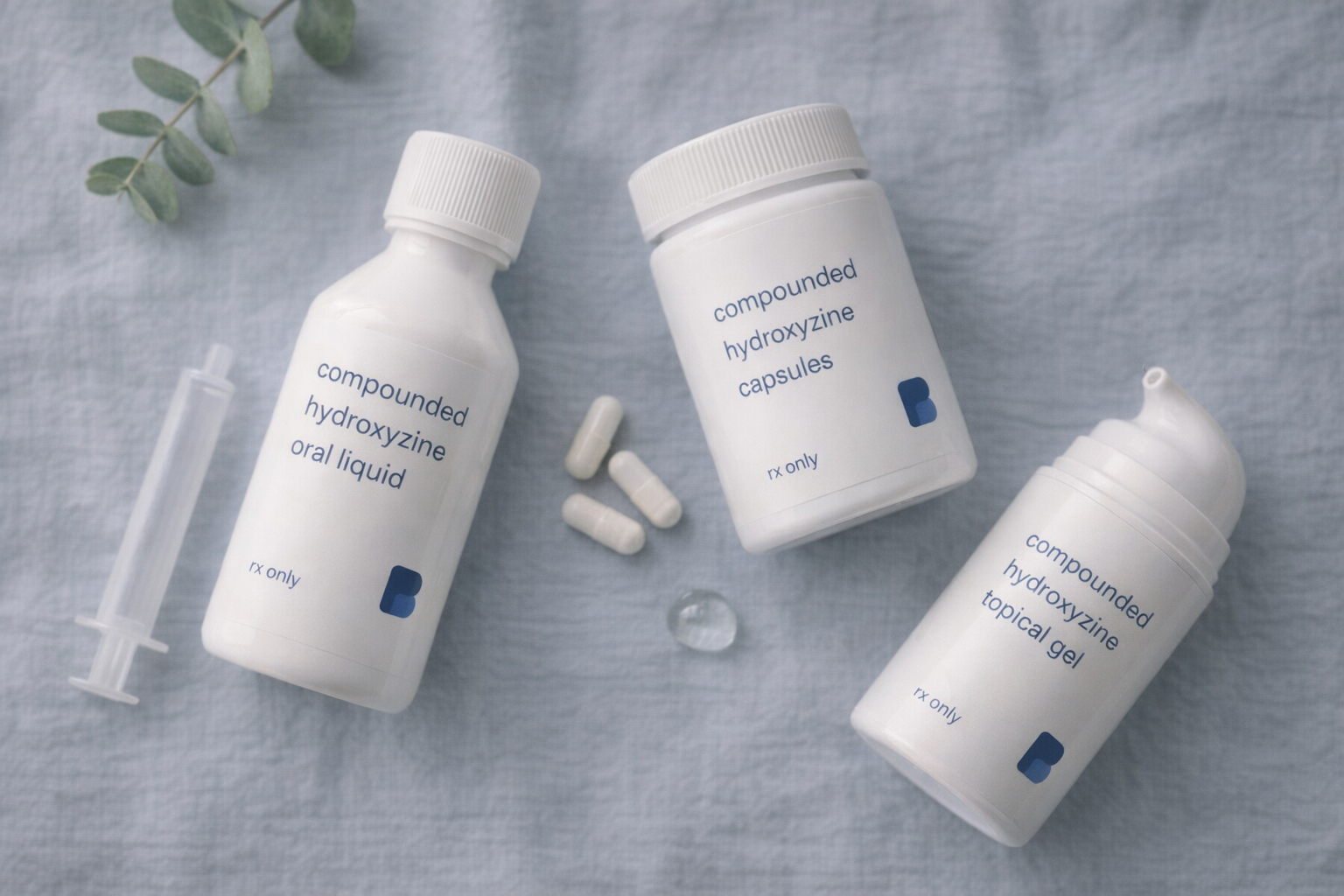
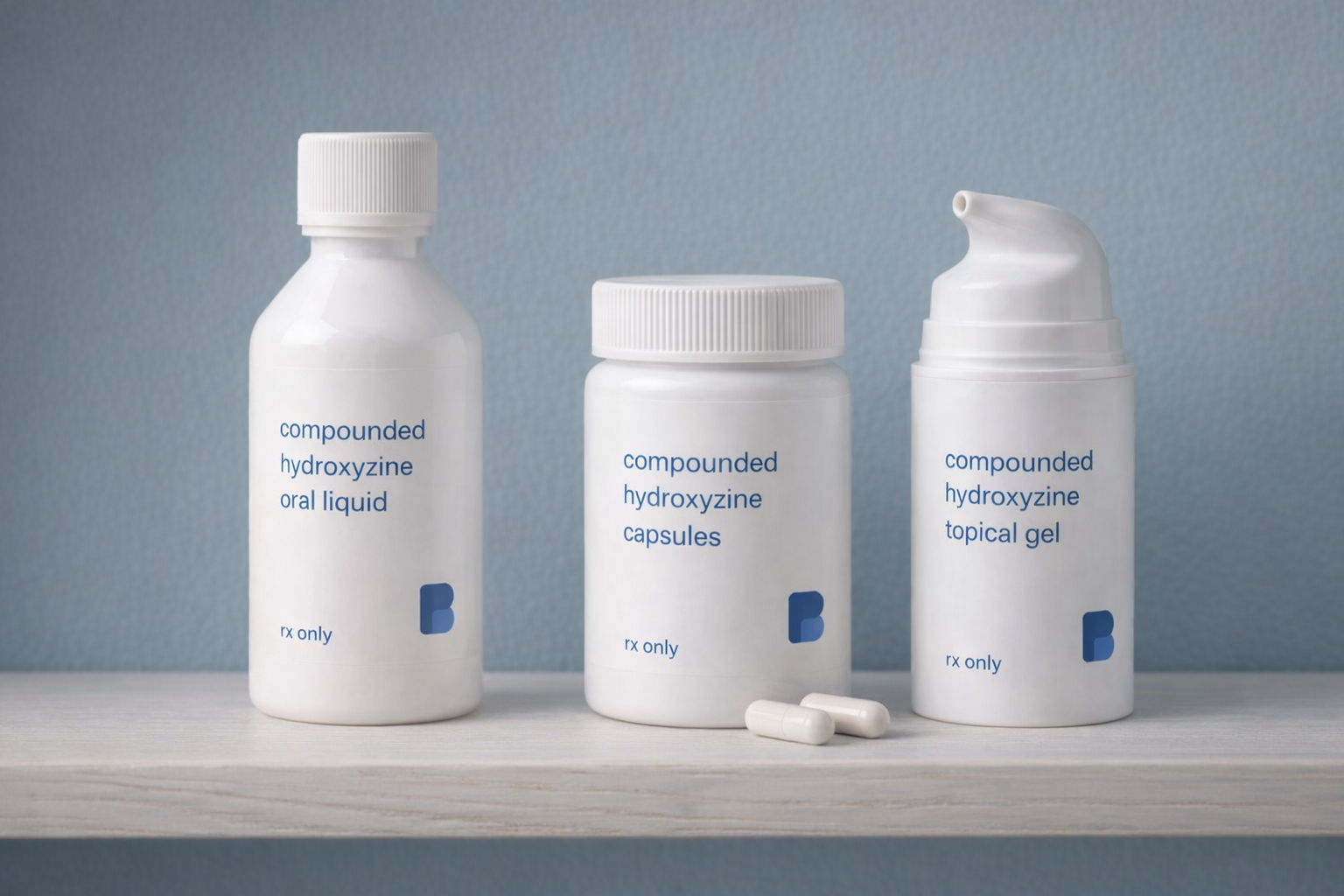
Most people receive hydroxyzine as a manufactured tablet, capsule or syrup. Bayview compounds it when a prescriber needs something those products do not provide for a particular patient: a different liquid concentration, a capsule prepared without a certain inactive ingredient, a topical gel or a rectal suppository.
What is it used for?
According to MedlinePlus, manufactured hydroxyzine is used to:
- Relieve itching caused by allergic skin reactions.
- Relieve anxiety and tension.
- Provide sedation before and after general anesthesia for surgery.
Those are the uses of the FDA-approved oral products. There is no FDA-approved hydroxyzine gel or suppository, so those compounded forms are off-label, and they have not been studied in the kind of trials behind the oral products. Bayview prepares hydroxyzine to a prescriber's order and makes no claim that a compounded preparation works for any condition.
Which forms does Bayview compound?
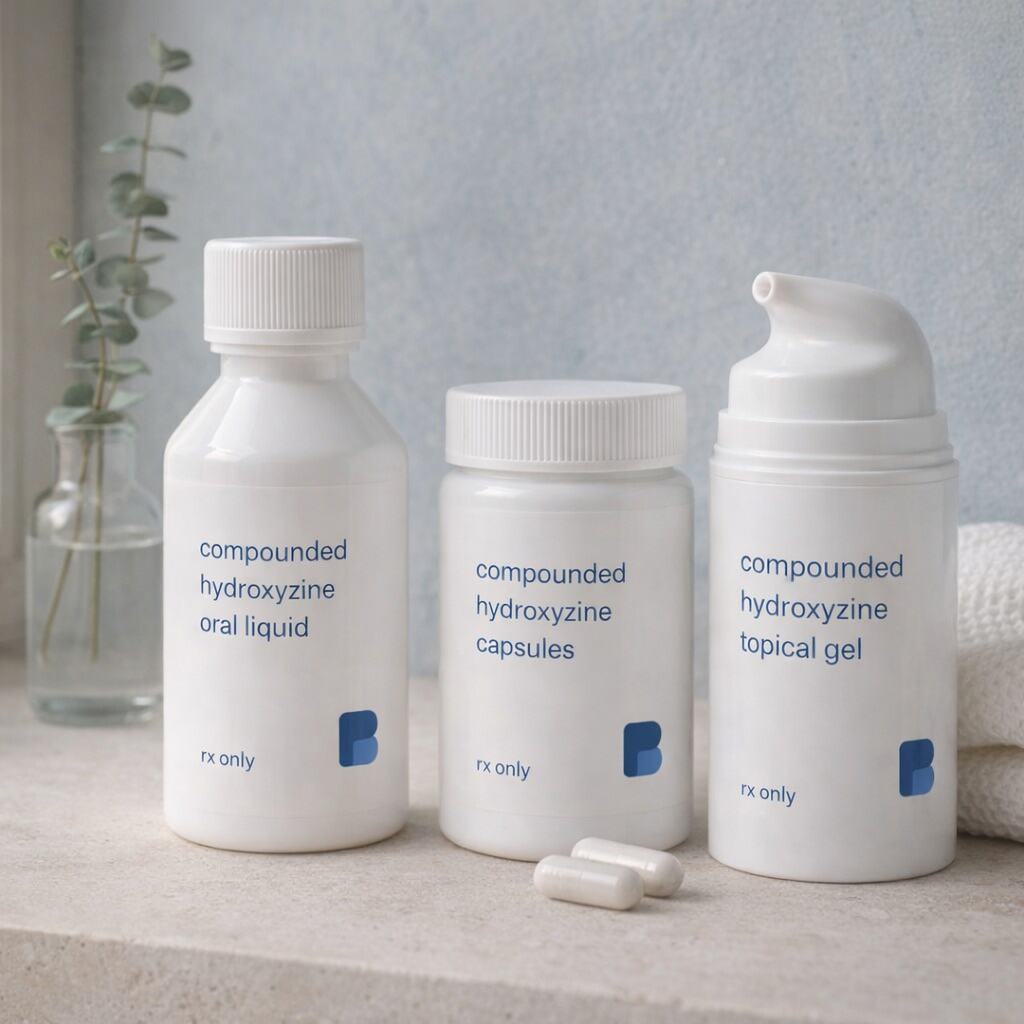
- Oral liquids. Hydroxyzine hydrochloride 25 mg/5 mL suspension and 50 mg/mL liquid, and hydroxyzine pamoate 10 mg/mL suspension. The manufactured oral solution is 10 mg per 5 mL.
- Capsules. 10 mg, 25 mg and 50 mg, prepared gluten free.
- Topical gel. 10 mg/g, applied to the skin.
- Rectal suppository. 25 mg.
Strength, dose and frequency are determined by the prescriber for the individual patient.
How is it used?
Follow the directions on your label; they come from your prescriber. Measure oral liquids with the syringe or cup provided, not a kitchen spoon, and shake suspensions well first. Apply a gel only to clean, intact skin and wash your hands afterward. Do not take more, or take it more often, than prescribed.
Side effects & safety
MedlinePlus lists dry mouth, drowsiness, dizziness, headache and confusion (especially in older adults) among the side effects of hydroxyzine. It advises calling a doctor right away for trembling or shaking that cannot be controlled, seizures, or a skin rash with pus-filled or blister-like sores, swelling, redness or fever.
The FDA labeling for hydroxyzine tablets notes that overdose may cause QT prolongation and a serious heart rhythm problem called torsade de pointes. Tell your prescriber about any heart rhythm condition before you start.
Who should not use it?
- Anyone who is pregnant or breastfeeding.
- Anyone with a prolonged QT interval, unless the prescriber has weighed that risk.
- Adults 65 and older should discuss the risks with their prescriber; hydroxyzine is usually not recommended in this age group.
- Anyone allergic to hydroxyzine or an ingredient in the preparation.
How should it be stored?
Store it exactly as your label directs and use it before the beyond-use date printed on it. Keep it out of reach of children and pets.
Why is this compounded?
A prescriber may order a compounded preparation for someone who needs a liquid concentration the manufactured solution does not come in, cannot take an inactive ingredient in the manufactured products, or cannot take medication by mouth. Those are the prescriber's decisions.
As a 503A compounding pharmacy, Bayview prepares each order pursuant to an individual patient prescription under USP 795 non-sterile compounding standards.
Clinical details for prescribers
Regulatory status. Hydroxyzine is noncontrolled, so eRx, fax and phone orders are accepted. All compounded hydroxyzine is 503A, patient-specific and not FDA-approved.
Formulation & dosing. Formulary preparations: hydroxyzine HCl 25 mg/5 mL oral suspension and 50 mg/mL oral liquid; hydroxyzine pamoate 10 mg/mL oral suspension; HCl 10, 25 and 50 mg capsules; HCl 10 mg/g topical gel; 25 mg rectal suppository. Dose selection is the prescriber's decision; refer to the FDA labeling for oral hydroxyzine.
Counseling / clinical points:
- Screen for QT prolongation risk and concurrent QT-prolonging drugs
- Additive sedation with alcohol and other CNS depressants
- Labeling advises against use in early pregnancy
- Topical and rectal use is off-label with no FDA-approved product
- Where the strength matches a manufactured product, document why a compounded preparation is needed
Send orders by eRx to Bayview Pharmacy (NCPDP 4106882) or fax 401-284-4506. See how to e-prescribe and the for providers page.
Compounded hydroxyzine is a compounded medication and is not FDA-approved. The FDA has not evaluated compounded preparations for safety, effectiveness or quality. A prescription is required.