



Ibuprofen is a nonsteroidal anti-inflammatory drug (NSAID). According to MedlinePlus, it works by stopping the body from making a substance that causes pain, fever, and inflammation, and it comes as tablets, chewable tablets, capsules, and liquids that are taken by mouth.
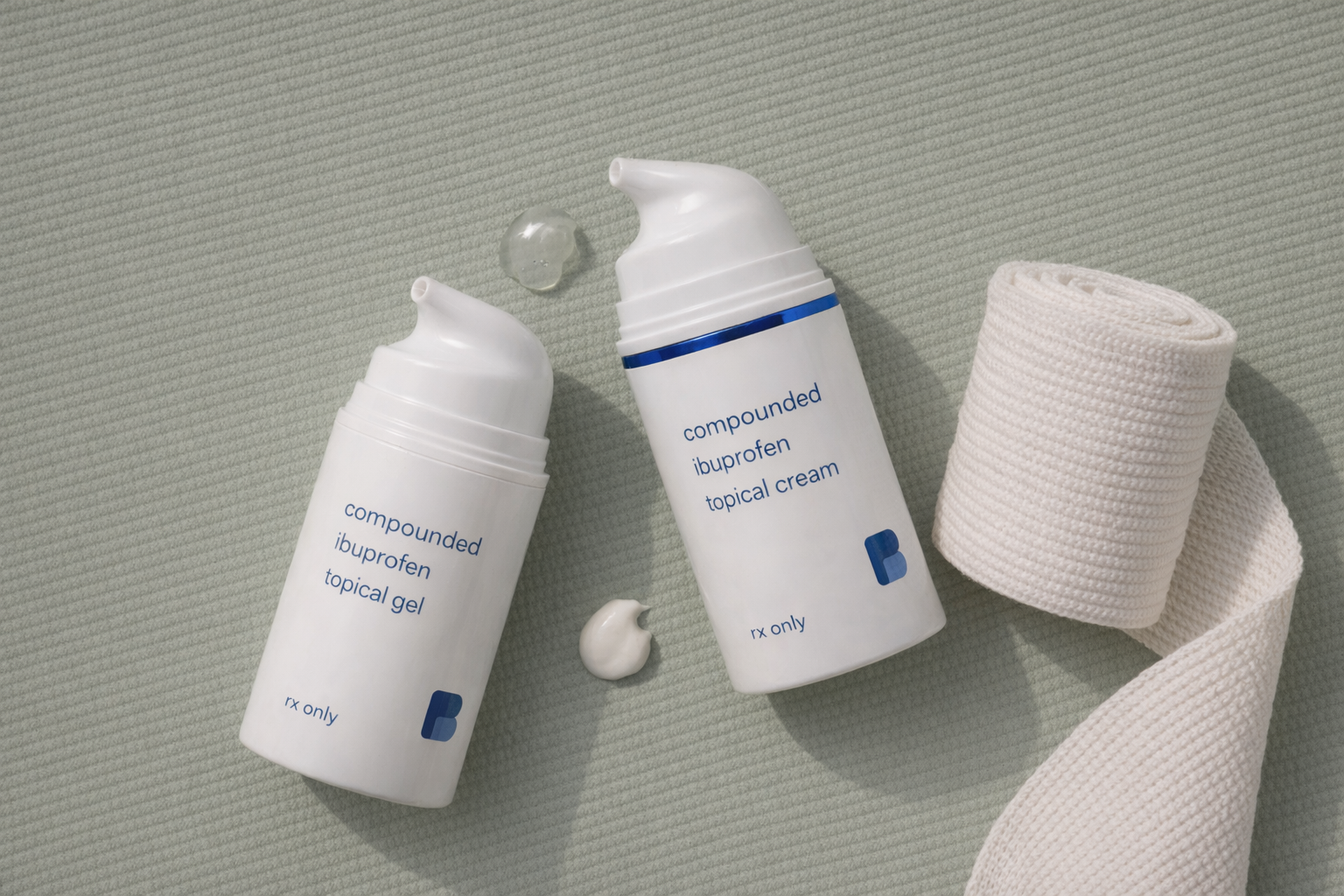
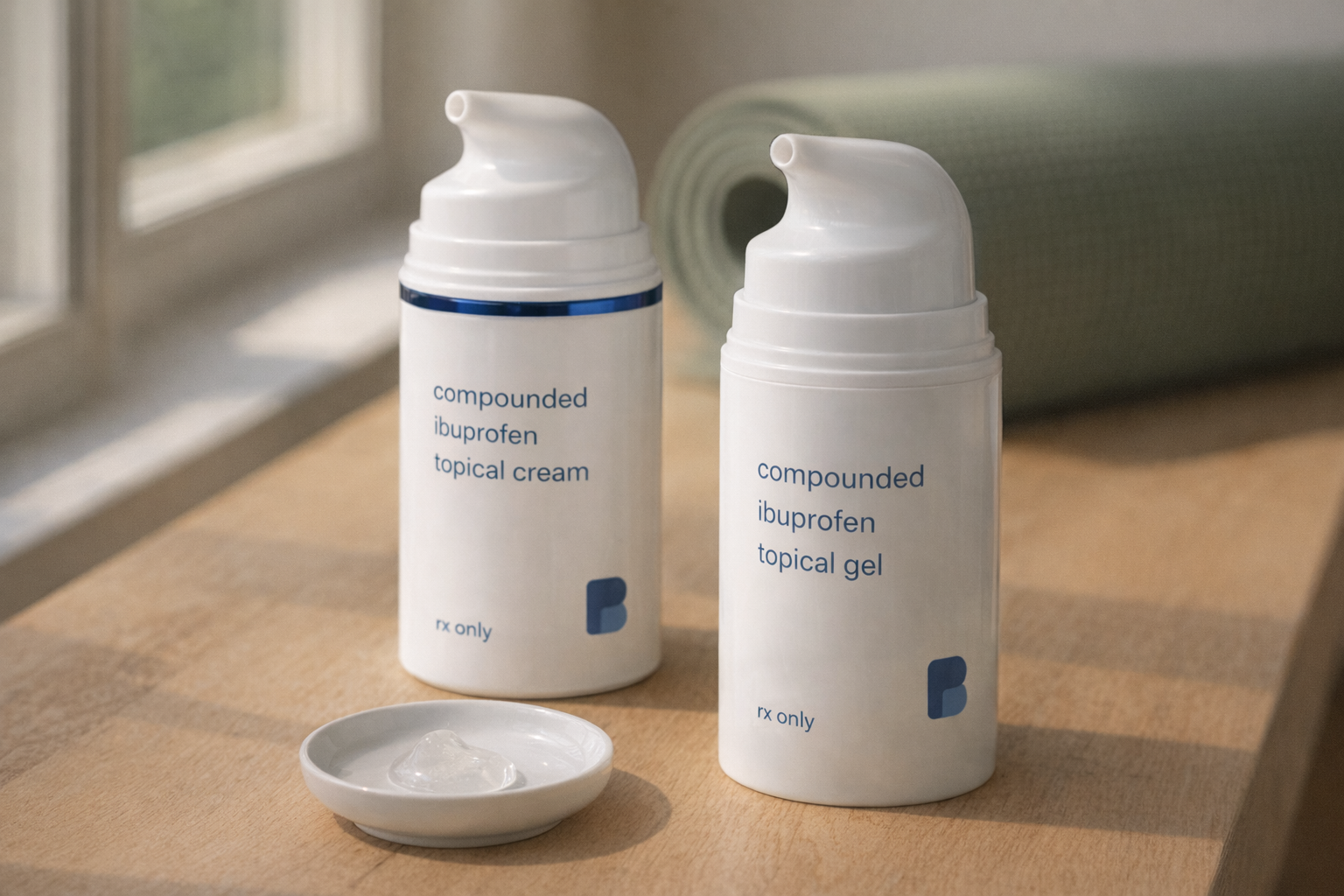
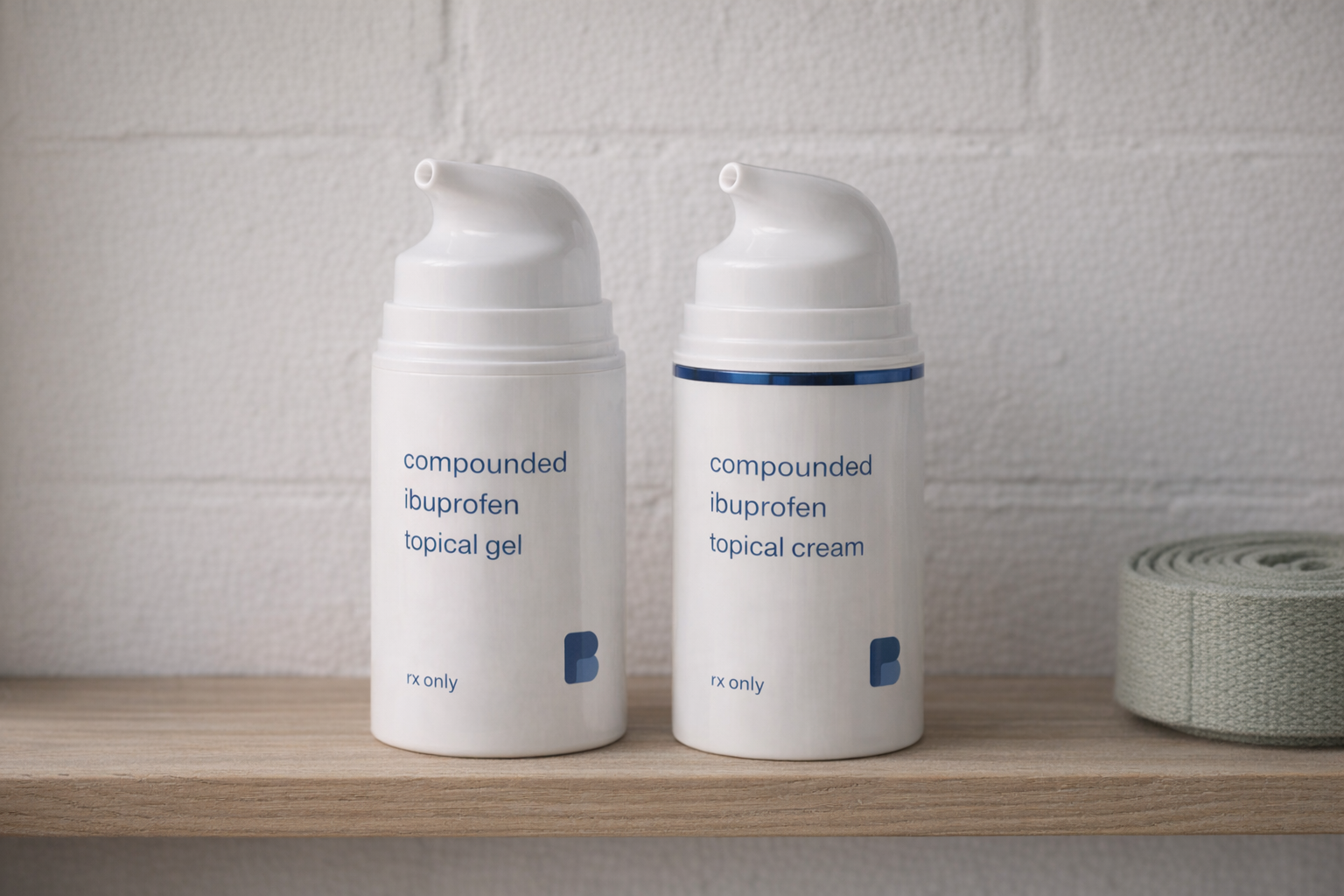
Topical ibuprofen is ibuprofen compounded into a gel or cream that is applied to the skin. Bayview Pharmacy prepares it in several strengths, alone or combined with other ingredients, to a prescriber's order.
What is it used for?
According to MedlinePlus, prescription ibuprofen taken by mouth is used to relieve soreness, swelling, and stiffness from osteoarthritis and rheumatoid arthritis, and for mild to moderate pain such as menstrual pain. Those are the uses of the FDA-approved products. Bayview's compounded gels and creams have not been studied in clinical trials, and Bayview makes no claim that they work for any condition. Your prescriber decides whether topical ibuprofen fits your situation.
How is it used?
Follow the directions on your label; they come from your prescriber. Apply only the amount prescribed, to clean, intact skin over the area your prescriber named. Wash your hands after each application unless your hands are the treated area, and keep it out of your eyes, nose, and mouth.
Do not cover the treated area with a tight or airtight bandage or apply heat unless your prescriber tells you to.
Side effects & safety
Skin reactions. Redness, itching, dryness, or a rash where it is applied can happen. Stop using it and call your provider for a rash, blisters, or swelling on treated skin.
NSAID warnings. MedlinePlus warns that NSAIDs such as ibuprofen may raise the risk of heart attack or stroke, and may cause ulcers, bleeding, or holes in the stomach or intestine. These problems can happen without warning and can cause death. Those warnings were written for ibuprofen taken by mouth. How much ibuprofen reaches the blood from a compounded gel has not been evaluated by the FDA, so these risks are not ruled out. Do not use another NSAID, such as ibuprofen or naproxen taken by mouth, at the same time unless your prescriber tells you to.
Pregnancy and breastfeeding. MedlinePlus advises against taking ibuprofen around or after 20 weeks of pregnancy unless a doctor says to, because it may harm the fetus and cause problems with delivery. Tell your prescriber if you are pregnant, planning a pregnancy, or breastfeeding.
Who should not use it?
- Anyone allergic to ibuprofen, aspirin, or other NSAIDs such as ketoprofen or naproxen.
- Anyone who is about to have, or has just had, heart bypass (CABG) surgery, unless a doctor directs it.
- Anyone around or past 20 weeks of pregnancy, unless a doctor directs it.
Tell your prescriber about asthma, heart failure, lupus, and liver or kidney disease, and about every medicine you take, especially blood thinners, aspirin, other NSAIDs, steroids taken by mouth, and SSRI or SNRI antidepressants. Do not apply it to broken or infected skin.
How should it be stored?
Store it as your label directs, with the cap or pump closed, away from heat and moisture, and use it before the beyond-use date printed on it. Keep it out of reach of children and pets.
Why is this compounded?
The ibuprofen products MedlinePlus lists are taken by mouth. A prescriber who wants ibuprofen applied to the skin for an individual patient needs it compounded. Compounding also lets the prescriber choose the strength, the base, and any added ingredients. Those are the prescriber's decisions.
As a 503A compounding pharmacy, Bayview prepares each order pursuant to an individual patient prescription under USP 795 non-sterile compounding standards. Combinations that add tramadol or ketamine are controlled substances and are not listed here; see our custom pain cream page.
Clinical details for prescribers
Regulatory status. Ibuprofen is noncontrolled, so eRx, fax and phone orders are accepted. Compounded topical ibuprofen is 503A, patient-specific and not FDA-approved.
Formulation & dosing. Formulary preparations: ibuprofen 2%, 5%, 10% and 20% topical gel; ibuprofen 10% transdermal gel; ibuprofen 200 mg/mL transdermal cream; ibuprofen 5% / menthol 3% topical gel; ibuprofen 10% / lidocaine HCl 5% topical cream; ketoprofen 10% / ibuprofen 2.5% topical gel; cyclobenzaprine HCl 1% / ibuprofen 20% transdermal gel. Specify the base, the application site, the amount per application and the frequency. Dose selection is the prescriber's decision.
Counseling / clinical points:
- NSAID class warnings on ibuprofen taken by mouth: cardiovascular thrombotic events and gastrointestinal bleeding, ulceration and perforation. Systemic exposure from compounded topical ibuprofen has not been evaluated by the FDA
- Avoid concurrent oral NSAIDs unless intended
- Avoid at about 20 weeks of pregnancy or later unless directed
- Intact skin only; no occlusion or heat unless directed
Send orders by eRx to Bayview Pharmacy (NCPDP 4106882) or fax 401-284-4506. See how to e-prescribe and the for providers page.
Compounded ibuprofen gel and cream are compounded medications and are not FDA-approved. The FDA has not evaluated compounded preparations for safety, effectiveness or quality. A prescription is required.