Compounded medications are not FDA-approved, so their safety rests on how the pharmacy that makes them is run: who licenses it, who inspects it, and which standards it follows. A 503A compounding pharmacy is licensed and inspected by state boards of pharmacy and is expected to follow the United States Pharmacopeia chapters for nonsterile, sterile, and hazardous drug compounding. This page explains each of those checks and how to look them up for any pharmacy, including ours.
Who oversees a compounding pharmacy?
A 503A compounding pharmacy prepares medications for named patients on a prescription. It is licensed by the board of pharmacy in its home state and by the board of each other state it ships into, and those boards inspect it. FDA can also inspect 503A pharmacies. Our guide to 503A and 503B pharmacies explains how that differs from an FDA-registered outsourcing facility.
What do USP 795, 797, and 800 cover?
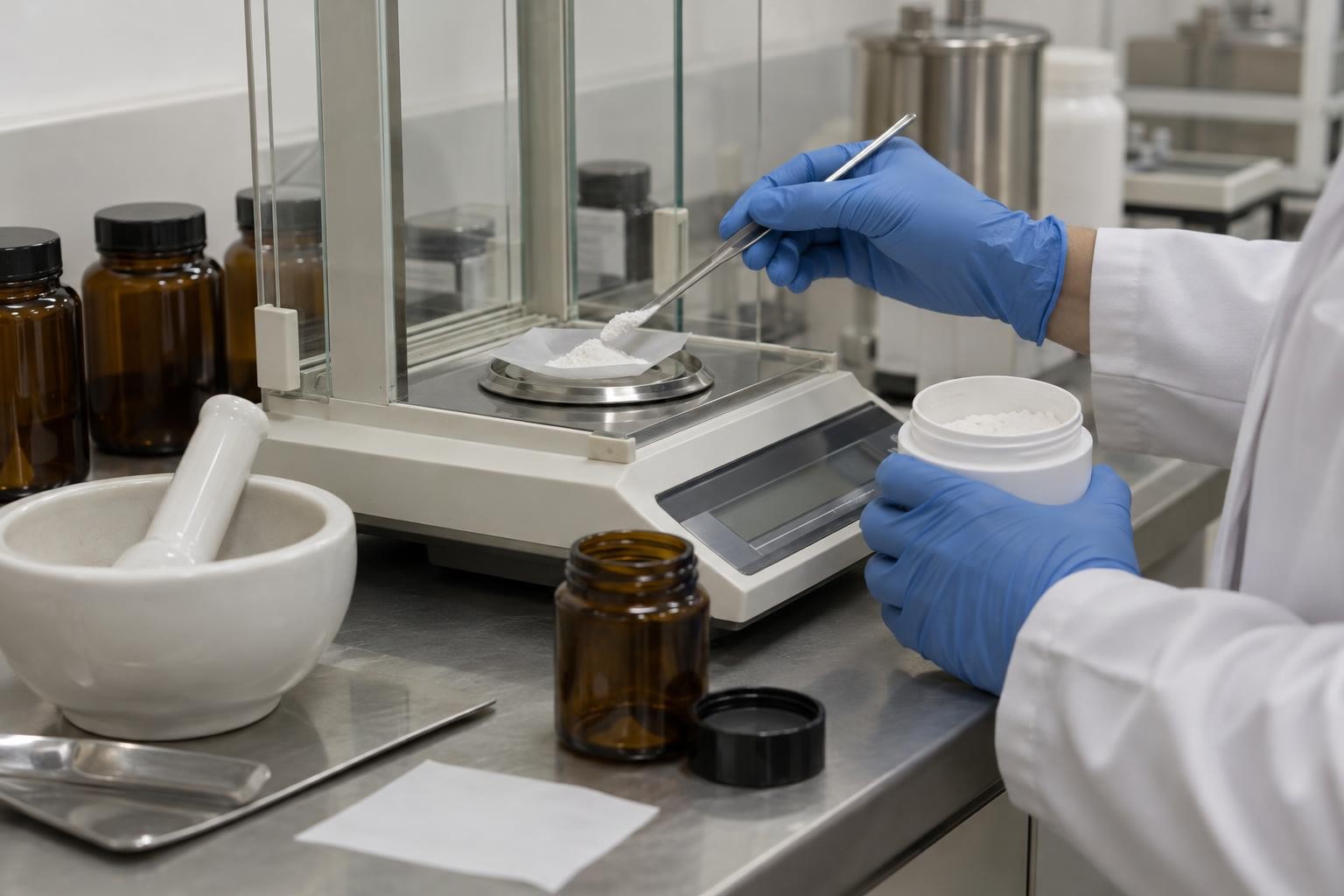
The United States Pharmacopeia publishes the chapters that set out how compounding is done. Three apply to most compounding pharmacies.
- USP 795, nonsterile compounding. Capsules, creams, suspensions, troches, and similar preparations. It covers the compounding process, facilities, equipment, ingredients, documentation, quality controls, training, and how beyond-use dates are assigned.
- USP 797, sterile compounding. Preparations that must be sterile, such as injections and eye drops. It covers staff training, facilities, environmental monitoring, and the storage and testing of finished preparations.
- USP 800, hazardous drugs. How hazardous drugs are handled so that staff, patients, and the environment are protected. It covers staff responsibilities, facility safeguards, cleaning and decontamination, spill response, and record keeping.
Bayview compounds in separate USP 795, 797, and 800 labs in Warwick, Rhode Island. Sterile preparations such as injections and eye drops are made in our USP 797 sterile lab, described on our sterile compounding page.
What is NABP compounding pharmacy accreditation?
The National Association of Boards of Pharmacy runs a voluntary Compounding Pharmacy Accreditation program for licensed pharmacies that compound. It assesses a pharmacy against USP 795, USP 797, and the applicable parts of USP 800. It requires a licensed pharmacist in charge of operations and compliance and a recent NABP inspection before applying, and accreditation lasts three years. Pharmacies are expected to meet the standards throughout that period, not only on the day they apply.
Bayview passed NABP's Verified Pharmacy Program inspection, the inspection that comes before accreditation, and is currently under review for NABP Compounding Pharmacy Accreditation.
How to check a compounding pharmacy yourself
- Look up the pharmacy's license on your state board of pharmacy's website. A pharmacy shipping from another state needs a nonresident license or registration in yours.
- Ask the pharmacy which USP chapters it compounds under, and whether sterile preparations are made in a dedicated sterile lab.
- Ask whether the pharmacy is accredited, and by whom.
- Be wary of anyone offering a compounded prescription drug without a prescription. Both 503A and 503B preparations are prescription drugs.

What this means for your prescription
Whether a compounded medication is right for you is your prescriber's decision. What the pharmacy owes you is a preparation made to the prescription, under the standards above, by people who will answer your questions about how it was made. To see what we compound, start with the catalog of compounded medications, or read what a compounding pharmacy is.
Frequently asked questions
What Bayview compounds for this
Important: Compounded medications are prepared to a prescriber's order for an individual patient. They are not FDA-approved, and the FDA has not evaluated them for safety, effectiveness, or manufacturing quality. This article is educational and is not a substitute for advice from your prescriber or pharmacist.
This preparation contains a controlled substance. Controlled-substance prescriptions carry refill limits, must be e-prescribed, and can only be shipped to states where Bayview holds the required licensure.
Uses discussed here may be off-label, meaning they are not part of any FDA-approved labeling. Off-label use is a decision for you and your prescriber, based on the available evidence.
Veterinary preparations are compounded to a veterinarian's order for a specific animal and are not FDA-approved animal drugs. Never give a compounded human medication to an animal without veterinary direction.
Compounded prescriptions are paid for directly rather than billed through insurance. Most are HSA/FSA-eligible, and many patients submit the receipt to their plan for possible reimbursement. Pricing depends on the strength, dose form and quantity your prescriber orders. Read more about cost and insurance.
Bayview Pharmacy is a compounding pharmacy in Warwick, Rhode Island, licensed to fill and ship compounded prescriptions for patients in Rhode Island, Massachusetts, Connecticut, New Jersey, New Hampshire, Florida, Maine and Pennsylvania. Prescriptions for New York patients are filled on a limited basis, and controlled substances are not shipped to New York addresses. See every state we ship to.