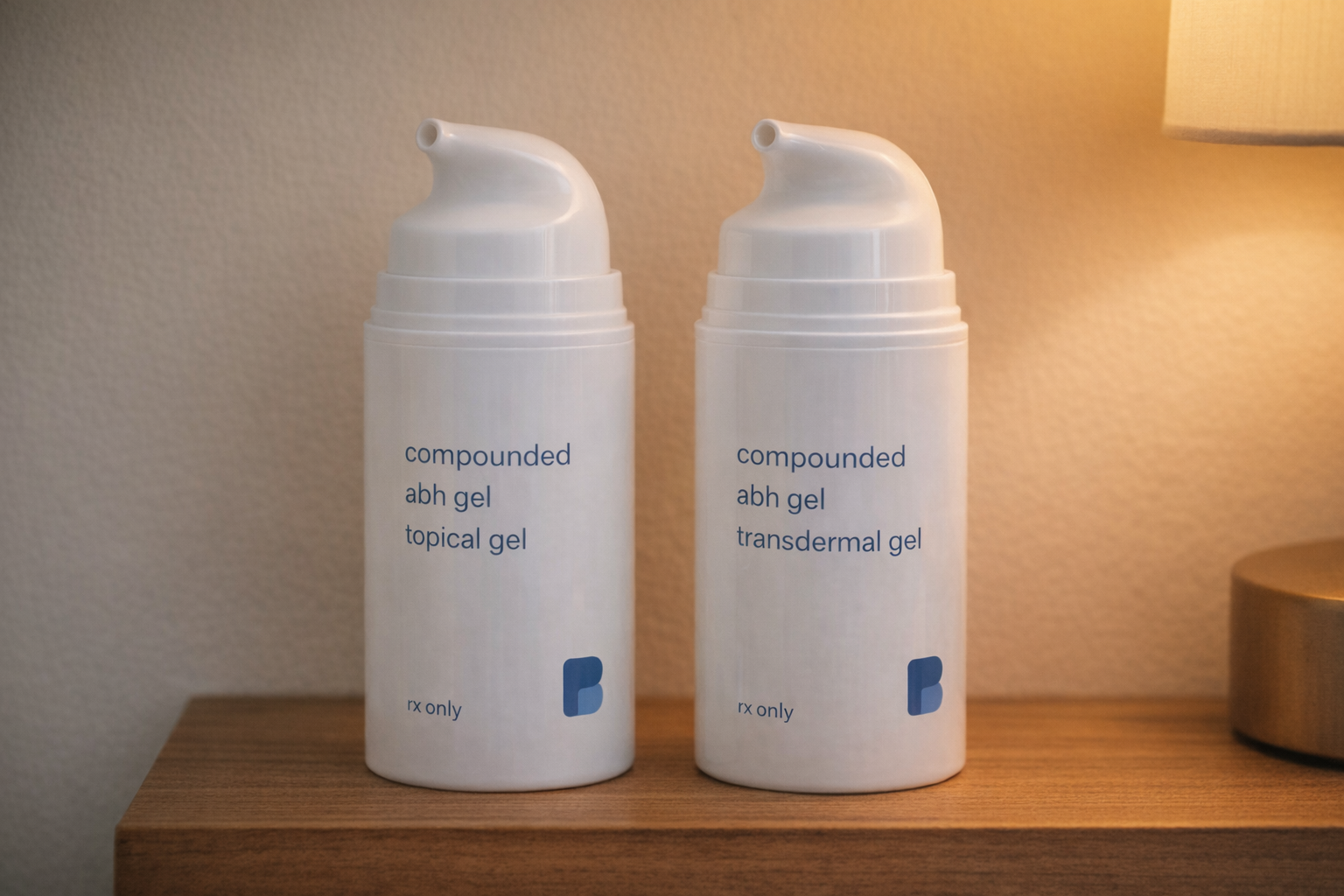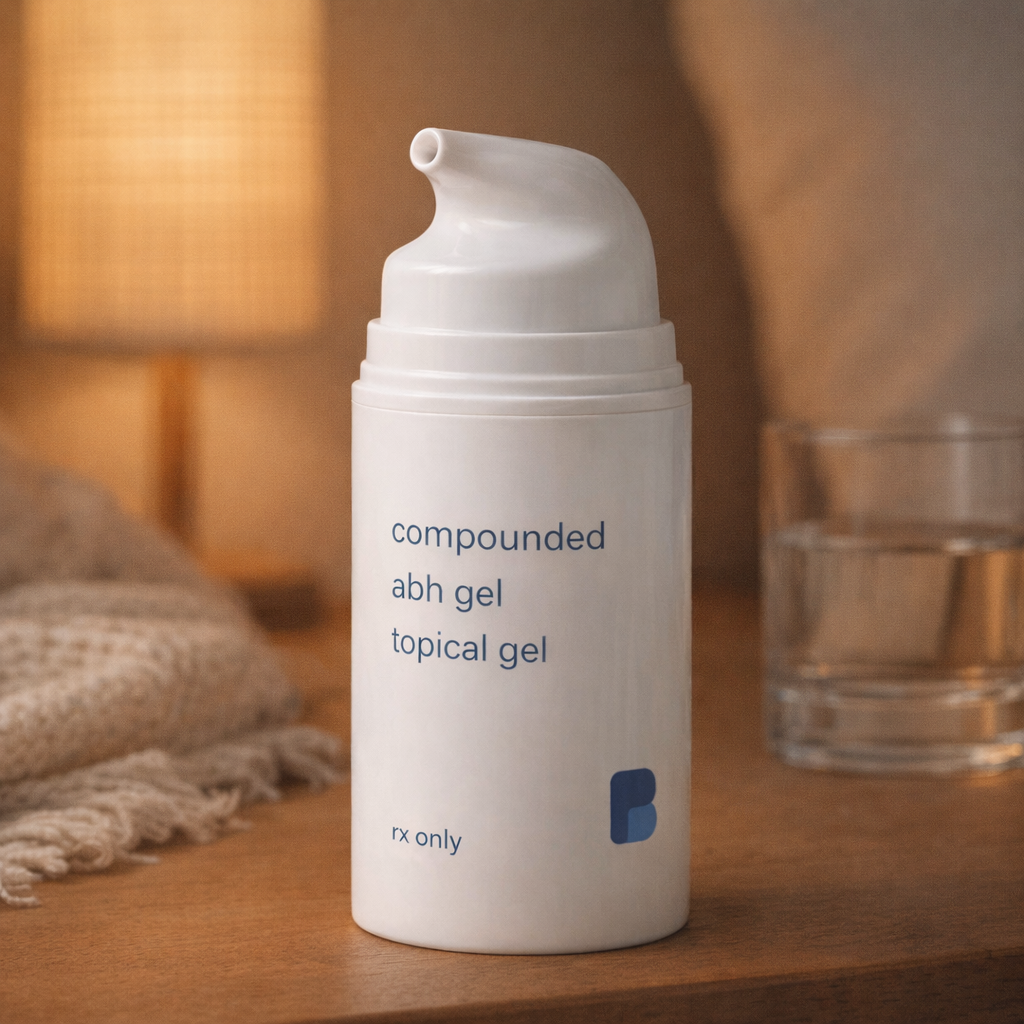





ABH gel is named for the brand names of its three ingredients. It combines lorazepam, a benzodiazepine; diphenhydramine, an antihistamine; and haloperidol, an antipsychotic. The gel is drawn into a syringe and rubbed into the skin, often on the inner wrist.
Each of the three medicines is FDA-approved in forms that are swallowed or injected. ABH gel is not an FDA-approved product. It is made by a compounding pharmacy to a prescriber's order.
What is it used for?
Prescribers in hospice and palliative care order ABH gel for patients who can no longer swallow medicines. The decision to use it, and what to use it for, belongs to the prescriber and the care team. ABH gel is not FDA-approved for any use, and the absorption study above is the reason Bayview makes no claim about what it does.
When the goal is to get these medicines into the body without swallowing tablets, other forms exist. Our hospice and palliative care page lists the oral concentrates and the oral or sublingual prefilled syringes Bayview prepares.
How is it used?
Follow the directions on the label; they come from the prescriber. Apply only the amount prescribed, to the area the prescriber named. The person applying it should wash their hands afterward, so the gel is not carried to their own skin, eyes, or mouth.
Side effects & safety
The warnings below were written for these medicines when they are swallowed. The study above found very little of the gel reaches the blood, but one study of ten healthy people cannot rule these risks out, especially in someone who is frail or whose skin is broken.
Lorazepam. MedlinePlus warns that lorazepam can cause serious or life-threatening breathing problems, drowsiness, or coma when it is combined with certain medicines, including some medicines for cough or pain, and that it may be habit forming. Its common side effects are drowsiness, dizziness, weakness, and unsteadiness.
Haloperidol. MedlinePlus warns that older adults with dementia who take antipsychotics such as haloperidol may have an increased chance of death, and that haloperidol is not FDA-approved for behavior problems in older adults with dementia. It can also cause stiff muscles and movements a person cannot control.
Diphenhydramine. Diphenhydramine is an antihistamine that commonly causes drowsiness.
Who should not use it?
- Anyone allergic to lorazepam, diphenhydramine, haloperidol, or any other ingredient in the prescription.
- People with Parkinson's disease, unless the prescriber directs it. MedlinePlus says a doctor will probably advise against haloperidol.
- People with glaucoma, unless the prescriber directs it. MedlinePlus says a doctor may advise against lorazepam.
Tell the prescriber about breathing problems such as sleep apnea, asthma, or COPD, about a personal or family history of prolonged QT syndrome or an irregular heartbeat, about seizures, and about every medicine the patient takes, especially opioids and other medicines that cause drowsiness.
How should it be stored?
Store it as the label directs and use it before the beyond-use date printed on it. Lorazepam is a controlled substance: keep the gel where children, pets, and visitors cannot reach it, and do not share it. Ask the pharmacist or the hospice team how to dispose of what is left over.
Why is this compounded?
No manufactured product combines these three medicines in a gel, so a prescriber who wants ABH gel needs it compounded. As a 503A compounding pharmacy, Bayview prepares each order pursuant to an individual patient prescription under USP 795 non-sterile compounding standards. We do not supply ABH gel as agency or facility stock.
Clinical details for prescribers
Regulatory status. Lorazepam is a Schedule IV controlled substance. Rhode Island rules and Bayview policy require EPCS for controlled compounds; fax and phone orders are not accepted for ABH gel. Compounded ABH gel is 503A, patient-specific and not FDA-approved.
Absorption data. Smith TJ and colleagues (J Pain Symptom Manage 2012;43(5):961 to 966) applied ABH gel to ten healthy volunteers with serial plasma sampling to 240 minutes: no lorazepam and no haloperidol were detected in any sample from any volunteer down to a limit of 0.05 ng/mL, and diphenhydramine was erratically detected in 5 of 10 volunteers at subtherapeutic levels. The authors concluded that none of the three agents is absorbed in quantities sufficient to be effective (PubMed). No absorption or efficacy claim is made for this preparation.
Formulation & dosing. Formulary preparations, per mL: lorazepam 1 mg / diphenhydramine HCl 12.5 mg / haloperidol 2 mg topical gel; diphenhydramine HCl 12.5 mg / haloperidol 1 mg / lorazepam 1 mg transdermal gel; diphenhydramine 25 mg / haloperidol 1 mg / lorazepam 1 mg transdermal gel. With metoclopramide: lorazepam 1 mg / diphenhydramine HCl 12.5 mg / haloperidol 2 mg / metoclopramide 20 mg topical gel. Dose selection is the prescriber's decision.
Alternatives when the oral route fails:
- ABH-type oral or sublingual prefilled syringe: lorazepam 0.5 mg / diphenhydramine 12.5 mg / haloperidol 0.5 mg per mL
- Lorazepam oral concentrate 2 mg/mL, a commercially available FDA-approved product
- See the hospice and palliative care page
Send orders by EPCS to Bayview Pharmacy (NCPDP 4106882). See how to e-prescribe and the for providers page.
ABH gel is a compounded medication and is not FDA-approved. The FDA has not evaluated compounded preparations for safety, effectiveness or quality. A prescription is required.