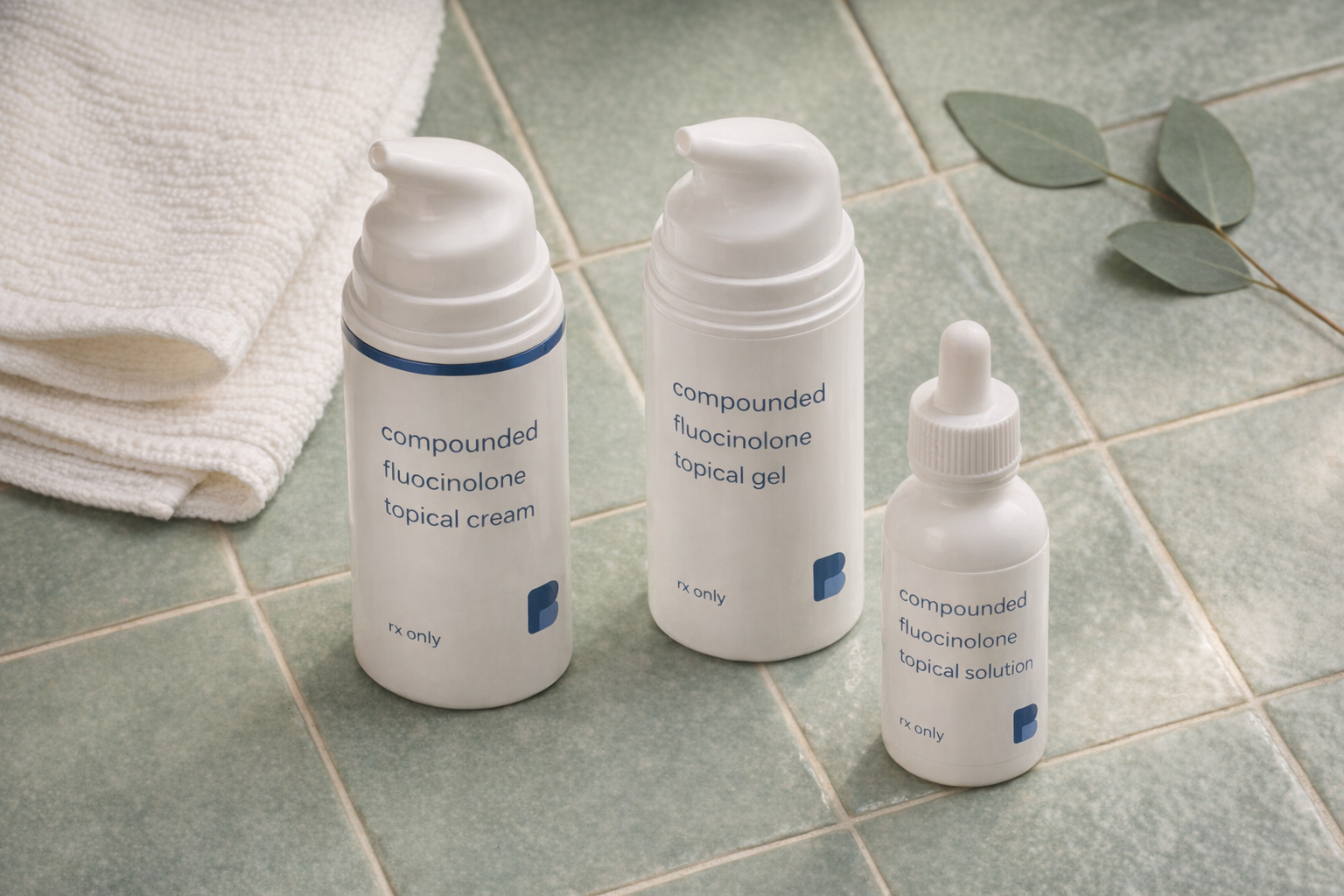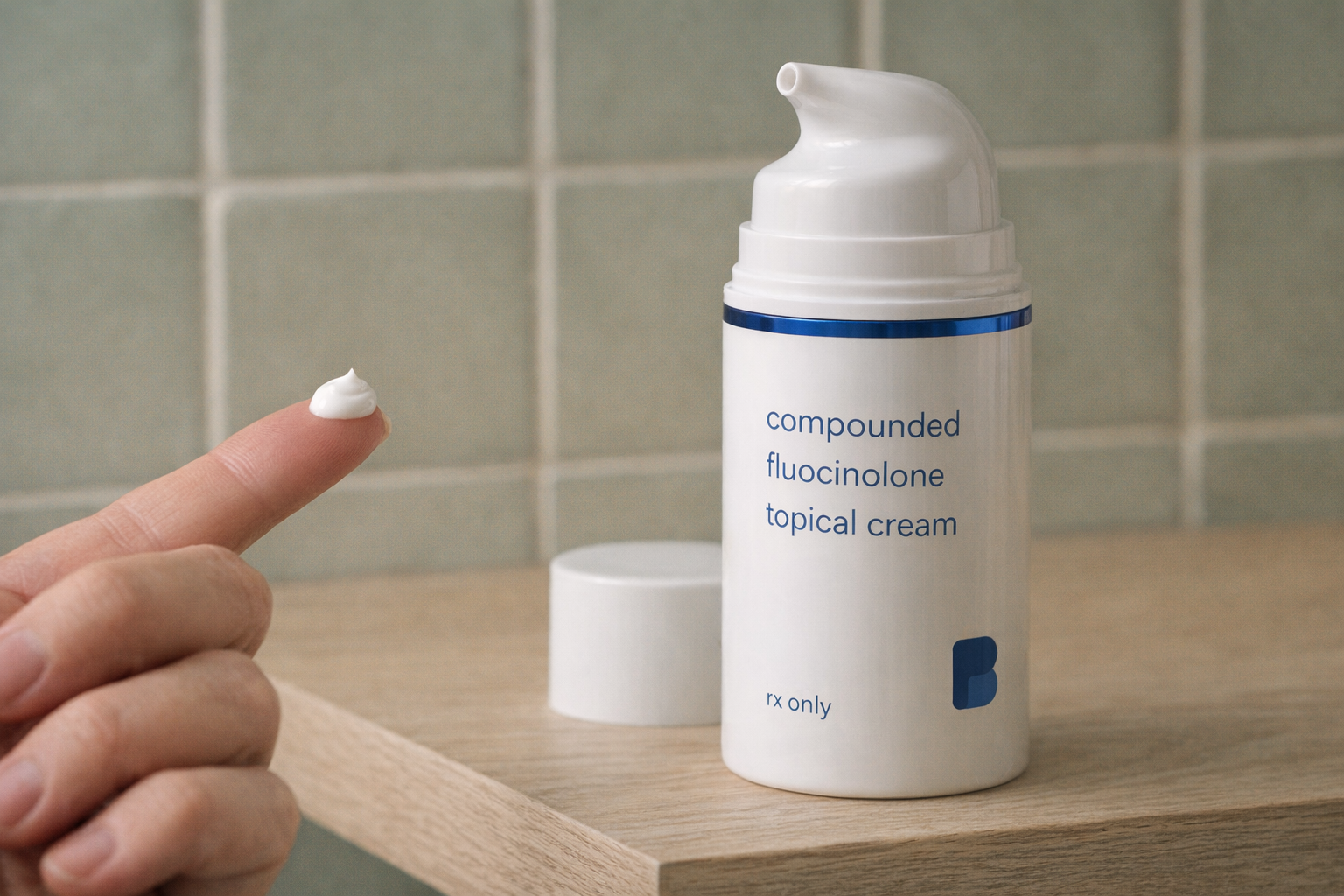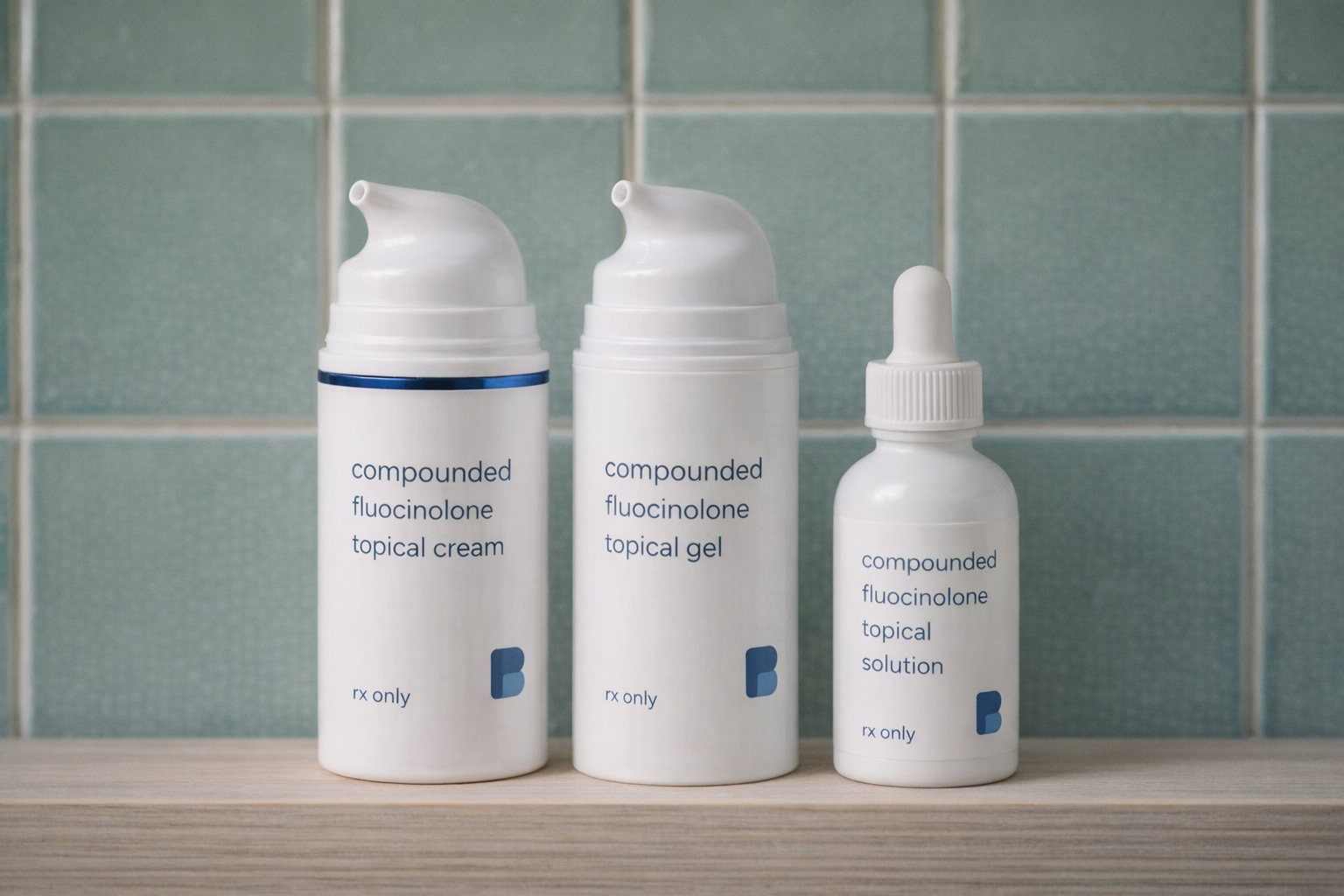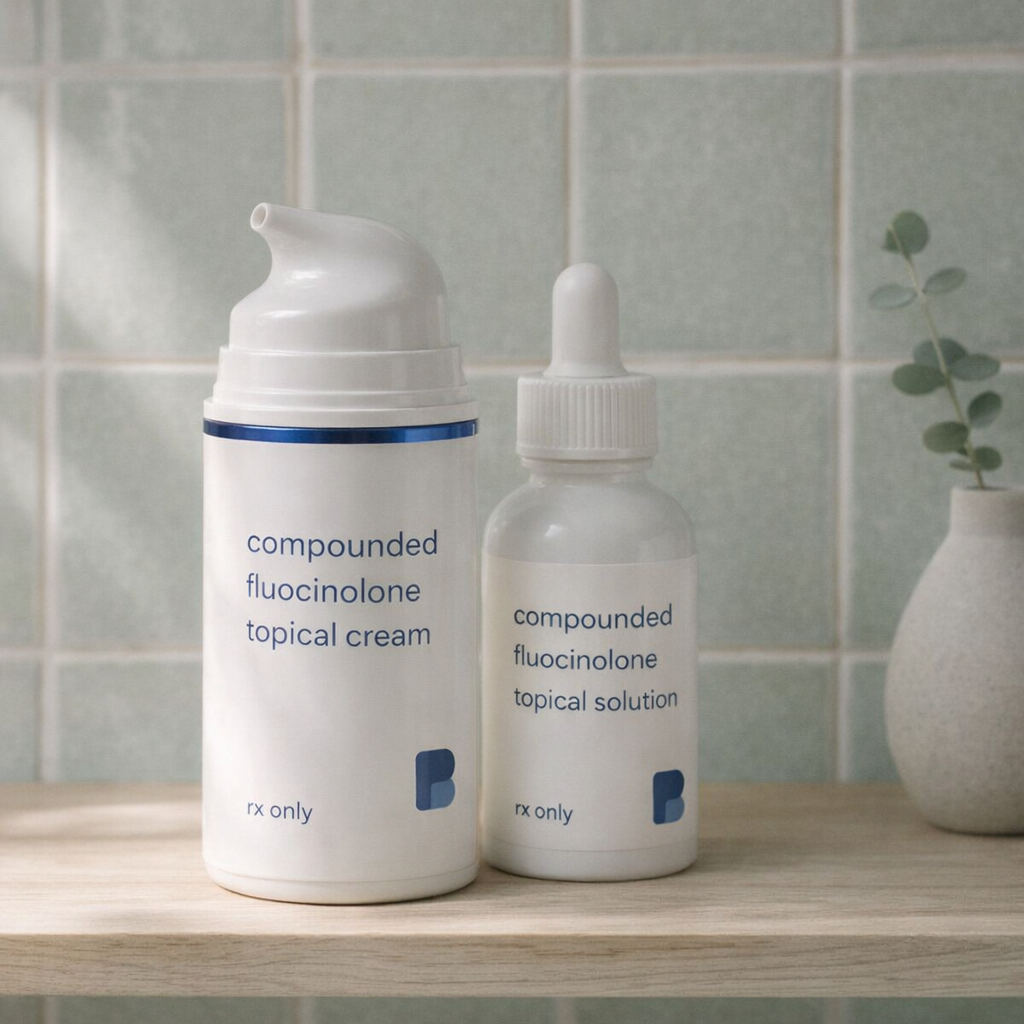





Fluocinolone acetonide is a prescription corticosteroid applied to the skin or scalp. According to MedlinePlus, it works by activating natural substances in the skin to reduce swelling, redness and itching.
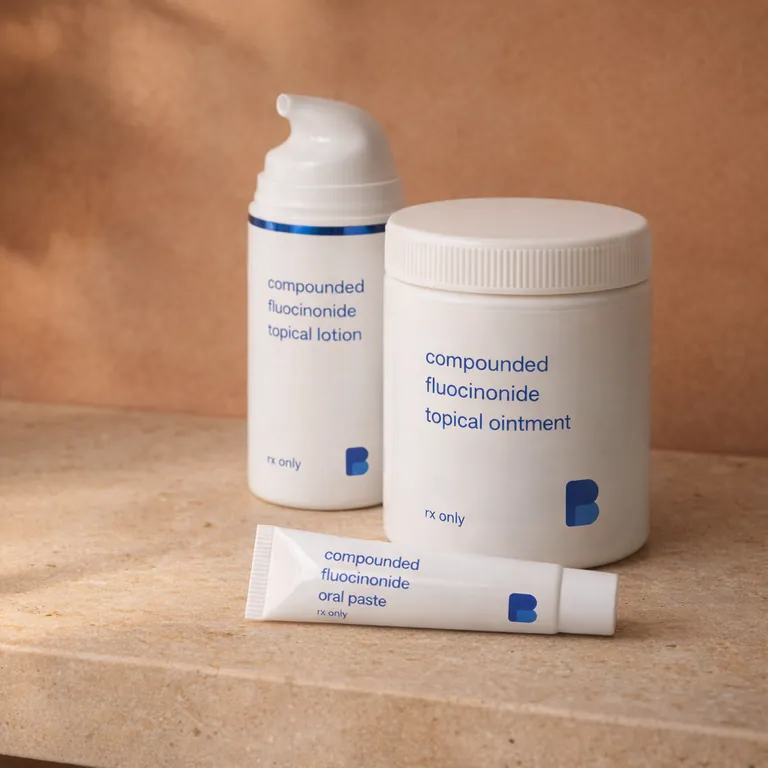
Manufactured fluocinolone comes as an ointment, cream, solution, shampoo and oil. Bayview compounds it when a prescriber needs something those products do not provide for a particular patient: another strength or base, a gel or lotion, or fluocinolone combined with an antifungal, an antibiotic or salicylic acid in one preparation.
What is it used for?
According to MedlinePlus, manufactured fluocinolone topical is used to treat the itching, redness, dryness, crusting, scaling, inflammation and discomfort of various skin conditions, including psoriasis and eczema.
Those are the uses of the FDA-approved products. Compounded strengths, bases and combinations have not been studied in the trials behind those products. Bayview prepares fluocinolone to a prescriber's order and makes no claim that a compounded preparation works for any condition.
Which forms does Bayview compound?
- Cream and ointment. 0.01%, 0.015%, 0.05% and 0.1%.
- Solution. 0.05% and 0.1%, for the scalp or other hair-bearing skin.
- Gel and lotion. A 0.05% gel and a 0.01% lotion.
- Shampoo. 0.01%, and shampoos that add ketoconazole, miconazole or salicylic acid.
- Combinations. With clotrimazole in a lotion, with neomycin and nystatin or with erythromycin in an ointment, with clioquinol as an ear solution, and with ketoconazole as an oral rinse.
Strength, base and how often to apply it are set by the prescriber for the individual patient. Fluocinolone blends with hydroquinone and tretinoin are covered on our melasma and dark spots page.
How is it used?
Follow the directions on your label; they come from your prescriber. Apply a thin layer only to the area your prescriber named, and wash your hands afterward unless your hands are the treated area. MedlinePlus advises avoiding the face, the genital and rectal areas, skin creases and armpits unless your doctor directs otherwise, and not wrapping or bandaging the treated area unless your doctor tells you to. Keep it out of your eyes and mouth, and do not swallow it.
For a child's diaper area, MedlinePlus advises against tight-fitting diapers or plastic pants, which may increase side effects. Call your prescriber if your skin has not improved within the first 2 weeks.
Side effects & safety
MedlinePlus lists burning, itching, irritation, redness or dryness of the skin, acne, a change in skin color, bruising or shiny skin, tiny red bumps or a rash around the mouth, and small white or red bumps on the skin among its side effects. Tell your prescriber if any of these are severe or do not go away.
Children may be at higher risk of side effects, including slowed growth and delayed weight gain, so discuss this with the child's prescriber.
Who should not use it?
- Anyone allergic to fluocinolone or another ingredient in the preparation. Tell your prescriber about a peanut allergy, which MedlinePlus lists among the allergies to report.
- Anyone with a skin infection on the area to be treated, unless the prescriber has accounted for it.
Tell your prescriber about diabetes or Cushing's syndrome, and if you are pregnant, planning a pregnancy or breastfeeding.
How should it be stored?
Keep it in the container it came in, tightly closed, at room temperature away from heat and moisture, and do not freeze it. Use it before the beyond-use date printed on your label. Keep it out of reach of children and pets.
Why is this compounded?
A prescriber may order compounded fluocinolone for someone who needs a strength or base the manufactured products do not come in, cannot use an ingredient in those products, or needs two medications applied as one preparation. Those are the prescriber's decisions.
As a 503A compounding pharmacy, Bayview prepares each order pursuant to an individual patient prescription under USP 795 non-sterile compounding standards.
Clinical details for prescribers
Regulatory status. Fluocinolone acetonide is noncontrolled, so eRx, fax and phone orders are accepted. All compounded fluocinolone is 503A, patient-specific and not FDA-approved.
Formulation & dosing. Formulary preparations: fluocinolone acetonide 0.01%, 0.015%, 0.05% and 0.1% cream and ointment; 0.05% and 0.1% topical solution; 0.05% gel; 0.01% lotion; 0.01% shampoo; shampoos with ketoconazole and salicylic acid (for example 0.05% / 2% / 2%) or with miconazole and salicylic acid; clotrimazole 1% / fluocinolone 0.01% lotion; fluocinolone 0.25 mg/g / neomycin / nystatin ointment; erythromycin 2% / fluocinolone 0.025% ointment; clioquinol 1% / fluocinolone 0.1% otic solution; fluocinolone 0.05% / ketoconazole 1% oral rinse. Specify the strength, base, site and frequency.
Counseling / clinical points:
- 0.05% and 0.1% exceed the strengths of the manufactured products; document the clinical reason
- Avoid face, groin, axillae and occlusion unless intended; children absorb more per body surface area
- Otic and oral rinse use is off-label
- Where the strength and base match a manufactured product, document why a compounded preparation is needed
Send orders by eRx to Bayview Pharmacy (NCPDP 4106882) or fax 401-284-4506. See how to e-prescribe and the for providers page.
Compounded fluocinolone acetonide is a compounded medication and is not FDA-approved. The FDA has not evaluated compounded preparations for safety, effectiveness or quality. A prescription is required.