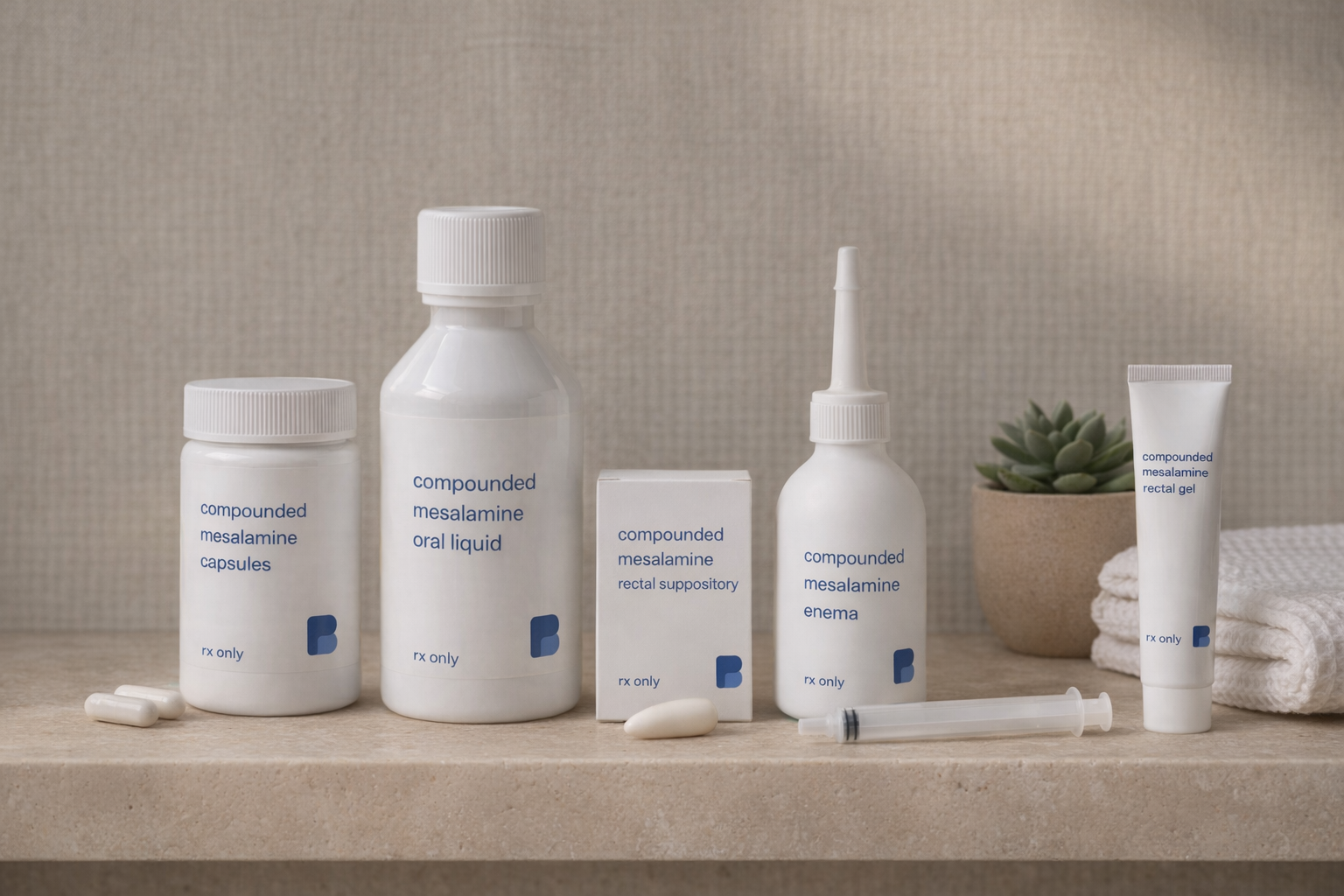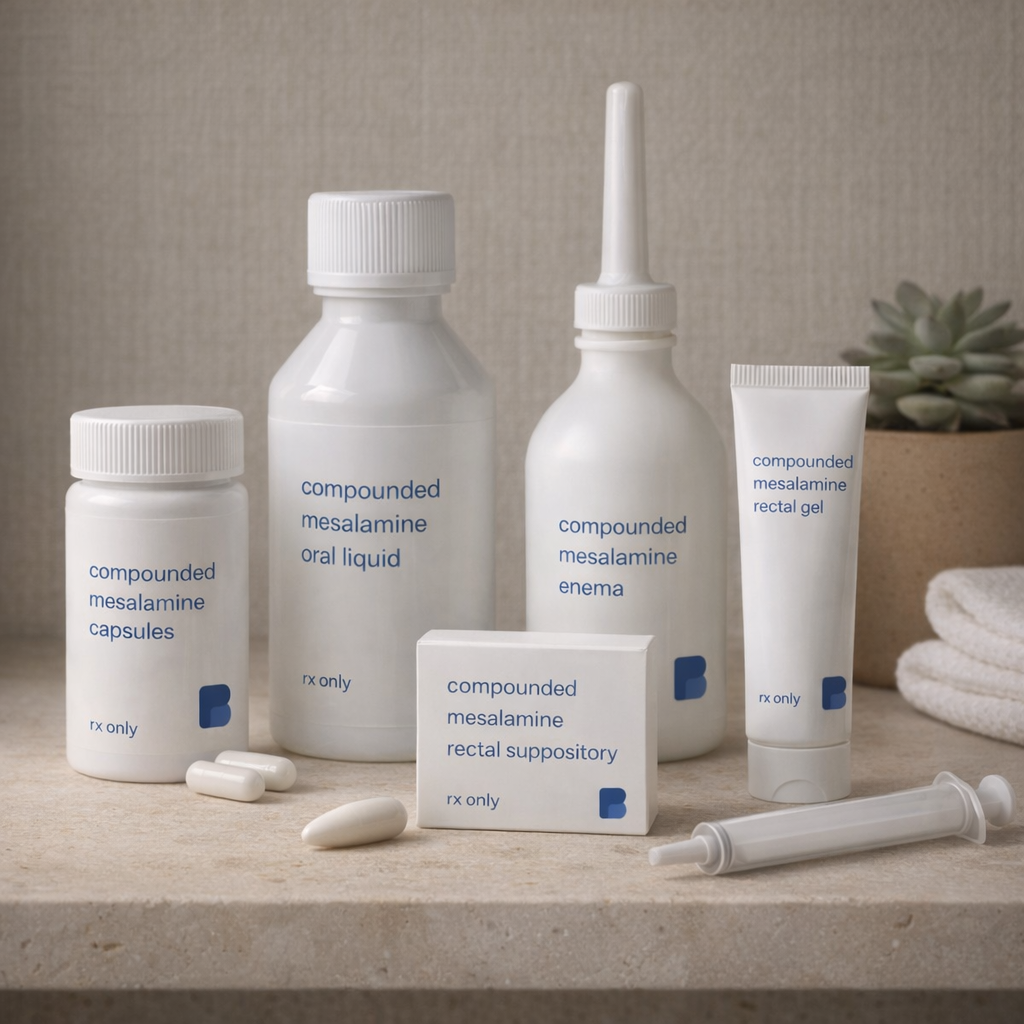





Mesalamine is a prescription aminosalicylate. It is manufactured as delayed-release and extended-release oral products and as two rectal products: a 1000 mg suppository and a 4 g/60 mL rectal suspension enema. A compounding pharmacy can prepare mesalamine as oral capsules or an oral liquid, as rectal preparations at other strengths, or as a rectal gel, when a prescriber orders it.
How does it work?
Mesalamine is an anti-inflammatory medicine that acts mainly on the lining of the bowel where it is placed. Rectal forms deliver it directly to the lower bowel. Manufactured oral products are made to release it in the intestine or gradually through the digestive system. See MedlinePlus on mesalamine and mesalamine rectal.
What forms are manufactured?
Manufactured oral mesalamine comes as delayed-release tablets, delayed-release capsules and extended-release capsules. MedlinePlus explains that delayed-release forms release the medicine in the intestine, and extended-release capsules release it throughout the digestive system. The manufactured suppository contains 1000 mg of mesalamine, and the manufactured enema contains 4 g in 60 mL. Brand names have included Pentasa, Canasa and Rowasa. Generic versions are listed on DailyMed.
Which forms does Bayview compound?
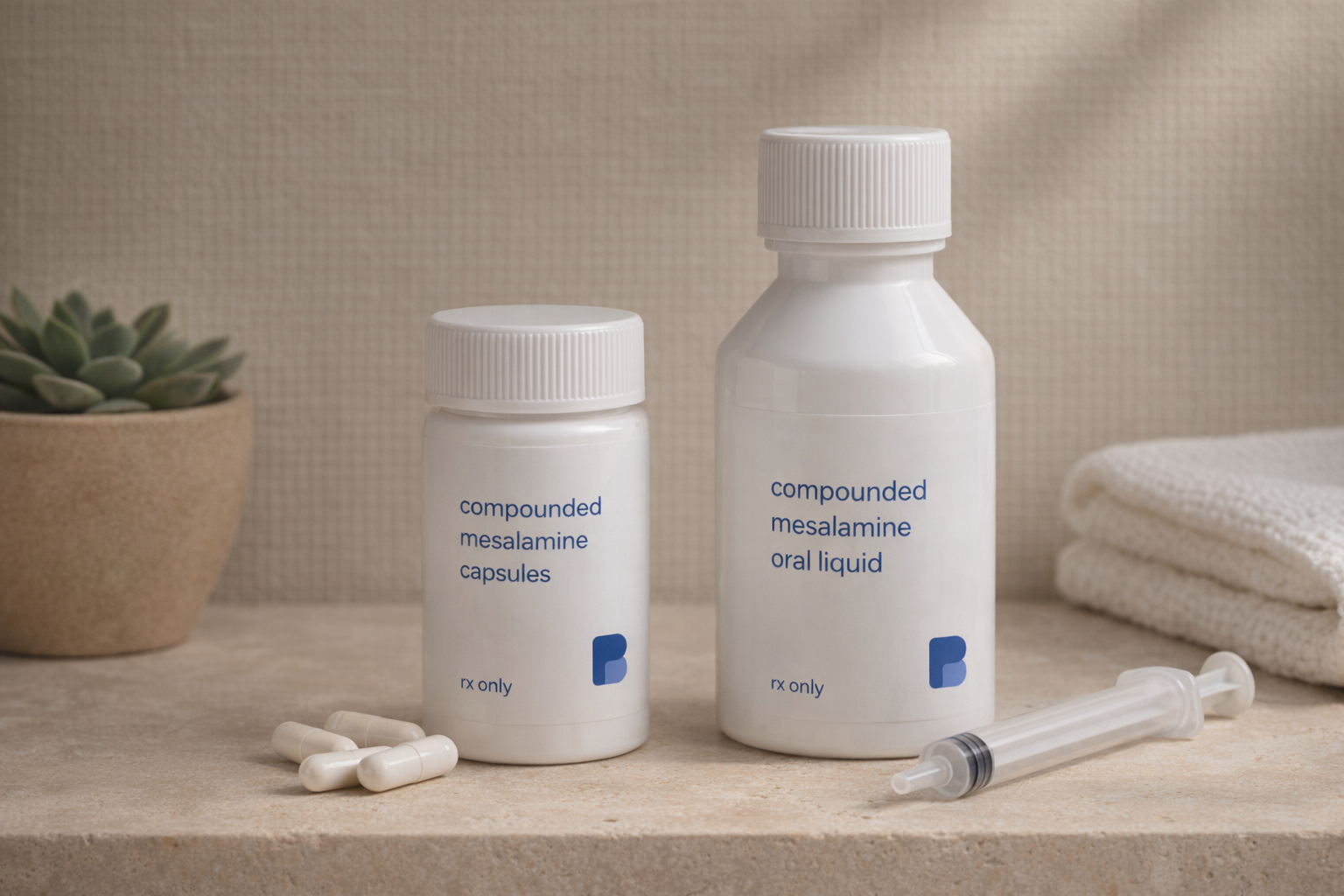
By mouth, Bayview compounds mesalamine capsules at 200 mg, 250 mg and 400 mg, slow release capsules at 200 mg and 250 mg, and a 50 mg/mL oral liquid. Rectally, it compounds suppositories at 250 mg, 500 mg and 1000 mg, a 1.2 g/60 mL rectal suspension enema, and a 50 mg/mL rectal gel. The compounded capsules and oral liquid are not delayed-release products, and the slow release capsules are not the same as a manufactured extended-release capsule. The table on this page lists each preparation.
How is it used?
Use it exactly as your prescriber directs and as the label on your container states. Swallow capsules whole unless your prescriber or label says otherwise, and measure the oral liquid with an oral syringe, not a kitchen spoon. For rectal forms, MedlinePlus advises emptying the bowels first. Insert a suppository pointed end first. Shake an enema well, lie on your left side, and insert the tip as directed. Mesalamine can stain clothing, fabrics, flooring and other surfaces, so take care during use. Drink plenty of fluids while using it.
Side effects & safety
Common side effects include joint or back pain, gas, dizziness and hair loss. Oral forms can also cause nausea, vomiting, heartburn or decreased appetite, and rectal forms can cause rectal pain. Mesalamine can affect the kidneys, so your prescriber may check kidney function before and during treatment. Rarely, a reaction to mesalamine can look like a flare of bowel inflammation, with cramping, bloody diarrhea, fever, headache or rash. Serious allergic reactions can involve the heart, liver or skin. Mesalamine can make your skin more sensitive to the sun, so use sun protection. Tell your prescriber right away about chest pain, shortness of breath, yellow skin or eyes, a blistering rash, or reduced urination.
Who should not use it?
Do not use mesalamine if you are allergic to mesalamine, to salicylates such as aspirin, to aminosalicylates or sulfasalazine, or to any ingredient in the preparation. MedlinePlus advises that mesalamine should not be taken by people who have had the chickenpox (varicella) vaccine in the past six weeks. Tell your prescriber about kidney or liver disease, kidney stones, a history of myocarditis or pericarditis, eczema, asthma, sulfite sensitivity, pregnancy or breastfeeding, and every medication you take.
How should it be stored?
Store as your label directs, away from heat and moisture. Keep it out of reach of children, and do not use it past the beyond-use date on the container.
Bayview sets each beyond-use date by the USP <795> standard for nonsterile compounding. Capsules and suppositories, which contain no water, can be dated up to 180 days. The oral liquid, the enema and the rectal gel contain water, so they can be dated up to 35 days when they contain a preservative, or up to 14 days kept in the refrigerator when they do not. Your label shows the exact date and how to store it.
Why is this compounded?
Manufactured oral mesalamine comes only as delayed-release and extended-release products at set strengths, and there is no manufactured oral liquid. Manufactured rectal mesalamine comes in one suppository strength and one enema strength, and there is no manufactured rectal gel. Compounding lets a prescriber order other capsule strengths, a liquid, a different suppository strength, a smaller amount per enema, or a gel. Related rectal preparations include the Short-Chain Fatty Acid (SCFA) Enema, Diltiazem Rectal Ointment, Nifedipine Rectal Ointment and Nitroglycerin Rectal Ointment. The full list is in our compounded medications catalog.
Clinical details for prescribers
Regulatory status. Mesalamine is not a controlled substance. FDA-approved oral mesalamine is delayed-release tablets and capsules and extended-release capsules (including 250 mg and 500 mg); FDA-approved rectal mesalamine is a 1000 mg suppository and a 4 g/60 mL rectal suspension enema. The 200, 250 and 400 mg capsules, 200 and 250 mg slow release capsules, 50 mg/mL oral liquid, 250 mg and 500 mg suppositories, 1.2 g/60 mL enema and 50 mg/mL rectal gel are available only through 503A compounding and are not FDA-approved. The 1000 mg suppository matches the marketed strength, and the 250 mg slow release capsule matches the strength of a marketed extended-release capsule; please state the clinical reason a compounded preparation is needed (for example an excipient sensitivity).
Formulation & dosing. Common orders are mesalamine 200 mg, 250 mg or 400 mg oral capsules, 200 mg or 250 mg slow release capsules, 50 mg/mL oral liquid, 250 mg, 500 mg or 1000 mg rectal suppository, 1.2 g/60 mL rectal suspension enema, and 50 mg/mL rectal gel. Dose, frequency and duration are set by the prescriber.
Counseling / clinical points:
- Labeling recommends evaluating renal function before starting and periodically during therapy
- Labeling describes mesalamine-induced acute intolerance syndrome, hypersensitivity reactions including myocarditis and pericarditis, hepatic failure in patients with preexisting liver disease, severe cutaneous adverse reactions, photosensitivity and nephrolithiasis
- Contraindicated with hypersensitivity to salicylates or aminosalicylates; the manufactured enema also lists sulfites
- Compounded oral capsules and liquid are not delayed-release. The 2022 Pentasa prescribing information reports that about 80% of mesalamine given as an unformulated 1 g aqueous suspension is absorbed, compared with 20% to 30% from the extended-release capsule
- Mesalamine can falsely elevate urinary normetanephrine by LC with electrochemical detection
Send orders by eRx to Bayview Pharmacy (NCPDP 4106882) or fax 401-284-4506. See how to e-prescribe and the for providers page.
Compounded mesalamine is a compounded medication and is not FDA-approved. The FDA has not evaluated compounded preparations for safety, effectiveness or quality. A prescription is required.