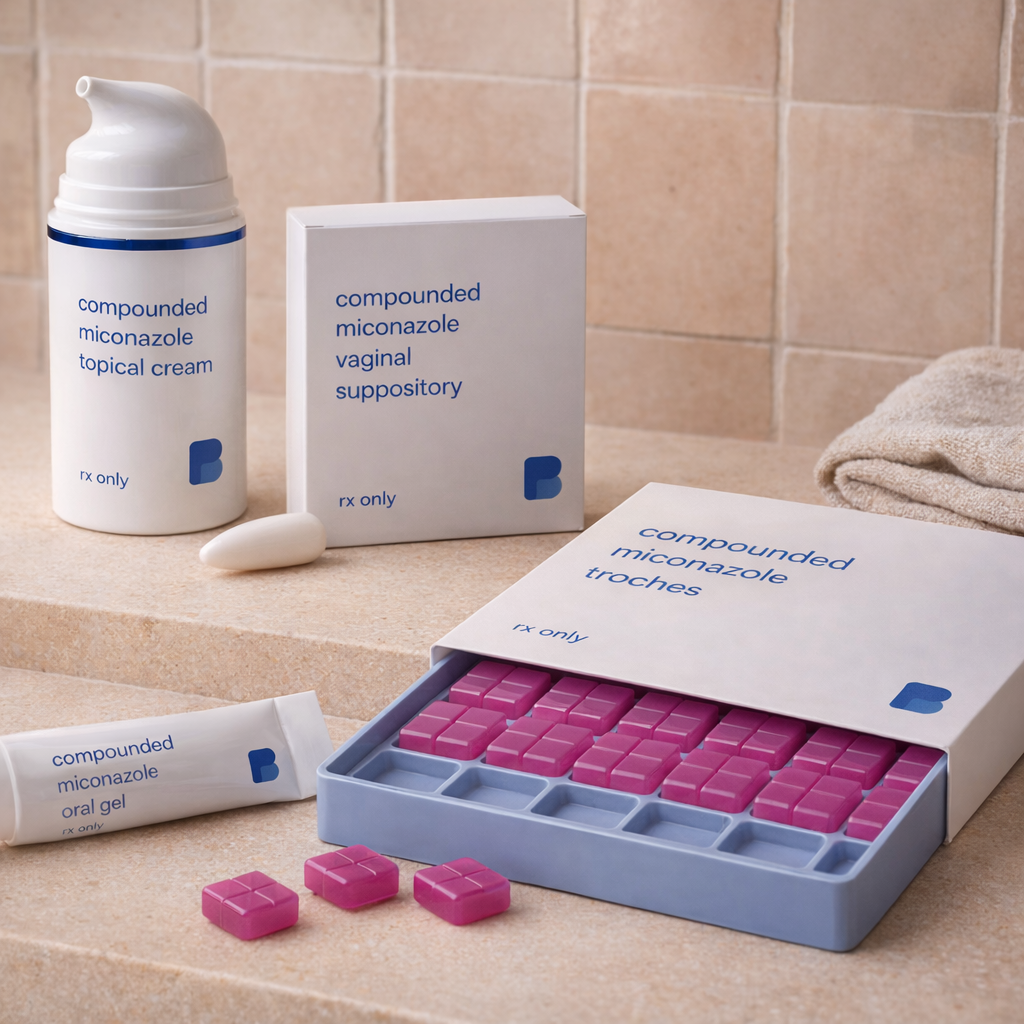






Miconazole is an azole antifungal used on the skin, in the mouth, in the ear, on the nails and in the vagina. It is one of the most familiar antifungals because several forms are sold over the counter. Compounding covers the forms and strengths that are not sold: an oral gel or troche, ear drops, a nail tincture, a medicated shampoo, and topicals at the strength a prescriber chooses.
How does it work?
Miconazole belongs to the azole class of antifungals. It interferes with the making of ergosterol, a building block of the fungal cell membrane, which weakens the membrane and stops the fungus from growing. See MedlinePlus on topical miconazole and vaginal miconazole.
Which forms does Bayview compound?
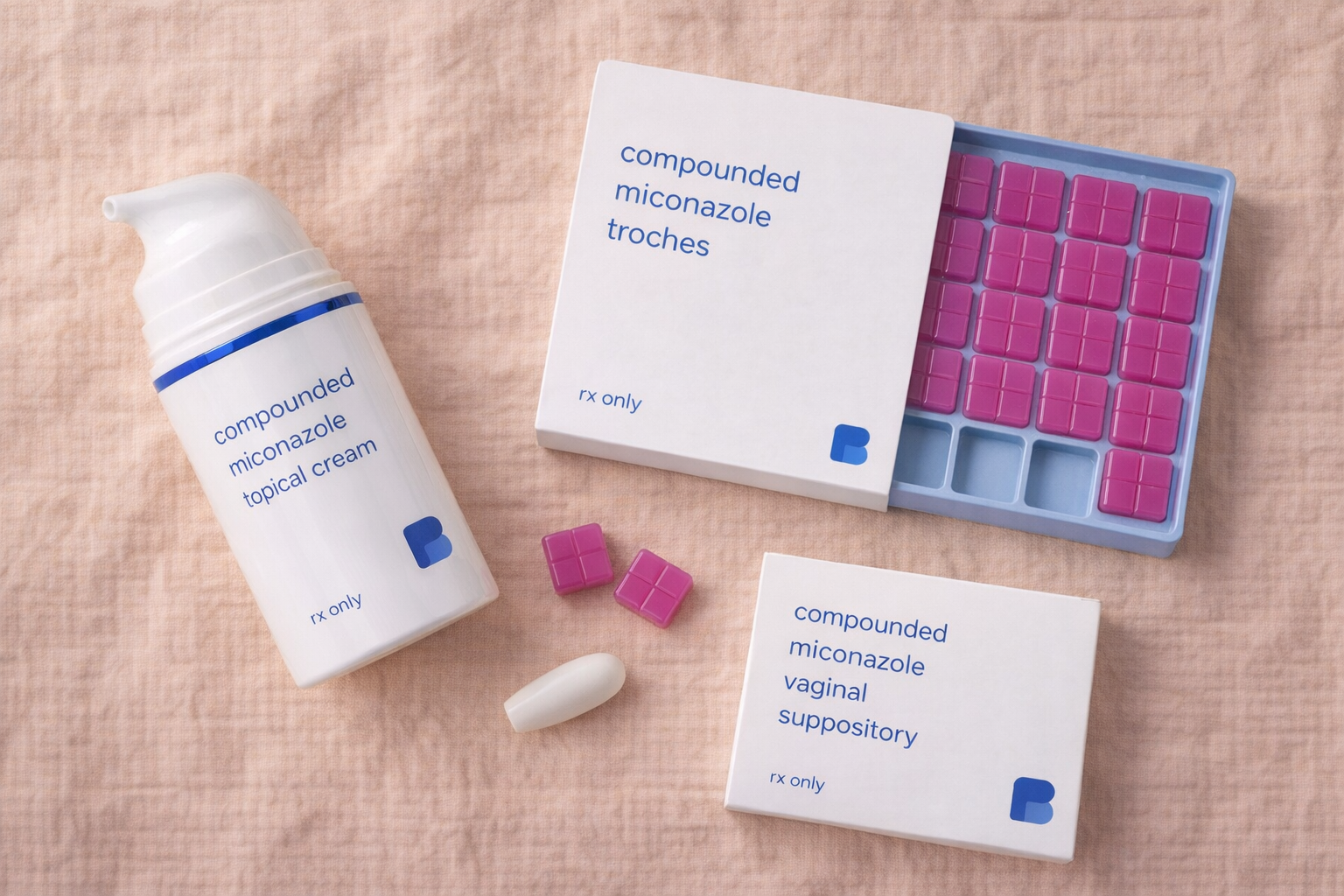
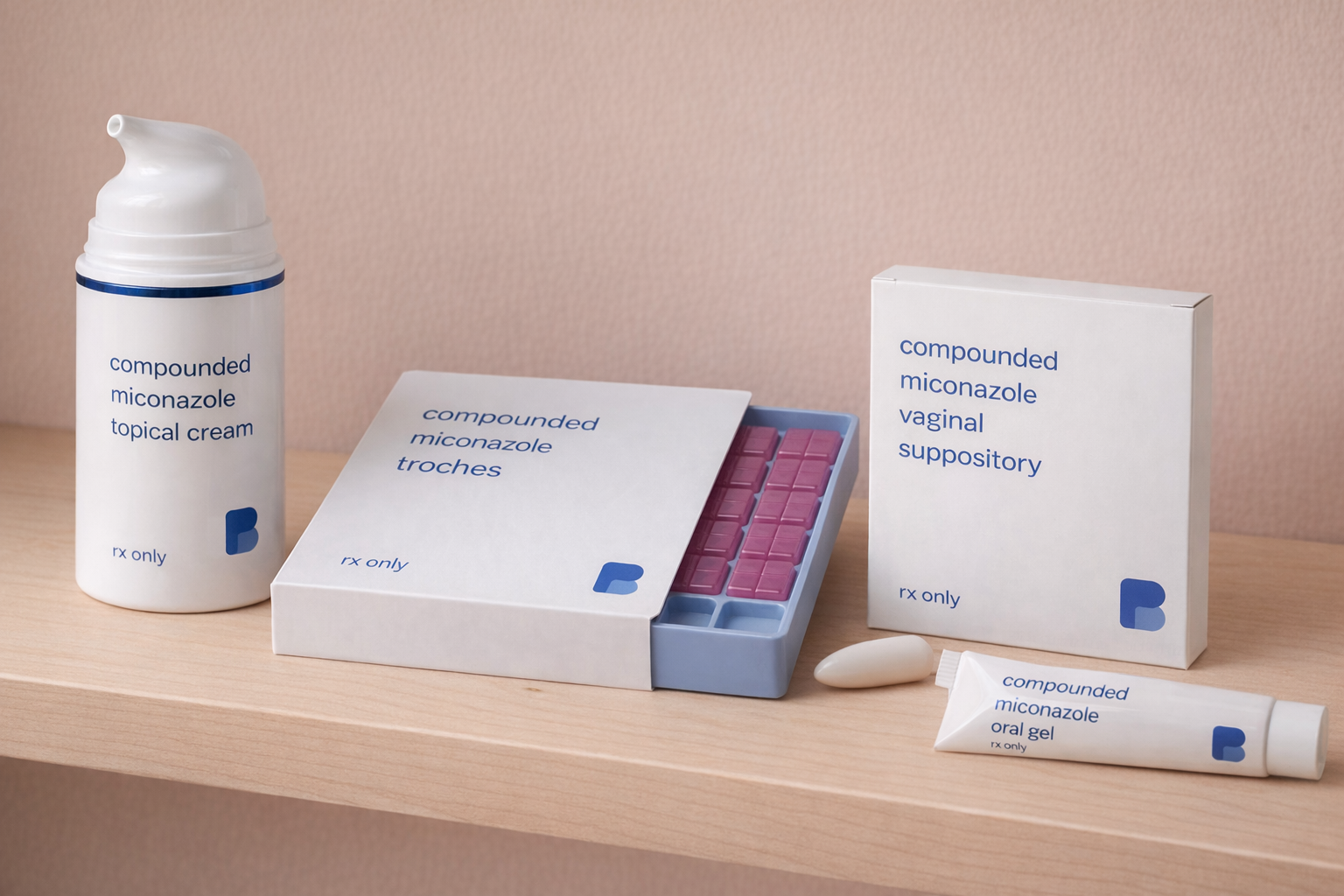
Bayview compounds miconazole as a topical cream, gel and solution, a nail tincture, a shampoo, an oral gel, oral paste and oral liquid, troches that dissolve in the mouth, ear preparations and vaginal suppositories. The full list of strengths is in the table on this page. Two-ingredient preparations, such as miconazole with tolnaftate, nystatin or hydrocortisone, can also be made when a prescriber orders them.
Is it the same as over-the-counter miconazole?
The active ingredient is the same, but the product is not. Over-the-counter creams, powders, sprays and vaginal products are manufactured in fixed strengths and bases. A compounded preparation is made for one patient in the form and strength written on the prescription, which is why it needs a prescriber's order.
How is it used?
How you use it depends on the form. Topicals are applied to clean, dry skin, troches are dissolved slowly in the mouth, oral gels and pastes are applied inside the mouth, ear preparations are placed in the ear and suppositories are inserted vaginally. Your prescriber sets the amount, how often to use it and for how long. Follow the directions on your prescription label and finish the course your prescriber sets.
Side effects & safety
On the skin, the most common side effects are burning, itching or irritation where it is applied. In the mouth, people may notice a change in taste, headache or stomach upset. Miconazole can interact with some medications. Tell your prescriber if you take a blood thinner such as warfarin, because miconazole used in the mouth or vagina can increase its effect and the risk of bleeding. See MedlinePlus on buccal miconazole and vaginal miconazole.
Who should not use it?
Do not use miconazole if you are allergic to miconazole, other azole antifungals or any ingredient in the preparation. Tell your prescriber if you are pregnant or breastfeeding, and share your full medication list, including vitamins and supplements, before you start.
How should it be stored?
Store at room temperature away from heat and moisture unless your label says otherwise. Keep it out of reach of children, and do not use it past the beyond-use date on the container.
Why is this compounded?
Manufactured miconazole covers common skin and vaginal uses. A prescriber turns to compounding when a patient needs a form that is not made, such as a troche, an oral gel, ear drops or a shampoo, or a strength or base the manufactured products do not offer. Related preparations include Antifungal Nasal Spray, Boric Acid Vaginal Suppositories and Magic Mouthwash. The full list is in our compounded medications catalog.
Clinical details for prescribers
Regulatory status. Miconazole is not a controlled substance. Manufactured topical, vaginal and buccal miconazole products exist; the oral gel, oral paste, oral liquid, troche, otic, nail, shampoo and higher-strength topical preparations listed here are available only through 503A compounding and are not FDA-approved.
Formulation & dosing. Common orders include miconazole 2% oral gel or paste, 10 mg or 250 mg troches, 1% otic solution, 2% shampoo, 8% nail tincture and 2% to 10% topicals. Vaginal suppositories are prepared at 100 mg, 200 mg or 500 mg. Strength, base, quantity and duration are set by the prescriber.
Counseling / clinical points:
- Miconazole inhibits CYP2C9 and CYP3A4; mucosal and vaginal use has been associated with raised INR in patients taking warfarin, so check anticoagulation and other interacting drugs
- Where a strength matches an over-the-counter product (for example 100 mg or 200 mg vaginal suppositories), document the clinical reason a compounded preparation is needed
- Reassess if symptoms do not improve within the expected course, and consider culture to confirm the organism
- Two-ingredient preparations (with tolnaftate, nystatin, hydrocortisone, lidocaine or ketoconazole) can be ordered; specify each active and strength
Send orders by eRx to Bayview Pharmacy (NCPDP 4106882) or fax 401-284-4506. See how to e-prescribe and the for providers page.
Compounded miconazole is a compounded medication and is not FDA-approved. The FDA has not evaluated compounded preparations for safety, effectiveness or quality. A prescription is required.