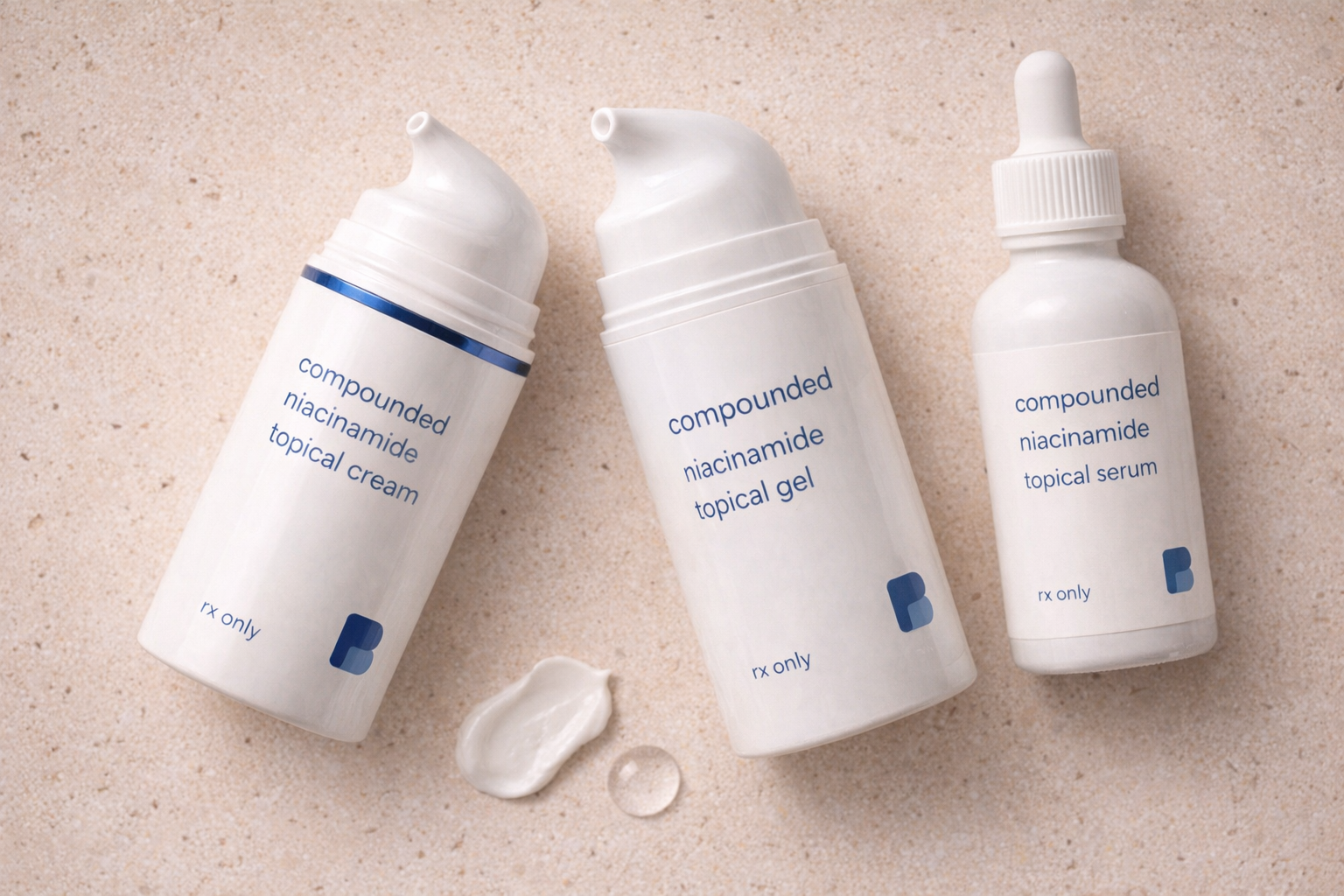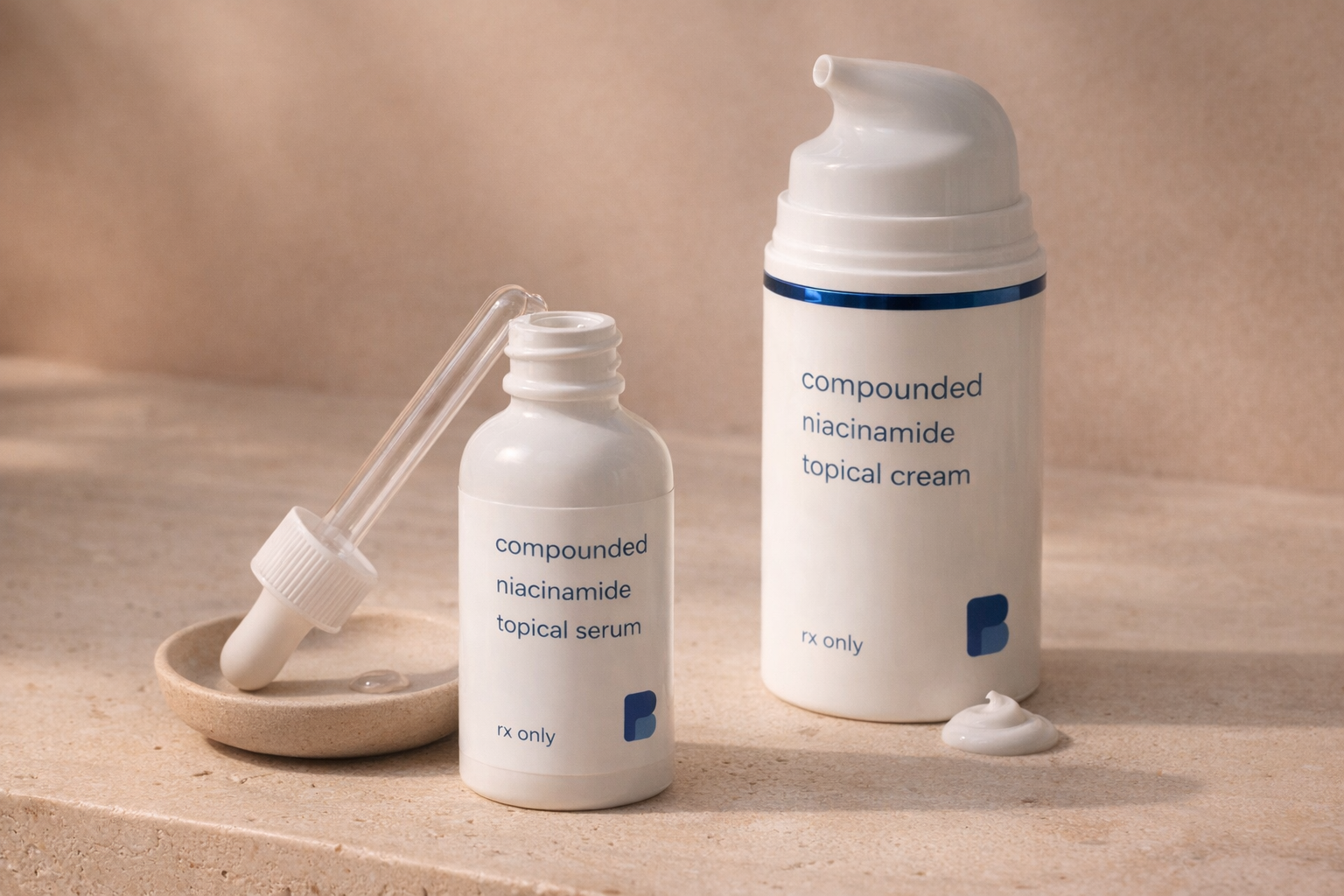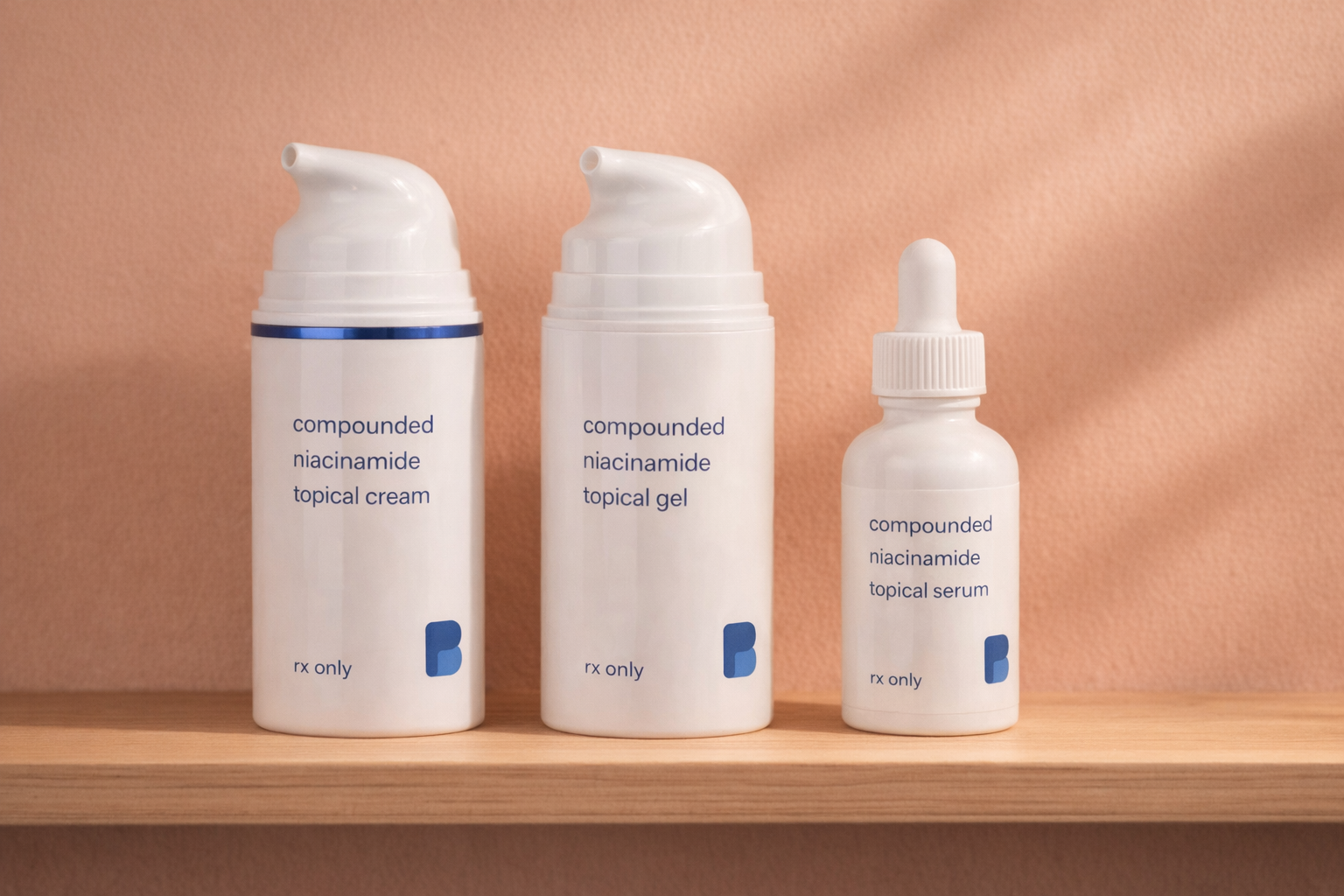






Niacinamide and nicotinamide are two names for the same molecule, the amide form of vitamin B3. In the body it becomes part of NAD and NADP, coenzymes cells use in energy metabolism. In skin care it is a common ingredient in creams and serums. A compounded preparation lets a prescriber choose the exact strength and base, or combine niacinamide with a prescription active in one product.
Is nicotinamide the same as niacinamide?
Yes. Nicotinamide and niacinamide are the same compound. Different labels, studies and countries favor one name or the other. Niacinamide is not the same as niacin (nicotinic acid), another form of vitamin B3; niacin can cause flushing, while niacinamide does not.
How does it work?
Niacinamide is a building block of NAD and NADP, coenzymes cells use to produce energy and repair themselves. Unlike niacin, it does not act on the receptors that cause flushing. How a topical niacinamide preparation fits a patient's skin care plan is a decision for the prescriber.
Which forms does Bayview compound?
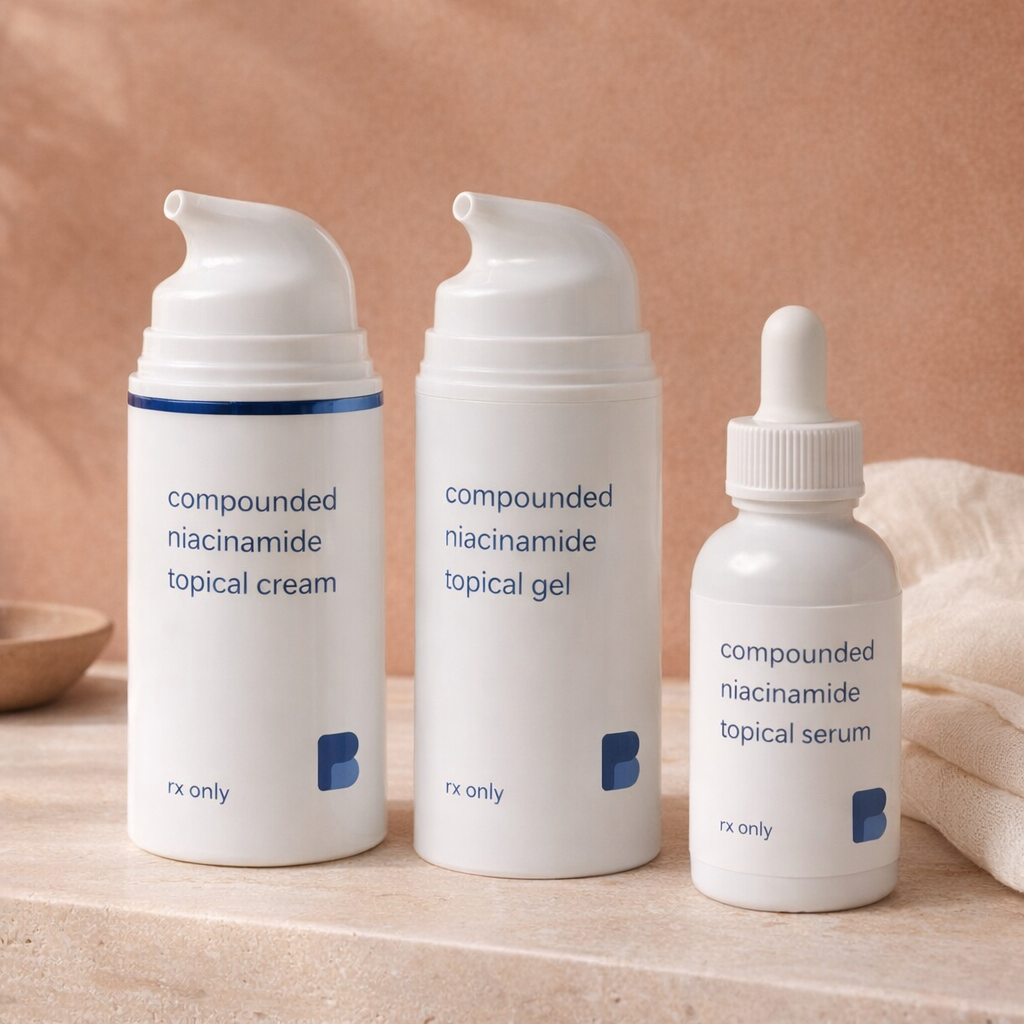
Bayview compounds niacinamide as a 3% or 4% topical cream, a 4% topical gel, a 5% topical serum and a 100 mg/mL oral suspension. It is also used in many combination creams and gels with prescription actives such as tretinoin, azelaic acid and ivermectin. The single-ingredient forms are in the table on this page.
How is it used?
Topical niacinamide is applied as a thin layer to clean, dry skin. The oral suspension is measured and taken by mouth. Your prescriber sets the amount, how often to use it and for how long. Follow the directions on your prescription label.
Side effects & safety
On the skin, niacinamide can cause mild redness, itching, burning or dryness, especially when you first start using it. Stop and call your prescriber if irritation is severe. Taken by mouth, it can cause stomach upset. Tell your prescriber about any other skin products you use, because combining actives can increase irritation.
Who should not use it?
Do not use niacinamide if you are allergic to it or to any ingredient in the preparation. Tell your prescriber if you are pregnant or breastfeeding, if you have liver disease, and about every medication and supplement you take, including any vitamin B3 supplement.
How should it be stored?
Store at room temperature away from heat and moisture unless your label says otherwise. Keep it out of reach of children, and do not use it past the beyond-use date on the container.
Why is this compounded?
Store-bought niacinamide products come in fixed strengths and bases chosen by the manufacturer. A prescriber turns to compounding when a patient needs a specific strength, a base free of an ingredient they react to, or niacinamide combined with a prescription active in one product. Related preparations include Hydroquinone Brightening Blends and Wrinkles and Fine Lines. The full list is in our compounded medications catalog.
Clinical details for prescribers
Regulatory status. Niacinamide is not a controlled substance. No FDA-approved drug product lists niacinamide as its sole active ingredient; it is marketed in cosmetics and dietary supplements. The topical and oral preparations listed here are compounded under 503A and are not FDA-approved.
Formulation & dosing. Common orders include 4% topical cream or gel and 5% topical serum, alone or combined with prescription actives. Strength, base, quantity and duration are set by the prescriber. Published research on oral nicotinamide includes the phase 3 ONTRAC trial (Chen et al., N Engl J Med 2015); that research concerns oral nicotinamide and does not describe Bayview's topical preparations.
Counseling / clinical points:
- Counsel on mild irritation, redness or dryness when starting a topical
- Review other topical actives in the regimen; combinations can be compounded into a single preparation
- Distinguish niacinamide from niacin (nicotinic acid), which causes flushing and has different dosing
- Ask patients about vitamin B3 supplements when ordering the oral suspension
Send orders by eRx to Bayview Pharmacy (NCPDP 4106882) or fax 401-284-4506. See how to e-prescribe and the for providers page.
Compounded niacinamide is a compounded medication and is not FDA-approved. The FDA has not evaluated compounded preparations for safety, effectiveness or quality. A prescription is required.