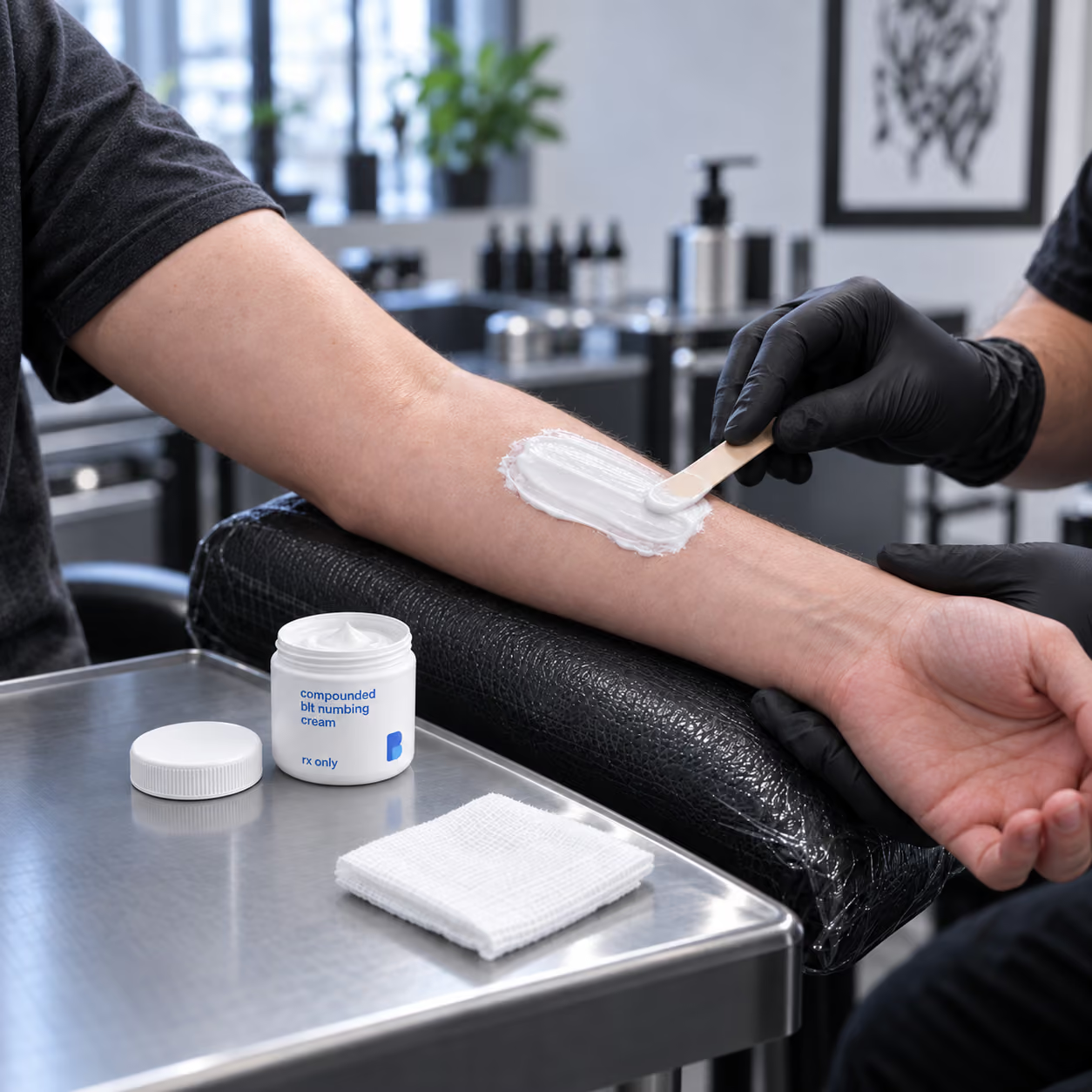
Numbing cream for tattoos is a topical anesthetic applied to clean, intact skin before an appointment. What you can buy off a shelf is capped at 4% lidocaine, and anything above that concentration is a prescription medication. That is where compounded preparations such as BLT numbing cream sit: benzocaine, lidocaine, and tetracaine in a single base, prepared by a pharmacy against a prescription written for one named patient.
This post covers what these preparations contain, what the FDA has said about high-strength numbing products, and how prescribers write directions for them. It does not tell you whether a numbing cream is appropriate for you or for your tattoo. Dose and appropriateness are the prescriber's decisions, not the pharmacy's and not the studio's.
What is tattoo numbing cream made of?
Numbing products sold for tattoos and piercings without a prescription are usually lidocaine at 4% or less, sometimes combined with benzocaine. Prescription and compounded preparations use the same family of drugs, at higher concentrations, and often more than one of them in the same base.
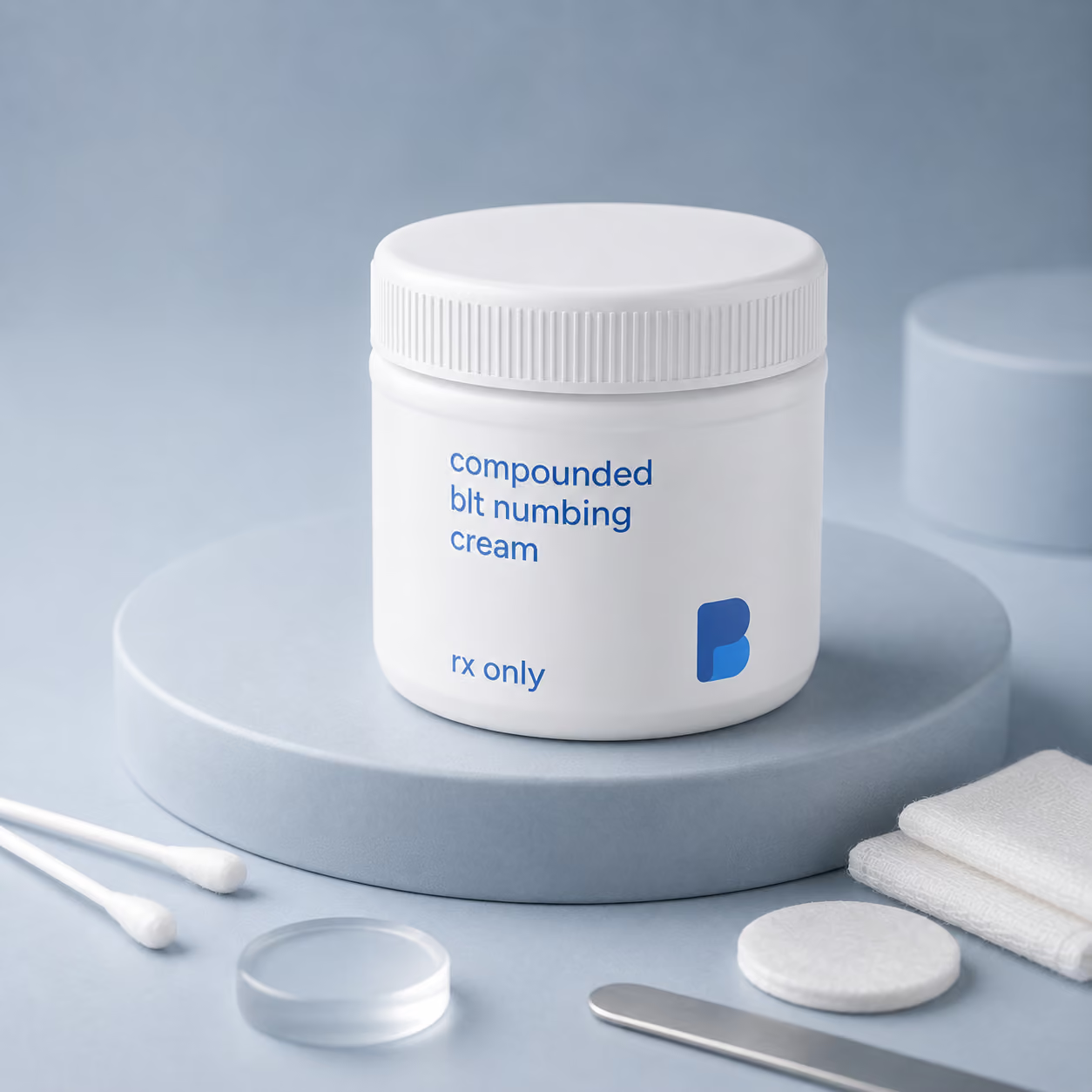
BLT is named for its three active ingredients. Bayview compounds it at benzocaine 20% with either lidocaine 8% or lidocaine 6%, plus tetracaine 4%.
IngredientClassPercentage compoundedBenzocaineEster anesthetic20%LidocaineAmide anesthetic6% or 8%TetracaineEster anesthetic4%
The ester and amide distinction matters mostly for allergy history, which is something to raise with your prescriber before an order is written. StatPearls, the peer-reviewed clinical reference, describes topical anesthetics as a class that blocks the sodium channels nerve fibers use to carry pain and touch signals in the skin. The three agents are combined because they behave differently from one another, not because more actives is inherently better. Combination topical anesthetics are compounded, used off-label, and are not FDA-approved.
Does numbing cream work on tattoos?
That is the question everyone types in, and it is one a compounding pharmacy should not answer with a yes. A compounded preparation is not FDA-approved, and we are not permitted to tell you it works, and would not know how it would go for you in any case.

Here is what can be said. BLT contains three anesthetic drugs whose individual actions on skin nerve endings are described in the published literature, including StatPearls chapters on topical anesthetics and on benzocaine, and a published review of lidocaine and tetracaine cream used before dermatologic laser procedures. The individual drugs are FDA-approved in other products. The combination is not, and using it before tattooing is an off-label use of an off-label preparation.
Whether it fits your procedure, your skin, and your medical history is a clinical judgment. Your prescriber makes it, and sets the strength, the area, the amount, and the timing when they write the order.
Why is 4% the over-the-counter ceiling?
Over-the-counter topical pain relief products are limited to 4% lidocaine, and the FDA advises consumers not to use nonprescription topical pain relief products above that concentration on their skin. Above 4%, lidocaine is a prescription drug, and single-agent strengths from 5% to 30% are prepared by compounding, which is what compounded lidocaine cream and ointment is.
Product typeLidocaine strengthStatusNonprescription numbing cream4% or lessOver-the-counterLidocaine patch5%FDA-approvedSingle-agent compounded lidocaine5% to 30%CompoundedCompounded BLT6% or 8%, with othersCompounded, off-label
The 5% lidocaine patch in that table is FDA-approved for the nerve pain that can linger after shingles, not for cosmetic procedures. The compounded rows are not FDA-approved in any indication, and the BLT row is off-label before tattooing, microneedling, and laser work.
The reason for the ceiling is absorption. How much anesthetic reaches the bloodstream depends on the concentration, the amount applied, the size of the area, whether the skin is intact, and whether the area is covered or warmed. A small tattoo on intact skin and a half-sleeve are not the same exposure, which is why a prescription names the site and the amount.
Is numbing cream illegal for tattoos?
The question usually comes from the difference between what is sold over the counter and what needs a prescription. Nonprescription numbing products are limited to 4% lidocaine. Anything above that concentration is a prescription preparation, which means a prescriber writes for it and a pharmacy prepares it for one named patient. The products the FDA has raised concerns about are high-strength ones sold direct to consumers without a prescription.

On March 26, 2024, the FDA warned consumers to avoid high-strength topical anesthetic products, including ones marketed for use before cosmetic procedures such as microdermabrasion, laser hair removal, tattooing, and piercing, citing the risk of irregular heartbeat, seizures, and breathing difficulties. Our lidocaine page describes the same 2024 action as a warning against unapproved store-bought or online numbing products containing more than 4% lidocaine, some as high as 40%.
If you are looking at a high-strength numbing product on an online marketplace rather than one dispensed on a prescription, that is the exact situation the FDA warning describes.
Do tattoo shops have numbing cream?
Many studios keep a nonprescription product on hand, which puts them at the 4% ceiling like anyone else. Some clients bring a prescription preparation their own prescriber ordered.
Bayview cannot supply a studio, a med spa, or a clinic with BLT as shelf stock. As a 503A compounding pharmacy we prepare each order in small batches under USP 795 non-sterile compounding standards, pursuant to a prescription for an individual patient. Stocking a practice is the role of a 503B outsourcing facility, which Bayview is not. If you are new to how this works, our post on finding a compounding pharmacy near you walks through it.
When should numbing cream be applied before a tattoo?
On the prescription. A typical direction Bayview sees on a BLT order is to apply to the treatment area 45 to 60 minutes before the procedure and remove it completely before treatment begins. That is a common regimen, not a recommendation to you, and your own label may read differently.

How long does tattoo numbing cream take to work?
Timing is written into the order for a reason: the three anesthetics in BLT are described in the literature as differing in how quickly they take effect and how long they last, with benzocaine acting fastest at the surface and tetracaine the slowest of the three to take effect. Higher-strength preparations are often applied in the office so the clinician can time them and remove them.
How much numbing cream should be applied?
Only the amount your prescriber directs, on the area they specify. The counseling that comes with these preparations is consistent across the fact sheets:
Covering or warming treated skin increases how much anesthetic reaches the bloodstream. The FDA has warned that applying topical anesthetics over large areas, in thick amounts, or under wraps or heat can lead to dangerous absorption. Benzocaine also carries a risk of methemoglobinemia, a rare but serious condition. Bluish lips or skin, trouble breathing, an irregular heartbeat, ringing in the ears, dizziness, confusion, or seizures are reasons to seek emergency care. Numbed skin also cannot warn you about heat or injury until sensation returns.
Can I put numbing cream on a fresh tattoo?
These preparations are compounded for use on intact skin, and the labeling says plainly not to apply them to broken, inflamed, or infected skin. A fresh tattoo is a wound. Aftercare belongs to your artist and your prescriber, and a numbing preparation ordered for the appointment is not an aftercare product.
Does numbing cream affect tattoo healing?
The labeling and the published sources behind these preparations describe application to intact skin, not what happens to a tattoo as it heals or how ink settles, so we will not speculate. If your artist or your prescriber has raised the question, ask them directly ahead of the appointment.
What Bayview compounds for this
On a prescriber's order, Bayview prepares BLT numbing cream as a cream for non-laser procedures and as an ointment for laser procedures, in 30 g and 60 g sizes. A lidocaine and tetracaine ointment is also prepared for laser work.
PreparationBaseOrdered forSizesBenzocaine 20%, lidocaine 8%, tetracaine 4%CreamNon-laser procedures30 g, 60 gBenzocaine 20%, lidocaine 8%, tetracaine 4%OintmentLaser procedures30 g, 60 gBenzocaine 20%, lidocaine 6%, tetracaine 4%CreamNon-laser procedures30 g, 60 gBenzocaine 20%, lidocaine 6%, tetracaine 4%OintmentLaser procedures30 g, 60 gLidocaine 23%, tetracaine 7%OintmentLaser procedures30 g, 60 g
Strengths are listed for education only and are not a statement of effectiveness. Your prescriber selects the strength, the base, and the size. Single-agent lidocaine from 5% to 30% is compounded as a cream, ointment, gel, or spray, and the rest of what we prepare is in the compounded medications catalog.
What does compounded numbing cream cost?
BLT is typically $60 for 30 g and $90 for 60 g, varying by strength and base. Compounded preparations are cash-priced and are generally eligible for HSA and FSA cards, and our post on whether compounding pharmacies take insurance explains why they are not billed through a plan. Call us with the formulation and quantity your prescriber ordered and we will quote it before we make it.
How do I get it from Bayview?
Ask your prescriber, the dermatology practice, the med spa, or the physician overseeing your procedure, whether a prescription topical anesthetic is appropriate for you. If they decide it is, they can send the prescription to Bayview by e-prescribe, fax, or phone, naming the strength, the base, the directions, and the quantity.
We prepare it and dispense it to the patient named on the prescription, and we can ship to the states where Bayview is licensed, which are listed on our FAQ page. Call 401-284-4505 with the order in hand and we will quote it first.
Frequently asked questions
How much does BLT numbing cream cost?
BLT is typically $60 for 30 g and $90 for 60 g, with the price varying by strength and base. Compounded preparations are cash-priced and are generally eligible for HSA and FSA cards. Call us at 401-284-4505 with the formulation and quantity your provider ordered and we will quote it before we make it.
What is the difference between the cream and the ointment?
Same active ingredients, different base. Bayview compounds the cream for non-laser procedures and the ointment for laser procedures, and your provider selects which one to order. A lidocaine 23% / tetracaine 7% ointment is also available for laser work. The base affects how the preparation sits on the skin and how it is removed, which matters more for some procedures than others.
Can BLT be used before a tattoo?
Tattooing is one of the procedures topical anesthetics are commonly used for, and Bayview compounds BLT against a valid prescription from a licensed provider. What Bayview does not do is decide whether it is appropriate for you or for a particular procedure — that is your provider's call, and a prescription is required. Be cautious about the high-strength numbing products sold directly to consumers online for tattoo work; those are the products the FDA's March 2024 consumer warning was about.
Can I wrap or cover the area after applying it?
Not unless your provider specifically tells you to. The FDA advises against wrapping skin treated with topical pain relief products in plastic wrap or any other dressing, because covering the area increases how much anesthetic passes into the bloodstream and raises the chance of serious side effects such as irregular heartbeat, seizures, and breathing difficulties. Occlusion is sometimes used deliberately under clinical direction; it is not something to do on your own. The same goes for applying heavily over a large area or to broken or irritated skin.
How long before a procedure should I apply it?
A typical direction is 45 to 60 minutes before the procedure, but follow the instructions your provider gives you rather than a general rule — the right timing depends on the formulation, the area, and what is being done. Benzocaine acts fastest, tetracaine is the slowest to take effect and the longest lasting, and the blend is built around that spread. Applying earlier than directed does not make it work better and increases how much is absorbed.
Is BLT stronger than over-the-counter numbing cream?
Yes, substantially. Over-the-counter numbing products are limited to 4% lidocaine. BLT combines benzocaine 20%, lidocaine 6–8%, and tetracaine 4%, which is well above that limit — and that is exactly why it requires a prescription rather than being something you pick up yourself. The FDA has warned consumers away from high-strength topical anesthetics sold without a prescription, including ones marketed for use before laser, tattooing, and piercing. Higher strength also means the cautions matter more, not less: no heavy application over large areas, not on broken skin, and no wrapping the area unless your provider directs it.
How do I get it from Bayview?
Your provider sends a prescription and we compound your order, then ship it to you or directly to the office where your procedure is scheduled. Bayview fills for patients in RI, MA, CT, NY, NJ, NH, FL, and ME. If your appointment is coming up soon, call us and we will do our best to time delivery to it.
Cream or ointment, which do I get?
Cream is typically used for non-laser procedures such as microneedling, injectables, and tattoos, while ointment is preferred for laser work because of how it sits on the skin under laser energy. Your provider picks the base, strength, and size that fit the procedure, so you do not have to choose.
Is it safe?
Used as directed on a limited area of intact skin, yes. Do not cover it with plastic wrap or heat, or leave it on longer than told, since that raises absorption. Seek care for bluish lips, trouble breathing, dizziness, or an irregular heartbeat.
When do I apply it?
Usually about 45 to 60 minutes before your procedure, exactly as your provider directs. Apply a thin, even layer only to the area they specify, and never to broken skin. Do not cover it with plastic wrap unless specifically told to, and let your provider know when you applied it so they can time the procedure.
What procedures is it used for?
Providers use it before laser hair removal and resurfacing, microneedling, tattoos and permanent makeup, and injectables like fillers. Your provider decides if it fits your treatment.
What is BLT numbing cream?
A compounded topical that blends benzocaine, lidocaine, and tetracaine to numb the skin before cosmetic procedures. It is prescription-only and compounded to your provider's order.
Can a topical cream cause body-wide side effects?
Yes. Vulvar and vaginal tissue absorbs medication into the bloodstream, so these creams are not purely local. Depending on which actives yours contains, drowsiness, dizziness, dry mouth, or confusion are possible. Tell your prescriber if you also take an oral form of any of these medications, because the topical dose adds to it. Numbing agents can also transfer to a partner.
What is tattoo numbing cream made of?
Numbing products sold without a prescription are usually lidocaine at 4% or less, sometimes with benzocaine. Compounded BLT numbing cream contains three anesthetics: benzocaine 20%, lidocaine at either 6% or 8%, and tetracaine 4%. Benzocaine and tetracaine are ester anesthetics and lidocaine is an amide, a distinction that matters for allergy history. Combination topical anesthetics are compounded, used off-label, and are not FDA-approved.
Why are over-the-counter numbing creams limited to 4% lidocaine?
Over-the-counter topical pain relief products are limited to 4% lidocaine, and the FDA advises consumers not to use nonprescription products above that concentration on their skin. Above 4%, lidocaine is a prescription drug. How much anesthetic reaches the bloodstream depends on the concentration, the amount, the size of the area, whether the skin is intact, and whether the area is covered or warmed.
Is numbing cream illegal for tattoos?
The practical line is prescription status rather than legality. A product at or below 4% lidocaine is sold without a prescription, and anything above that concentration is a prescription preparation a prescriber orders for a named patient. On March 26, 2024, the FDA warned consumers to avoid high-strength topical anesthetic products, including ones marketed before microdermabrasion, laser hair removal, tattooing, and piercing, citing the risk of irregular heartbeat, seizures, and breathing difficulties.
How long before a tattoo is numbing cream applied?
That is set on the prescription. A typical direction on a BLT order is to apply to the treatment area 45 to 60 minutes before the procedure and remove it completely before treatment begins. That is a common regimen, not a recommendation, and your own label may read differently. Higher-strength preparations are often applied in the office so the clinician can time them.
Can I put numbing cream on a fresh tattoo?
These preparations are compounded for use on clean, intact skin, and the labeling says not to apply them to broken, inflamed, or infected skin. A fresh tattoo is a wound. A numbing preparation ordered for the appointment is not an aftercare product. Aftercare questions belong to your artist and your prescriber, who decides what is appropriate for you.
Does Bayview sell BLT numbing cream to tattoo studios?
No. As a 503A compounding pharmacy, Bayview prepares each order in small batches, pursuant to a prescription for an individual patient. Supplying a studio, med spa, or clinic with shelf stock is the role of a 503B outsourcing facility, which Bayview is not. A prescriber sends the order, and the preparation is dispensed to the patient named on it.
What Bayview compounds for this
Important: Compounded medications are prepared to a prescriber's order for an individual patient. They are not FDA-approved, and the FDA has not evaluated them for safety, effectiveness, or manufacturing quality. This article is educational and is not a substitute for advice from your prescriber or pharmacist.
This preparation contains a controlled substance. Controlled-substance prescriptions carry refill limits, must be e-prescribed, and can only be shipped to states where Bayview holds the required licensure.
Uses discussed here may be off-label, meaning they are not part of any FDA-approved labeling. Off-label use is a decision for you and your prescriber, based on the available evidence.
Veterinary preparations are compounded to a veterinarian's order for a specific animal and are not FDA-approved animal drugs. Never give a compounded human medication to an animal without veterinary direction.
Compounded prescriptions are paid for directly rather than billed through insurance. Most are HSA/FSA-eligible, and many patients submit the receipt to their plan for possible reimbursement. Pricing depends on the strength, dose form and quantity your prescriber orders. Read more about cost and insurance.
BLT numbing cream starts at $90 for 60 g, and the formulation page also lists $60 for 30 g, with the price varying by strength and base. Compounded preparations are cash-priced rather than billed through a plan, because a preparation made for one patient has no manufactured product code for a pharmacy benefit to price against. They are generally eligible for HSA and FSA cards. Call 401-284-4505 with the formulation and quantity your prescriber ordered and we will quote it before we make it.
Bayview Pharmacy is an NABP-accredited compounding pharmacy in Warwick, Rhode Island, licensed to fill and ship compounded prescriptions for patients in Rhode Island, Massachusetts, Connecticut, New Jersey, New Hampshire, Florida, New York and Maine. Controlled substances are not shipped to New York addresses. See where we ship and how to get started.
Related reading