Check out our most popular compounded medications! Get Started

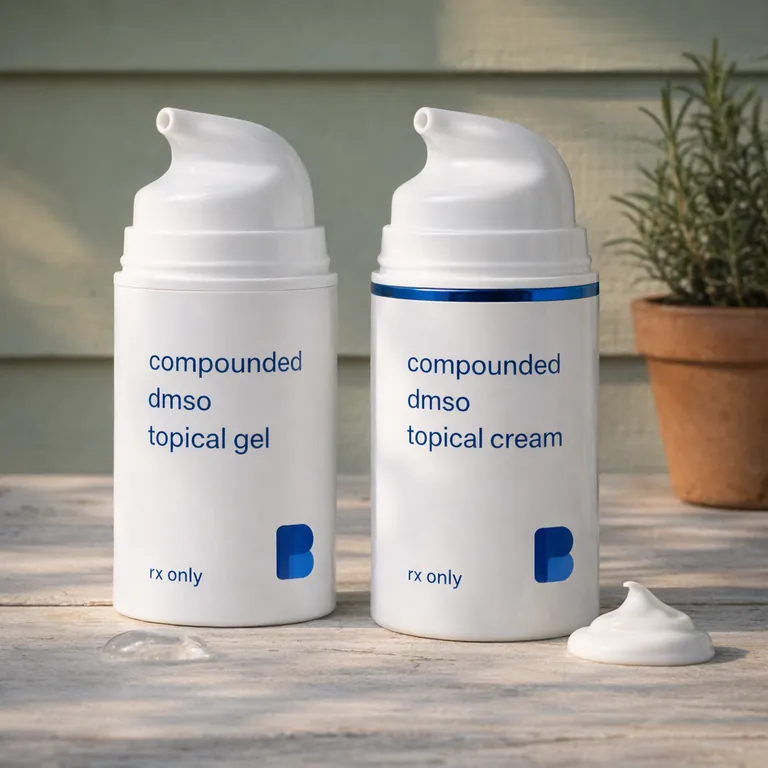
Dimethyl sulfoxide (DMSO) is a solvent and skin penetration enhancer that compounding pharmacies include in topical gels, creams and solutions by prescription.
Dimethyl sulfoxide is a clear organosulfur liquid that mixes with both water and oils. In pharmacy it is used mainly as a solvent and penetration enhancer: it loosens the packing of lipids in the outer skin layer so other ingredients dissolved in it pass through more readily. It is absorbed through the skin and partly converted to dimethyl sulfide, which leaves through the breath and skin with a garlic-like odor. One manufactured product uses DMSO as the drug: Rimso-50, a sterile bladder instillation, is FDA-approved for symptomatic relief of interstitial cystitis. Pennsaid, a diclofenac topical solution FDA-approved for the pain of osteoarthritis of the knee, uses DMSO as its solvent. A prescriber might order a compounded preparation containing DMSO as a vehicle that carries another active ingredient into the skin. Compounded preparations are not FDA-approved and require a prescription.
Rimso-50 has no boxed warning and no known contraindications, but its label warns that DMSO can release histamine and that hypersensitivity reactions have occurred with topical use. Stop and get medical help for hives, rash, facial swelling, nasal congestion or trouble breathing. The label recommends an eye examination before treatment and periodically during it because animals given high doses developed lens changes. The most familiar effect is a garlic-like taste lasting several hours and a garlic-like odor on the breath and skin that can last up to 72 hours. Topical DMSO commonly causes dry skin and contact dermatitis, sometimes with blisters. DMSO is absorbed through the skin and mucous membranes, so use only the preparation dispensed to you. In pregnancy the label advises use only when the benefit justifies the risk; LactMed found negligible milk levels after one bladder instillation but has no data for topical use. If side effects bother you, talk to your prescriber or pharmacist.
DMSO is a polar aprotic solvent and amphiphile that alters lipid packing and hydration in membranes in a concentration-dependent way, which underlies its use as a permeability enhancer; effects on inflammatory mediators are described in experimental models and vary with concentration. After topical application it is absorbed and distributed through tissues and body fluids, then oxidized to dimethyl sulfone or reduced to dimethyl sulfide; the sulfone persists in serum for more than two weeks after a single instillation, and the sulfide accounts for the odor. Excretion is renal and fecal; the label gives no half-life. About 16% of an intravesical dose is absorbed systemically versus about 70% of an oral dose (LactMed). Labeled indications: Rimso-50 for symptomatic relief of interstitial cystitis; Pennsaid (diclofenac in DMSO) for the pain of osteoarthritis of the knee. Prescribers have ordered compounded topical preparations with DMSO as a vehicle for musculoskeletal pain, where a 2026 review in Biomolecules summarizes one controlled trial in knee osteoarthritis alongside a negative trial in systemic sclerosis digital ulcers in which more than a quarter of the high-concentration group withdrew for skin toxicity. Concentration and vehicle are per prescriber. Monitoring for intravesical use per label: slit lamp examination, liver and renal function and CBC about every six months. DMSO is not a controlled substance.
Compounded at Bayview
Patient guides for the preparations we make most often. Each one is compounded to order and requires a prescription.
For prescribers
Every preparation in our formulary that contains this ingredient. Strength, base and dose form are set by the prescription.
Other salt forms of this molecule, and ingredients commonly compounded alongside it.
This page describes an active pharmaceutical ingredient, not a finished drug product. Bayview Pharmacy compounds preparations containing it only on a prescriber's order for an individual patient.
Compounded preparations are not FDA-approved, and the FDA has not evaluated them for safety, effectiveness, or manufacturing quality. Nothing on this page is a claim that any preparation is effective for any condition.
A valid prescription is required. Availability depends on Bayview's licensure in your state. This page is general information, not medical advice. Discuss your situation with a licensed healthcare provider.
Our pharmacists work with prescribers to build preparations around a patient's dose, form and tolerances. Ask us what is possible with this ingredient.