Check out our most popular compounded medications! Get Started

Lidocaine Hydrochloride is a widely used local anesthetic and antiarrhythmic agent, known for its efficacy in providing rapid onset of action and temporary numbing effects.
Lidocaine hydrochloride is a local anesthetic used in compounding pharmacy. It works by blocking voltage-gated sodium channels, thereby inhibiting nerve impulse conduction, which results in temporary numbness or loss of sensation in the targeted area.[1] Its local anesthetic uses include infiltration for surgical procedures, regional nerve blocks, topical airway anesthesia, and dental procedures.[1]
Lidocaine is also a Vaughan-Williams class Ib antiarrhythmic used for acute ventricular tachyarrhythmias.[1] Topically, it is available as patches for relief of postherpetic neuralgia pain,[1] and it is compounded into creams, gels, and ointments on a prescriber's order.
When prescribing or considering formulations containing lidocaine hydrochloride, healthcare professionals should be aware of its pharmacokinetics and potential interactions with other medications. Lidocaine is metabolized in the liver by CYP1A2 and CYP3A4, so hepatic impairment increases the risk of systemic toxicity, and drugs such as propranolol and fluvoxamine can raise lidocaine levels.[1] Proper dosing and administration are crucial to minimize the risk of systemic toxicity.[1]
Compounded at Bayview
Patient guides for the preparations we make most often. Each one is compounded to order and requires a prescription.
For prescribers
Every preparation in our formulary that contains this ingredient. Strength, base and dose form are set by the prescription.
A prescription topical anesthetic prepared by Bayview at strengths from 5% to 30%, as a cream, ointment, gel, or spray. Lidocaine numbs a limited area of skin by blocking the nerve signals that carry pain and sensation. The compounded strengths are not FDA-approved and are prepared to your prescriber's order.
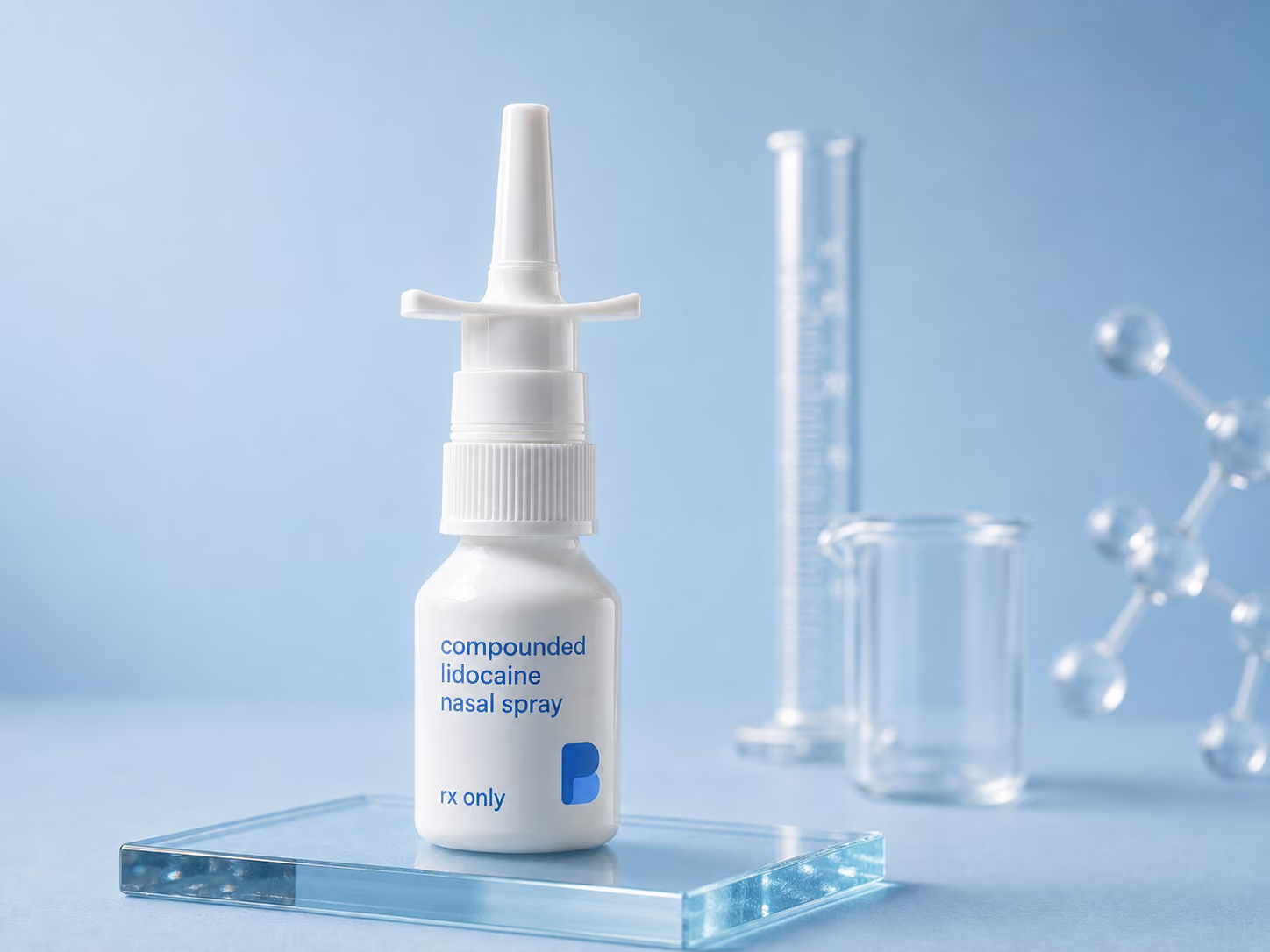
Lidocaine is a local anesthetic. Sprayed into the nose, it numbs the nasal lining before procedures such as nasal endoscopy or tube placement. It is also prescribed off-label as an abortive option for cluster headache and acute migraine, on the idea that it reaches nerve tissue at the back of the nose. There is no FDA-approved lidocaine nasal spray in the United States.
Over-the-counter lidocaine products are limited to 4%. Anything above that requires a prescription. In 2024 the FDA warned people not to use unapproved store-bought or online numbing products that contained more than 4% lidocaine, some as high as 40%, after reports of serious harm when they were spread over large areas or covered before tattoos and cosmetic procedures. A compounded prescription is written for a specific area and use, and comes with directions from your prescriber and pharmacist.
Lidocaine absorbed through an inflamed or raw bladder lining can cause body-wide effects. Watch for numbness or tingling around the mouth, ringing in the ears, dizziness, confusion, twitching, and, rarely, seizures or an irregular heartbeat, get emergency care if those happen. Stick to the prescribed dose, avoid other lidocaine products unless your prescriber says otherwise, and tell your prescriber about liver problems or heart rhythm medicines.
Numbness or tingling around the mouth, a metallic taste, ringing in the ears, dizziness, blurred vision, drowsiness, confusion, or slurred speech are early signs. At higher levels, muscle twitching, seizures, trouble breathing, or an irregular heartbeat can follow. Bluish lips or skin with unusual tiredness can signal methemoglobinemia, a rare reaction. Stop using it and get emergency care if any of these happen.
Other salt forms of this molecule, and ingredients commonly compounded alongside it.
This page describes an active pharmaceutical ingredient, not a finished drug product. Bayview Pharmacy compounds preparations containing it only on a prescriber's order for an individual patient.
Compounded preparations are not FDA-approved, and the FDA has not evaluated them for safety, effectiveness, or manufacturing quality. Nothing on this page is a claim that any preparation is effective for any condition.
A valid prescription is required. Availability depends on Bayview's licensure in your state. This page is general information, not medical advice — discuss your situation with a licensed healthcare provider.
Our pharmacists work with prescribers to build preparations around a patient's dose, form and tolerances. Ask us what is possible with this ingredient.