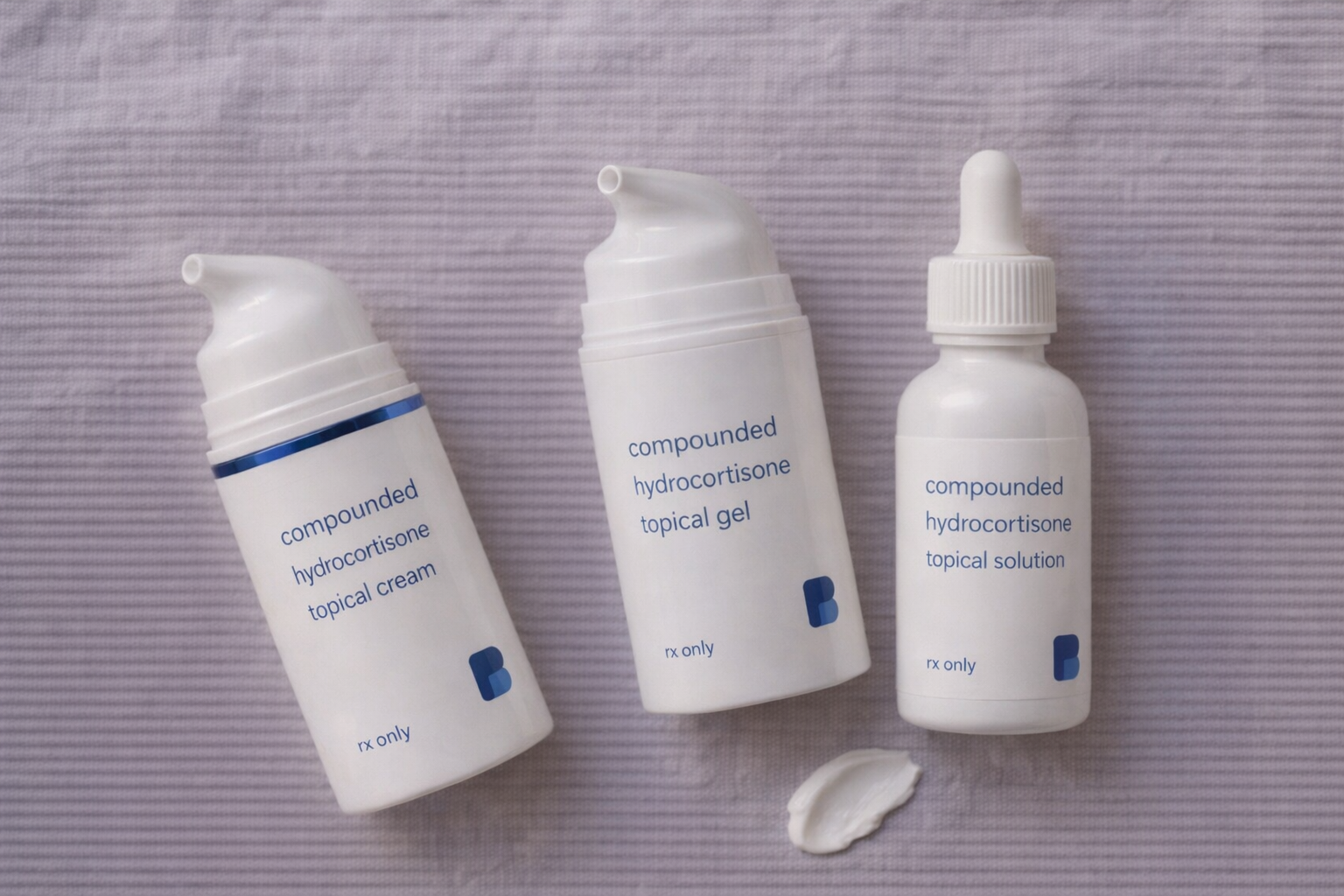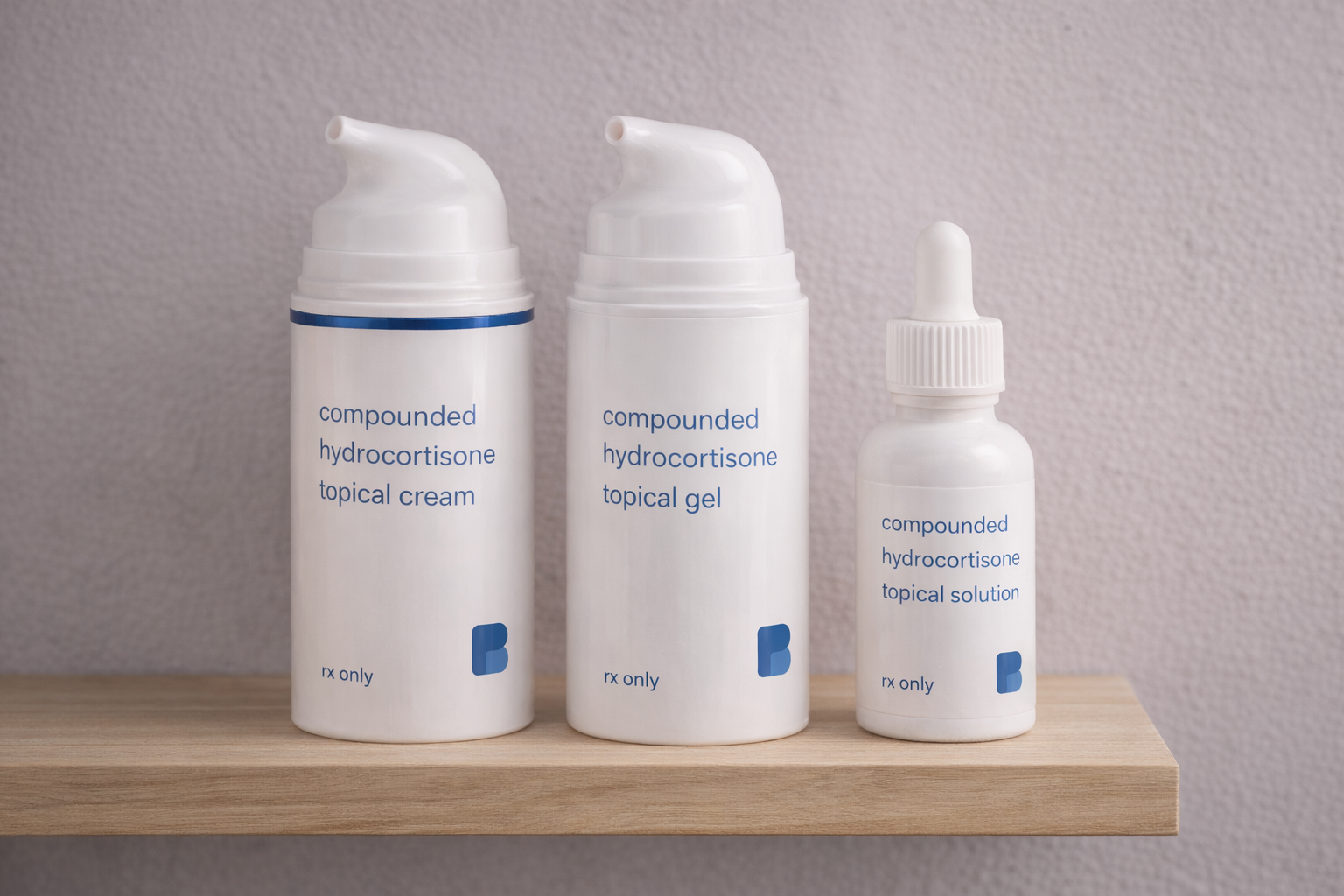





Hydrocortisone is a synthetic form of cortisol, the steroid hormone the adrenal glands make. On the skin it eases redness, swelling and itching, and it sits in the least potent class of topical steroids. Because 1% and 2.5% products are already sold, a compounded hydrocortisone cream is for a strength, base or combination a prescriber specifies that the manufactured products do not offer.
How does it work?
Hydrocortisone narrows small blood vessels in the skin, reduces the release of inflammatory chemicals and calms the local immune response. See MedlinePlus on topical hydrocortisone.
How is it different from over-the-counter hydrocortisone cream?
Over-the-counter creams are manufactured at 1% in fixed bases, and prescription creams at 2.5%. A compounded preparation is made for one patient in the strength, base and combination written on the prescription, which is why it needs a prescriber's order. It is not a stronger version of a store product unless your prescriber writes it that way.
Which forms does Bayview compound?
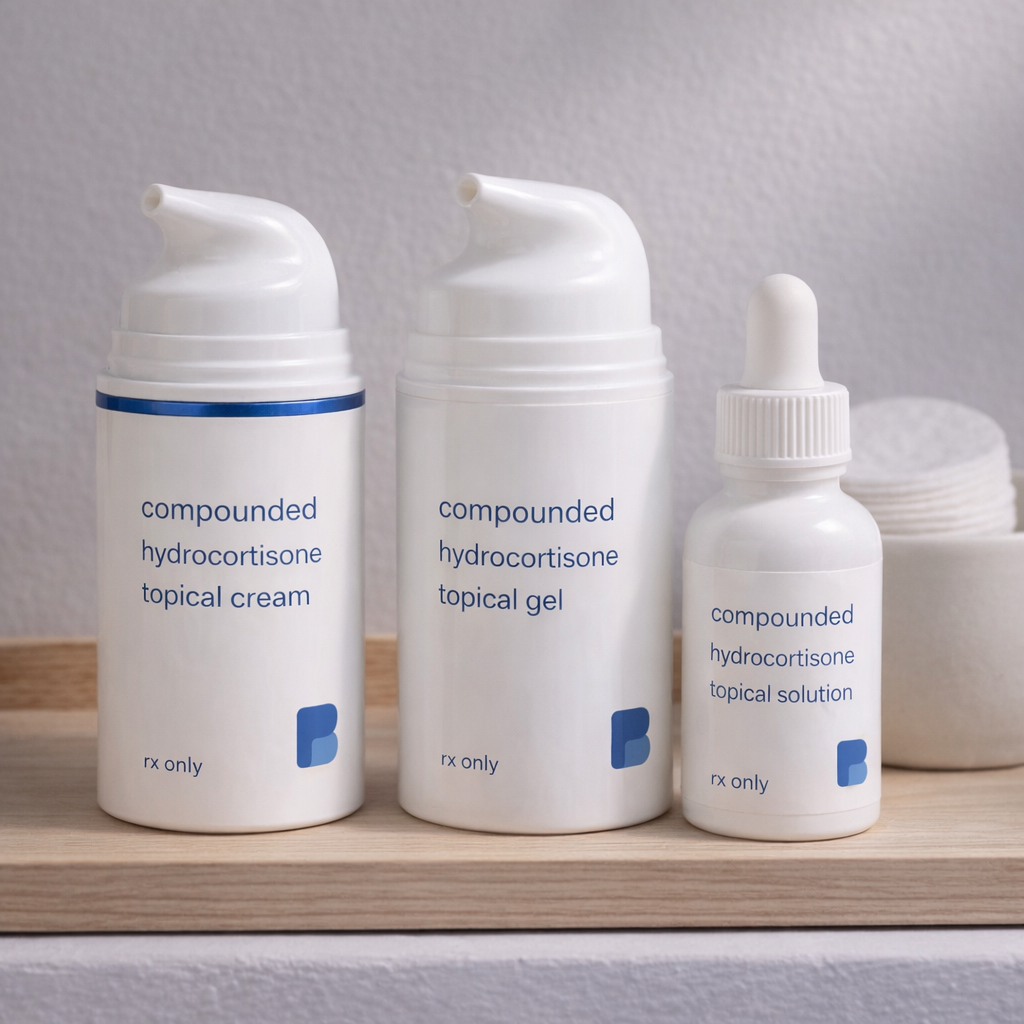
Bayview compounds hydrocortisone as a 2% or 3% cream, a 0.2% hydrocortisone acetate cream, a 3% or 5% gel, a 2.5% topical solution and a 5% topical spray. Two-ingredient preparations with lidocaine, pramoxine, iodoquinol, clotrimazole, miconazole, neomycin, nystatin or acyclovir can also be prepared.
How is it used?
Apply a thin layer to the affected area as your prescriber directs, usually one to several times a day, and rub it in gently. Do not cover the area with bandages or plastic unless told to, and do not use it on the face, groin or under the arms longer than your prescriber directs.
Side effects & safety
Side effects can include burning, itching, dryness or irritation where it is applied. With long use, large areas or covered skin, enough can be absorbed to affect the body's own cortisol production, especially in children. See the hydrocortisone cream label.
Who should not use it?
Do not use hydrocortisone if you are allergic to it or any ingredient in the preparation, or on a skin infection your prescriber has not treated. Tell your prescriber if you are pregnant or breastfeeding and about any other steroid products you use.
How should it be stored?
Store as your label directs, away from heat and moisture. Keep it out of reach of children, and do not use it past the beyond-use date on the container.
Why is this compounded?
Because hydrocortisone cream is already sold at 1% and 2.5%, a prescriber orders it compounded only when a patient needs something those products do not offer: another strength, a gel, solution or spray, a base without a preservative or fragrance, or a combination with an anesthetic, antifungal or antibiotic. Related preparations include Lidocaine and Nystatin. The full list is in our compounded medications catalog.
Clinical details for prescribers
Regulatory status. Hydrocortisone is not a controlled substance. Hydrocortisone 1% is sold over the counter and 2.5% cream and ointment are FDA-approved by prescription. The strengths, bases and combinations listed here are compounded under 503A and are not FDA-approved.
Formulation & dosing. Common orders include hydrocortisone 2% or 3% cream, 2.5% solution and combinations with lidocaine, pramoxine or an azole antifungal. Specify strength, base, combination actives and treatment duration.
Counseling / clinical points:
- Because OTC and Rx products exist, document the clinical reason a compounded preparation is needed
- Class VII potency; HPA axis suppression is still possible with large areas, occlusion or pediatric use
- Avoid prolonged use on the face, groin and intertriginous skin
- Specify each active and strength when ordering a combination
Send orders by eRx to Bayview Pharmacy (NCPDP 4106882) or fax 401-284-4506. See how to e-prescribe and the for providers page.
Compounded hydrocortisone is a compounded medication and is not FDA-approved. The FDA has not evaluated compounded preparations for safety, effectiveness or quality. A prescription is required.