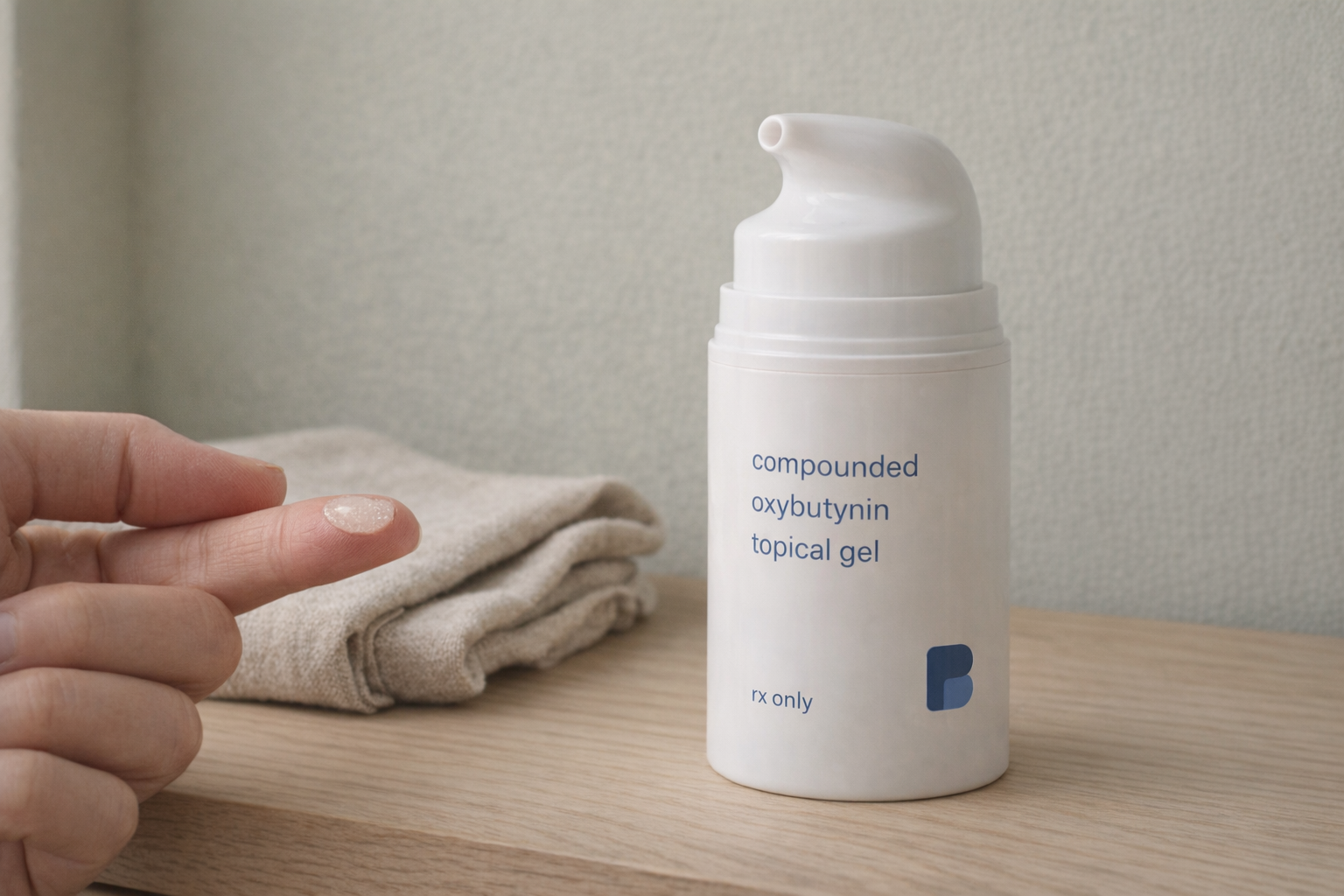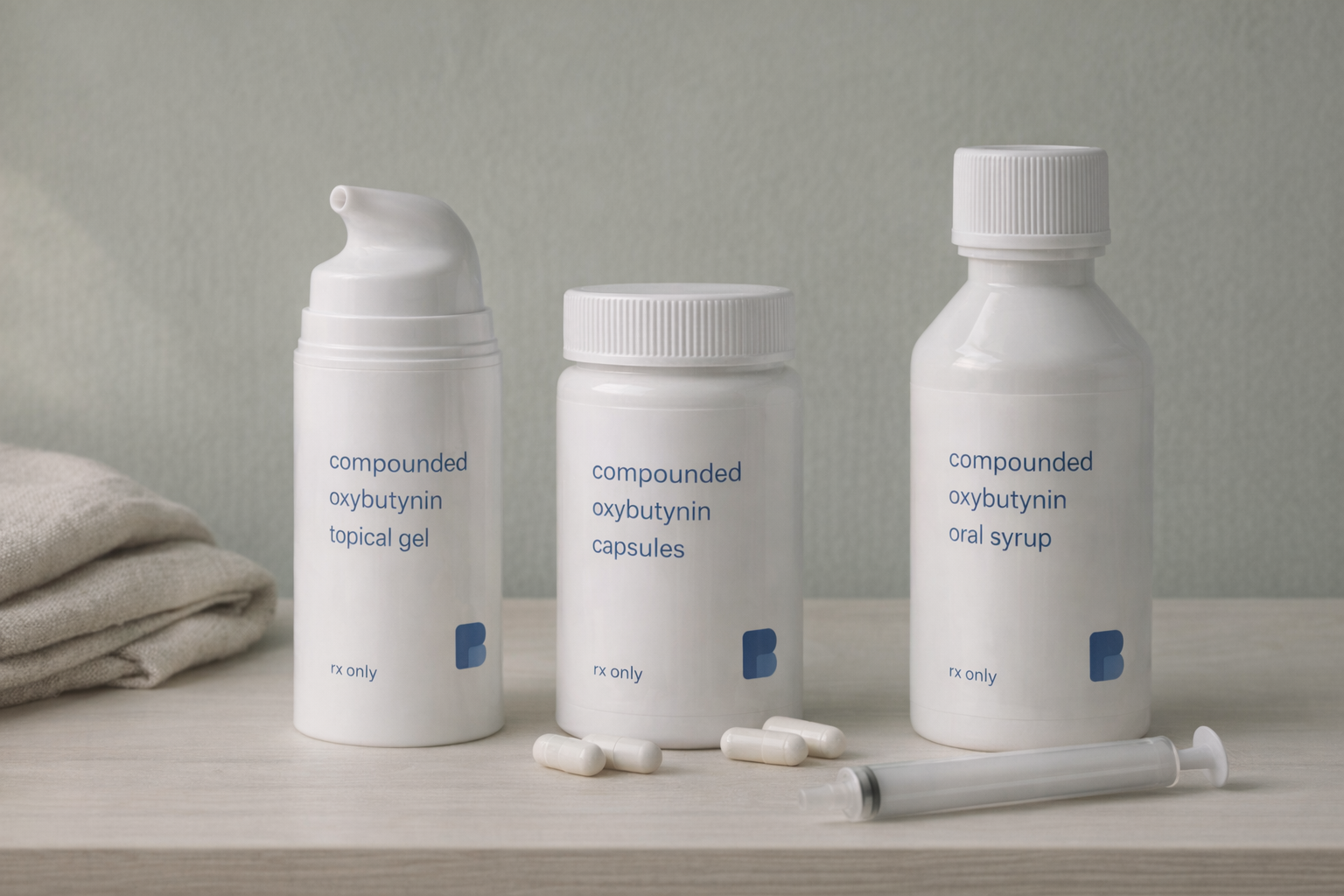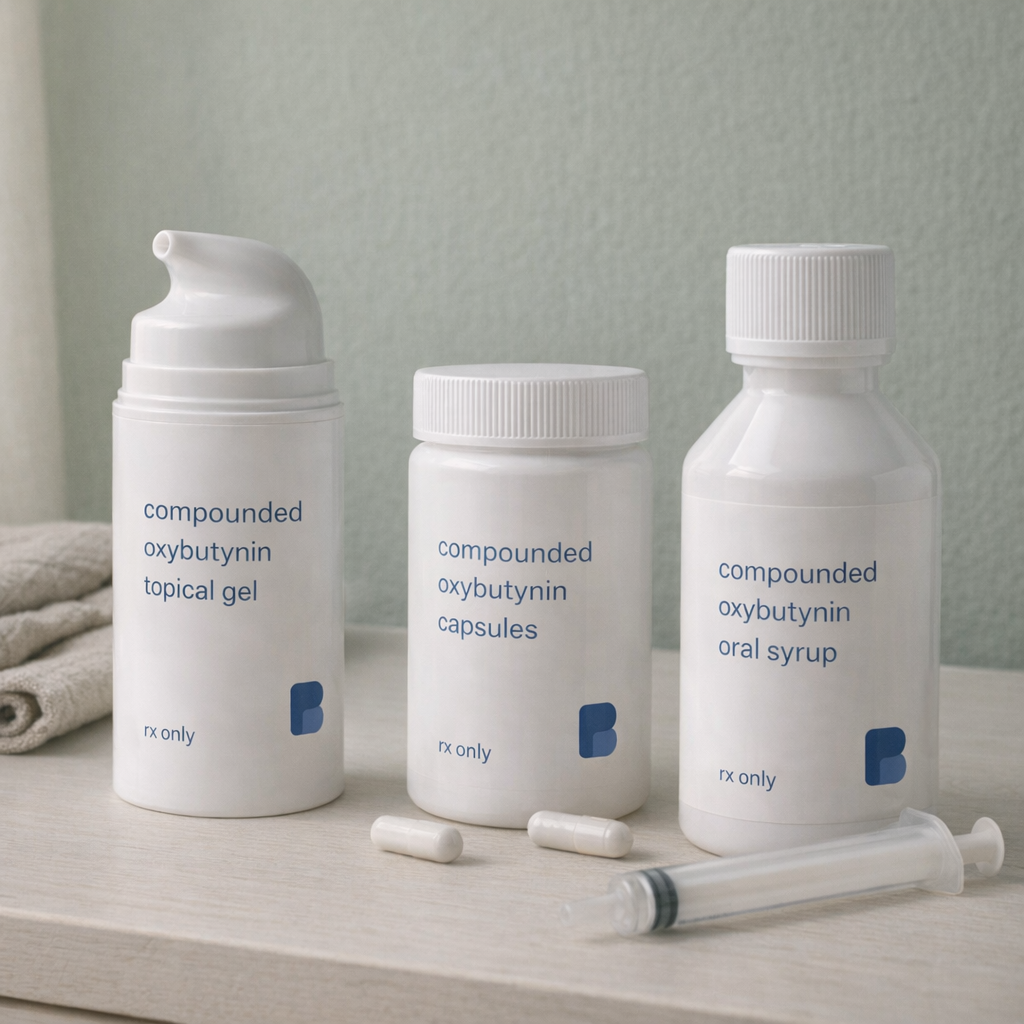



Oxybutynin chloride is a prescription anticholinergic medicine. FDA-approved oxybutynin comes as tablets, extended-release tablets and an oral syrup. A manufactured gel was once sold but has been discontinued in the United States. A compounding pharmacy can prepare oxybutynin as a gel applied to the skin, as slow release capsules, or as a measured oral syrup when a prescriber orders it.
How does it work?
Oxybutynin blocks the action of acetylcholine at muscarinic receptors. MedlinePlus describes it as an antimuscarinic that relaxes the bladder muscles. The same action also reduces saliva and sweat, which is why dry mouth is a common side effect. See MedlinePlus on oxybutynin.
What is it prescribed for?
FDA-approved oxybutynin products are labeled for symptoms of an overactive or unstable bladder. Prescribers sometimes order oxybutynin for other purposes, such as excessive sweating or hot flashes. Those uses are off-label and prescriber-directed. Bayview prepares the preparation your prescriber writes and makes no claim about any use.
Which forms does Bayview compound?
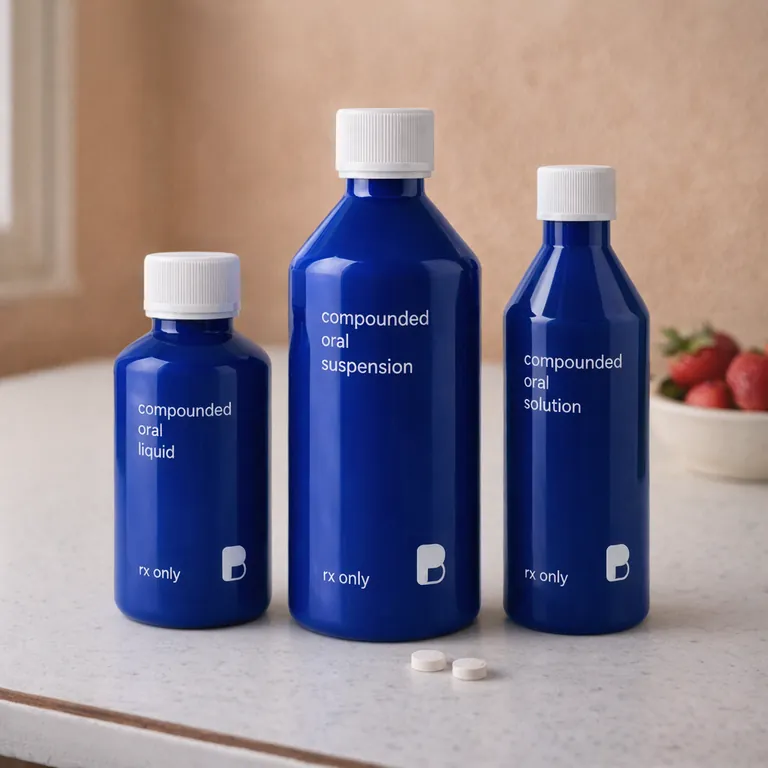
Bayview compounds oxybutynin chloride 8% and 10% topical gels, a 10% gel with glycopyrrolate 0.25%, 5 mg and 7.5 mg slow release capsules, and a 1 mg/mL oral syrup that is gluten free and flavored. The table on this page lists each preparation.
How is it used?
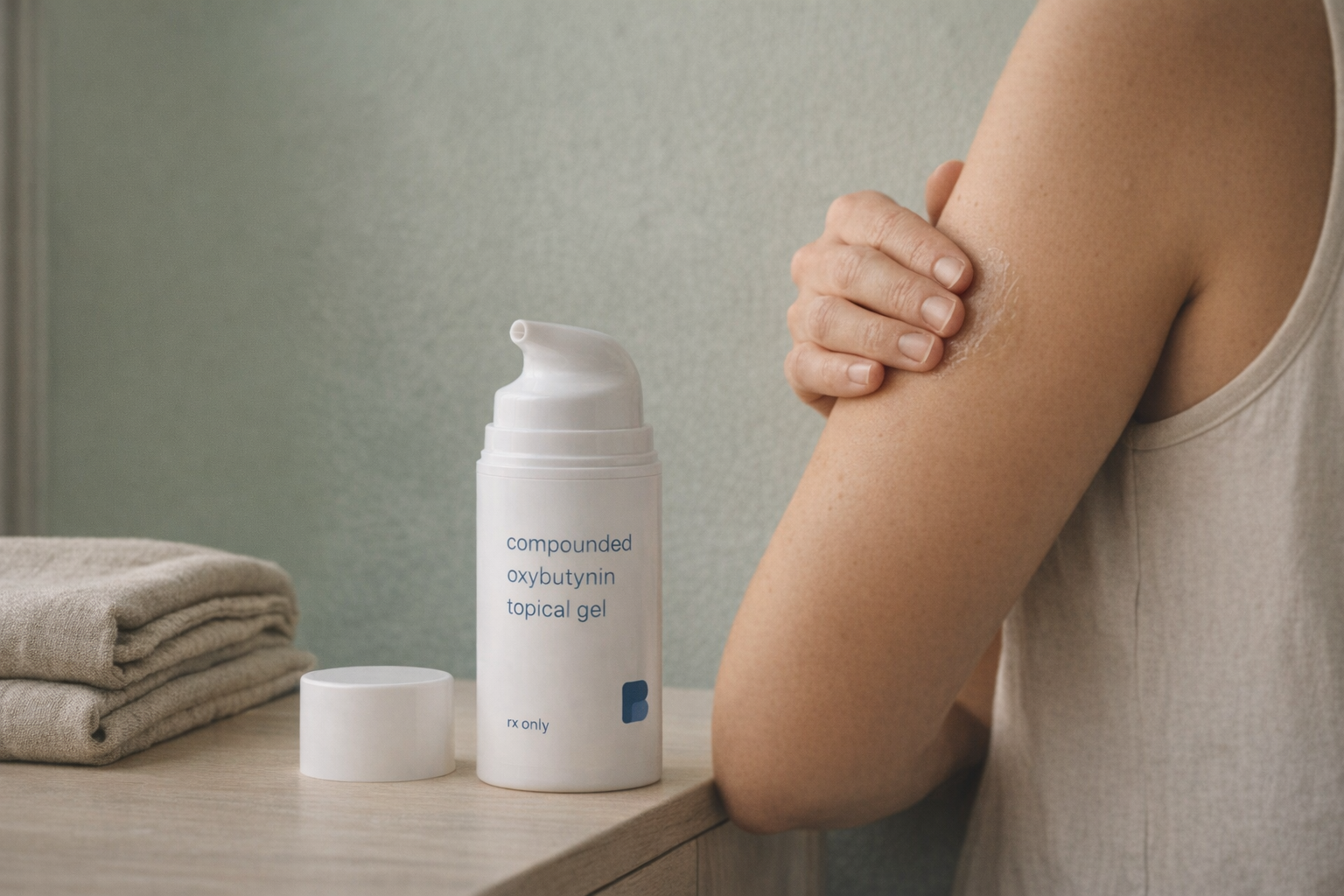
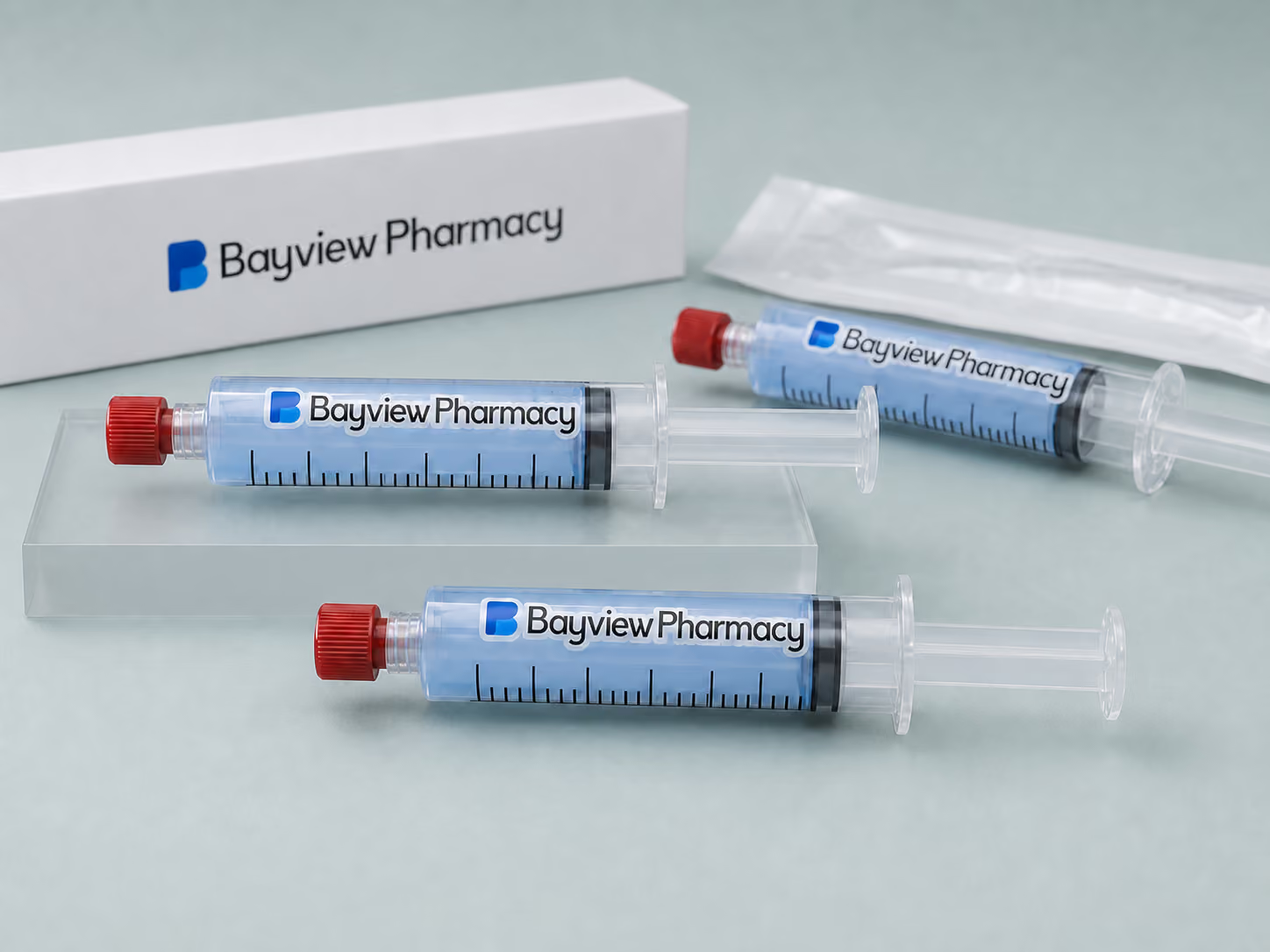
Use it exactly as your prescriber directs and as the label on your container states. For a gel, apply it to clean, dry skin at the site your prescriber names, let it dry, and wash your hands afterward. The gel can catch fire until it is dry, so stay away from open flames and do not smoke while applying it. Cover the site with clothing so the gel is not passed to other people. Swallow capsules whole unless told otherwise, and measure the syrup with an oral syringe, not a kitchen spoon.
Side effects & safety
Common side effects include dry mouth, dry eyes, blurred vision, constipation, drowsiness, dizziness and headache. Gels can cause redness, itching or irritation where they are applied. Oxybutynin may make it harder for your body to cool down, so avoid extreme heat and get medical care for signs of heat stroke such as fever, dizziness, nausea, confusion or a fast pulse. Swelling of the face, lips, tongue or throat needs emergency care. MedlinePlus advises that adults 65 and older usually should not take the tablets or syrup, because they may be less safe than other options; older adults should discuss the risks with their prescriber.
Who should not use it?
Do not use oxybutynin if you have urinary retention, gastric retention, uncontrolled narrow-angle glaucoma, or an allergy to oxybutynin or any ingredient in the preparation. Tell your prescriber about glaucoma, trouble emptying your bladder, stomach or bowel problems, myasthenia gravis, dementia, heart, liver or kidney disease, pregnancy or breastfeeding, and every medication you take. Alcohol can make drowsiness worse.
How should it be stored?
Store as your label directs, away from heat, moisture and open flames. Keep it out of reach of children and pets, and do not use it past the beyond-use date on the container.
Bayview sets each beyond-use date by the USP <795> standard for nonsterile compounding. Capsules can be dated up to 180 days. Preparations that contain water, such as the syrup and water-based gels, can be dated up to 35 days when they contain a preservative, or up to 14 days kept in the refrigerator when they do not. Your label shows the exact date and how to store it.
Why is this compounded?
The manufactured gel is no longer sold in the United States, so a topical oxybutynin gel has to be compounded. Capsules and a syrup can be prepared at strengths or with excipients a prescriber specifies. Related preparations include Bladder Instillations, Custom Oral Suspensions and Hydroxyzine. The full list is in our compounded medications catalog.
Clinical details for prescribers
Regulatory status. Oxybutynin is not a controlled substance. FDA-approved oxybutynin is available as immediate-release tablets, extended-release tablets (5, 10 and 15 mg) and syrup (5 mg/5 mL). The gels and slow release capsules listed here are available only through 503A compounding and are not FDA-approved.
Formulation & dosing. Common orders are oxybutynin chloride 8% or 10% topical gel, 10% gel with glycopyrrolate 0.25%, 5 mg or 7.5 mg slow release capsules, and 1 mg/mL oral syrup. Dose, site and frequency are set by the prescriber. The 1 mg/mL syrup matches the marketed 5 mg/5 mL syrup, and the 5 mg capsule matches a marketed extended-release tablet strength; please state the clinical reason a compounded preparation is needed.
Counseling / clinical points:
- Labeling warns of angioedema and of CNS anticholinergic effects (hallucinations, agitation, confusion, somnolence), especially early in treatment or after a dose increase
- Use caution in frail older adults and in dementia treated with cholinesterase inhibitors; MedlinePlus advises adults 65 and older usually should not take the tablets or syrup
- Counsel on heat prostration risk, flammability of alcohol-based gels until dry, and covering the application site to prevent transfer
- Sweating, hot flash and other non-bladder uses are off-label
Send orders by eRx to Bayview Pharmacy (NCPDP 4106882) or fax 401-284-4506. See how to e-prescribe and the for providers page.
Compounded oxybutynin is a compounded medication and is not FDA-approved. The FDA has not evaluated compounded preparations for safety, effectiveness or quality. A prescription is required.