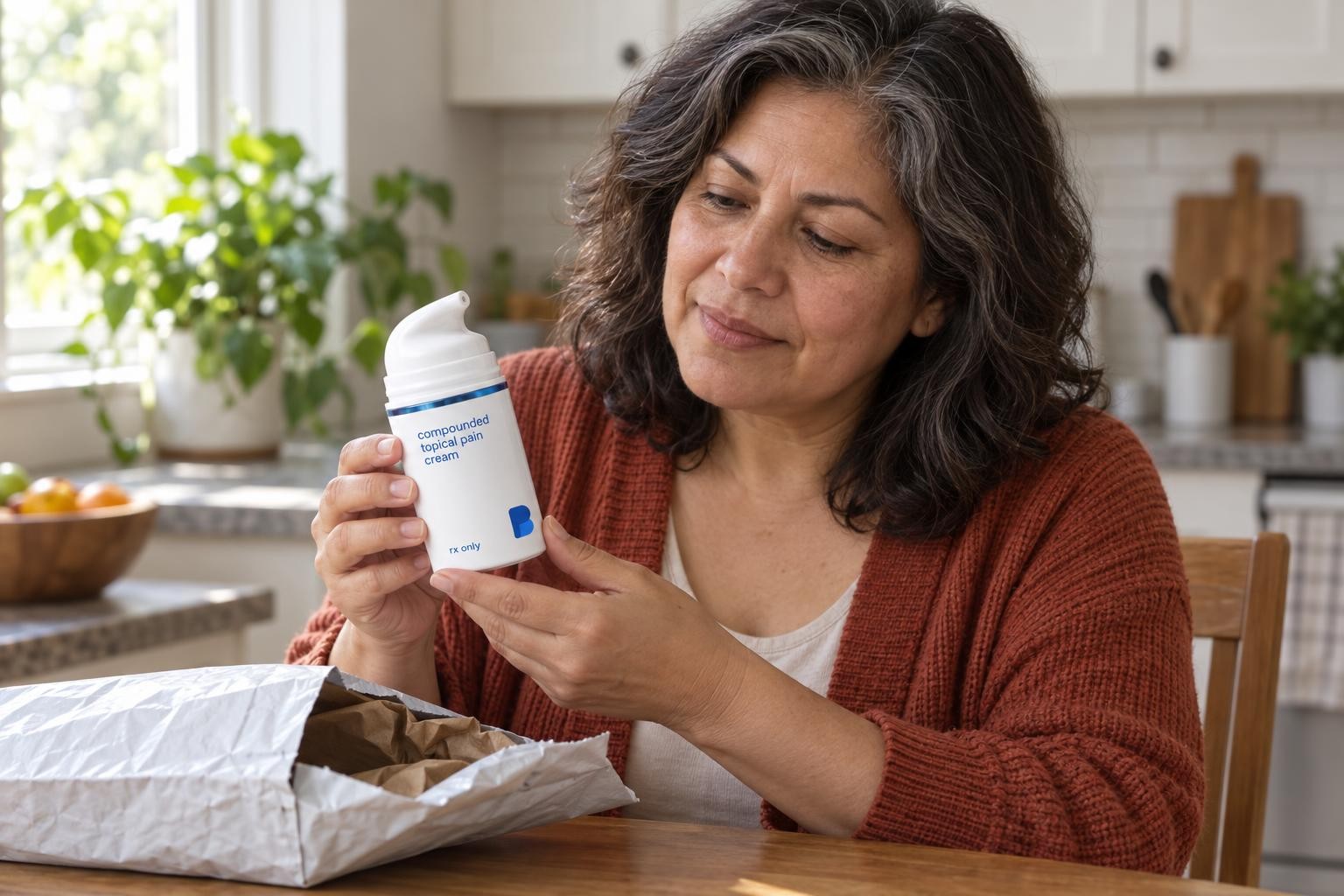
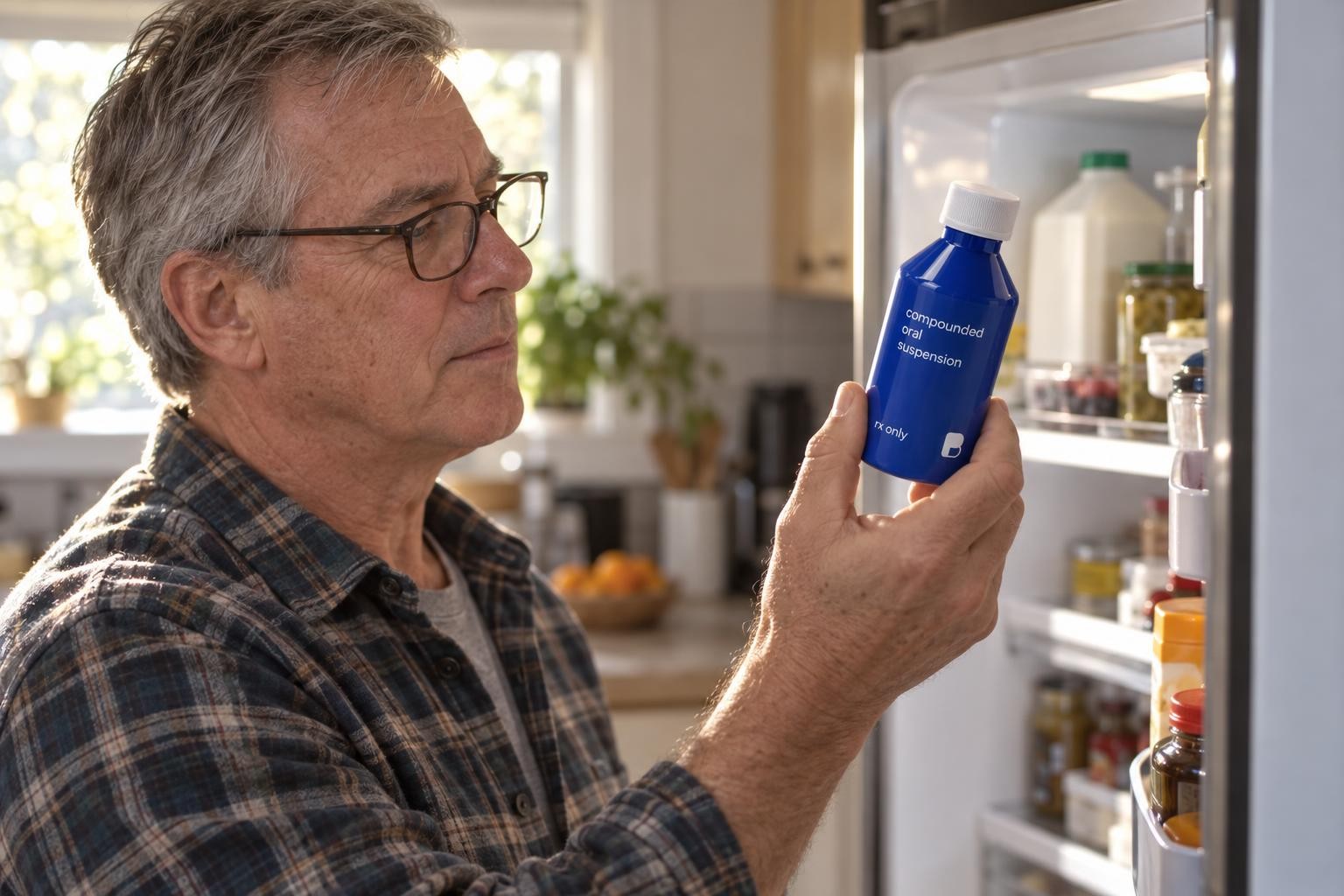
A beyond-use date (BUD) is the date, or the date and hour, after which a compounded preparation must not be used, stored or transported. It is counted from the day and time the pharmacy prepares it. If your prescription was compounded, the label shows a BUD instead of an expiration date, along with how to store it. This guide explains what sets that date and what to do when it passes.
Beyond-use date vs. expiration date: what is the difference?
An expiration date goes on manufactured medicines. The manufacturer sets it from stability testing, and the FDA reviews that testing as part of approving the product. A beyond-use date goes on compounded preparations, which are made for one patient and are not FDA-approved. The pharmacy assigns the BUD using standards from the United States Pharmacopeia (USP), and it is usually much shorter than an expiration date.
| Expiration date | Beyond-use date | |
|---|---|---|
| Found on | Manufactured, FDA-approved products | Compounded preparations |
| Set by | The manufacturer | The compounding pharmacy |
| Based on | Product stability testing reviewed by the FDA | USP limits, ingredients and storage |
| Typical length | Often a year or more | Hours to a few months |
Manufactured medicines can carry a BUD too. When a pharmacy moves a product out of its original container, the new container gets a beyond-use date because the original expiration date no longer applies.
How does a pharmacy set a beyond-use date?
Several things decide how long a compounded preparation lasts:
- Water. Microbes grow where there is water. Water-based liquids and creams get shorter dates than dry or oil-based forms.
- Dosage form. Capsules, troches and suppositories usually last longest. Oral liquids are among the shortest.
- Preservatives. A preserved water-based preparation can get a longer date than an unpreserved one.
- Sterile or nonsterile. Eye drops and injections follow stricter sterile rules and often have short dates.
- Storage. Refrigeration or freezing can allow a longer date than room temperature.
- Ingredients. The BUD cannot run past the expiration date of any ingredient that went into it.

Default beyond-use dates for nonsterile preparations (USP 795)
USP Chapter 795 covers nonsterile compounding: creams, capsules, troches, suppositories and oral liquids. Its revised version, in effect since November 2023, sorts preparations by water activity, a measure of how much free water is available for microbes. When there is no specific stability data for a preparation, these defaults are the longest a pharmacy may assign:
| Type of preparation | Examples | Default BUD | Storage |
|---|---|---|---|
| Water-based, no preservative | Many oral suspensions | 14 days | Refrigerator |
| Water-based, preserved | Preserved creams and liquids | 35 days | Room temperature or refrigerator |
| Nonaqueous oral liquid | Oil-based oral liquids | 90 days | Room temperature or refrigerator |
| Other nonaqueous forms | Capsules, tablets, powders, ointments, suppositories, troches | 180 days | Room temperature or refrigerator |
A pharmacy can assign a longer date than the default only with stability data for that specific preparation, and USP 795 caps nonsterile BUDs at 180 days. A pharmacy can always assign a shorter date, for example when an ingredient expires sooner.
How long common forms last
USP 795 default limits. Your label shows your actual date.
Sterile preparations (USP 797)
Sterile preparations, such as eye drops and injections, follow USP Chapter 797. Under the 2023 revision, the BUD depends first on the environment where the preparation is made. The least controlled category allows only 12 hours at room temperature or 24 hours refrigerated. Preparations made in a full cleanroom suite with sterility testing can get longer dates, and the longest is 180 days frozen. That is why a sterile preparation often needs to stay cold and may be filled in small amounts.
What does a beyond-use date mean for refills?
When the BUD is shorter than the time your prescription covers, the pharmacy fills only what you can use before that date, and you refill more often. Water-based liquids and most sterile preparations are the most likely to be filled this way. Request your refill a few days before you run out so the next fill is ready.
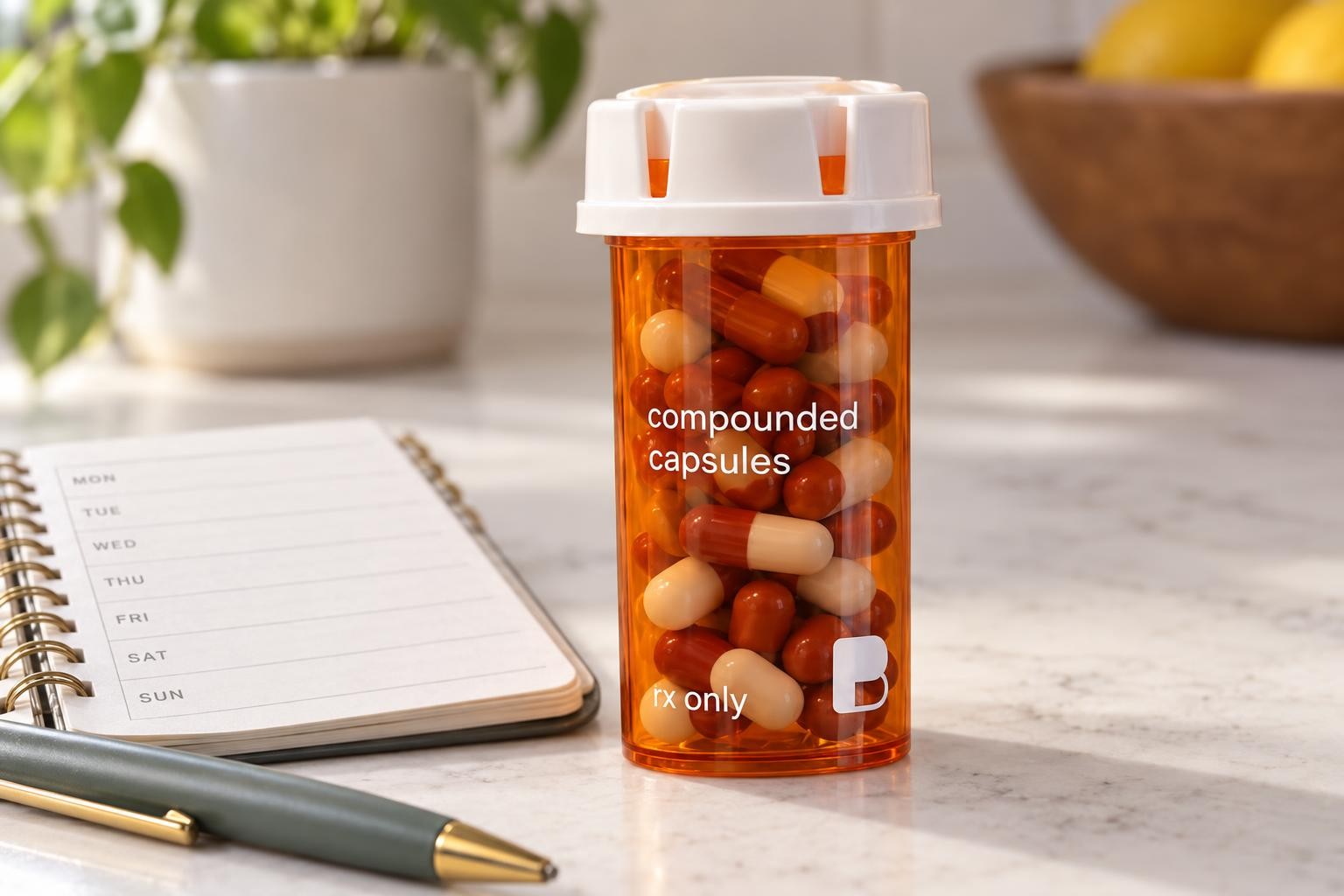
180days
The longest beyond-use date USP 795 allows for a nonsterile compounded preparation, such as capsules or an ointment.USP 795, revised 2023. Your label shows your actual date.
Does storage change the beyond-use date?
Yes. The date on your label holds only if you store the medication the way the label says. A preparation labeled for the refrigerator may not last to its BUD on the counter. Keep it in its original container, follow the storage line on the label, and do not freeze anything unless the label tells you to.
Myth or fact?
A few days past the date is fine, like milk.
Do not use a compounded preparation after its beyond-use date.
A beyond-use date is just an expiration date.
Expiration dates come from manufacturer testing. BUDs come from USP limits.
A short date means a lower-quality product.
A short date reflects the form and storage, such as a water-based liquid.
What should you do after the beyond-use date?
Do not use it. Past its BUD a preparation may be less effective or unsafe, and sterile preparations carry a risk of contamination. Ask your pharmacist how to dispose of it, and call for a new supply if your prescription continues.
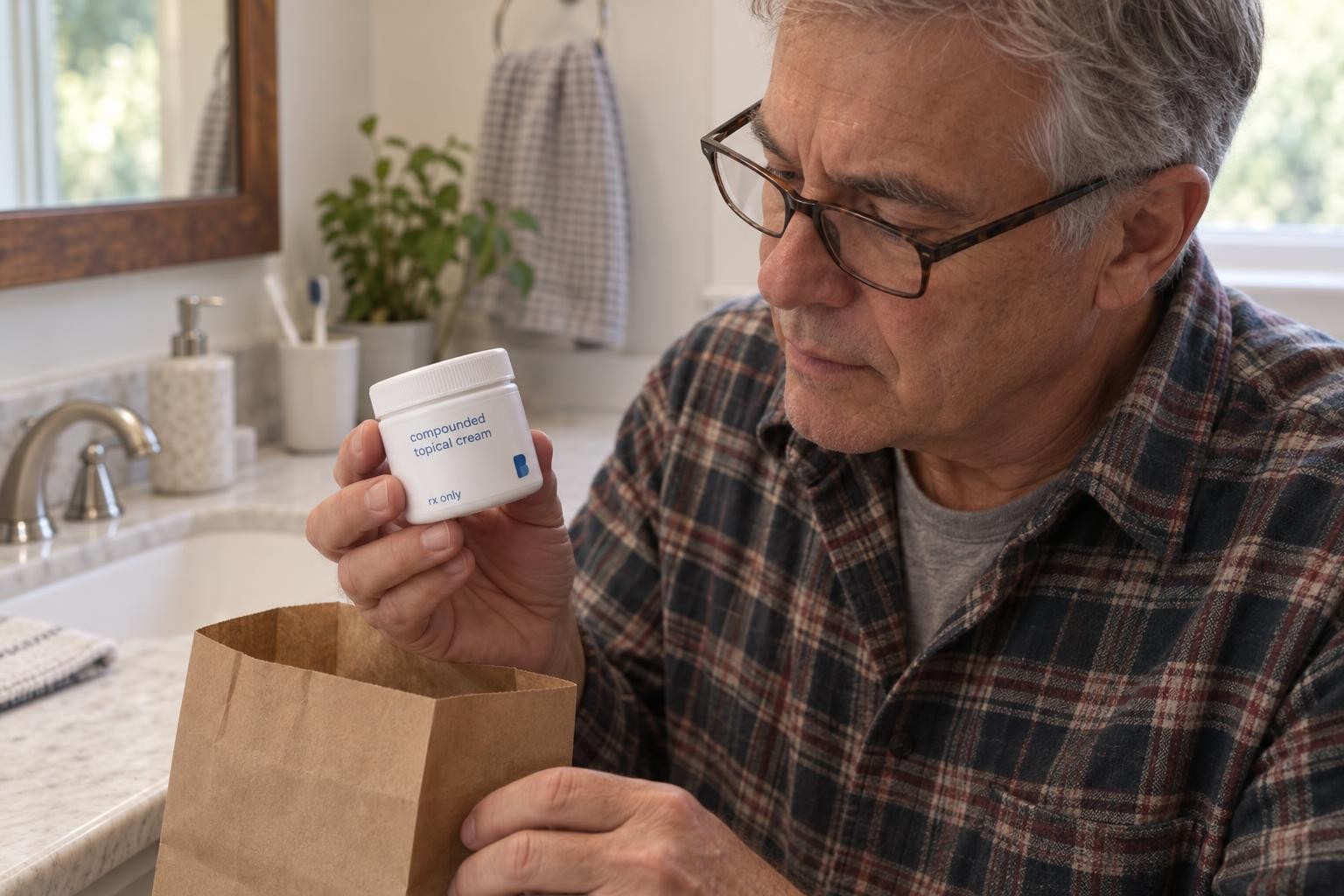
Also call the pharmacy if a preparation changes color, smell or texture, or a cream separates, even before the date.
- Find the beyond-use date and storage line on the label.
- Store it exactly as the label says.
- Keep it in its original container.
- Request refills a few days before you run out.
- Call if it changes color, smell or texture.
- Do not use it after the beyond-use date.
How Bayview assigns beyond-use dates
Bayview Pharmacy compounds nonsterile preparations under USP 795 and sterile preparations in our USP 797 sterile lab, and every label carries the beyond-use date and storage directions for that preparation. Each dose form page also covers how that form is used and stored. If a date or storage instruction is unclear, call us at (401) 284-4505.
To learn more, see what a compounding pharmacy is, our dosage forms and bases glossary, and 503A vs. 503B compounding pharmacies, which explains why outsourcing facilities can label some products with expiration dates. The rest of what we compound is in our compounded medications catalog.
Frequently asked questions
What is a beyond-use date?
A beyond-use date (BUD) is the date, or the date and hour, after which a compounded preparation should not be used. It is counted from the day the pharmacy prepares it, and it is printed on your prescription label. It holds only if you store the medication the way the label says.
Is a beyond-use date the same as an expiration date?
No. An expiration date goes on manufactured drugs and comes from the manufacturer's stability testing, which the FDA reviews. A beyond-use date goes on compounded preparations, which are made for one patient and are not FDA-approved. The pharmacy assigns it using USP standards, and it is usually much shorter than an expiration date.
Can I use my compounded medication after the beyond-use date?
No. After the beyond-use date the preparation may be less effective or unsafe, and sterile preparations carry a risk of contamination. Call the pharmacy before you run out so a new supply is ready. Also call if the medication changes color, smell or texture, even before the date.
Why did I get a smaller supply than my prescription allows?
When a preparation's beyond-use date is shorter than the time your prescription covers, the pharmacy fills only what you can use before that date. You then refill more often. Water-based liquids and most sterile preparations have the shortest dates, so they are the most likely to be filled this way.
What Bayview compounds for this
Important: Compounded medications are prepared to a prescriber's order for an individual patient. They are not FDA-approved, and the FDA has not evaluated them for safety, effectiveness, or manufacturing quality. This article is educational and is not a substitute for advice from your prescriber or pharmacist.
This preparation contains a controlled substance. Controlled-substance prescriptions carry refill limits, must be e-prescribed, and can only be shipped to states where Bayview holds the required licensure.
Uses discussed here may be off-label, meaning they are not part of any FDA-approved labeling. Off-label use is a decision for you and your prescriber, based on the available evidence.
Veterinary preparations are compounded to a veterinarian's order for a specific animal and are not FDA-approved animal drugs. Never give a compounded human medication to an animal without veterinary direction.
Compounded prescriptions are paid for directly rather than billed through insurance. Most are HSA/FSA-eligible, and many patients submit the receipt to their plan for possible reimbursement. Pricing depends on the strength, dose form and quantity your prescriber orders. Read more about cost and insurance.
A short beyond-use date can mean smaller fills and more frequent refills. Ask the pharmacy how much each fill covers and what it costs before it is prepared.
Bayview Pharmacy is a compounding pharmacy in Warwick, Rhode Island, licensed to fill and ship compounded prescriptions for patients in Rhode Island, Massachusetts, Connecticut, New Jersey, New Hampshire, Florida, Maine and Pennsylvania. Prescriptions for New York patients are filled on a limited basis, and controlled substances are not shipped to New York addresses. See every state we ship to.
Related reading