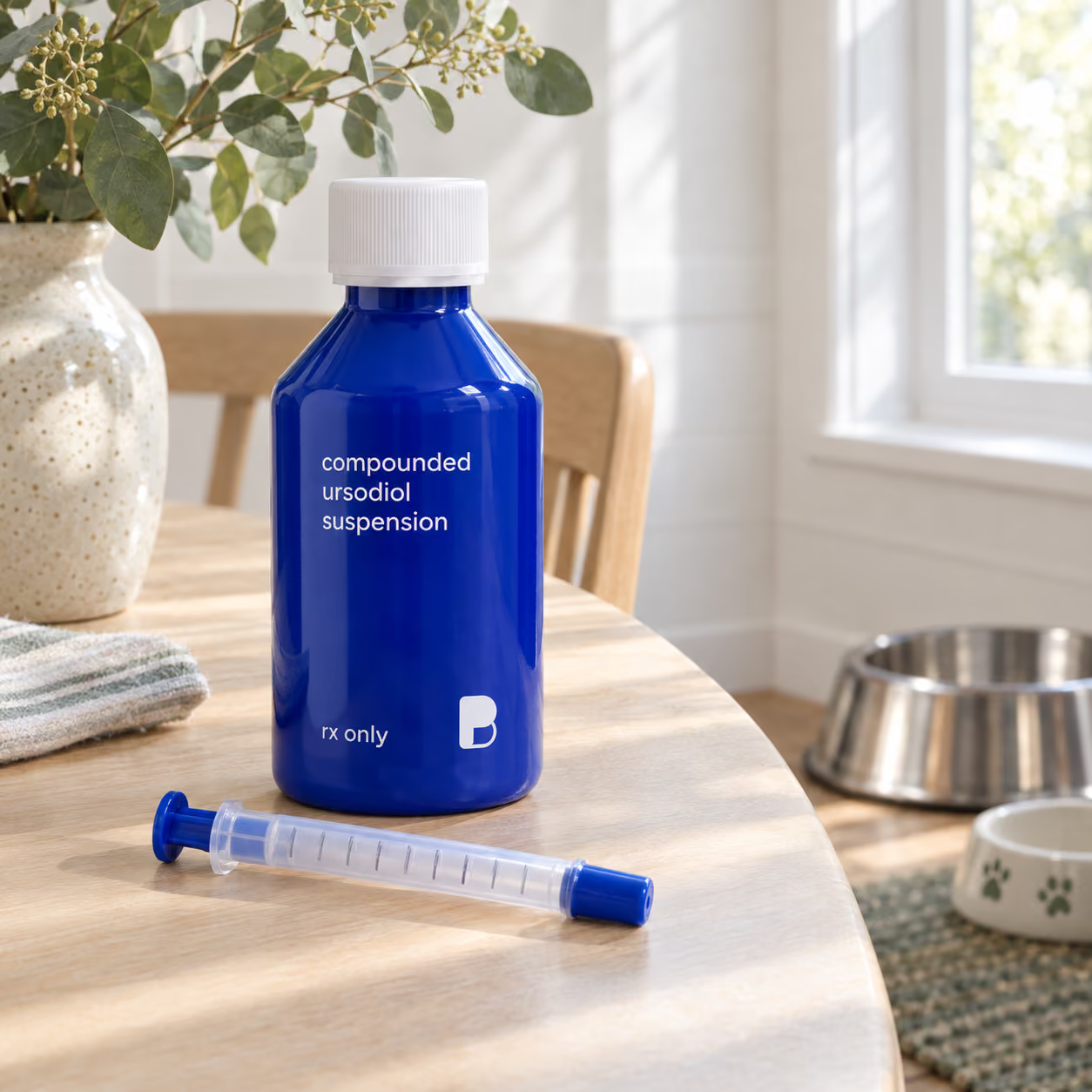

Ronidazole for cats is a compounded antiprotozoal that veterinarians prescribe for intestinal infection with Tritrichomonas foetus, a single-celled parasite that causes chronic large-bowel diarrhea. No FDA-approved ronidazole product exists for cats or any other species, so it is only available as a compounded preparation made to a veterinarian's prescription for one cat. Bayview Pharmacy compounds it as capsules and oral liquids, listed on our ronidazole ingredient page. Compounded preparations are not FDA-approved.
What is Tritrichomonas foetus in cats?
Tritrichomonas foetus is a protozoan parasite that lives in the end of a cat's small intestine and in the large intestine. Infected cats get chronic large-bowel diarrhea. The stool is foul-smelling, soft to liquid, and sometimes has blood or mucus in it, according to a study in the Journal of Feline Medicine and Surgery.
The same name has long been used for a parasite that causes reproductive disease in cattle. In 2013, researchers proposed that the cat parasite is a separate species and named it Tritrichomonas blagburni. You may see either name in your cat's records.
The parasite spreads through fecal contamination, such as a shared litter box or a cat grooming after stepping in feces, according to the Cornell University Shelter Medicine Program. It turns up most often in young cats and in homes, catteries and shelters where many cats live together. Some infected cats have no diarrhea at all but can still pass the parasite on.
Will it go away on its own?
Sometimes, but slowly. Cornell notes that untreated cats can take up to two years to clear the infection, and some remain infected for life. During that time the cat can keep passing the parasite to other cats. That long course is the reason veterinarians consider treatment.
How is Tritrichomonas foetus diagnosed?
Your veterinarian confirms the infection before prescribing ronidazole. Fecal testing, including PCR testing for the parasite's DNA and fecal culture, is how it is usually found. It can be confused with Giardia, and a single negative test does not always rule it out, so your veterinarian may repeat testing.
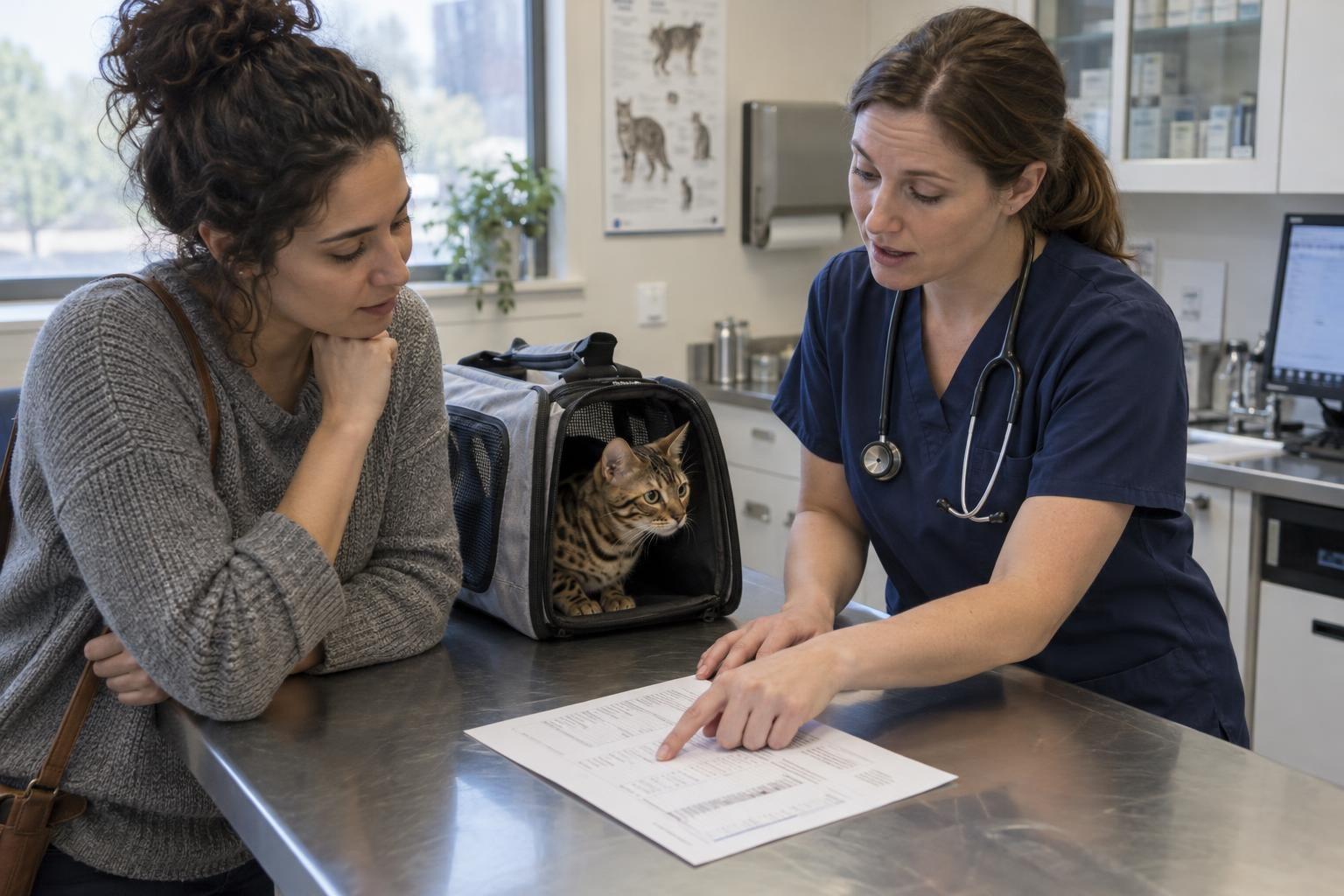
From diarrhea to treatment
Diarrhea that won't quit
Soft, smelly stool that keeps coming back.
Vet exam and fecal tests
PCR or culture looks for the parasite.
Infection confirmed
Your vet decides whether to treat.
Prescription compounded
Made for your cat, from an accurate weight.
Watch closely
Tremors or wobbliness: stop and call your vet.
What does ronidazole do?
Ronidazole is a nitroimidazole, the same drug family as metronidazole. Inside susceptible protozoa it is converted into reactive compounds that damage the organism's DNA. In a 2006 study in the Journal of Veterinary Internal Medicine, ronidazole was active against feline T. foetus in the laboratory and cleared infection in experimentally infected cats. Tinidazole and metronidazole were less effective against the parasite.
A 2019 knowledge summary in Veterinary Evidence found that ronidazole appears effective at clearing infection and resolving diarrhea, but that the evidence behind it is still fairly limited. Some cats do not respond, and some relapse after treatment. That can come from drug resistance, reinfection, or an infection that was never fully cleared. These findings describe research on the drug, not any compounded preparation, including ours.
Is ronidazole FDA-approved for cats?
No. Ronidazole is not FDA-approved for cats, and no approved product exists for any species in the United States. Veterinarians prescribe it extralabel (off-label). Federal rules (21 CFR 530.41) prohibit extralabel use of ronidazole and other nitroimidazoles in food-producing animals. Like metronidazole, ronidazole tastes very bitter, which is one reason it is usually compounded into capsules.
What are the side effects of ronidazole in cats?
The more common side effects are decreased appetite and vomiting. The serious one is neurologic. Reports in the veterinary literature describe cats on ronidazole developing tremors, unsteadiness, agitation and unusual behavior, and VCA Animal Hospitals also lists seizures, weakness and collapse.
A 2011 pharmacokinetic study found that cats absorb ronidazole almost completely and clear it slowly, which may make neurologic side effects more likely as doses add up. That is one reason the dose is worked out carefully from an accurate body weight. Give exactly what your veterinarian prescribed, and never add or double a dose.
Stop and call
If your cat trembles, wobbles, acts strangely or has a seizure, stop giving ronidazole and call your veterinarian right away.VCA Animal Hospitals. Follow your vet's instructions.
When should you call your veterinarian right away?
- Tremors, unsteadiness or a wobbly walk
- Agitation, confusion or any unusual behavior
- A seizure, weakness or collapse
- Stops eating or keeps vomiting
Tell your veterinarian about every medication and supplement your cat receives, since several drugs interact with nitroimidazoles. Tell them too if your cat is pregnant or nursing.
How do you handle ronidazole safely at home?
Ronidazole has caused cancer in laboratory mice and rats, so it is treated as a possible human carcinogen, and people should keep contact with it to a minimum. VCA advises wearing gloves whenever you give it.
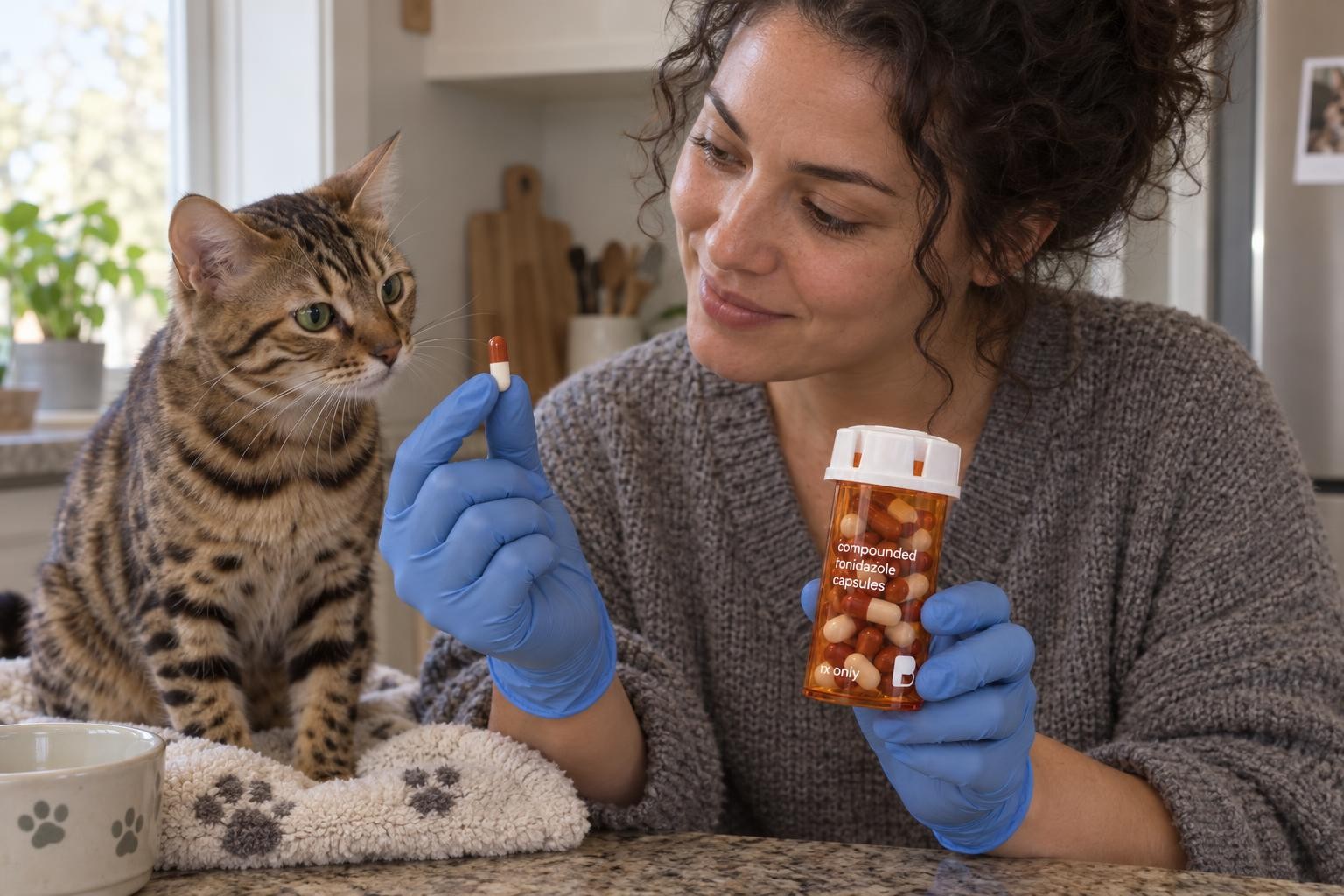
- Wear disposable gloves every time you give a dose.
- Give capsules whole. Never open or crush them.
- Measure liquids carefully with the syringe provided.
- Wash your hands after each dose, even with gloves.
- Wear gloves to scoop the litter box during treatment.
- Store it out of reach of children and other pets.
Because the parasite spreads through feces, scoop the litter box promptly and keep it clean. In a home with several cats, ask your veterinarian whether the other cats should be tested and whether to use separate litter boxes.
Ronidazole capsules or oral liquid?
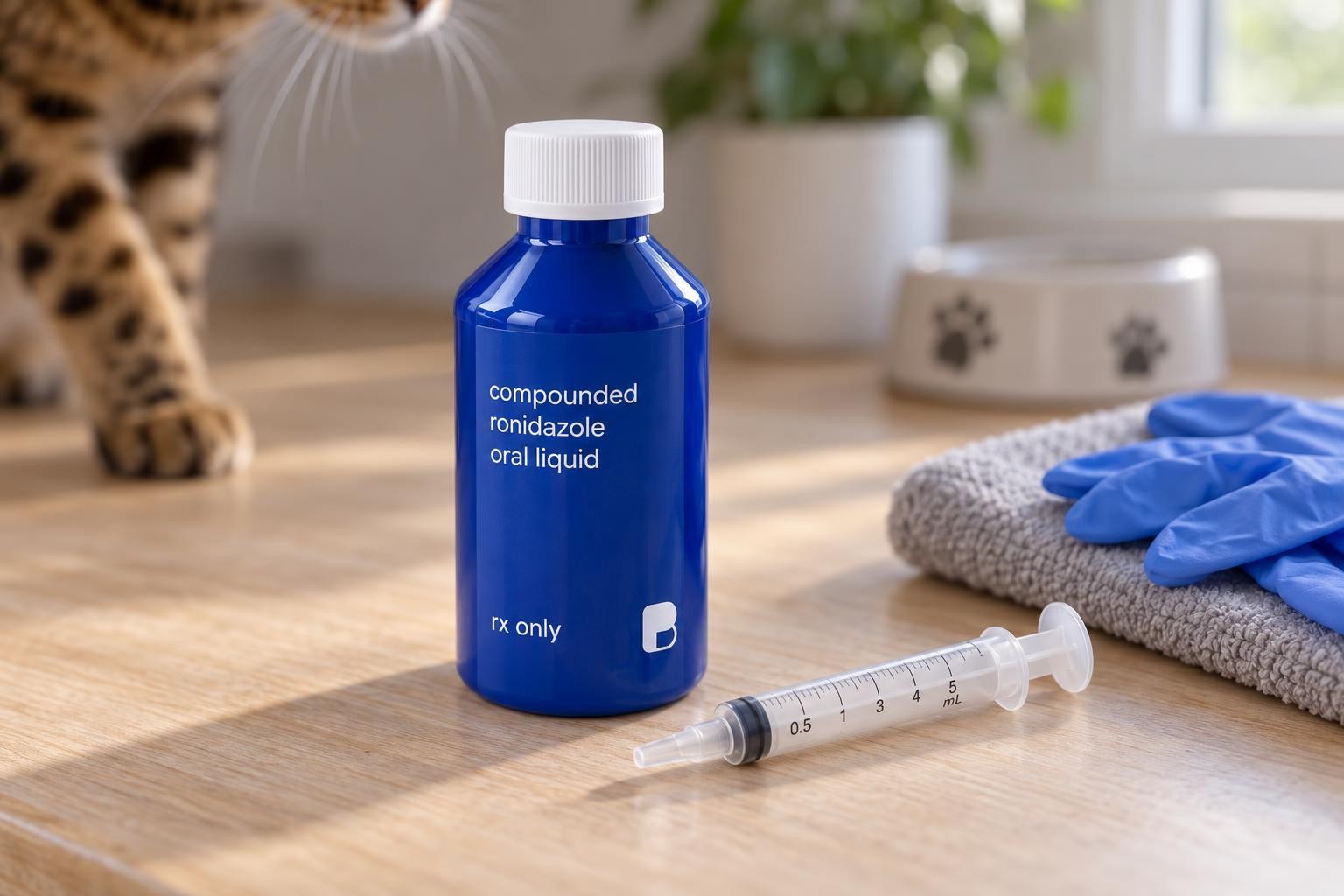
Bayview prepares ronidazole in two forms, each made to a veterinarian's prescription for one cat. Your veterinarian chooses the form and sets the strength from your cat's weight.
How each form is given
Wear disposable gloves for either form, and wash your hands after.
- Shake if the label says to.
- Measure with the oral syringe.
Strength shows how it's made, not how much to give. Your vet sets the dose.
Is ronidazole in stock at Bayview?
Supply of ronidazole bulk ingredient has been tight worldwide, and a 2025 veterinary column noted it had become hard to get in many areas. Ronidazole is currently out of stock at Bayview. Check our ronidazole ingredient page for current availability and to be told when it is back. If your cat needs treatment now, your veterinarian can talk through other options.
For veterinary compounding in general, see our compounding pharmacy for pets guide, and for another cat preparation, our post on methimazole transdermal gel for cats.
What does compounded ronidazole cost?
The price depends on the form, strength and quantity your veterinarian orders, so ask the pharmacy for the price of your cat's preparation before it is filled. It is priced as a cash prescription. For more on paying for compounded medications, see do compounding pharmacies take insurance.
How do you talk to your veterinarian about ronidazole?
- Has testing confirmed Tritrichomonas foetus?
- Is treatment worth it for my cat, or can we wait it out?
- Which form fits my cat: capsule or liquid?
- Do my other cats need testing?
- What should I do if I see tremors or wobbliness?
- When should my cat be retested?
- Could my cat's other medications interact with it?
If your veterinarian prescribes compounded ronidazole, they send the prescription to Bayview Pharmacy through a veterinary e-prescribing platform, by fax to (401) 284-4506, or by phone at (401) 284-4505, with your cat's current body weight. Bayview does not provide consultations and does not decide whether a medication is right for your cat; your veterinarian makes that call. We fill the prescription and can ship to the states where Bayview is licensed.
Frequently asked questions
Is ronidazole FDA-approved for cats?
No. There is no FDA-approved ronidazole product for cats or any other species, so it is only available as a compounded preparation. A veterinarian prescribes it extralabel for one cat, usually after testing confirms Tritrichomonas foetus infection. Federal rules prohibit extralabel use of ronidazole and other nitroimidazoles in food-producing animals.
What side effects should I watch for with ronidazole?
Decreased appetite and vomiting are the more common side effects. The serious one is neurologic: unsteadiness, tremors, agitation or unusual behavior, and seizures. If you see any neurologic sign, stop giving ronidazole and call your veterinarian right away. Give exactly the dose your veterinarian prescribed, since the dose is worked out from your cat's weight.
Why do I need to wear gloves to give ronidazole?
Ronidazole has caused cancer in laboratory mice and rats, so it is treated as a possible human carcinogen and people should keep contact with it to a minimum. Wear disposable gloves when you give it, do not open or crush the capsules, and wash your hands afterward. Keep it away from children and other pets.
Will Tritrichomonas foetus go away without treatment?
Sometimes, but slowly. Untreated cats can take up to two years to clear the infection, and some stay infected for life. During that time they can pass the parasite to other cats through shared litter boxes. Whether to treat, and with what, is your veterinarian's call.
What Bayview compounds for this
Important: Compounded medications are prepared to a prescriber's order for an individual patient. They are not FDA-approved, and the FDA has not evaluated them for safety, effectiveness, or manufacturing quality. This article is educational and is not a substitute for advice from your prescriber or pharmacist.
This preparation contains a controlled substance. Controlled-substance prescriptions carry refill limits, must be e-prescribed, and can only be shipped to states where Bayview holds the required licensure.
Uses discussed here may be off-label, meaning they are not part of any FDA-approved labeling. Off-label use is a decision for you and your prescriber, based on the available evidence.
Veterinary preparations are compounded to a veterinarian's order for a specific animal and are not FDA-approved animal drugs. Never give a compounded human medication to an animal without veterinary direction.
Compounded prescriptions are paid for directly rather than billed through insurance. Most are HSA/FSA-eligible, and many patients submit the receipt to their plan for possible reimbursement. Pricing depends on the strength, dose form and quantity your prescriber orders. Read more about cost and insurance.
The price of a ronidazole preparation depends on the form, strength and quantity your veterinarian orders, so ask the pharmacy for the price before it is filled. It is priced as a cash prescription.
Bayview Pharmacy is a compounding pharmacy in Warwick, Rhode Island, licensed to fill and ship compounded prescriptions for patients in Rhode Island, Massachusetts, Connecticut, New Jersey, New Hampshire, Florida, Maine and Pennsylvania. Prescriptions for New York patients are filled on a limited basis, and controlled substances are not shipped to New York addresses. See every state we ship to.
Related reading