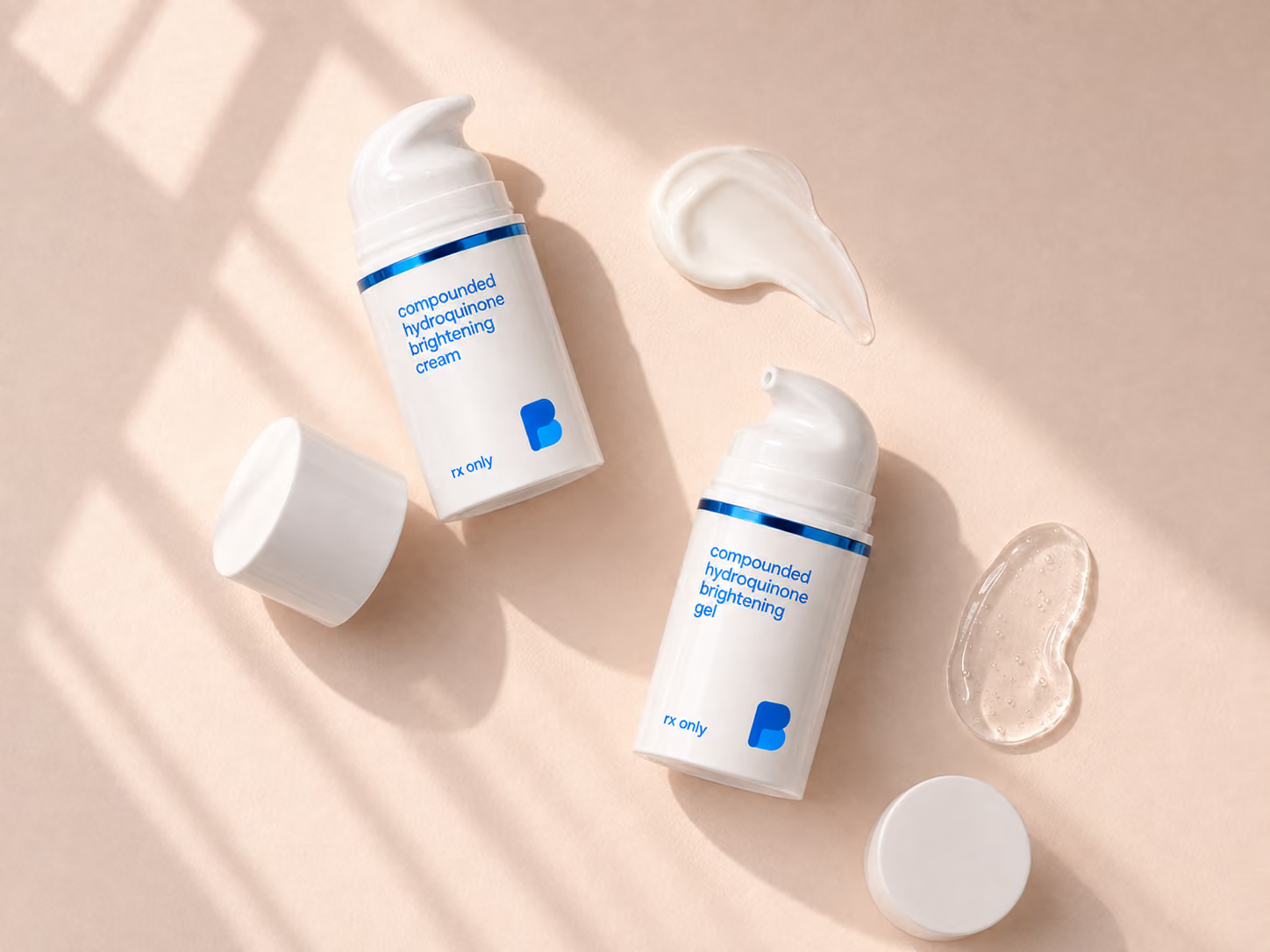
Check out our most popular compounded medications! Get Started

Hydroquinone is a depigmenting (skin-lightening) agent that Bayview compounds to a prescriber's order.
Hydroquinone is a skin-lightening agent used in dermatology to treat hyperpigmentation disorders. It works by inhibiting the enzyme tyrosinase, blocking the conversion of L-DOPA to melanin and thereby reducing the formation of pigmentation.[1] It is used for conditions such as melasma, solar lentigines (age spots), freckles, and postinflammatory hyperpigmentation.[1]
In compounded and commercial formulations, hydroquinone is often combined with other active ingredients; a widely used combination is hydroquinone 4% with tretinoin 0.05% and fluocinolone acetonide 0.01%.[1] Its use is typically recommended for a limited period under the guidance of a healthcare professional; if no improvement is seen after 2 to 3 months, it should be discontinued.[1] Potential side effects include skin irritation, redness, contact dermatitis, and exogenous ochronosis, a blue-black or gray-brown discoloration.[1] Prescribers should be aware of concentration levels in formulations, as ochronosis is associated with concentrations above 4% and use beyond 3 months.[1]
Hydroquinone requires careful patient selection and monitoring. Prescribers should educate patients that concurrent sunscreen use is required to protect against UV-induced pigmentation.[1] Patients should also be informed about the potential for skin irritation and the importance of following prescribed usage directions.[1]
Compounded at Bayview
Patient guides for the preparations we make most often. Each one is compounded to order and requires a prescription.
For prescribers
Every preparation in our formulary that contains this ingredient. Strength, base and dose form are set by the prescription.
Because there is no legal over-the-counter hydroquinone in the United States anymore. The CARES Act ended the pathway that allowed OTC hydroquinone products to be marketed, so they came off the shelves. The only FDA-approved hydroquinone product is prescription Tri-Luma (fluocinolone acetonide 0.01% / hydroquinone 4% / tretinoin 0.05%). Anything else, including these blends, is compounded to a prescriber's formula and is not FDA-approved.
It depends on how many actives are in the blend, their strengths, and the size — a two-ingredient 30 g gel and a five-ingredient 60 g gel are not priced alike. Compounded preparations are cash-priced and are generally eligible for HSA and FSA cards. Call us at 401-284-4505 with the blend and quantity your prescriber ordered and we will quote it before we make it.
HQ Free uses tranexamic acid, azelaic acid, and niacinamide instead of hydroquinone. It is a good option if you prefer to avoid hydroquinone or have reacted to it before. The hydroquinone formulas (Control through Ultra Plus) are often chosen for more stubborn pigment. Your provider decides which fits you.
Not legally in the United States, not since September 23, 2020. The FDA states that all over-the-counter skin lightening products require an approved new drug application before they can be legally marketed, and that manufacturers and distributors of unapproved products had to remove them from the marketplace as of that date. The 2% fade creams that used to sit on drugstore shelves were sold under an older framework and were never formally approved. Anything sold as OTC hydroquinone today is being marketed illegally, which is also why the FDA warns that such products have been found to contain mercury.
No. Hydroquinone is not banned — it moved to prescription-only. One prescription combination product containing hydroquinone holds FDA approval, for the short-term treatment of dark spots associated with moderate-to-severe melasma, and other strengths and blends are prepared by compounding pharmacies against an individual prescription. What is no longer permitted is selling hydroquinone over the counter without FDA approval. Some other countries have restricted it further, which is where the “banned” idea usually comes from.
Other salt forms of this molecule, and ingredients commonly compounded alongside it.
This page describes an active pharmaceutical ingredient, not a finished drug product. Bayview Pharmacy compounds preparations containing it only on a prescriber's order for an individual patient.
Compounded preparations are not FDA-approved, and the FDA has not evaluated them for safety, effectiveness, or manufacturing quality. Nothing on this page is a claim that any preparation is effective for any condition.
A valid prescription is required. Availability depends on Bayview's licensure in your state. This page is general information, not medical advice — discuss your situation with a licensed healthcare provider.
Our pharmacists work with prescribers to build preparations around a patient's dose, form and tolerances. Ask us what is possible with this ingredient.