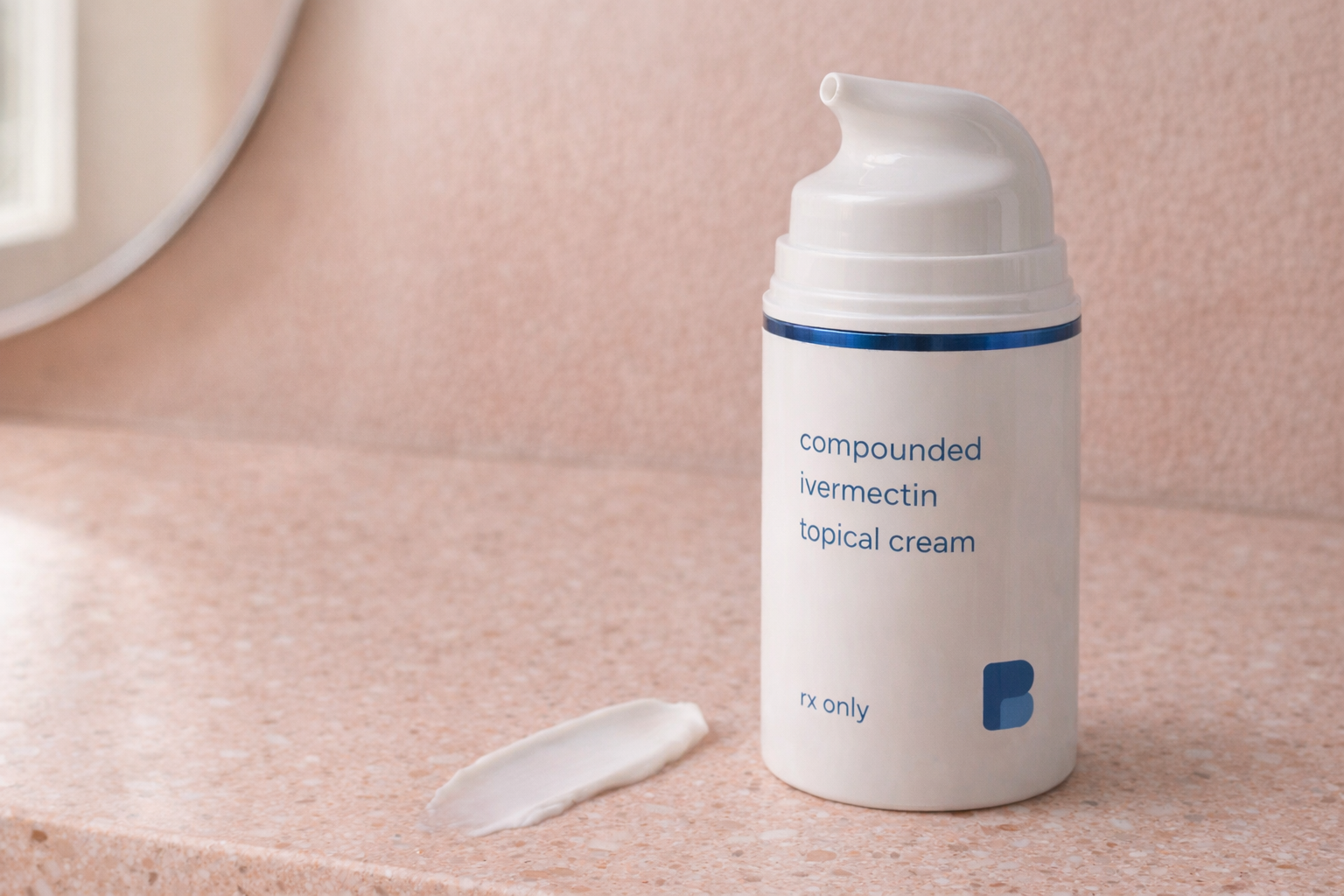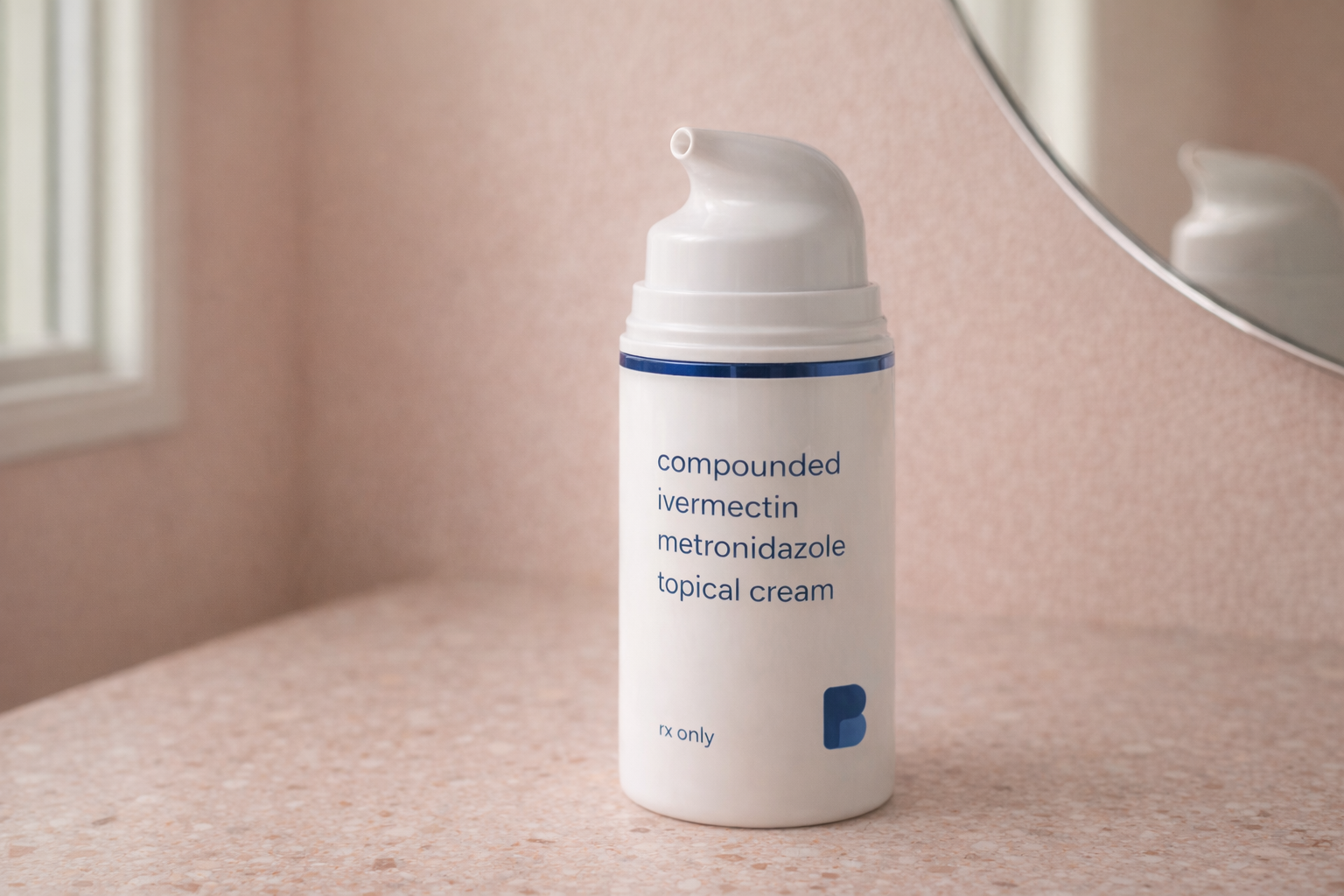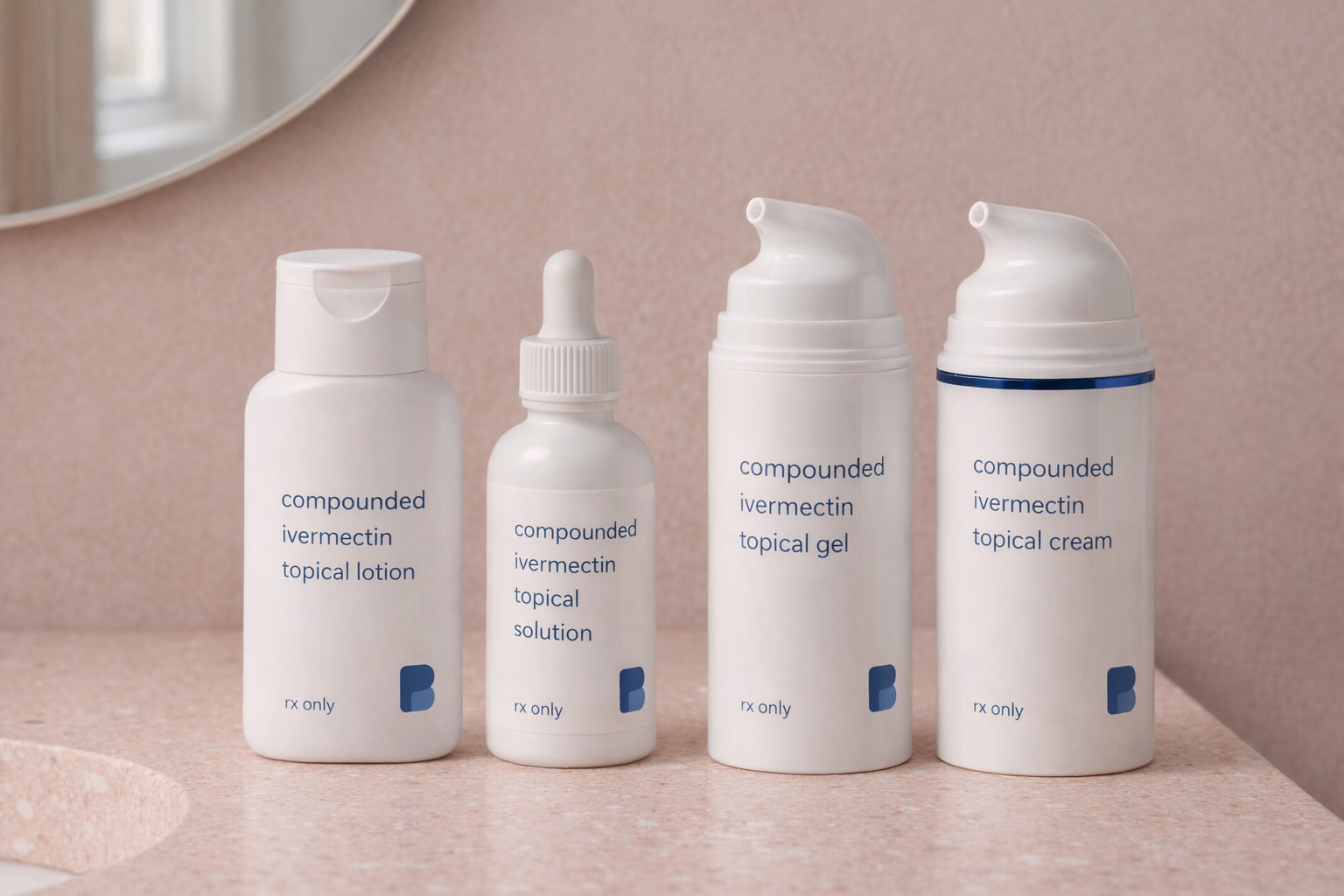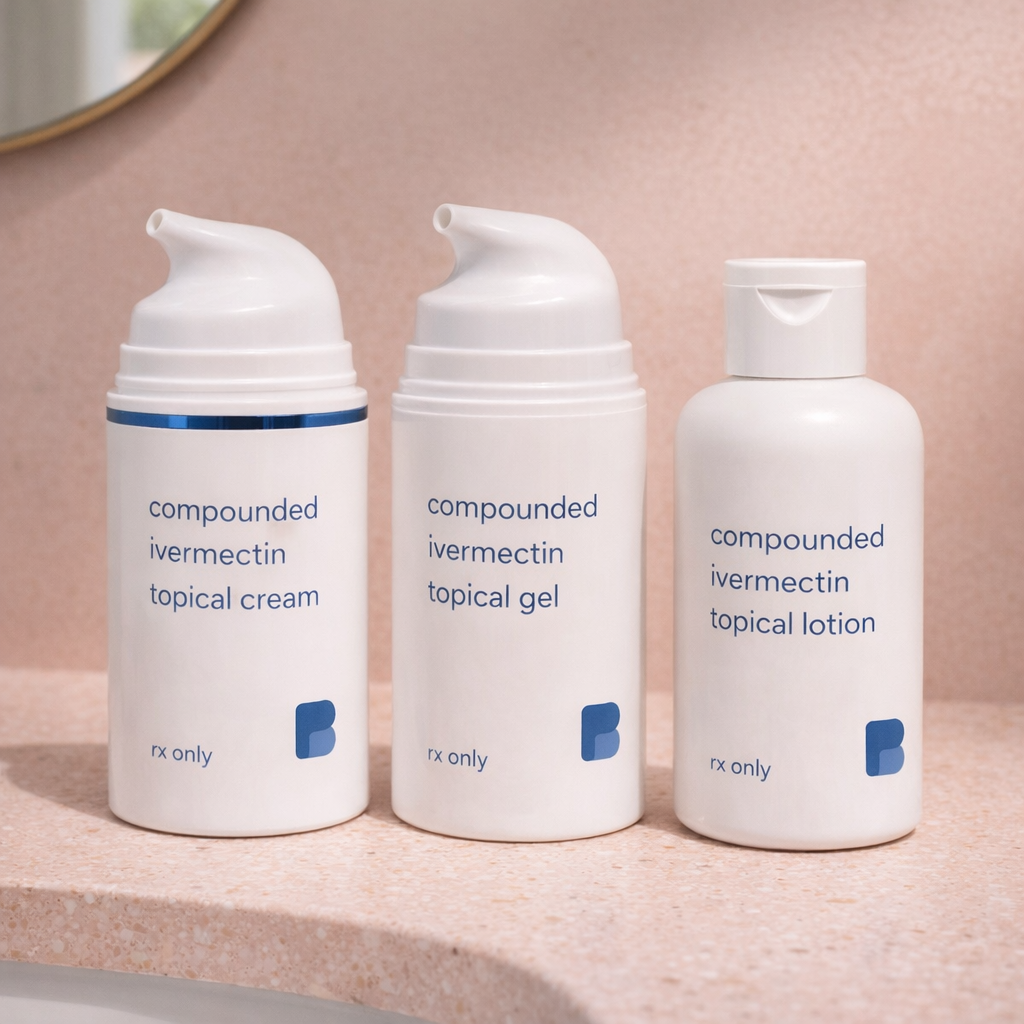




Topical ivermectin is a prescription medicine applied to the skin. The FDA-approved topical products are a 1% cream (Soolantra) and a 0.5% lotion for the hair and scalp (Sklice). A compounding pharmacy can prepare topical ivermectin in a different base, or combine it with niacinamide, metronidazole or azelaic acid in one preparation, when a prescriber orders it.
How does it work?
Ivermectin is an antiparasitic medicine. Applied to the skin, it acts where it is applied. The other ingredients in a combination have their own roles: metronidazole and azelaic acid are prescription topical ingredients, and niacinamide is a form of vitamin B3 used in skin care.
What are the FDA-approved products?
Soolantra is labeled for the inflammatory lesions of rosacea and is prescription only. Sklice is labeled for head lice, is sold over the counter, and is used only on the hair and scalp. Other uses of topical ivermectin, alone or in combination, are off-label and prescriber-directed. See MedlinePlus on ivermectin topical.
Which forms does Bayview compound?
Bayview compounds ivermectin 1% (10 mg/mL) topical lotion, 0.08% topical solution and 3 mg/mL topical gel. It also compounds 1% ivermectin creams and gels combined with niacinamide, metronidazole or azelaic acid. The table on this page lists each preparation.
How is it used?
These preparations are for use on the skin only. Apply only as your prescriber directs and as the label on your container states. Keep them away from the eyes, lips, inside the nose and mouth, and the vagina, and wash your hands after applying unless your hands are the area being treated.
Side effects & safety
The most common side effects of topical ivermectin are burning and irritation of the skin where it is applied. Allergic skin reactions have been reported. Products that contain metronidazole or azelaic acid can also cause dryness, stinging or itching. If a preparation gets in your eyes, rinse them with plenty of water. Stop using it and contact your prescriber if you develop a rash, swelling or severe irritation.
Who should not use it?
Do not use a preparation if you are allergic to ivermectin or to any other ingredient in it. Tell your prescriber about any skin conditions, other medications applied to the same area, pregnancy or breastfeeding. Topical ivermectin is not for oral, ophthalmic or intravaginal use.
How should it be stored?
Store as your label directs, away from heat and moisture. Keep it out of reach of children and pets, and do not use it past the beyond-use date on the container.
Bayview sets each beyond-use date by the USP <795> standard for nonsterile compounding. Preparations made without water can be dated up to 180 days. Those that contain water, as most creams, gels and lotions do, can be dated up to 35 days when they contain a preservative, or up to 14 days kept in the refrigerator when they do not. Your label shows the exact date and how to store it.
Why is this compounded?
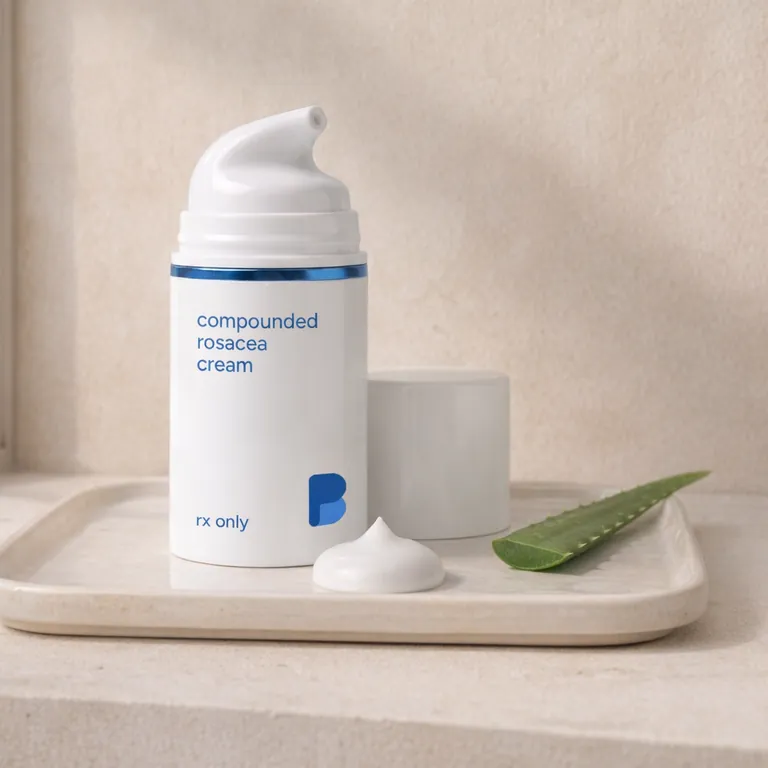
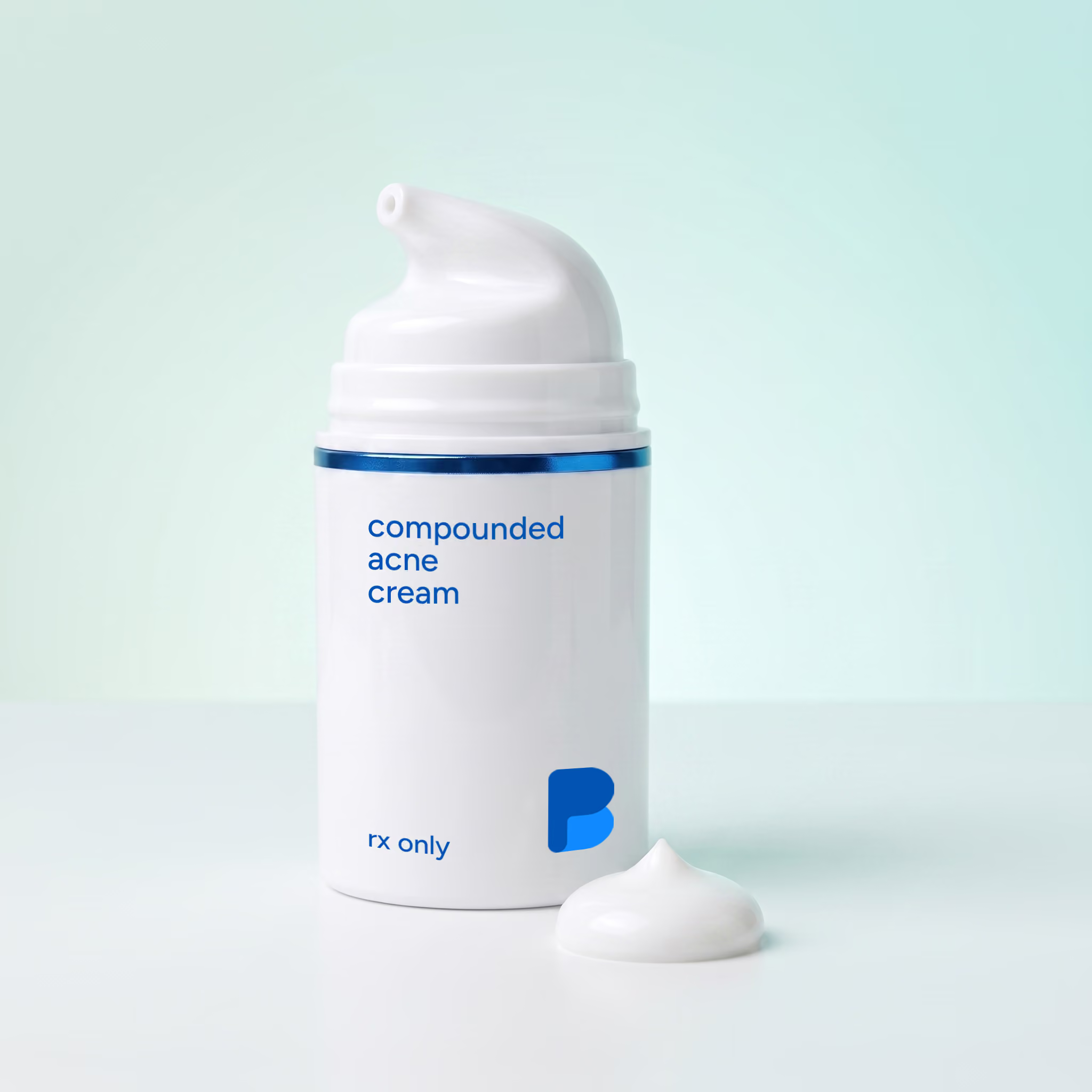
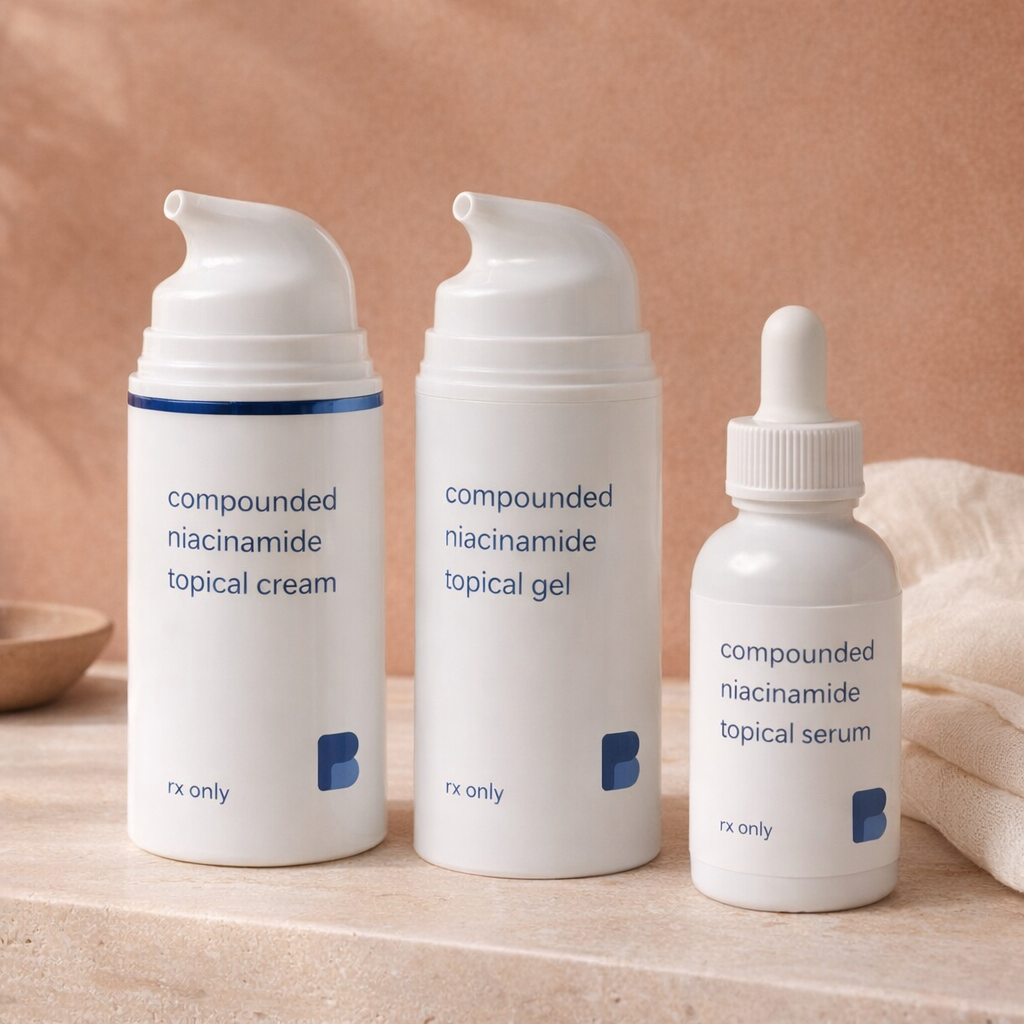
The manufactured topical products come in one cream and one lotion, each with ivermectin alone. Compounding lets a prescriber order ivermectin in a gel, lotion or solution base, or combined with other topical ingredients in a single preparation. Related preparations include Rosacea & Redness Treatments, Acne Treatments and Niacinamide (Nicotinamide) Cream, Gel & Serum. The full list is in our compounded medications catalog.
Clinical details for prescribers
Regulatory status. Ivermectin is not a controlled substance. FDA-approved topical ivermectin is Soolantra 1% cream (Rx) and Sklice 0.5% lotion (OTC). The lotion, solution, gel and combination preparations listed here are available only through 503A compounding and are not FDA-approved. This page covers topical preparations only.
Formulation. Available preparations are ivermectin 1% (10 mg/mL) lotion, 0.08% solution and 3 mg/mL gel; niacinamide 4% / ivermectin 1% cream; niacinamide 4% / ivermectin 1% / metronidazole 0.75% gel; niacinamide 5% / ivermectin 1% / potassium azeloyl diglycinate 15% cream; ivermectin 1% / metronidazole 0.75% cream and gel; and azelaic acid 15% / ivermectin 1% / metronidazole 1% cream and gel. Directions are set by the prescriber.
Counseling / clinical points:
- Soolantra labeling states it is not for oral, ophthalmic or intravaginal use; counsel the same for compounded preparations
- Most commonly reported reactions with ivermectin 1% cream are skin burning and irritation; contact and allergic dermatitis are reported postmarketing
- Uses outside the Soolantra and Sklice labels are off-label
Send orders by eRx to Bayview Pharmacy (NCPDP 4106882) or fax 401-284-4506. See how to e-prescribe and the for providers page.
Compounded topical ivermectin is a compounded medication and is not FDA-approved. The FDA has not evaluated compounded preparations for safety, effectiveness or quality. A prescription is required.